
You’ve finally done it. You’ve converted a van into your home on wheels, craving freedom on the open road. But as you settle in for your first night, reality hits: your laptop battery is dying, you can’t charge your camera, and the thought of a hot coffee in the morning seems impossible without a noisy generator. This common van life pain point—the need for clean, quiet, and reliable AC power off-grid—finds its perfect solution in a dedicated 600w pure sine wave inverter. This guide isn’t just about specs; it’s about integrating this essential tool seamlessly into your mobile life.
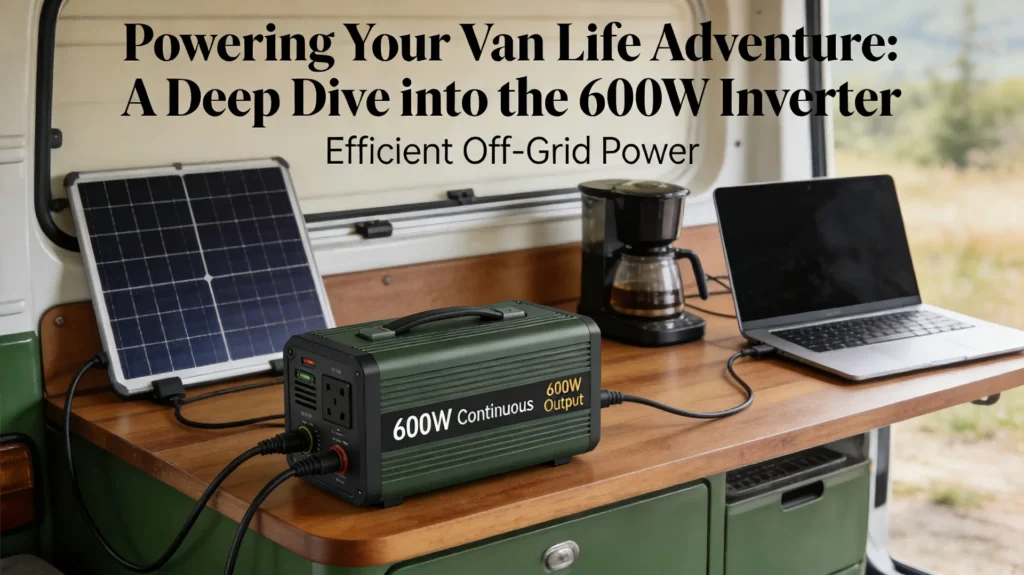
1. The Mobile Power Hub: How an Inverter Unlocks Your Van's Potential
A 600w pure sine wave inverter acts as your vehicle’s silent power station. It meticulously converts the 12V DC from your auxiliary house battery bank into 120V AC, the standard household current. The “pure sine wave” part is what separates a basic power source from a safe, compatible one. Many van dwellers on Reddit (r/vandwellers, r/overlanding) share stories of early mistakes with cheaper modified sine wave inverters causing annoying hums in speakers, flickering in LED lights, or worse, slowly damaging expensive gadgets. The pure sine wave output is chemically identical to grid power, ensuring everything from your delicate drone batteries to your efficient induction cooktop (within wattage limits) runs smoothly and safely.
2. Tailoring the 600W Inverter to Van Life Applications
The 600-watt rating is particularly strategic for van conversions. It provides enough juice for comfort and productivity without requiring an enormous, space-consuming battery bank. Let’s map out a typical day powered by this system:
- Morning & Productivity: Power a small single-serve coffee maker (~800-1500W surge, then lower), run a laptop (50-100W) and monitor, charge camera batteries and phones via AC adapters or the inverter’s built-in USB ports. Facebook groups like “Van Life Diaries” are filled with digital nomads who consider this their core setup.
- Evening & Comfort: Run a efficient 12V fridge (which cycles on/off), power a small TV or projector (~100W), string lights, and charge all devices. Some may even run a low-wattage electric blanket on a chilly night.
- Tools & Maintenance: Use battery chargers for cordless tool systems, run a small soldering iron for repairs, or power an air compressor for tires.
Critical Consideration: The key is managing surge current. A 600W inverter with a 1200W surge can handle the brief startup spike of a fridge compressor or a coffee maker’s heating element, even if their running wattage is lower.
3. Choosing Your Van's Inverter: A Practical Buyer's Checklist
For van life, selection goes beyond paper specs. It’s about durability, integration, and livability.
- Efficiency is King: Every percentage point of efficiency lost is battery power turned into wasted heat. Opt for a model with ≥90% efficiency. This directly translates to longer time between charges, whether from your alternator or solar panels. Reviews often praise brands that are transparent about their efficiency under real loads.
- The Noise Factor: Your van is your home. A fan that sounds like a hairdryer every time you boil water is disruptive. Look for inverters with temperature-controlled fans that only spin when necessary and are described as “quiet” or “low-noise” in user testimonials.
- Protection for Your Home-on-Wheels: Your electrical system must be foolproof. Essential protections include:
- Low Voltage Disconnect (LVD): Automatically shuts off before draining your batteries to a damaging level.
- Over-Temperature Protection: Prevents burnout in a confined, potentially hot space.
- Robust Short-Circuit Protection: A critical safety feature for any vehicle-based system.
- Form Factor & Mounting: Space is premium. A compact, sleek design that can be securely mounted in a ventilated location (like under a seat or in a dedicated electrical cabinet) is ideal. Passive cooling (no fan) is silent but ensure it has adequate heat sinks and airflow.
- Remote Control Capability: An optional remote switch allows you to turn the inverter on/off from your living area without accessing the mounting point, saving power when not in use.
4. Installation & Integration: Doing It Right the First Time
Poor installation is the top cause of inverter failure in vans. Here’s the professional approach:
1. Cable and Fuse Sizing: For a 600w pure sine wave inverter 12v, the current draw can exceed 50 amps. Undersized cables will overheat, cause voltage drop, and starve your inverter. Use the thickest gauge recommended by the manufacturer (often 4 AWG or 2 AWG). Install an appropriately rated ANL or MRBF fuse within 18 inches of the battery positive terminal. This is non-negotiable for fire safety.
2. Location and Ventilation: Mount the inverter as close to your house batteries as possible to minimize cable length, but in a place that stays dry and has ample air circulation. Avoid dead-air spaces or locations near heat sources.
3. Grounding: Secure the inverter’s ground terminal directly to the vehicle’s chassis or a dedicated ground bus bar with a cable of the same gauge as the positive cable.
Maintenance for the Long Haul: Periodically check terminal connections for tightness and corrosion. Keep vents clear of dust and pet hair. Be mindful of your power usage; consistently running at the 600W limit will generate significant heat and stress the unit.
5. Van Life Inverter FAQ
5.1. Can I run an air conditioner with a 600W inverter?
Almost certainly not. Even the smallest 12V air conditioners typically require 800-1500+ running watts, with startup surges much higher. A 600W inverter is fundamentally undersized for this load. Van lifers usually address cooling via 12V fans, roof vents, or standalone battery-powered AC units.
5.2. Should I get a Giandel 600w pure sine wave inverter or a Projecta 600w pure sine wave inverter for my van?
Both are popular consumer brands. The decision often comes down to specific model features like the fan noise profile, the exact surge rating, physical dimensions for your available space, and the presence of a remote switch. Scour real-user reviews on Amazon and forums for mentions of reliability in mobile environments.
5.3. How do I calculate what battery bank I need for my inverter?
This is a vital step. First, list all devices and their wattage. Estimate daily usage in watt-hours (Wh). For example: Laptop (60W) for 4 hours = 240 Wh. A 300W load running for 3 hours = 900 Wh. Your battery bank capacity (in Wh) should be at least double your estimated daily use to avoid discharging below 50%, which extends battery life. A 200Ah 12V lithium battery provides roughly 2560 Wh of usable power (200Ah * 12.8V * 0.5 depth of discharge).
5.4. Why is the 600w pure sine wave inverter price worth it for van life?
When your home, work, and adventure depend on your electrical system, reliability is priceless. The pure sine wave ensures compatibility with every device, protects your investment in electronics, and operates efficiently. It’s a foundational component, not a place to cut corners.
6. Why GTR is the Trusted Partner for Mobile Adventurers
At GTR, we engineer for the journey, not just the junction. We understand that an inverter in a van isn’t just a product; it’s part of your critical infrastructure. Our 600w pure sine wave inverter is built with the unique demands of mobile living in mind.
We achieve exceptional efficiency (>92%) to maximize your precious solar or alternator charging. Our advanced thermal management system uses a large, quiet fan that operates on a variable speed profile, ensuring robust cooling without constant intrusive noise. We’ve incorporated a full suite of intelligent protections monitored in real-time, giving you peace of mind while you’re off the grid.
Furthermore, GTR provides comprehensive support. Our detailed technical sheets and installation guides are written with the DIY van converter in mind, helping you integrate our products safely and effectively. Discover the full specifications and how our inverter can become the reliable heart of your van’s electrical system by visiting LEDCXR.com. For more resources on building a robust mobile power setup, including battery and solar considerations, explore our educational hub at LEDCXR.com.
Stop dreaming about the perfect van life setup and start building it. Choose a power foundation you can trust. Investigate the GTR 600W Pure Sine Wave Inverter, designed for reliability in mobile environments. Visit our product page for detailed specs and take the next step towards boundless, powered adventure.