
The Definitive Guide to Automotive led headlights: Technology, Safety, and Performance
The automotive landscape has shifted dramatically over the last decade. As vehicle manufacturers like Tesla and Toyota push for greater energy efficiency and safety, the humble headlamp has evolved from a simple filament bulb into a sophisticated piece of electronic equipment. If you are considering an upgrade or simply want to understand the technology powering your night drives, this comprehensive guide covers everything you need to know about led headlights.
_24-576x1024.webp)
1. Understanding LED Technology in Vehicles
To make an informed decision, one must first understand the mechanics. LED stands for “Light Emitting Diode.” Unlike traditional halogen bulbs, which rely on heating a tungsten filament until it glows, or HID (Xenon) bulbs that create an arc of electricity, LEDs operate through electroluminescence.
1.1. How It Works
When an electrical current passes through a semiconductor material (the diode), it emits photons. This process is incredibly efficient because very little energy is wasted as heat compared to halogens. However, while the light beam is cool, the electronic components behind the diode generate heat, necessitating advanced cooling systems.
Modern led headlights utilize CSP (Chip Scale Package) or COB (Chip on Board) technology. This allows for a tighter beam pattern that mimics the original filament placement of halogen bulbs, reducing the risk of scattering light.
2. Where Modern LEDs Are Used
The application of this technology extends far beyond aftermarket upgrades. It is now the gold standard in several sectors.
2.1. OEM Integration
Major manufacturers such as BMW (with their Laser/LED hybrids) and Audi rely on LEDs for their adaptive lighting systems. These systems can essentially “paint” light onto the road, dimming specific sections to avoid blinding oncoming traffic while keeping the high beams active elsewhere.
2.2. Electric Vehicles (EVs)
For EVs like the Tesla Model 3 or BYD seal, energy conservation is paramount. led headlights consume significantly less power than halogens (often 20-30 watts vs. 55-60 watts), which directly translates to marginally better range and less strain on the 12V battery system.
3. Critical Selection Criteria
Browsing through forums on Reddit or Facebook groups reveals a common complaint: “Are led headlights too bright?” or “Why does my light scatter everywhere?” These issues usually stem from purchasing the wrong product. Here is what you must evaluate:
- Beam Pattern & Cut-off Line: This is the most vital safety factor. A high-quality bulb must replicate the filament position of the bulb it replaces. If the light source is even a millimeter off, it may cause glare for other drivers.
- Lumens vs. Lux: Don’t be fooled by inflated marketing numbers. Lumens measure total light output, but Lux measures how much of that light actually hits the road at a specific distance.
- Color Temperature: Measured in Kelvin (K).
- 3000K (Yellow): Best for fog lights and bad weather.
- 6000K (Crystal White): The standard for modern led headlights, offering the best balance of clarity and contrast.
- 8000K+ (Blue): Generally not recommended as they reduce visibility and may attract law enforcement attention.
- Heat Dissipation: Look for bulbs using aviation-grade aluminum and active cooling fans or copper braid heat sinks. Heat is the enemy of LED longevity.
4. Installation and Maintenance Guide
One of the most popular form factors is the led headlights h4 (also known as 9003/HB2). These are dual-filament bulbs, meaning one bulb handles both high and low beams. Installing them requires specific attention to orientation.
4.1. Step-by-Step Installation
- Access: Open the hood and locate the rear of the headlight housing. You may need to remove a dust cover.
- Removal: Unclip the metal retention spring holding the old halogen bulb. Pull the bulb out gently—do not touch the glass of the halogen bulb if you plan to keep it as a spare.
- Preparation: If your LED bulb has a removable collar, install the collar first and lock it in with the spring.
- Insertion: Insert the LED bulb into the collar. Crucial Note: The LED chips should face 3 o’clock and 9 o’clock for a proper beam pattern.
- Wiring: Connect the plug. If the light doesn’t turn on, flip the plug 180 degrees (polarity matters for some generic brands, though high-end units are usually non-polarity).
4.2. Maintenance Tips
Unlike halogens, LEDs do not fade slowly; they usually work until they don’t. However, keep the headlight lenses clean. Oxidation (yellowing) on the outer plastic lens can reduce light output by up to 40%, negating the benefits of your upgrade.
5. Frequently Asked Questions
Q: Are led headlights illegal?
A: It depends on your jurisdiction. In many regions, replacing a halogen bulb with an LED in a reflector housing is technically restricted. However, using complete replacement assemblies or compliant bulbs is often permitted. Always check local laws.
Q: Why are my led headlights too bright for others?
A: This typically happens if the bulb is not aligned correctly (chips not at 3 and 9 o’clock) or if the headlight assembly requires re-aiming after installation. You may need to lower your beam angle.
Q: Do I need a CANbus adapter?
A: If you drive a European car (BMW, Audi, VW) or a modern American truck (Dodge, Jeep), the computer may detect the lower power draw of the LED as a “burnt bulb.” A CANbus decoder solves this flickering or error code issue.
Q: How long do they last?
A: Quality LEDs can last up to 30,000 to 50,000 hours, significantly longer than the 1,000-hour lifespan of a halogen bulb.
6. The GTR Manufacturing Advantage
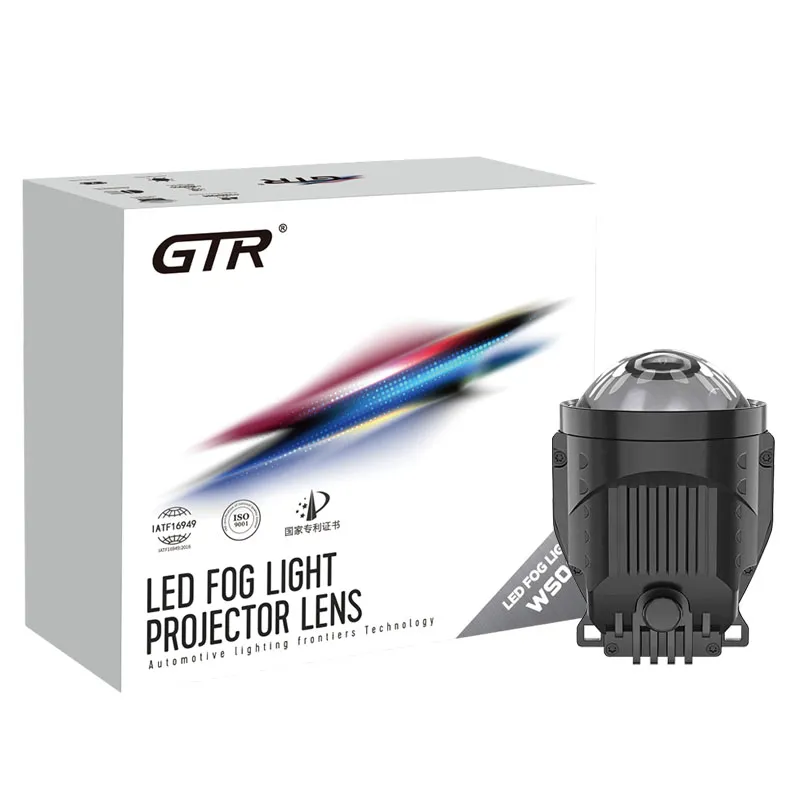
When selecting a supplier or a brand, the source of the materials matters. GTR stands out in the crowded market of automotive lighting for several distinct reasons.
First, GTR focuses on material science. While generic manufacturers use cheap plastic bases, GTR utilizes high-thermal-conductivity substrates and aviation aluminum to manage heat. This ensures that the brightness you see at minute one is the same brightness you see at minute sixty.
Second, precision engineering is at the core of GTR’s philosophy. Whether you are looking for a standard replacement or a high-performance retrofit, the chip placement on GTR products is calibrated to micrometer precision to ensure a perfect cut-off line. This dedication to quality control ensures safety for the driver and courtesy for oncoming traffic.
For those interested in the latest lens technologies and bi-LED modules, GTR’s innovation hub offers solutions that rival factory-installed luxury lighting systems.