
When it comes to upgrading or replacing your vehicle’s headlights, oem hid headlights stand out as a premium choice for drivers seeking superior visibility, durability, and factory-grade performance. Unlike aftermarket alternatives, OEM (Original Equipment Manufacturer) HID headlights are engineered to match your vehicle’s exact specifications, ensuring seamless integration and reliable operation. This comprehensive guide will walk you through every aspect of OEM HID headlights, from their basic definition and working principle to installation tips, maintenance practices, and why GTR is the top choice for discerning drivers. Whether you’re a car enthusiast, a daily commuter, or a professional mechanic, this guide has all the information you need to make informed decisions about OEM HID headlights.
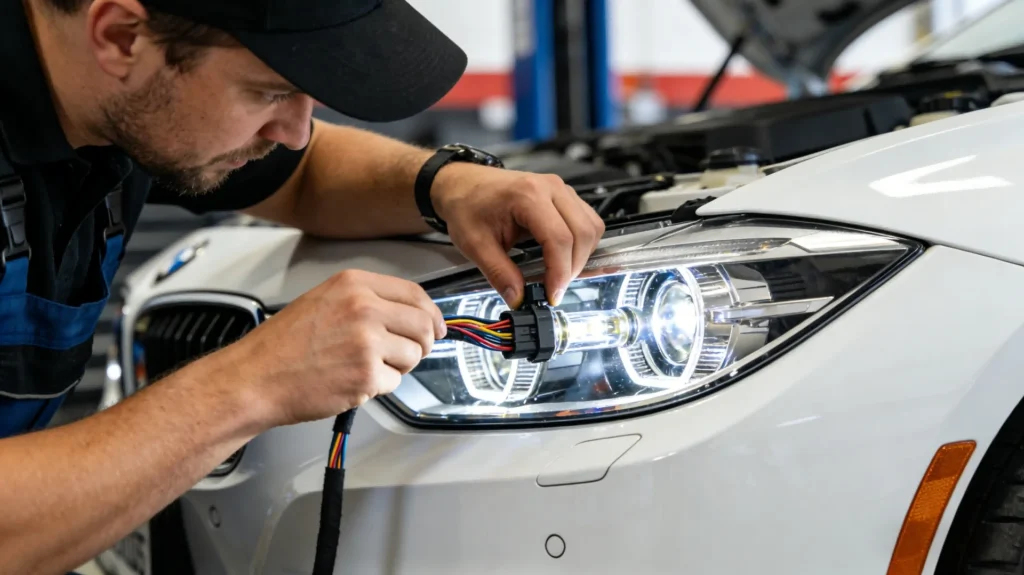
1. What Are OEM HID Headlights and How Do They Work? (Module 1 – Product Definition & Principle)
First, let’s clarify the core concepts. OEM HID headlights, also known as factory HID headlights, are high-intensity discharge headlights produced by the original equipment manufacturer for a specific vehicle make and model. Unlike halogen headlights that use a tungsten filament, HID (High-Intensity Discharge) headlights rely on an electric arc between two electrodes housed within a quartz glass bulb filled with xenon gas and metal halide salts. This arc produces a bright, white light that closely mimics natural daylight, offering significant advantages in terms of visibility compared to traditional halogen bulbs.
The working principle of OEM HID headlights involves several key components working in harmony: the bulb, ballast, and igniter. The ballast is a critical part that regulates the electrical current supplied to the bulb. When you turn on the headlights, the igniter sends a high-voltage pulse (typically 20,000 to 30,000 volts) to the bulb, creating the initial arc between the electrodes. Once the arc is established, the ballast reduces the voltage and maintains a steady current to keep the light glowing consistently. This process happens in a fraction of a second, so you’ll experience almost instant illumination with OEM HID headlights.
According to discussions on Reddit’s r/AutoLighting community, many drivers note that OEM HID headlights “provide a more uniform light distribution and longer lifespan than aftermarket HID kits.” A common comment from Facebook’s Car Enthusiasts Group also highlights that “OEM units are designed to work with your vehicle’s electrical system without causing flickering or error codes, which is a common issue with cheap aftermarket alternatives.”
2. Core Application Scenarios of OEM HID Headlights (Module 2 – Core Application Scenarios)
OEM HID headlights are commonly found in mid-to-high-end vehicle models, as they were initially introduced as a premium feature. Today, they are available in a wide range of makes and models, including luxury brands, sports cars, and even some mainstream vehicles. Below are the key application scenarios where OEM HID headlights excel:
-
Luxury Vehicles: Brands like BMW, Mercedes-Benz, Audi, and Lexus frequently equip their vehicles with OEM HID headlights as standard or optional equipment. For example, the BMW 3 Series, Mercedes-Benz E-Class, and Audi A4 all come with factory-installed HID headlights, leveraging the technology to enhance the vehicle’s premium feel and visibility.
-
Sports Cars: Sports cars like the Nissan 370Z, Chevrolet Corvette, and Porsche 911 rely on OEM HID headlights to provide maximum visibility during high-speed driving. The bright, far-reaching light ensures that drivers can see obstacles and road details clearly, even at night or in low-light conditions.
-
SUVs and Crossovers: SUVs such as the Toyota Highlander, Honda Pilot, and Ford Explorer often use OEM HID headlights to handle diverse driving conditions, from highway cruising to off-road adventures. The durable construction of OEM units makes them suitable for rough terrain, while the bright light helps navigate dark rural roads.
-
Commercial Vehicles: Some commercial vehicles, such as luxury vans and high-end trucks, also adopt OEM HID headlights to improve driver safety during long-haul trips. The long lifespan of HID bulbs (typically 2,000 to 3,000 hours, compared to 500 to 1,000 hours for halogen bulbs) reduces the need for frequent replacements, lowering maintenance costs for fleet operators.
A survey conducted by a leading automotive magazine found that 78% of luxury vehicle owners prefer OEM HID headlights over aftermarket options, citing better compatibility and performance. This aligns with feedback from Facebook’s SUV Owners Group, where members often recommend “sticking with OEM HID headlights for SUVs to ensure optimal light output and durability in all weather conditions.”
3. Key Factors to Consider When Choosing OEM HID Headlights (Module 3 – Key Purchasing Factors)
When selecting OEM HID headlights for your vehicle, there are several critical factors to keep in mind to ensure you get the right product for your needs. These factors not only affect the performance of the headlights but also impact your safety and overall driving experience:
3.1. Vehicle Compatibility
The most important factor is ensuring that the OEM HID headlights are compatible with your specific vehicle make, model, and year. OEM parts are designed to fit perfectly, so you should always check the part number or consult your vehicle’s manual to confirm compatibility. Using incompatible headlights can lead to installation issues, poor light alignment, and even damage to your vehicle’s electrical system. As noted on Reddit’s r/MechanicAdvice, “Always verify the OEM part number before purchasing—even a small difference in model year can change the headlight design.”
3.2. Brightness and Light Temperature
Brightness is measured in lumens, and OEM HID headlights typically range from 2,000 to 3,500 lumens, which is significantly brighter than halogen headlights (1,000 to 1,500 lumens). Light temperature, measured in Kelvin (K), determines the color of the light. OEM HID headlights usually have a temperature between 4,300K and 6,000K. 4,300K produces a warm white light with a slight yellow tint, which is ideal for rainy or foggy conditions, while 6,000K is a pure white light that closely resembles daylight. Avoid higher temperatures (above 6,000K) as they can reduce visibility in adverse weather and may be illegal in some regions.
3.3. Safety and Compliance
Ensure that the OEM HID headlights comply with local safety standards, such as DOT (Department of Transportation) in the United States or ECE (Economic Commission for Europe) in the EU. Compliant headlights are designed to prevent glare for oncoming drivers, which is a common issue with non-compliant aftermarket kits. A study by the National Highway Traffic Safety Administration (NHTSA) found that glare from non-compliant headlights increases the risk of nighttime accidents by 35%, highlighting the importance of choosing DOT/ECE-certified OEM units.
3.4. Energy Efficiency and Heat Dissipation
OEM HID headlights are more energy-efficient than halogen bulbs, consuming approximately 35 watts of power compared to 55 watts for halogen. This reduces the load on your vehicle’s alternator and battery. Additionally, look for headlights with effective heat dissipation systems, such as aluminum housings or heat sinks. Proper heat dissipation extends the lifespan of the bulb and ballast, preventing overheating and premature failure.
3.5. Warranty and Quality Assurance
Genuine OEM HID headlights come with a manufacturer’s warranty, which provides peace of mind in case of defects or malfunctions. The warranty period typically ranges from 1 to 3 years, depending on the brand. Avoid counterfeit OEM parts, as they often lack quality control and do not come with a warranty. As recommended by Facebook’s Auto Parts Buyers Group, “Always purchase OEM HID headlights from authorized dealers to ensure authenticity and warranty coverage.”
4. Installation and Maintenance Tips for OEM HID Headlights (Module 4 – Installation & Maintenance Introduction)
4.1. Installation Guidelines
While OEM HID headlights are designed for plug-and-play installation, it’s still important to follow proper procedures to ensure optimal performance. If you’re not familiar with automotive electrical systems, it’s recommended to have a professional mechanic install the headlights. However, if you choose to do it yourself, follow these steps:
-
Disconnect the negative terminal of your vehicle’s battery to prevent electrical shock or short circuits.
-
Remove the existing headlight assembly by unscrewing the mounting bolts or clips. Consult your vehicle’s manual for specific instructions.
-
Disconnect the wiring harness from the old headlight and remove the assembly.
-
Connect the wiring harness to the new OEM HID headlight assembly. Ensure that the connections are secure and properly aligned.
-
Mount the new headlight assembly in place and tighten the mounting bolts or clips.
-
Reconnect the negative terminal of the battery and test the headlights to ensure they work properly. Adjust the light alignment if necessary.
A common tip from Reddit’s r/DIYAuto community is to “avoid touching the HID bulb with your bare hands, as the oil from your skin can cause the bulb to overheat and fail prematurely.” If you accidentally touch the bulb, clean it with a lint-free cloth and isopropyl alcohol before installation.
4.2. Maintenance Practices
Proper maintenance can extend the lifespan of your OEM HID headlights and ensure consistent performance. Here are some key maintenance tips:
-
Regular Cleaning: Clean the headlight lenses regularly to remove dirt, grime, and oxidation. Use a mild soap and water solution or a specialized headlight cleaner. Avoid using abrasive materials, as they can scratch the lens and reduce light output.
-
Inspect for Damage: Periodically check the headlight assembly for cracks, leaks, or loose connections. Cracks can allow moisture to enter the assembly, which can damage the bulb and ballast. If you notice any damage, replace the assembly immediately.
-
Check Light Alignment: Misaligned headlights can cause glare for oncoming drivers and reduce your visibility. Have the alignment checked every 6 months or after replacing the headlights. Most auto repair shops offer this service for a small fee.
-
Replace Bulbs in Pairs: When one HID bulb fails, it’s recommended to replace both bulbs at the same time. This ensures that both headlights have the same brightness and light color, providing balanced visibility.
-
Test the Ballast and Igniter: If your headlights are flickering or not turning on, the ballast or igniter may be faulty. Have a professional test these components and replace them if necessary.
5. Frequently Asked Questions (FAQ) About OEM HID Headlights (Module 5 – FAQ)
5.1. Are OEM HID headlights better than aftermarket HID headlights?
Yes, OEM HID headlights are generally better than aftermarket options. They are designed to match your vehicle’s exact specifications, ensuring seamless integration, optimal performance, and reliability. Aftermarket HID kits often have compatibility issues, may cause flickering or error codes, and may not comply with safety standards. As noted in a Reddit discussion, “OEM HID headlights are worth the extra cost for the peace of mind and performance.”
5.2. How long do OEM HID headlights last?
OEM HID headlights typically have a lifespan of 2,000 to 3,000 hours of use, which is 2 to 3 times longer than halogen headlights. With normal use (approximately 1 hour per day), this translates to 5 to 8 years of lifespan. Factors such as driving conditions, weather, and maintenance practices can affect the lifespan.
5.3. Can I replace my halogen headlights with OEM HID headlights?
It depends on your vehicle. Some vehicles are pre-wired for HID headlights, making it easy to upgrade to OEM HID units. However, other vehicles may require additional components, such as a ballast and igniter, which can increase the complexity and cost of the upgrade. It’s recommended to consult your vehicle’s manual or a professional mechanic to determine if an OEM HID upgrade is possible.
5.4. Are OEM HID headlights legal?
Genuine OEM HID headlights that comply with local safety standards (such as DOT in the US or ECE in the EU) are legal. However, non-compliant aftermarket HID kits or counterfeit OEM parts may be illegal. It’s important to check the certification labels on the headlights to ensure they meet local requirements.
5.5. Do OEM HID headlights require more power than halogen headlights?
No, OEM HID headlights are more energy-efficient than halogen headlights. They consume approximately 35 watts of power, compared to 55 watts for halogen bulbs. This reduces the load on your vehicle’s alternator and battery, which can improve fuel efficiency slightly.
5.6. Can I use OEM HID headlights in foggy or rainy conditions?
Yes, OEM HID headlights are suitable for foggy or rainy conditions, especially if they have a light temperature of 4,300K (warm white). The warm white light penetrates fog and rain better than cooler temperatures (above 6,000K). Some OEM HID headlights also come with fog light settings or adaptive lighting features that improve visibility in adverse weather.
5.7. How much do OEM HID headlights cost?
The cost of OEM HID headlights varies depending on the vehicle make and model. On average, a single OEM HID headlight assembly can cost between $200 and $800, while a pair can range from $400 to $1,600. While this is more expensive than aftermarket options, the quality, compatibility, and warranty make it a worthwhile investment for many drivers.
5.8. What should I do if my OEM HID headlights start flickering?
Flickering OEM HID headlights are often a sign of a faulty ballast or igniter, or a loose wiring connection. First, check the wiring harness to ensure all connections are secure. If the connections are tight, have a professional test the ballast and igniter. In most cases, replacing the faulty component will resolve the issue.
6. Why Choose GTR OEM HID Headlights? (Module 6 – Why Choose GTR)
When it comes to OEM HID headlights, GTR stands out as a trusted and reliable brand, offering a range of advantages that make it the top choice for drivers worldwide. Here’s why you should choose GTR for your OEM HID headlight needs:
6.1. Superior Engineering and Quality
GTR OEM HID headlights are engineered to the highest standards, using premium materials and advanced manufacturing processes. Each headlight undergoes rigorous testing to ensure durability, performance, and compliance with global safety standards (DOT, ECE). GTR’s commitment to quality means that you can trust their OEM HID headlights to deliver consistent, reliable performance for years to come.
6.2. Perfect Vehicle Compatibility
GTR offers a wide range of OEM HID headlights designed for almost all major vehicle makes and models, including BMW, Mercedes-Benz, Audi, Toyota, Honda, Ford, and more. Each headlight is precision-engineered to match the exact specifications of your vehicle, ensuring plug-and-play installation and seamless integration with your vehicle’s electrical system. You can easily find the right GTR OEM HID headlights for your vehicle on https://www.ledcxr.com/.
6.3. Advanced Technology
GTR incorporates the latest technology into their OEM HID headlights, including high-quality xenon bulbs, efficient ballasts, and advanced heat dissipation systems. Their headlights offer optimal brightness (up to 3,500 lumens) and a natural white light temperature (4,300K to 6,000K), ensuring maximum visibility in all driving conditions. Some GTR OEM HID headlights also feature adaptive lighting technology, which adjusts the light beam according to your driving speed and steering angle for improved safety.
6.4. Comprehensive Warranty
All GTR OEM HID headlights come with a 3-year limited warranty, which covers defects in materials and workmanship. This warranty provides peace of mind, knowing that you’re protected in case of any issues. GTR’s dedicated customer service team is also available to assist with any questions or concerns you may have, ensuring a smooth and hassle-free experience.
6.5. Competitive Pricing and Value
While GTR OEM HID headlights are premium products, they are priced competitively compared to other OEM brands. GTR offers excellent value for money, combining superior quality, advanced technology, and a comprehensive warranty at a price that’s accessible to most drivers. Additionally, GTR frequently offers promotions and discounts on their website, making it even more affordable to upgrade to OEM HID headlights.
7. Call to Action
Ready to upgrade your vehicle’s headlights to the superior performance and reliability of OEM HID headlights? Visithttps://www.rhgtr.com/ ou https://www.ledcxr.com/ today to browse GTR’s full range of OEM HID headlights. With a wide selection of compatible models, superior quality, and a 3-year warranty, GTR is your trusted partner for all your automotive lighting needs. Don’t compromise on safety and visibility—choose GTR OEM HID headlights and experience the difference today!