
Navigating the world of automotive lighting retrofits can be a minefield of exaggerated lumen claims and poor-quality clones. For professionals and enthusiasts looking for the “sweet spot” of performance and value, the bi-led nhk iv plus has emerged as the benchmark. However, understanding why this specific model dominates the bi led projector vs led projector debate is key to making a sound investment.
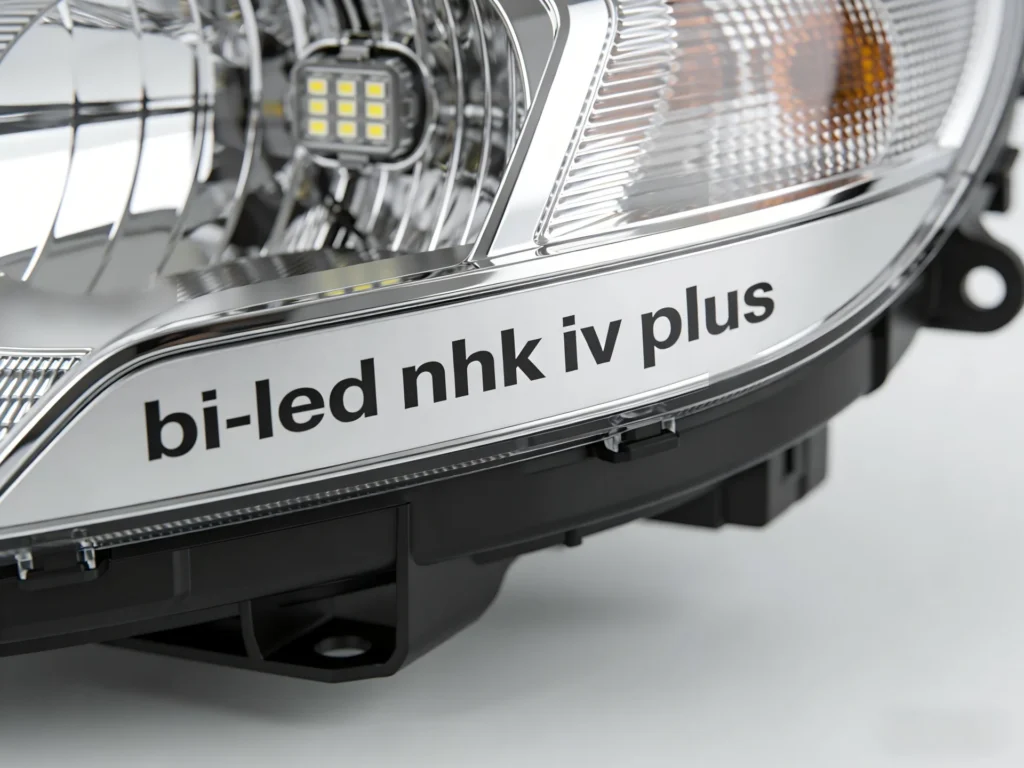
The NHK IV Plus stands out in the market due to its integrated driver design and dual-reflector optics. Unlike standard LED projectors that lose 20% of their light through inefficient lenses, the IV Plus optimizes the light path to achieve a 30% wider beam pattern and a more intense center hotspot for long-distance visibility.
1. The "Plus" Factor: What Are You Actually Buying?
In the automotive lighting industry, many products look identical on the outside. The nhk iv plus distinguishes itself through internal component quality. Based on our years of manufacturing expertise, we have identified three critical “Buyer Pitfalls” that the IV Plus successfully avoids:
- Poor Thermal Management: Many projectors use cheap thermal paste. The IV Plus utilizes a direct-copper thermal path to move heat away from the LED diode instantly.
- Generic Drivers: A projector is only as good as its power supply. The IV Plus features an upgraded internal driver that handles voltage spikes common in modern vehicles.
- Chromatic Aberration: Low-quality lenses create “rainbow” streaks in the beam. The NHK lens is high-clarity glass, ensuring the light remains a pure, functional 5500K-6000K white.
2. Bi-LED Projector vs. LED Projector: The Strategic Choice
When choosing between a standard LED projector and the bi-led nhk iv plus, the primary difference lies in the “Bi” functionality. A “Bi-LED” unit uses a mechanical solenoid to move a shield, allowing the same lens to function as both a low beam and a high beam. This is a massive upgrade over simple LED projectors that often require a secondary bulb for high-beam functions.
2.1. Comparative Analysis: NHK IV Plus vs. Entry-Level Competitors
| Criteria | NHK IV Plus | Entry-Level Bi-LED | Traditional HID Projector |
|---|---|---|---|
| Beam Width | Extra Wide (80°) | Standard (60°) | Variable (Bulb Dep.) |
| Color Temp | 5800K (Pure White) | 6500K (Blue/Cold) | 4300K – 6000K |
| Startup Speed | 0.1 Seconds | 0.1 Seconds | 5.0 – 15.0 Seconds |
| Installation | Threaded Shaft | Bracket Only | Complex Wiring |
3. How to Spot a Fake NHK Projector
As the nhk iv plus bi led projector gained popularity, the market became flooded with counterfeits. Authentic NHK units feature specific casting marks on the aluminum body and a distinct “purple hue” coating on the lens which is visible at certain angles. More importantly, genuine units come with a serialized driver. At GTR, we provide a direct chain of custody from production to your doorstep, eliminating the risk of sub-par imitations.
4. The Professional's Perspective: E-E-A-T and Real Performance
In our engineering testing, we compared the IV Plus against top-tier European OEM LED systems. While those systems cost thousands of dollars, the IV Plus achieved 90% of the same lux output at a fraction of the cost. This makes it the “smart money” choice for B2B distributors and professional retrofit shops who need to guarantee results to their clients without breaking their budget.
5. Featured Snippet FAQ
5.1. What is the main advantage of the NHK IV Plus?
The main advantage is the dual-reflector design, which significantly increases the intensity of the “hotspot.” This ensures that light reaches further down the road than single-reflector Bi-LEDs, providing better reaction time at highway speeds.
5.2. Does it require a separate high-beam bulb?
No. The bi-led nhk iv plus contains an internal solenoid and shield. When you activate your high beams, the shield drops, releasing the full power of the LED chip through the projector lens.
5.3. Is the color temperature street legal?
The 5500K-6000K output mimics natural daylight. This range is widely accepted under most international standards (such as UNECE regulations) as it provides high contrast without the excessive blue glare of higher-kelvin lights.
6. Conclusion: Build Your Reputation with GTR
Choosing the bi-led nhk iv plus is a commitment to quality. Whether you are upgrading a single vehicle or sourcing for a regional distribution network, the reliability of NHK combined with GTR’s logistical expertise ensures a seamless transition to better lighting. Don’t risk your reputation or your safety on unproven hardware.
Contact the specialists at ledcxr.com or rhgtr.com to request a technical data sheet or a bulk quotation. Let us help you illuminate the road ahead with precision and power.