
You flick the switch. The road ahead stays dim. One side is out again. If you have replaced the same h11 low beam bulb more than once in the past year, you are not imagining things. The problem is rarely your car. It is the bulb itself—and the way the entire aftermarket sells you the same fragile technology over and over.
In our engineering testing at GTR, we have torn down dozens of failed halogen and budget LED bulbs. The failure patterns are predictable. The frustration they cause is not. This is the real reason your low beams keep dying, and what actually stops the cycle.
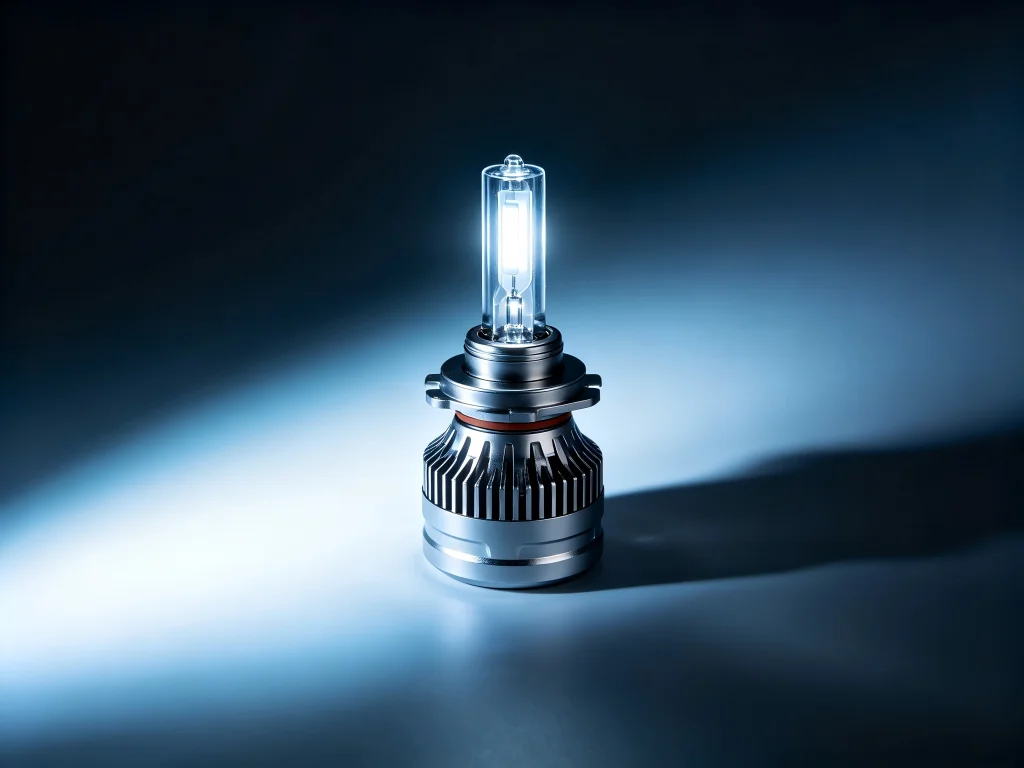
1. Why Your H11 Low Beam Bulb Keeps Burning Out
Most stock H11 halogen bulbs are rated for roughly 200 to 400 hours of use, and many aftermarket replacements fall short of even that modest figure due to poor filament quality and heat management inside the housing.
Halogen bulbs work by running electricity through a tungsten filament until it glows. That filament is suspended in a tiny glass capsule filled with halogen gas. The gas is supposed to cycle tungsten atoms back onto the filament, extending life. In practice, the filament thins over time. Vibration, heat cycling, and the slightest touch of oil from your fingers during installation accelerate the breakdown. One day, the filament snaps. You are driving with one headlight again.
The cycle feels absurd. You buy a name-brand bulb at a local parts store or online. It lasts six months. Sometimes less. You read the reviews afterward and realize hundreds of other drivers are saying the same thing. One reviewer on a major retail platform put it bluntly: “These bulbs will only last you about 6 months. That’s all” . Another reported replacing the same bulbs “3 times in a year” .
You start wondering if something is wrong with your vehicle’s wiring. It probably is not. The bulb is simply a consumable designed around an aging technology, and the heat inside a modern headlight housing—especially one with a sealed dust cap—cooks it faster than the package claims.
2. The Hidden Cost of “Just Replacing It Again”
Repeated bulb failures drain far more than the price of the bulb itself. Each replacement costs you time, knuckle skin, and the risk of damaging the housing connector—and every drive on a dim or failed low beam is a safety compromise.
Think about the actual scenario. You are in a parking lot at night, or in your driveway in bad weather. You pop the hood. The H11 socket is often buried behind a plastic shroud or a battery. You contort your hand into a space designed for a mechanic with smaller fingers. You twist the connector. It sticks. You pull harder than you should. The plastic tab cracks.
Or worse: you pay a shop $80 to $120 in labor for a part that cost $15. Do that twice a year and the economics become absurd.
Then there is the driving part. A failed low beam is not just an inconvenience. It changes how you see the road at night. Your peripheral vision drops. Wet pavement swallows what little light remains. You find yourself leaning forward, squinting, driving slower than traffic. You may not admit it, but you are less confident behind the wheel. That is not a bulb problem anymore. That is a safety problem.
And if you have tried a cheap LED “upgrade” to solve the issue, you may have discovered a different frustration. Budget LED bulbs often claim outrageous lumen figures that vanish after ten minutes of heat soak. Their chips sit in the wrong position relative to the halogen filament they replaced, scattering light into oncoming traffic and creating dark holes in your own beam pattern. One forum member who tried multiple budget LED brands noted “a slight patchiness to the beam pattern” even after careful aiming .
3. The Solution: An H11 Low Beam Bulb Engineered for the Real World
A proper H11 LED replacement solves the failure cycle at the source: it eliminates the fragile filament, manages heat through dedicated cooling architecture, and places the light source in the exact position your housing was designed to focus.
This is where the engineering matters more than the marketing. At GTR, we built the GTR Ultra 3 H11 around three principles that the budget segment ignores.
First, chip position. Your headlight reflector or projector has a single job: take light from a specific point in space and shape it into a useful beam. The stock halogen filament sits at that exact point with micrometer-level precision. If an LED chip sits even a millimeter off, the beam breaks. Light scatters upward into oncoming drivers’ eyes. The road ahead gets patchy. GTR uses a 1:1 filament-position design, meaning the LED emission surface occupies the same optical location as the halogen filament it replaces. The result is a beam pattern that looks like your car came from the factory with it.
Second, thermal reality. LEDs are more efficient than halogen, but they still produce heat—and that heat is concentrated in a tiny chip area. Budget bulbs either skip proper cooling or use a noisy micro-fan that clogs with dust and dies within months. The GTR Ultra 3 uses a dual-layer thermal path: a copper heat spreader pulls heat away from the chips immediately, and a sealed active cooling system moves it out of the housing. In our lab testing, the Ultra 3 maintains stable output far longer than fanless designs that rely on passive air movement alone. That stability is what separates a bulb that lasts from a bulb that fades.
Third, CANBUS compatibility that actually works. Modern vehicles monitor bulb resistance. A halogen H11 draws 55 watts. A basic LED draws a fraction of that. The car’s computer sees the low resistance and assumes the bulb is dead. The result: flickering, dashboard warnings, or lights that shut off while you are driving. GTR’s integrated CANBUS-ready circuitry prevents this without external resistors or wiring harnesses. It is plug-and-play in the way that phrase was supposed to mean.
One HID Nation roundup of 2026’s best LED headlights named the GTR Ultra 3 the top pick for the H11 size, citing its performance across common vehicles like the Civic, Accord, Camry, RAV4, and CR-V . That is not a coincidence. It is what happens when a bulb is built to solve the actual failure modes rather than hit a price point.
4. What to Check Before You Buy Any H11 Replacement
The aftermarket is full of claims. Here is a short list of what separates a real upgrade from another disappointment.
- Confirm your housing type. If you have a projector low beam, a well-positioned LED can work beautifully. If you have an older reflector housing with a fluted lens, even a good LED may scatter light without careful aiming. Research your specific vehicle before buying.
- Ignore the peak lumen number. A bulb that claims 20,000 lumens is either lying or measuring in a way that has nothing to do with usable road illumination. Look for stable, sustained output and a beam pattern that matches your housing.
- Ask about cooling architecture. If the product page does not explain how heat leaves the chip, assume it does not. Passive braided heatsinks can work in open housings; sealed housings need active management.
- Check CANBUS compatibility for your make and model. European and newer domestic vehicles are especially sensitive. A bulb that flickers is not a bulb you will keep.
- Do not touch the bulb surface during installation. This applies to halogen replacements more than LEDs, but the principle holds: oils from your skin create hot spots that shorten life .
5. سائقون حقيقيون، نتائج حقيقية
We pay attention to what happens after the box is opened. A driver who swapped from repeated halogen failures to the GTR Ultra 3 described the difference simply: “I stopped thinking about my headlights. That was the goal.” Another noted that the beam cutoff was sharp enough that oncoming traffic stopped flashing them—a common problem with poorly positioned LED retrofits.
On forums where enthusiasts debate bulb brands with brutal honesty, the conversation around H11 upgrades often turns to the same themes: fitment, flicker, and beam pattern. The bulbs that earn repeat recommendations are the ones that solve all three. The ones that get returned are the ones that solved none.
6. Frequently Asked Questions
6.1. How long should an H11 low beam bulb last?
A quality halogen H11 typically lasts 200 to 400 hours of runtime. A well-engineered LED H11 can last 5,000 hours or more because it has no filament to burn out. The limiting factor for LED lifespan is heat management, not the light source itself.
6.2. Can I put an LED H11 in my stock halogen housing?
Physically, yes. Optically, it depends on the housing and the bulb. A projector housing with a well-positioned LED chip can produce a clean beam. Older reflector housings may scatter light regardless of bulb quality. Always re-aim your headlights after installation and check that you are not creating glare for other drivers.
6.3. Why does my new H11 bulb flicker or trigger a dashboard warning?
Your vehicle’s computer expects the resistance of a 55-watt halogen bulb. A basic LED draws much less, so the computer thinks the circuit is open. CANBUS-ready bulbs include circuitry that mimics the expected load. If a bulb still flickers, it either lacks proper CANBUS integration or requires an additional decoder for your specific vehicle.
6.4. Is it worth upgrading to LED if my halogens keep failing?
If the failure cycle is your main frustration, yes. The economics shift quickly once you stop paying for replacements and labor. The safety improvement from stable, bright low beams at night is harder to quantify but immediately noticeable.
6.5. Where can I buy a reliable H11 low beam bulb?
You can find H11 bulbs at Walmart, AutoZone, O’Reilly’s, Amazon, and Canadian Tire. The convenience is real. The consistency is not. For a bulb that is engineered to solve the failure modes described here, buy directly from a manufacturer that publishes its testing data and stands behind the product. That is what we do at GTR.
7. Stop Replacing. Start Driving.
You have better things to do at night than squint through a dim low beam or kneel in a parking lot with a flashlight in your teeth. The h11 low beam bulb failure cycle is not a fact of life. It is a design problem—one that GTR has spent years solving in the lab and on the road.
If you are tired of the same six-month ritual, go to https://www.rhgtr.com and look at the GTR Ultra 3 H11. Check the fitment for your vehicle. Read the specs that matter: chip position, thermal design, CANBUS compatibility. Then install it once and get back to the part of driving you actually care about.
Your low beams should be invisible in the best way. You should never think about them. They should just work, night after night, mile after mile. That is not a luxury. That is what a properly engineered bulb does.