
You are about to spend money on an h7 headlight bulb. The options are overwhelming. Halogen. LED. Cheap kits. Premium brands. Marketing claims that sound impressive but mean nothing. This guide cuts through the noise. It will tell you exactly what matters, what does not, and how to avoid the mistakes that cost drivers hundreds of dollars in wasted upgrades.
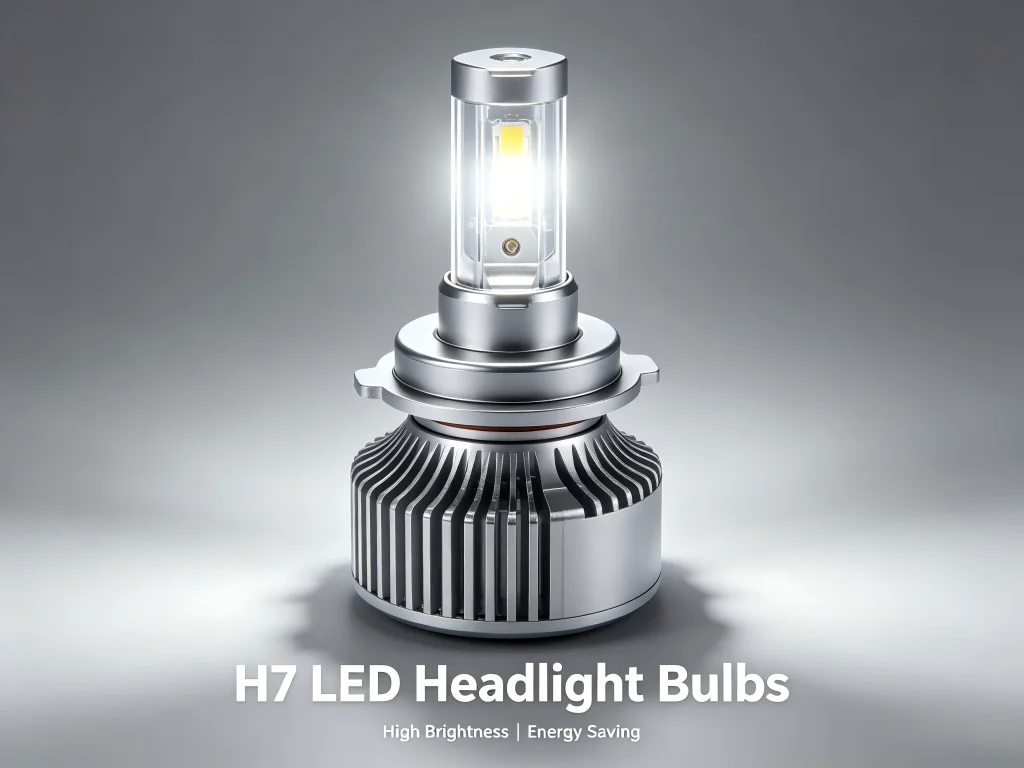
1. H7 Headlight Bulb Fits What Cars? Understanding the Basics
H7 is a standardized bulb base (PX26d) used by a massive range of vehicles from European, Asian, and American manufacturers. It is a single-filament design, meaning it serves one function per housing — typically low beam or high beam, but not both simultaneously.
Unlike the H4 bulb, which combines high and low beam in a single unit, H7 systems use separate bulbs for each function. This distinction matters because you cannot swap an H4 for an H7, or vice versa. Your vehicle’s headlamp housing dictates which bulb you need .
Common H7 applications include vehicles from Audi, BMW, Mercedes-Benz, Volkswagen, Ford, Honda, Hyundai, and many others . If you are unsure, check your owner’s manual or the labeling on your existing bulb base.
2. Halogen vs. LED: The Real Differences That Matter
The choice between upgrading to LED or sticking with halogen comes down to four factors: brightness, beam control, lifespan, and compatibility.
2.1. Brightness and Color Temperature
A standard halogen H7 produces roughly 1,000 to 1,500 lumens with a color temperature around 3200K — a warm, yellowish light . A quality H7 LED bulb can produce 3,000 to 4,000 raw lumens at 6000K, which closely mimics daylight .
But raw lumens can be misleading. What matters is effective lumens — the light that actually reaches the road in a usable beam pattern. A poorly designed LED with 8,000 raw lumens but terrible beam control may put less useful light on the road than a well-designed bulb with 3,000 lumens.
2.2. Lifespan and Cost of Ownership
A halogen H7 bulb lasts roughly 450 to 550 hours . A quality LED bulb can last 50,000 hours or more . Over five years of typical driving, you might replace your halogens four or five times. The LED is a one-time purchase.
Cheap LED kits, however, often fail within months. Fan bearings seize. Driver circuits overheat. Cheap chips degrade rapidly. The upfront savings evaporate when you are buying replacements twice a year.
2.3. CANBUS and Electrical Compatibility
This is where most LED upgrades fail. Modern vehicles monitor bulb resistance to detect failures. An LED draws far less power than a halogen, which triggers dashboard errors and flickering in many cars .
Some manufacturers include external resistors to trick the system. These resistors generate significant heat — sometimes exceeding 100°C — which can damage nearby plastic components inside the headlamp housing .
The proper solution is a bulb with integrated CANBUS-compatible driver electronics that communicate correctly with the vehicle’s system without generating excessive heat.
| Criteria | Premium Halogen (e.g., Philips WhiteVision) | Budget LED Kit | GTR H7 LED Ultra Series |
|---|---|---|---|
| درجة حرارة اللون | Up to 3700K | 6000K–6500K (Often Overstated) | 6000K (Accurate, Stable) |
| Effective Lumens | ~1,500 LM | Variable, Often Below Claims | 3,350 LM (Measured) |
| العمر الافتراضي | ~450 Hours | Months to 2 Years | >50,000 Hours |
| Beam Pattern | OEM Quality | Often Scattered | 1:1 Filament Replica, Adjustable |
| إدارة الحرارة | Passive (Glass) | Cheap Fan or Passive | Active + Thermal Protection Circuit |
| CANBUS | N/A | External Resistors (Heat Risk) | Integrated Driver Electronics |
3. The Six Buying Criteria That Actually Matter
Forget lumen numbers printed in massive fonts. Here is what you should evaluate before spending money.
- Filament Positioning Accuracy. Does the LED chip sit exactly where the halogen filament would? If not, the beam pattern will be wrong. Ask for specs or test data showing the chip position relative to the base flange.
- Thermal Design. Passive heat sinks work for low-power applications. For anything above 25 watts per bulb, active cooling (fan or liquid) is necessary. Check for a thermal protection circuit that prevents overheating damage.
- Driver Quality. The LED driver is the electronic brain that regulates current and manages CANBUS communication. Cheap drivers cause flickering, premature failure, and error codes.
- Adjustability. A rotatable collar allows you to fine-tune the beam pattern after installation. Without it, you are stuck with whatever alignment the factory provides.
- Waterproof Rating. Headlamp housings are not sealed environments. Condensation happens. Look for an IP65 or higher rating.
- Warranty and Support. A company that stands behind its product offers more than 30 days. GTR provides a lifetime warranty on Ultra Series bulbs because we know they are engineered to last .
4. Real Driver Experiences: What the Reviews Reveal
Online reviews tell a consistent story. Drivers who buy cheap LED kits report the same problems repeatedly: flickering, error codes, poor beam patterns, and premature failure. One eBay reviewer of a budget kit wrote: “Advertised as super bright bulbs and they’re not very bright at all. Even when using as high beams with a resistor it’s the same brightness. Disappointing” .
Another reported: “Headlights are not as bright as described, and they keep malfunctioning I’ll be driving and they will just go dim I could barely see the road” .
Drivers who invest in properly engineered bulbs tell a different story. One Mercedes C63 AMG owner noted: “My Mercedes C63 AMG has a very bad temperament with LEDs I used from other companies. Auxito has been the only ones that didn’t burn out in a few weeks or give me bulb out errors” . That level of compatibility does not happen by accident. It comes from engineering drivers that communicate correctly with demanding European electrical systems.
5. الأسئلة المتداولة
5.1. Are 100W H7 bulbs safe to use?
No. A true 100W bulb exceeds the design limits of most headlamp housings and wiring. Heat output at that level can melt connectors and damage reflectors. “100W” marketing is often meaningless — it refers to “equivalent” output, not actual power draw .
5.2. Can I use an H7 LED bulb in a projector housing?
Yes, but beam alignment is even more critical in projector housings. A poorly positioned LED will scatter light through the projector lens, creating glare and poor road illumination. GTR’s adjustable collar helps achieve proper alignment in projector systems.
5.3. Do I need to replace both bulbs at once?
Absolutely. Light output degrades gradually, and mismatched bulbs create uneven illumination. Always replace in pairs for symmetric beam performance .
5.4. Will LED bulbs void my vehicle warranty?
In most regions, replacing a consumable bulb does not void the vehicle warranty. However, if the LED causes damage to the electrical system or headlamp housing, that damage may not be covered. Properly designed bulbs with integrated drivers minimize this risk.
6. Make the Decision That Protects Your Night Vision
The road does not care about marketing claims. It cares about light — focused, reliable, properly aimed light that shows you what you need to see before it is too late.
GTR’s H7 LED bulbs are engineered for drivers who are tired of compromises. Visit https://www.rhgtr.com to see the full range and find the solution that actually works for your vehicle.