
1. Introduction: Illuminating the Road Ahead with H11 55W LED Headlight Bulbs
Driving at night or in poor weather conditions demands clear, reliable vision. For years, the yellowish glow of halogen headlights was the standard, but it often left drivers wanting more—more light, more clarity, and more safety. The automotive lighting landscape has been revolutionized by LED technology, offering a transformative upgrade that is both powerful and practical. At the forefront of this upgrade for countless vehicles is the h11 55w led headlight bulb. This specific bulb represents a direct, plug-and-play path to dramatically improved road illumination, turning a routine drive into a safer, more confident experience. This article will guide you through everything you need to know about these bulbs, from their technical makeup and undeniable benefits to how to select and install the perfect set for your car.
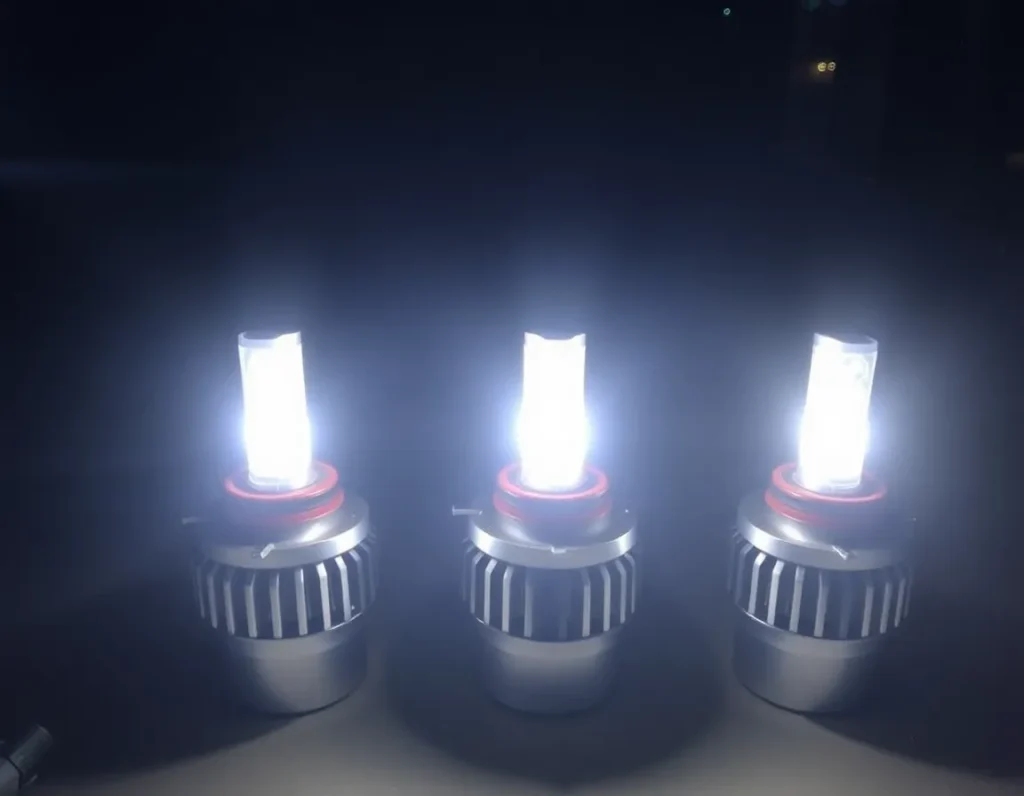
2. What is an H11 55W LED Headlight Bulb? A Technical Breakdown
An H11 55W LED headlight bulb is a modern lighting component designed to replace a traditional halogen bulb in a vehicle’s headlight assembly. The designation “H11” refers to the bulb’s base type—a specific two-pin connector that ensures it fits into headlight housings engineered for the H11 halogen bulb. This plug-and-play compatibility is a key feature, allowing for a straightforward upgrade without modifying the vehicle’s wiring.
The “55W” indicates the bulb’s power consumption, measured in watts. Crucially, this 55W rating is typically equivalent to the wattage of the original halogen bulb it replaces (e.g., a standard H11 halogen is also 55W). This means the LED draws a similar amount of electrical current from your car’s system, preventing potential overloads on the wiring or fuse box. However, the similarity ends there. While a halogen bulb uses a heated filament to produce light, an LED (Light Emitting Diode) generates light through electroluminescence as electrical current passes through a semiconductor microchip. This fundamental difference in technology is what unlocks superior performance.
A modern H11 LED bulb is a sophisticated assembly. It consists of a high-lumen LED chip (or an array of chips, often on a COB – Chip-on-Board – design) mounted on a metal heat sink. Managing heat is critical for LED longevity; the heat sink, often made of aluminum with fins, passively draws heat away from the diode. Many bulbs also incorporate a small cooling fan for active thermal management. The light from the chips is then focused through a primary lens or reflector cup designed to mimic the filament position of the original halogen, which is essential for achieving a proper beam pattern that doesn’t blind other drivers. The entire unit is housed in a compact body that connects to the standard H11 base.
3. H11 55W LED vs. Halogen: A Comprehensive Performance Comparison
Comparing H11 LED bulbs to their halogen counterparts is a study in stark contrasts across every performance metric. The upgrade is not incremental; it’s transformative.
3.1. Light Output and Color
Halogen bulbs produce a warm, yellowish light typically in the 3000K (Kelvin) color temperature range. Their output is often measured around 1,000 to 1,300 lumens. An H11 55W LED bulb, in contrast, can produce between 6,000 to 12,000 lumens per pair, flooding the road with significantly more light. Furthermore, LEDs offer a cleaner, whiter light, usually between 6000K (pure white) and 6500K (cool white with a slight blue tint). This color temperature is closer to natural daylight, which reduces eye strain and improves contrast, making it easier to distinguish objects, road markings, and potential hazards.
3.2. Energy Efficiency and Lifespan
This is where LED technology truly shines. While both may be rated at 55W, the LED produces far more light per watt (higher luminous efficacy). A halogen bulb wastes about 80% of its energy as heat. LEDs are far more efficient, converting a greater portion of energy into visible light. The lifespan difference is monumental. A quality halogen bulb may last 450 to 1,000 hours. A well-engineered H11 LED bulb can last 30,000 to 50,000 hours—effectively the lifetime of the vehicle in most cases.
3.3. Beam Pattern and Safety
A common concern with LED upgrades is glare. Halogen housings are designed to reflect light from a specific filament point. Premium LED bulbs are engineered with chips placed to emulate that exact filament location, paired with precisely aligned secondary optics, to produce a clean, sharp cutoff line that matches or improves upon the OEM halogen pattern. This ensures the light is projected onto the road and not into the eyes of oncoming traffic. The instant-on capability of LEDs (they reach full brightness in microseconds) also provides a critical safety advantage over halogens, which have a slight delay.
3.4. Durability and Vibration Resistance
Halogen bulbs have a fragile, thin tungsten filament that can break from shock or vibration. LEDs are solid-state devices with no moving parts or fragile elements, making them inherently more resistant to the bumps and vibrations of daily driving.
4. Key Benefits of Upgrading to H11 55W LED Headlight Bulbs
Upgrading to an H11 55W LED headlight bulb delivers a suite of advantages that enhance driving safety, comfort, and vehicle aesthetics.
- Superior Nighttime Visibility: The dramatic increase in lumen output and whiter light illuminates a wider and longer stretch of road, revealing details, animals, and obstacles much earlier, giving you more time to react.
- Enhanced Safety: Improved visibility is the cornerstone of proactive safety. The crisp, white light improves depth perception and color recognition. The instant-on feature is particularly beneficial for daytime running lights or when using headlight flashes to signal.
- Long-Term Value and Reliability: While the initial cost is higher than halogen, the extraordinary lifespan of LEDs means you may never need to replace them again. This eliminates the recurring cost and hassle of bulb changes, offering excellent long-term value.
- Modern Aesthetic Appeal: The bright white light gives your vehicle a contemporary, high-end look, similar to the lighting found on new luxury and performance cars.
- Reduced Load on the Electrical System: High-quality 55W LED bulbs often draw less actual current than their halogen equivalents despite the same wattage rating, putting less strain on your vehicle’s alternator and battery.
- Improved Driving Comfort: Reduced eye strain from the daylight-like color temperature makes long night drives less fatiguing, allowing you to stay alert and focused.
5. How to Choose the Best H11 55W LED Bulb: A Buyer's Guide
Not all H11 LED bulbs are created equal. Selecting the right pair requires attention to several key factors to ensure optimal performance, legality, and longevity.
5.1. Lumen Output and Color Temperature
Look for a reputable brand that publishes realistic lumen ratings (8,000-12,000 lumens per set is a strong range). Be wary of exaggerated claims. For color temperature, 6000K is the sweet spot for most drivers, offering pure white light with excellent visibility. 6500K has a slight blue tint, while 5000K is a warmer white. Avoid extremely high Kelvin ratings (e.g., 8000K+) as they produce excessive blue light that can scatter in fog or rain and may not be street-legal.
5.2. Heat Management System
This is the most critical factor for longevity. Look for bulbs with a robust heat sink, typically made of aviation-grade aluminum with large fins. Many high-performance bulbs combine this with a quiet, high-RPM fan (fan-cooled) or advanced passive systems with copper straps or liquid cooling. Effective heat dissipation prevents the LED chips from overheating and degrading prematurely.
5.3. Chip Technology and Beam Pattern
Bulbs using top-tier LED chips (like Philips Lumileds, CREE, or OSRAM) generally offer better performance and consistency. Crucially, the bulb design must focus the light correctly. Look for models that advertise a “perfect beam pattern,” “CANbus ready,” or “error-free” operation. Some feature rotatable bases or adjustable lock rings to fine-tune the chip orientation within your specific housing for the cleanest cutoff.
5.4. Build Quality and Warranty
Examine product images for solid construction. The housing should be sturdy, and all connections should be secure. A lengthy warranty (2-5 years) is a strong indicator of the manufacturer’s confidence in their product’s durability.
5.5. Canbus Compatibility
Modern vehicles with computer-controlled electrical systems (CANbus) may interpret the low power draw of LEDs as a “bulb out” error, causing flickering or dashboard warnings. Ensure the bulbs are “CANbus ready” or include built-in decoders/resistors to prevent these issues.
6. Step-by-Step Installation Guide for H11 55W LED Headlight Bulbs
Installing H11 LED bulbs is generally a straightforward DIY project. Always consult your vehicle’s owner manual for specific instructions regarding headlight access.
Tools & Materials Needed: New H11 55W LED bulb kit, clean gloves (optional, to prevent oils from your skin touching the bulb housing), and a screwdriver or socket set if needed for access.
- Preparation: Park your vehicle on a level surface, turn off the engine, and engage the parking brake. Open the hood and locate the back of the headlight assembly. Allow the existing halogen bulbs to cool completely if the headlights were recently on.
- Access the Headlight Assembly: Remove the dust cover or access panel at the rear of the headlight. This is usually a rubber or plastic cap that twists or pulls off. For some vehicles, you may need to remove the battery or washer fluid reservoir for better access.
- Remove the Old Halogen Bulb: Disconnect the power connector by pressing the clip and pulling it straight off. Then, release the bulb retaining spring or clip (usually a wire clip that you squeeze or push to unlock). Carefully remove the old H11 halogen bulb without touching the glass. Set it aside.
- Install the New LED Bulb: Important: Handle the new LED bulb by its base or heat sink, avoiding the plastic lens and cooling fan. Insert the LED bulb into the headlight socket, ensuring the tabs align correctly. Secure it with the original retaining clip or spring until it is firmly locked in place.
- Orientation and Cable Management: Many LED bulbs need to be rotated within the base so that the LED chips are positioned horizontally (typically at 3 and 9 o’clock) to produce the correct beam pattern. Refer to the bulb’s instructions. Neatly tuck any driver boxes or excess wiring into the headlight cavity, ensuring nothing interferes with the cooling fan or moving parts.
- Reconnect and Test: Reconnect the power connector to the LED bulb. Before replacing the dust cover, turn on the headlights to test both low and high beams (if applicable). Verify the bulbs are working and that the beam pattern looks correct against a wall. Check for any error messages on your dashboard.
- Finalize Installation: Once confirmed working, carefully place all wiring inside the headlight assembly and reseal it with the dust cover. Ensure the cover is snug to prevent moisture ingress. Repeat the process for the other headlight.
- Aim Your Headlights (Critical Step): LED bulbs can sometimes change the headlight aim. For safety and legality, it is highly recommended to have your headlights professionally aimed after installation, or follow your vehicle’s manual to adjust them yourself against a flat wall in the dark.
7. Common Issues and Troubleshooting for H11 LED Installations
Even with a careful installation, you might encounter a few hiccups when upgrading to H11 55W LED headlight bulbs. Understanding these common issues and their solutions will ensure your upgrade delivers a seamless, long-lasting performance.
7.1. Flickering or Hyperflashing
This is one of the most frequent problems. Flickering occurs when the vehicle’s electrical system, expecting the higher resistance of a halogen filament, interprets the low power draw of the LED as a “blown bulb.” Hyperflashing (rapid turn signal blinking) is a related issue for vehicles using H11 bulbs as front turn signals. The solution is often a CANbus decoder or error code eliminator. This small device, sometimes integrated into the bulb’s wiring, adds a simulated load to the circuit, tricking the car’s computer into thinking a halogen bulb is still installed. Ensure the decoder is compatible with your specific vehicle model and bulb type.
7.2. Bulb Not Turning On or Intermittent Operation
If one or both bulbs fail to illuminate, first double-check that the LED bulb is fully seated and locked into the H11 socket. The polarity of LED bulbs is critical; unlike halogens, they only work when the positive and negative wires are connected correctly. If the bulb doesn’t light, try rotating it 180 degrees in the socket and reconnecting it. Also, inspect the OEM connector and wiring for any damage or corrosion. Loose connections at the driver box or between the bulb and its base can also cause intermittent failure.
7.3. Excessive Heat or Fan Noise
While LEDs run cooler than halogens, the heat they do generate is concentrated at the bulb’s base. A built-in cooling fan or passive heatsink is essential to manage this. If you hear a loud or rattling fan noise, it could indicate a faulty fan or obstruction. Ensure the fan has adequate clearance inside the headlight housing and that no wiring is touching the fan blades. A fan that stops working will lead to rapid LED degradation and failure. For heatsink models, verify that the fins are not pressed against any plastic components that could melt.
7.4. Poor Beam Pattern or Glare
A scattered or improperly focused beam pattern, often causing glare for oncoming drivers, is typically not a bulb failure but an installation or compatibility issue. The LED chips must be aligned precisely to mimic the halogen filament’s position. Many H11 LED bulbs are designed to be rotated within the socket to achieve the correct “clocking” orientation where the LED chips sit at the 3 and 9 o’clock positions. Refer to the bulb’s manual for the correct orientation. If properly clocked and the glare persists, the bulb’s design may not be optimal for your specific headlight housing reflector or projector bowl. In such cases, professional aiming is not just recommended but necessary to minimize hazardous glare.
7.5. Dashboard Error Messages
Modern vehicles with a bulb-out warning system will often display a message on the dashboard. Like flickering, this is due to the lower current draw. A quality CANbus-compatible bulb or a separate decoder/resistor kit is the standard fix. It’s important to address these errors, as a persistent warning light could mask other vehicle system alerts.
8. Legal and Safety Considerations for Aftermarket LED Headlights
Upgrading your lighting involves a responsibility to other road users. While an H11 55W LED headlight bulb can dramatically improve your visibility, it must be used in a legal and safe manner to avoid creating new hazards.
8.1. Understanding DOT/SAE and ECE Regulations
In the United States, the Department of Transportation (DOT) and the Society of Automotive Engineers (SAE) set the standards for headlight performance. A “DOT compliant” or “SAE compliant” marking suggests the bulb meets specific requirements for beam pattern, luminosity, and color. However, it’s crucial to know that compliance is often self-certified by the manufacturer. In Europe and many other regions, the Economic Commission for Europe (ECE) regulations are the standard, denoted by an “E-mark” on the bulb. The strictest standard is often the ECE R128, which certifies the entire “light source unit” (bulb and housing together). Aftermarket LED bulbs retrofitted into halogen housings rarely, if ever, carry genuine ECE R128 approval.
8.2. The Critical Issue of Headlight Housing Design
Legality and safety hinge not just on the bulb, but on its interaction with the headlight housing. Halogen housings are engineered with a specific focal point—the position of the halogen filament—to project light through the reflector or lens in a controlled, non-glaring pattern. An LED bulb, with a different physical shape and light emission pattern, almost always shifts this focal point. This can cause “hot spots,” dark spots, and excessive scatter that blinds other drivers, even if the beam appears correct from the driver’s seat. Many jurisdictions have laws explicitly prohibiting the installation of any light source not originally intended for the housing, making most LED retrofits into halogen housings technically illegal, regardless of bulb markings.
8.3. Minimizing Glare and Ensuring Proper Aim
Your foremost safety duty is to prevent glare. After installing LED bulbs, having your headlights professionally aimed is non-negotiable. A qualified technician can adjust the vertical and horizontal aim to ensure the cutoff line is sharp and positioned correctly, putting most of the increased light on the road and not in other drivers’ eyes. Regularly check your aim, especially after carrying heavy loads or undergoing suspension work. If you consistently get flashed by oncoming traffic, your headlights are likely misaligned or the bulb/housing combination is inherently flawed.
8.4. State and Local Vehicle Codes
Laws vary significantly. Some states have explicit statutes against blue or certain colored headlights (often limiting color temperature to a white/yellow spectrum, typically under 6000K). Others prohibit any modification that changes the original design of the lighting device. It is your responsibility to check your local vehicle code. Law enforcement can issue citations for non-compliant lighting, and in the event of an accident, non-compliant modifications could potentially affect insurance liability.
9. Maintenance and Care Tips for Your H11 55W LED Bulbs
LED headlight bulbs are famously low-maintenance, but a few simple practices will maximize their lifespan and ensure they perform at their peak for years to come.
9.1. Handling and Cleaning
Always handle LED bulbs by their base or housing, never by the glass dome or the delicate LED chips. Skin oils can create hot spots on the plastic lens or, in rare cases, damage the chip surface. If you need to clean the bulb lens (the part inside the headlight), use 99% isopropyl alcohol and a microfiber cloth, applying gentle pressure. Before reinstalling a bulb, ensure both the bulb base and your vehicle’s H11 socket are clean, dry, and free of debris to guarantee a solid electrical connection.
9.2. Ensuring Adequate Ventilation
The longevity of an LED bulb is directly tied to its operating temperature. The cooling system—whether fan or heatsink—must have room to function. When installing, never force or cram wiring or the driver box in a way that blocks airflow around the heatsink or fan intake/exhaust. Periodically check the back of the headlight assembly to ensure the dust cover is secure but that nothing is obstructing the bulb’s rear components.
9.3. Electrical System Health
While LEDs are less susceptible to voltage spikes than halogens, a healthy vehicle electrical system is still important. If your vehicle has a history of alternator issues or voltage regulator problems, address those before upgrading to any aftermarket electronics, including LEDs. Using a multimeter to check that your headlight circuit is delivering a steady voltage (around 13.5-14.5V with the engine running) is a good practice.
9.4. Seasonal and Long-Term Checks
During routine maintenance, such as oil changes, take a moment to turn on your headlights and visually confirm both low and high beams are working. Look for any signs of condensation inside the headlight housing, as a moist environment can damage the LED driver electronics. If you notice a significant drop in light output or a change in color temperature from one side to the other, it may indicate one bulb is beginning to fail. LEDs typically don’t burn out suddenly; they gradually dim over time.
10. Summary of Key Points
Upgrading to H11 55W LED headlight bulbs represents a significant technological leap forward from traditional halogen lighting. This transition offers a compelling blend of superior illumination, enhanced efficiency, and modern design. The key takeaways from this guide emphasize a balanced approach of appreciating the benefits while respecting the technical and legal nuances of the upgrade.
The performance advantages are clear: LEDs provide a whiter, brighter light that closely mimics daylight, reducing eye strain and improving object detection at night. Their dramatically longer lifespan and lower energy consumption translate to long-term cost savings and reduced environmental impact. However, achieving these benefits requires careful product selection. Prioritize bulbs with robust thermal management (quality fans or large heatsinks), correct beam pattern design for your housing type, and necessary anti-flicker components for your vehicle.
Installation, while generally straightforward, demands attention to detail—proper seating, polarity, cable management, and, most critically, post-installation headlight aiming. The most common post-installation issues, such as flickering or error messages, are usually solvable with the right CANbus-compatible equipment. Ultimately, the user’s responsibility extends to safety and legality. Understanding that most LED retrofits into halogen housings exist in a regulatory gray area is crucial. The imperative is to minimize glare through precise aiming and to choose products designed with proper focus, thereby ensuring your improved vision does not come at the expense of others’ safety on the road.
11. Frequently Asked Questions (FAQ)
11.1. Are H11 55W LED bulbs really plug-and-play?
Physically, yes. They plug into the standard H11 socket. However, “plug-and-play” can be misleading electronically. Many modern vehicles require additional components like CANbus decoders to prevent hyperflashing or dashboard errors. Furthermore, achieving the correct beam pattern often requires rotating the bulb to a specific orientation within the socket, which is a step beyond simply plugging in a halogen.
11.2. Will H11 LED bulbs melt my headlight housing?
It is highly unlikely with a properly designed LED bulb. Halogen bulbs emit intense infrared radiation (heat) in their light output, which is why headlight housings are built to withstand it. LEDs produce light with almost no IR, and the heat they do generate is sunk away from the housing via a heatsink or fan. In fact, LEDs generally put less thermal stress on the headlight’s plastic components than halogens do.
11.3. Why are my new LED bulbs not as bright as expected?
Several factors could be at play. First, perceived brightness is tied to color temperature; a 6000K bulb may look “crisper” but can actually have lower measurable lumens (total light output) than a 5000K bulb. Second, a poor beam pattern can scatter light inefficiently. Third, ensure you purchased bulbs from a reputable brand that provides accurate lumen ratings, as some manufacturers exaggerate specifications. Finally, dirty or hazy headlight lenses will drastically reduce the output of any bulb.
11.4. Can I use H11 LED bulbs for both low beam and high beam?
This depends entirely on your vehicle’s configuration. The H11 bulb is traditionally a single-filament bulb used for low beams in many applications. Some vehicles use a separate bulb (like an H9 or HB3) for high beams. However, in dual-beam headlight systems that use one bulb for both functions (e.g., an H11 for low and the same bulb at a higher wattage or with a second shutter for high), a dual-beam LED H11 bulb is required. These have two sets of LED chips that activate separately for low and high beam functions. Check your owner’s manual to confirm your car’s setup.
11.5. How long do H11 55W LED headlight bulbs typically last?
Quality LED bulbs are rated for 30,000 to 50,000 hours of operation, which translates to over a decade of normal driving use. This is 20-30 times longer than a standard halogen bulb. Their lifespan is primarily determined by the quality of the driver electronics and the effectiveness of the thermal management system. A bulb that runs cooler will last exponentially longer.
11.6. Is a higher wattage LED bulb (like 80W or 100W) better than a 55W?
Not necessarily. Wattage measures power consumption, not light output. A well-designed 55W LED system can be far more efficient and produce more usable light (lumens) than a poorly designed 100W system. Higher wattage often means more heat, placing greater demand on the cooling system and your vehicle’s electrical system. The focus should be on the lumen output and beam pattern quality, not the wattage rating. The 55W rating is popular as it often matches the electrical draw of the halogen it replaces, helping to avoid canbus issues.