
Elegir bien LED in fog lights is no longer a simple comparison of watts and lumens. Buyers now face replacement bulbs, complete LED modules, projector fog lamps, white and yellow LEDs, fan-cooled and fanless designs, CANbus products, truck-specific kits, and universal auxiliary lights. The wrong choice can be expensive.
This guide takes a purchasing-first approach. Instead of asking which product has the biggest number on the box, we will evaluate what actually matters: beam quality, optical compatibility, thermal stability, fitment, electronics, weather resistance, mounting, and total cost of ownership.
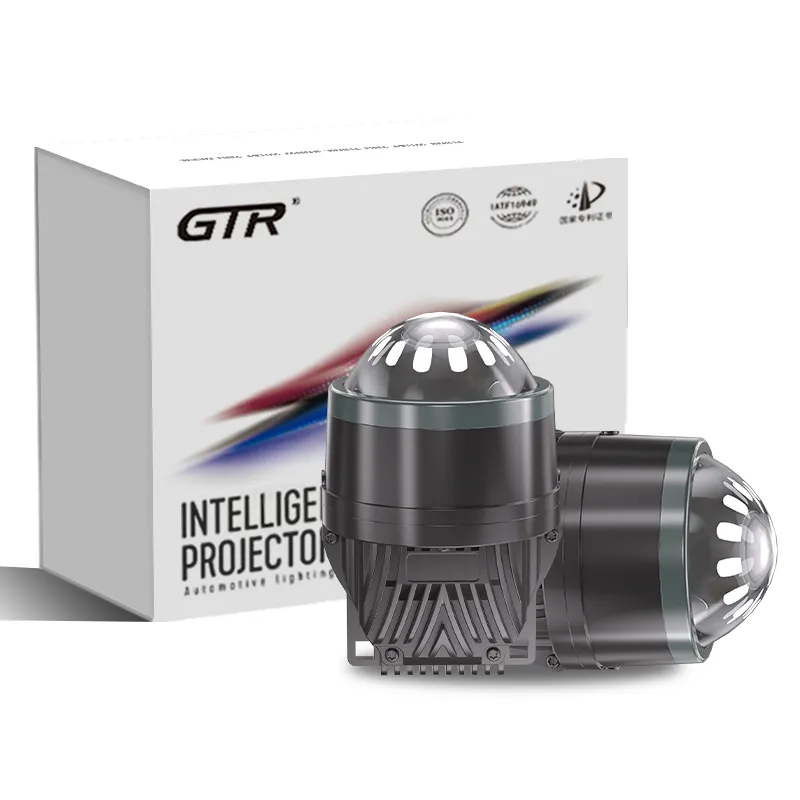
1. What Should You Look for When Buying LED Fog Lights?
Choose LED fog lights based on beam pattern, housing compatibility, thermal management, color temperature, electrical compatibility, weather resistance, and verified vehicle fitment. Do not select a product from lumen output alone. A controlled low-and-wide beam with stable output usually provides more practical value than extreme brightness with poor optical distribution.
For consumers, this approach prevents a bad purchase.
For wholesalers and distributors, it prevents something more expensive: returns.
2. LED Bulb or Complete LED Fog Light Assembly?
LED replacement bulbs are usually the simplest and lowest-cost upgrade when the existing fog-light housing performs well. Complete LED assemblies provide greater control over optics, sealing, thermal management, and beam design, but they cost more and require precise vehicle or mounting compatibility.
| Option | LED Replacement Bulb | Complete LED Assembly | LED Projector/Auxiliary Module |
|---|---|---|---|
| Cost | Low to Medium | Medium to high | Medium to high |
| Instalación | Usually easiest | Vehicle dependent | May require brackets/wiring |
| Optical Control | Depends on OEM housing | Better design freedom | High when properly engineered |
| Appearance | Mostly OEM | Can modernize vehicle | Highly customizable |
| Vehicle Compatibility | Bulb-specific | Assembly-specific | Mounting-specific |
| Mejor aplicación | Simple halogen upgrade | Factory-style replacement | Trucks, bumpers, off-road builds |
There is an important purchasing lesson here.
Do not assume a complete factory-style LED assembly can automatically replace a halogen assembly.
Some modern vehicles use different wiring, control modules, mounting systems, or vehicle coding between halogen and factory LED versions. A physical fit does not guarantee electronic compatibility.
3. Beam Pattern Should Be Your First Buying Criterion
Lumens are easy to advertise.
Beam quality is harder to fake on a wall.
When evaluating LED bulbs in fog lights, examine how the light is distributed after installation.
A useful fog-light beam should generally:
- Provide broad horizontal coverage
- Keep excessive light away from the driver’s direct eye line
- Illuminate road shoulders effectively
- Avoid large dark zones
- Avoid an extreme foreground hotspot
- Maintain left-right consistency
This is especially important when replacing a halogen filament with LED chips.
A halogen filament is a three-dimensional light source. LED chips have different dimensions and emission characteristics. If their position does not correspond well with the reflector’s focal geometry, the housing may send light where it was never intended to go.
4. Don't Compare LED Fog Lights by Lumens Alone
Suppose Product A advertises 15,000 lumens while Product B advertises 6,000.
Product A sounds better.
But those numbers tell you almost nothing about:
- Where the light lands
- Whether output remains stable when hot
- Whether both lamps produce equal output
- How the output was measured
- Whether the beam creates excessive glare
- How much usable illumination reaches the road
For professional purchasing, request photometric information whenever available.
Lux measurements at defined positions, beam images, thermal tests, and application-specific comparisons can tell you more than a headline lumen number.
5. White vs Yellow LED Fog Lights
| Característica | Cool White LED | Warm White | Selective Yellow |
|---|---|---|---|
| Modern Appearance | Excellent | Bueno | Distinctive |
| Visual Match With LED Headlights | Excellent | Moderado | Low |
| Perceived Contrast in Bad Weather | Depends on application | Bueno | Often preferred |
| Urban Daily Driving | Excellent | Bueno | Bueno |
| Fog/Rain/Dust Focus | Good with proper beam | Very Good | Very Good |
The mistake is treating color temperature as a substitute for optics.
A poorly controlled yellow lamp remains poorly controlled.
A well-designed white fog lamp can outperform it.
Start with beam distribution. Then choose color.
6. Fan vs Fanless LED Fog Light Bulbs
6.1. Fan-Cooled LEDs
A fan can increase airflow across the heat sink, allowing a compact bulb to dissipate more heat.
The trade-off is another moving component.
For protected passenger-car installations, this may be acceptable. For mud, dust, water, or severe-duty applications, buyers should evaluate fan construction and environmental protection carefully.
6.2. Fanless LEDs
Fanless designs use passive heat sinks, conductive structures, braided heat spreaders, or larger metal surfaces.
They eliminate fan failure but still need enough physical area and thermal conductivity to manage heat.
“Fanless” does not automatically mean more reliable.
The entire thermal system matters.
7. Waterproof Ratings: Read Beyond the Marketing
Fog lamps live close to the road.
That exposes them to rain, pressure spray, mud, road salt, dust, temperature cycles, and condensation.
IP ratings can help buyers compare enclosure protection. General background on IP classifications can be reviewed through the International Electrotechnical Commission.
But a high IP number printed on packaging does not guarantee the entire installation is protected.
Inspect:
- Connector sealing
- Cable entry points
- Housing joints
- Breather design
- Driver enclosure
- Lens-to-housing sealing
- Corrosion protection
8. CANbus Compatibility Can Save You a Return
Modern vehicles may monitor lighting circuits.
Replace a halogen bulb with a low-current LED, and the vehicle may interpret the electrical change as a failed bulb.
Possible symptoms include:
- Bulb-out warnings
- Flickering
- Lights switching off
- Intermittent operation
- Error codes
That is why professional buyers should never accept the phrase “CANbus ready” without understanding which vehicles were actually tested.
9. Fitment Matters More Than the Bulb Number
Two bulbs carrying the same nominal base may still have different physical dimensions.
An oversized heat sink can hit a dust cover. A driver box may have nowhere to mount. A connector can interfere with surrounding components.
Before placing a bulk order, check:
- Base dimensions
- Overall bulb length
- Rear heat-sink diameter
- Connector position
- Driver dimensions
- Polarity
- Dust-cover clearance
- Adjustment capability
10. Best LED Fog Lights for Car Applications
For ordinary passenger vehicles, OEM-like integration should normally take priority.
Bueno LED fog lights for car applications should offer controlled beam distribution, compact dimensions, low noise, stable thermal behavior, and straightforward electrical integration.
A giant cooling system and extreme output may be unnecessary.
Packaging efficiency matters because modern engine bays are crowded.
11. Best LED Fog Lights for Trucks
Truck applications change the purchasing priorities.
Para LED fog lights for trucks, we would place greater weight on:
- Vibration resistance
- Housing strength
- Water protection
- Long-duration thermal stability
- Bracket strength
- Wide road coverage
- Serviceability
That is particularly relevant for commercial pickups, agricultural vehicles, work trucks, and vehicles regularly used away from paved roads.
12. Buying LED Fog Lights for Ram 1500
Searching LED fog lights for Ram 1500 is not specific enough to guarantee fitment.
Ram 1500 generations, model years, trims, and lighting configurations vary.
Some earlier configurations can use different bulb specifications depending on whether the fog lamps are mounted horizontally or vertically. Later generations can also have major differences between factory halogen and factory LED configurations.
Therefore, identify the vehicle by:
Year + generation/body style + trim + factory lighting configuration + original bulb/assembly number.
That five-point verification can prevent many purchasing mistakes.
13. Buying LED Fog Lights for F150
The same rule applies when purchasing LED fog lights F150 products.
Do not assume that a product marketed broadly for an F-150 fits every trim or model year.
Check whether you are replacing:
- A bulb inside the original housing
- The complete factory fog-light assembly
- An aftermarket bumper lamp
- An auxiliary lamp mounted separately
Those are four different purchasing problems.
14. LED Fog Lights for Bull Bar: What Changes?
When purchasing LED fog lights for bull bar applications, the lamp becomes only half of the system.
The bracket and mounting position become equally important.
Check mounting height, horizontal spacing, adjustment range, bolt diameter, cable routing, and vibration resistance.
Most importantly, determine whether you actually need a fog beam.
Many compact lights marketed for bumpers produce spot or driving beams. Those can be useful auxiliary lamps but serve a different optical purpose.
15. LED Fog Lights for Ranch Hand Bumper
For LED fog lights for Ranch Hand bumper applications, measure before buying.
Consider:
| Measurement | Why It Matters |
|---|---|
| Opening Width/Height | Determines physical lamp fit |
| Available Depth | Prevents interference behind bumper |
| Mounting Hole Position | Determines bracket compatibility |
| Adjustment Range | Allows correct beam aim |
| Harness Length | Determines wiring practicality |
| Lamp Beam Type | Determines whether output suits fog use |
16. LED Fog Lights for Bike and Motorcycle Applications
Compact dimensions and low current draw make LEDs attractive for motorcycles.
However, LED fog lights for bike applications should be evaluated differently from passenger-car products.
Motorcycle lighting experiences continuous vibration and direct environmental exposure. Brackets should resist loosening, wires need adequate strain relief, and housings should tolerate water exposure.
Weight matters too.
A heavy lamp mounted at the end of a thin crash-bar bracket creates greater mechanical stress during vibration.
17. The Professional Buyer's 10-Point LED Fog Light Checklist
- Verify the application. Never purchase from bulb number alone.
- Check the beam. Ask for real beam-pattern images or photometric data.
- Compare hot output. Initial brightness does not show thermal performance.
- Evaluate LED chip position. Optical geometry matters in reflector conversions.
- Inspect thermal design. Look beyond the words “aviation aluminum.”
- Check electrical compatibility. Test representative vehicles where possible.
- Confirm physical clearance. Measure the complete bulb and driver.
- Review environmental protection. Inspect connectors and sealing, not just the advertised IP rating.
- Check compliance requirements. Regulations vary by country and application.
- Calculate return risk. A cheaper product can become expensive after warranty claims, installation complaints, and replacements.
18. What Should B2B Buyers Test Before Ordering 1,000 Units?
This is where consumer buying guides usually stop too early.
A sample that turns on is not a validated product.
Before committing to a large order, professional buyers should consider testing several samples across representative applications.
18.1. Beam Test
Install the product in the intended housing and compare beam distribution against the original lamp at the same distance and aim.
18.2. Thermal Test
Operate the product long enough to reach thermal equilibrium. Compare stabilized output against initial output.
18.3. Voltage Test
Check performance across the expected automotive voltage range.
18.4. Vehicle Compatibility Test
Test actual target vehicles for flicker, warning messages, startup behavior, and interference.
18.5. Environmental Test
For demanding markets, vibration, temperature cycling, water resistance, and corrosion testing become increasingly valuable.
Based on our manufacturing experience, these tests can reveal problems that are invisible during a showroom demonstration.
19. Por qué los compradores profesionales trabajan con GTR
For distributors, the best LED fog lights are not necessarily the products with the lowest factory price.
The better product is the one that delivers competitive performance while reducing complaints, returns, warranty costs, and fitment confusion.
GTR works with automotive aftermarket distributors, lighting specialists, retrofit chains, wholesalers, and regional brands that need more than an off-the-shelf lamp.
Depending on project requirements, cooperation may include:
- Vehicle-specific lighting development
- Optical and beam-pattern optimization
- LED and driver configuration
- Thermal design
- OEM/ODM programs
- Private-label solutions
- Packaging customization
- Market-specific product planning
- Technical and fitment support
20. FAQ: Buying LED Fog Lights
20.1. What are the best LED bulbs for fog lights?
The best bulb is one that matches the vehicle’s socket and housing, produces a controlled beam, maintains stable output when hot, fits physically, works with the vehicle electronics, and meets applicable regulations. Maximum advertised lumens alone should not determine the purchase.
20.2. How many lumens should LED fog lights have?
There is no universal ideal lumen number because optical efficiency and beam distribution vary. Evaluate road illumination, beam shape, glare control, and stabilized output rather than chasing the highest lumen specification.
20.3. Is 6000K good for fog lights?
6000K can provide a clean white appearance and works well for many general applications. Drivers who frequently encounter severe fog, rain, snow, or dust may also consider warmer white or selective-yellow lighting.
20.4. Are yellow LED fog lights better?
They can provide comfortable perceived contrast in some adverse-weather conditions, but color alone does not make a lamp effective. Optical control remains the primary factor.
20.5. Can LED fog lights be plug and play?
Many replacement bulbs are designed for plug-and-play installation, but physical fit does not guarantee electronic or optical compatibility. Some vehicles may require additional consideration for CANbus monitoring, connectors, coding, or complete LED assemblies.
20.6. Are LED fog lights good for trucks?
Yes. Their efficiency, compact size, and durability can make LEDs suitable for trucks. Severe-duty applications should place extra emphasis on vibration resistance, waterproofing, thermal stability, mounting strength, and beam control.
20.7. Should I buy LED bulbs or a complete fog-light assembly?
Choose replacement bulbs when the original housing is in good condition and a properly matched LED solution is available. Consider a complete assembly when better optics, a different appearance, greater environmental protection, or vehicle-specific integration is required.
20.8. How do wholesalers evaluate an LED fog-light supplier?
Evaluate product consistency, optical performance, thermal testing, electrical compatibility, quality control, customization capability, warranty support, fitment data, production capacity, and the supplier’s ability to solve application-specific problems.
21. Buy the Beam, Not the Box
A spectacular lumen claim can sell the first pair.
Consistent optical performance sells the next thousand.
Whether you need LED fog lights for cars, truck applications, Ram 1500 programs, F-150 applications, bull-bar installations, bumper-mounted lights, motorcycle lighting, or a private-label product range, build your purchasing decision around the complete lighting system.
If you are planning your next automotive lighting product line, send GTR the target vehicle list, market, desired beam characteristics, price segment, and annual volume. Visit https://www.rhgtr.com to explore GTR automotive lighting solutions and discuss an OEM/ODM program built around real applications—not just bigger numbers on a specification sheet.