
1. Introduction : Le grand débat sur les phares – HID vs LED pour les faisceaux de projecteur
For any driver looking to upgrade their vehicle’s nighttime visibility, the central question quickly becomes: which is better, hid or led for projector headlights? This isn’t just a minor accessory choice; it’s a critical decision impacting safety, aesthetics, and performance. Projector headlights, with their sharp, focused beam patterns, have become the modern standard, but their effectiveness is entirely dependent on the light source placed within them. The two dominant technologies vying for supremacy are High-Intensity Discharge (HID, or Xenon) and Light Emitting Diode (LED). Each boasts passionate advocates and distinct technological pedigrees. This guide cuts through the hype and glare to deliver a clear, detailed comparison. We’ll explore the foundational role of the projector housing, break down the science behind each bulb type, and directly compare them across every key metric—from raw lumen output and color temperature to longevity, energy use, and cost. By the end, you’ll have the knowledge to move beyond the debate and make an informed, confident choice for your specific vehicle and driving needs.
2. Comprendre les phares de projecteur : les fondements essentiels
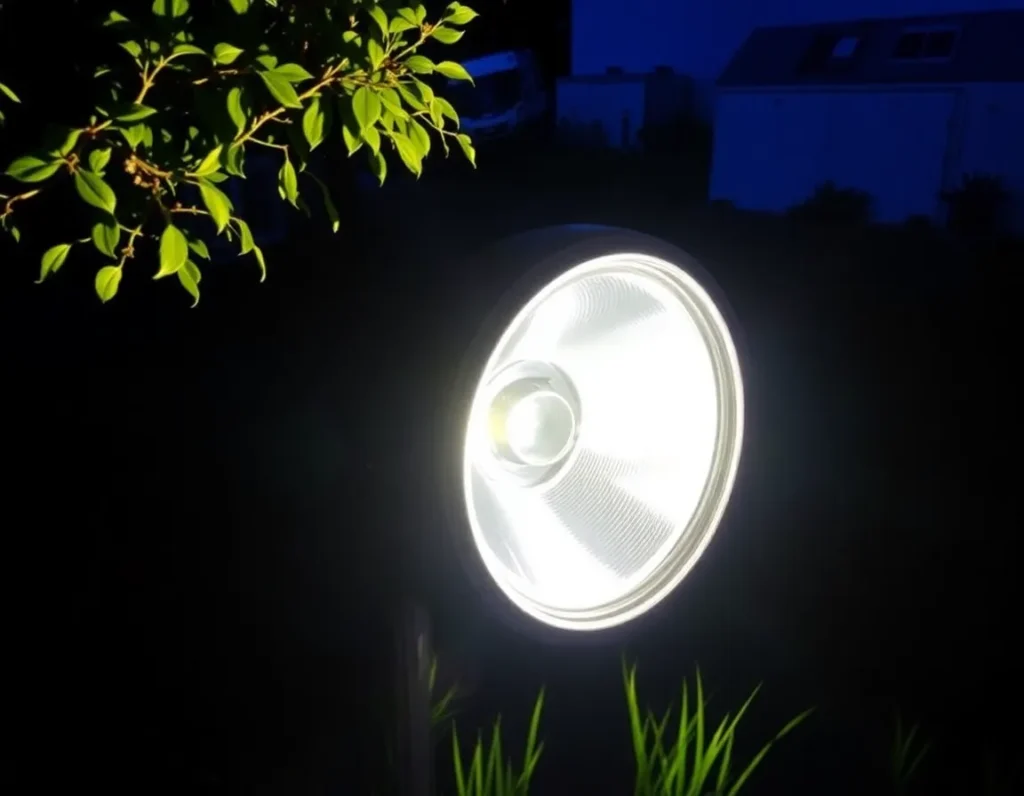
Before diving into the HID vs. LED debate, it’s crucial to understand the stage upon which this battle is fought: the projector headlight housing. Unlike traditional reflector housings, which simply bounce light from a bulb off a mirrored bowl, projector headlights use a more sophisticated optical system. At its heart is an ellipsoidal reflector bowl that captures light from the source (the bulb) placed at its focal point. This light is then directed forward through a condenser lens and, most importantly, a front cutoff shield. This shield is the key to the projector’s magic—it creates the sharp, horizontal cutoff line in the beam pattern, preventing light from scattering upward and blinding oncoming drivers.
The shaped light finally passes through a clear front projection lens, which further focuses and distributes the beam onto the road in a precise, controlled pattern. This design is why projector housings are non-negotiable for high-performance light sources like HID and LED bulbs. Reflector housings are designed for the specific light emission pattern of a halogen filament; installing a brighter, differently shaped HID or LED bulb in a reflector will cause massive glare and hot spots, creating a dangerous and illegal lighting condition. The projector’s engineered optics are what allow the intense, white light of HID and LED systems to be tamed and used effectively, maximizing usable road illumination while minimizing glare. In essence, the projector is the essential enabler that makes the advanced performance of HID and LED technology safe and viable on the road.
3. Phares HID (xénon) : technologie, avantages et inconvénients
High-Intensity Discharge (HID) headlights, commonly called Xenon lights, represent a significant technological leap from halogen. They produce light not with a glowing filament, but by creating an electrical arc between two electrodes inside a quartz glass capsule filled with xenon gas and metal salts. This process requires a high-voltage starter (or ballast) to ignite the arc—often producing an initial surge of over 20,000 volts—and a stable ballast to regulate the current once the arc is established. A noticeable trait of HID systems is their brief warm-up period; they start with a bluish-white light that shifts to a stable, pure white as the metal salts vaporize and reach full operating temperature.
3.1. Avantages des phares HID
- Sortie lumineuse et portée supérieures : Historiquement, les systèmes HID ont établi la référence en matière de puissance lumineuse brute, produisant souvent nettement plus de lumens que les halogènes et les premières LED. Cela se traduisait par un éclairage à distance exceptionnel, ou “ portée ”, ce qui en faisait un favori pour les conducteurs sur les routes sombres et ouvertes.
- Excellente pénétration de la route : Les caractéristiques spectrales spécifiques de la lumière HID, en particulier dans les températures de couleur plus basses comme 4300K-5000K, sont moins sensibles à la diffusion dans des conditions défavorables comme le brouillard, la pluie ou la neige légère par rapport à certaines LED blanc très froid, offrant un meilleur contraste et une meilleure pénétration.
- Technologie mature et éprouvée : Installée en usine dans les véhicules depuis des décennies, la technologie HID est bien comprise, et des kits de rechange de qualité sont largement disponibles.
- Look distinctif : La couleur caractéristique et la source de lumière à arc offraient une esthétique haut de gamme et high-tech qui a défini les véhicules de luxe et de performance pendant des années.
3.2. Inconvénients des phares HID
- Temps de chauffe : Le fait de nécessiter 5 à 15 secondes pour atteindre la pleine luminosité est un véritable inconvénient de sécurité dans les situations où un éclairage immédiat est nécessaire, comme pour les appels de phares.
- Installation complexe : Le rétrofit nécessite l’installation d’ampoules, de ballasts et souvent de faisceaux de câbles. Les ballasts doivent être montés solidement et protégés de l’humidité, ce qui rend l’installation plus complexe qu’un simple remplacement d’ampoule.
- Risque d’éblouissement : Même dans les boîtiers de projecteur, les kits HID de mauvaise qualité ou mal réglés peuvent produire un éblouissement excessif. L’orientation du tube à arc des ampoules est également cruciale pour un faisceau correct.
- Durability issues: Ballasts and igniters are additional points of failure. Vibrations can also damage internal electrodes over time.
- Higher power consumption at startup: Although efficient in steady state, the initial ignition surge puts a heavy load on the vehicle's electrical system.
4. LED Headlights: Technology, Advantages, and Disadvantages
Light-emitting diode (LED) headlights represent the semiconductor revolution in automotive lighting. They generate light by passing a current through a semiconductor material, causing electrons to release energy as photons—a process called electroluminescence. A single LED chip is tiny and incredibly bright, but it also produces intense heat at its semiconductor junction. Consequently, modern automotive LED bulbs are complex assemblies. They feature an array of high-power LED chips mounted on a circuit board, a sophisticated driver (a semiconductor equivalent of an HID ballast) to regulate power, and, crucially, an integrated heat sink—often using aluminum fins or a fan—to actively dissipate heat and prevent rapid degradation.
4.1. Advantages of LED Headlights
- Instant illumination: LEDs turn on and reach full brightness instantly, with no warm-up delay. This provides immediate full lighting and enables advanced features like dynamic cornering lights and communication-based lighting systems.
- Exceptional energy efficiency: LEDs convert a much higher percentage of electrical energy into visible light rather than heat (compared to halogens and HIDs), reducing the load on the vehicle's alternator and electrical system.
- Extremely long lifespan: With no filament to burn out or gas to degrade, a properly cooled LED assembly can last tens of thousands of hours—often exceeding the useful life of the vehicle itself.
- Compact and robust design: The solid-state construction makes LEDs highly resistant to vibration and shock. Their small size also gives designers more flexibility in headlight styling.
- Large gamme de température de couleur : Les LED peuvent être conçues pour produire une lumière blanche très pure (généralement 5000K-6000K) que de nombreux conducteurs préfèrent subjectivement pour son apparence moderne et nette.
4.2. Inconvénients des phares à LED
- La gestion de la chaleur est essentielle : Bien qu’efficaces, la chaleur intense à la jonction de la puce doit être gérée. Une mauvaise conception du dissipateur thermique ou un ventilateur de refroidissement défaillant peut entraîner une panne catastrophique et des composants fondus.
- Risque d’éblouissement avec une optique de mauvaise qualité : Parce que les LED émettent de la lumière depuis un réseau plat à puces multiples plutôt que depuis une source ponctuelle unique comme un arc HID ou un filament halogène, reproduire le point focal parfait dans un projecteur conçu pour une autre technologie peut être difficile. Les ampoules LED de mauvaise qualité produisent souvent des faisceaux avec des points chauds distrayants, des zones sombres et une dispersion excessive.
- Coût initial plus élevé pour les unités de qualité : Un kit de conversion LED vraiment bien conçu, avec une optique et une gestion thermique appropriées, coûte généralement plus cher qu’un kit HID de milieu de gamme.
- Performances par temps froid : Ironiquement, les LED peuvent être trop efficaces ; elles produisent très peu de chaleur résiduelle, ce qui peut permettre à la neige et à la glace de s’accumuler sur le verre du phare dans les climats hivernaux, contrairement aux lumières halogènes ou HID qui génèrent suffisamment de chaleur pour les faire fondre.
5. Comparaison directe : HID vs LED dans les catégories de performance clés
Avec les technologies individuelles expliquées, une comparaison directe révèle comment elles se comparent dans le monde réel. C’est là que le choix entre hid or led for projector headlights devient concret.
5.1. Luminosité et flux lumineux
The battle of brightness has evolved. For years, HID held a clear advantage in raw light output. A quality 35-watt 4300K HID system could produce around 3,200 lumens, outshining halogens. Modern high-performance LED chips have significantly closed this gap. Top-tier LED bulbs can now match or even slightly exceed the light output of equivalent HID systems. However, lumens alone don't tell the whole story. HID light, due to its arc source and spectral properties, often seems to have better ”throw” or long-distance penetration in a well-designed projector. LED light can be exceptionally bright and white, but its perception is sometimes more ”flood-like,“ illuminating a wide area intensely but with slightly less perceived reach. For most drivers, both technologies offer a massive and satisfying improvement over halogen.
5.2. Beam and Focus
This is arguably the most critical category for a successful conversion. HID bulbs, with their light emanating from a small distinct arc, closely mimic the point-source characteristic of a halogen filament. This allows them to work more easily in harmony with the optics of a projector designed for halogen (a HID ”retrofit”). The beam typically remains sharp and clean, with a defined cutoff line. LED bulbs, with their multiple chips spread over a surface, struggle to replicate a perfect point source. The result in many aftermarket LED bulbs is a beam that loses sharpness, develops multiple cutoff lines or distracting shadows, and can scatter light above the cutoff, causing glare. The best LED solutions use carefully positioned chips and integrated shields to mimic the position of a filament, but achieving optical perfection is more difficult and varies considerably by product.
5.3. Color Temperature and Visibility
HID systems offer a range typically from 3000K (yellow) to 8000K+ (deep blue), but the sweet spot for output and visibility combination is 4300K to 5000K (bright white with a touch of warmth). This range offers excellent color rendering and cuts through inclement weather well. LEDs are commonly found in the 5000K to 6500K range, producing a very pure, ”daylight“ white that many find appealing for its modern look and high contrast in dry conditions. However, some drivers find that the very cool white light of higher Kelvin LEDs can create more glare from reflective road signs and offers slightly lower contrast in rain or fog compared to the warmer HID light. The choice here is partly subjective, tied to aesthetic preference and typical driving conditions.
5.4. Longevity and Reliability
LED holds a decisive theoretical advantage. A well-cooled LED system has an estimated lifespan of 30,000 to 50,000 hours or more, making it essentially a ”lifetime“ component. HID bulbs have a limited lifespan, typically estimated between 2,000 and 5,000 hours—still much longer than halogen but subject to eventual failure. However, real-world reliability depends on build quality. A cheap LED with a failing fan will die quickly from heat. The ballast of an HID system is an additional component that can fail, often due to moisture ingress or electrical issues. For pure, predictable longevity with fewer failure points, LED has the advantage.
5.5. Energy Efficiency and Electrical Load
This is another clear win for LED technology. A typical LED headlight bulb draws between 20 and 30 watts per side to produce light equivalent to a 35-watt HID or a 55-watt halogen. More importantly, it does so without the high-voltage startup surge required by HID ballasts. This lower, more stable draw is gentler on the vehicle's wiring, switches, and alternator, making LEDs the most efficient choice from an electrical system standpoint.
5.6. Cost Analysis (Initial and Long-Term)
The initial cost is nuanced. Entry-level HID kits can be very inexpensive, but they often suffer from poor reliability and color shift. A quality HID kit with reputable ballasts (e.g., Philips, Osram) and bulbs represents a solid mid-range investment. High-performance LED kits from trusted brands typically command a higher upfront price, reflecting the cost of the chips, driver, and cooling system. In the long run, the significantly longer lifespan of LED means you will likely never replace them, potentially saving on future bulb replacement costs. Considering longevity and efficiency, the total cost of ownership often favors LED, despite its higher initial price for a quality product.
6. Installation, Compatibility, and Cost Considerations
Choosing between HID and LED technology for your projector headlights isn't just about performance; it's about what works with your vehicle and your budget. The installation process, compatibility with your specific projector housing, and the total cost of ownership are critical factors that will determine your satisfaction with the upgrade.
6.1. Installation Complexity and DIY Feasibility
For the average DIYer, LED kits are generally the simplest and cleanest installation. A typical LED conversion kit includes the bulb, an integrated driver (or a small separate module), and the necessary adapters. The process often involves plugging the LED bulb into the original headlight socket, securing the driver module with cable ties in the engine bay, and ensuring the cooling fan or heat sink has adequate clearance. There's no need to find mounting locations for bulky ballasts or route high-voltage wiring, making the installation less intrusive.
HID kits are more complex. They require mounting two ballasts per headlight—one for low beams and often one for high beams if it's a bi-xenon setup. You need to find secure, heat-resistant locations for these boxes and route high-voltage wiring from the ballast to the bulb, ensuring it stays away from moving parts and sharp edges. Ballasts also need a reliable 12V power connection, sometimes requiring tapping into factory wiring or using relay harnesses for stable power. This added complexity increases installation time and the risk of error, making professional installation a more attractive option for HID systems.
6.2. Vehicle Compatibility and Projector Housing Matching
This is the most important technical consideration. Projector housings are optically designed for a specific light source. Using the wrong bulb can result in poor performance and glare for other drivers.
HID bulbs in halogen projectors are a notorious mismatch. The arc gap (the light-emitting part) of an HID bulb is in a different location than the filament of a halogen bulb. This misalignment scatters light, creating an uneven beam with excessive glare and ”hot spots,“ which defeats the purpose of the projector's sharp cutoff. For HIDs to work correctly, they must be installed in projectors specifically designed for HID bulbs, which have different focal points and reflectors.
LED bulbs present a similar but evolving challenge. Early LED bulbs struggled to mimic the 360-degree light emission of a halogen filament, causing dark spots in the beam. Modern high-quality LED bulbs are designed with chips placed to mimic the exact size and position of a halogen filament (or HID arc). This ”filament-style” or ”360-degree” design is crucial for a clean beam in a projector housing. Before purchasing a kit, verify that the bulb is marketed as compatible with projector housings and look for customer beam photos. The safest bet is to choose a kit from a reputable brand known for proper optical engineering.
6.3. Full Cost Breakdown
The financial aspect goes beyond the sticker price.
- Initial Purchase Price: Entry-level HID kits can be found for under $50, but they are almost universally poor quality, with unreliable ballasts and bulbs that quickly change color. A quality HID kit from brands like Philips, Osram, or Morimoto typically costs between $150 and $300+. A high-performance LED kit from brands like Diode Dynamics, GTR Lighting, or Morimoto also generally falls in the $200 to $400 range. While LED often has a higher entry point, the gap has narrowed significantly for well-designed products.
- Installation Cost: If you don't do it yourself, HID installation will typically cost more in labor due to its complexity. Expect to pay an additional $100 to $200 for professional installation of an HID system compared to a simpler LED setup.
- Long-Term Operating Cost: This is where LEDs take the advantage. With a lifespan of over 30,000 hours, an LED kit will likely outlive the vehicle itself. HID bulbs, while durable, will eventually need replacement (typically every 2,000 to 5,000 hours). Replacing a pair of quality HID bulbs can cost between $100 and $200. LEDs eliminate this future expense. Additionally, the lower power consumption of LEDs puts less strain on the vehicle's electrical system, a hidden long-term benefit.
- Total Cost of Ownership: When you add up the initial cost, potential installation fees, and future replacement bulbs, a quality LED kit often proves to be the more economical choice over a 5-10 year period, despite its potentially higher upfront cost.
7. Réglementations légales et de sécurité pour les améliorations après-vente
Améliorer vos phares n’est pas sans règles. Des réglementations existent pour garantir la sécurité routière pour vous et tous les autres. Les ignorer peut entraîner des amendes, des échecs aux inspections du véhicule et, surtout, créer un environnement de conduite dangereux.
7.1. Conformité au Department of Transportation (DOT) et à la SAE
Aux États-Unis, le Department of Transportation (DOT) établit les normes fédérales de sécurité des véhicules automobiles (FMVSS). Pour l’éclairage, le DOT se réfère généralement aux normes de performance établies par SAE International (anciennement la Society of Automotive Engineers). Un système de phares ” conforme DOT ” signifie qu’il respecte ces normes SAE en matière de faisceau, d’intensité et de contrôle de l’éblouissement.
Ceci est crucial : La conformité concerne l’ensemble du bloc optique assemblé, pas seulement l’ampoule. Même si vous installez une ampoule HID ou LED marquée DOT dans un boîtier non conçu pour cela, le faisceau résultant sera presque certainement non conforme. Le boîtier et l’ampoule doivent être conçus comme un ensemble apparié. C’est pourquoi les phares d’origine (OE) de l’usine sont toujours conformes, et pourquoi des projecteurs de ” rétrofit ” après-vente conçus pour les ampoules HID existent pour les travaux personnalisés.
7.2. Le problème critique de l'éblouissement et du réglage
Les kits HID/LED mal installés ou incompatibles sont une cause majeure d’éblouissement dangereux des phares. Lorsque la source lumineuse n’est pas au point focal correct, le projecteur ne peut pas contrôler correctement le faisceau. La lumière se répand au-dessus de la ligne de coupure, aveuglant la circulation venant en sens inverse. Ce n’est pas seulement une nuisance ; c’est un danger majeur pour la sécurité qui réduit la vision des autres conducteurs et augmente le risque d’accident.
Même avec un kit parfaitement adapté, le réglage des phares est primordial. Après toute installation de phares ou remplacement d’ampoule, les phares doivent être correctement réglés. C’est une procédure simple souvent effectuée gratuitement ou à faible coût dans les ateliers de réparation. Un réglage correct garantit que votre faisceau éclaire efficacement la route sans éblouir les autres conducteurs. De nombreux États incluent des contrôles de réglage des phares dans leurs protocoles d’inspection de sécurité des véhicules.
7.3. Lois d'inspection par État
Les règlements sont appliqués au niveau de l’État. Les États avec ” inspection de sécurité ” sont les plus stricts. Dans ces États, un véhicule doit passer une inspection annuelle ou bisannuelle. Un inspecteur peut et va refuser un véhicule pour :
- Motif du faisceau des phares non conforme (trop d’éblouissement, couleur incorrecte).
- La présence de certaines couleurs (par exemple, ampoules bleues ou violettes, souvent réservées aux forces de l’ordre).
- Des phares qui ne sont pas correctement réglés.
Même dans les États sans inspection, les forces de l’ordre peuvent émettre des contraventions pour ” équipement inadéquat ” ou des phares causant un éblouissement excessif. La meilleure pratique est de s’assurer que votre amélioration est conçue comme un système conforme et est installée et réglée professionnellement.
8. Making the Right Choice: A Decision Guide for Your Vehicle
With all the technical data in hand, how to decide? The best choice between HID or LED for projector headlights depends on your specific priorities, your vehicle, and your budget. Use this guide to navigate toward your optimal solution.
8.1. Scenario 1: Choose HID if…
- Maximum raw light output is your absolute priority: You do a lot of night driving on rural roads or highways and you want the brightest and most far-reaching beam possible. A high-quality 5500K HID system in a proper HID projector remains the benchmark in terms of pure luminous flux.
- You have factory HID projectors: If your vehicle is equipped from the factory with HID projectors and the bulbs have dimmed or failed, replacing them with OEM-spec or high-quality aftermarket HID bulbs is the correct and compliant choice. Do not put LED bulbs in factory HID projectors without verifying perfect optical compatibility.
- You are doing a custom retrofit: If you are willing to open your headlight housings to install true HID-specific projectors (like those from Morimoto or OEM parts from other vehicles), you are building a high-end lighting system where HID excels.
8.2. Scenario 2: Choose LED if…
- You want modern, balanced performance: You are looking for excellent brightness, instant activation, whiter light, and superior energy efficiency in a single package. LED technology offers the best overall performance profile for most drivers.
- Ease of installation and reliability matter: You are planning a DIY installation and want a simpler, plug-and-play solution, without ballasts to mount and with minimal wiring. The exceptional lifespan and durability of LEDs also mean a true ”install and forget“ experience.
- Your vehicle has halogen headlights: To upgrade factory halogen headlight housings, a high-quality LED bulb designed for projectors is often the best and safest choice than an HID kit. It is more likely to produce a clean beam without the glare and reliability issues of an incompatible HID setup.
- Cold weather performance is essential: If you live in a climate with harsh winters, the instant full brightness of LEDs in freezing temperatures is a significant advantage over HIDs.
8.3. Quick decision checklist
- Check your housing: What do you have? (Halogen projector, HID projector, or reflector?).
- Set your budget: Include possible professional installation.
- Rank your priorities: Is it maximum brightness (HID), complete modern performance (LED), or the lowest long-term cost (LED)?
- Check compatibility: Only buy bulbs specifically designed for your housing type from reputable brands.
- Plan installation and adjustment: Allow time for DIY or professional help, and always have your headlights adjusted after installation.
9. Summary of Key Points
The debate between HID and LED for projector headlights reveals two mature technologies with distinct strengths. HID (Xenon) systems produce intense, broad light and have a long history, but they suffer from a warm-up period, higher electrical load, and greater complexity. LED technology offers instant illumination, exceptional energy efficiency, incredibly long lifespan, and a more compact form factor, making it the increasingly preferred choice for modern upgrades.
The crucial point is that the projector housing itself is not universal. Its optics are tuned for a specific light source. Installing an HID bulb into a halogen projector, or even an LED not designed for it, will likely create a poor, non-compliant, and glaring beam. Compatibility is paramount.
From a practical standpoint, LED kits generally offer easier installation, lower long-term operating costs, and performance that meets or exceeds the needs of most drivers. HID retains an advantage in terms of maximum raw power for specialized applications and is the correct choice for factory-equipped vehicles. Whichever you choose, always prioritize kits from reputable manufacturers, ensure proper installation, and have the headlights professionally adjusted to guarantee safety, compliance, and optimal performance on the road.
10. Frequently Asked Questions (FAQ)
10.1. Can I simply put HID or LED bulbs in my factory projector headlights?
It entirely depends on what your factory projectors were designed for. If you have halogen projectors, a high-quality LED bulb designed for projectors is most likely to work well. Putting HID bulbs into halogen projectors almost always causes excessive glare and a poor beam. If you have factory HID projectors, you must replace the bulbs with HID bulbs. Always research specific compatibility for your vehicle.
10.2. Which is brighter: HID or LED?
In terms of raw lumen output measured at the bulb, a high-quality HID system is generally brighter. However, ”brightness” on the road also depends on beam focus and color temperature. A well-focused LED beam can appear subjectively brighter and more useful due to its whiter light, even if its lumen count is slightly lower. For most drivers, the difference in effective road illumination is negligible.
10.3. Are LED headlights legal?
Yes, LED headlights are legal if they are part of a compliant headlight assembly. This means either 1) they are factory original equipment, or 2) the aftermarket LED bulb is certified (e.g., DOT/SAE compliant) and used in a housing that produces a legal beam without excessive glare. It is the user's responsibility to ensure the final result is compliant. Many cheap, non-compliant LED bulbs flood the market, so it is crucial to buy from a reputable automotive lighting brand.
10.4. Why are my new HID/LED lights flickering?
Flickering is almost always an electrical issue. For HID, it often indicates a failing ballast, poor ground connection, or vehicle voltage fluctuations. For LED, it is usually caused by a Canbus error (the vehicle's computer detecting lower consumption and thinking the bulb is burned out) or an incompatible or poor-quality driver. Solutions include installing a relay harness for stable power (HID) or using a Canbus decoder or error eliminator (LED).
10.5. Do I need a conversion kit or can I just buy bulbs?
You will always need a kit. For HID, this includes bulbs, ballasts, and wiring. For LED, this includes bulbs with integrated or separate drivers and wiring. You cannot simply screw an HID or LED ”bulb” into a socket designed for a halogen bulb and expect it to work — the electrical systems are completely different.
10.6. What color temperature (Kelvin) should I choose?
For optimal visibility, stay between 5000K and 6000K. This range produces pure, bright white light with a slight cool tint. It offers excellent contrast for seeing road details and is easier on the eyes over long periods than higher, bluer temperatures. Avoid going above 6500K, as the light becomes increasingly blue/violet, reduces useful light output, disperses more in fog/rain, and is more likely to be illegal and disturb other drivers.
10.7. How long do HID and LED bulbs last?
HID bulbs have a good lifespan, typically rated between 2,000 and 5,000 hours. LED bulbs have a significantly longer lifespan, often rated from 30,000 to 50,000 hours or more — essentially the life of the vehicle in normal use.