
Debout dans l’allée des pièces automobiles—ou en faisant défiler des pages de produits sans fin—les options pour les feux de croisement peuvent sembler accablantes. Halogène, LED, HID. Différentes tailles d’ampoules, différentes températures de couleur, différents niveaux de prix. Et chaque marque prétend être la meilleure.
Low beams must be bright enough to see at least 150 feet ahead to meet federal safety standards—but the best systems illuminate far beyond that, giving you crucial extra seconds to react.
This guide cuts through the marketing noise. We'll compare each major technology, expose what the specifications really mean, and give you the framework to choose the right low beams for your vehicle and driving conditions.
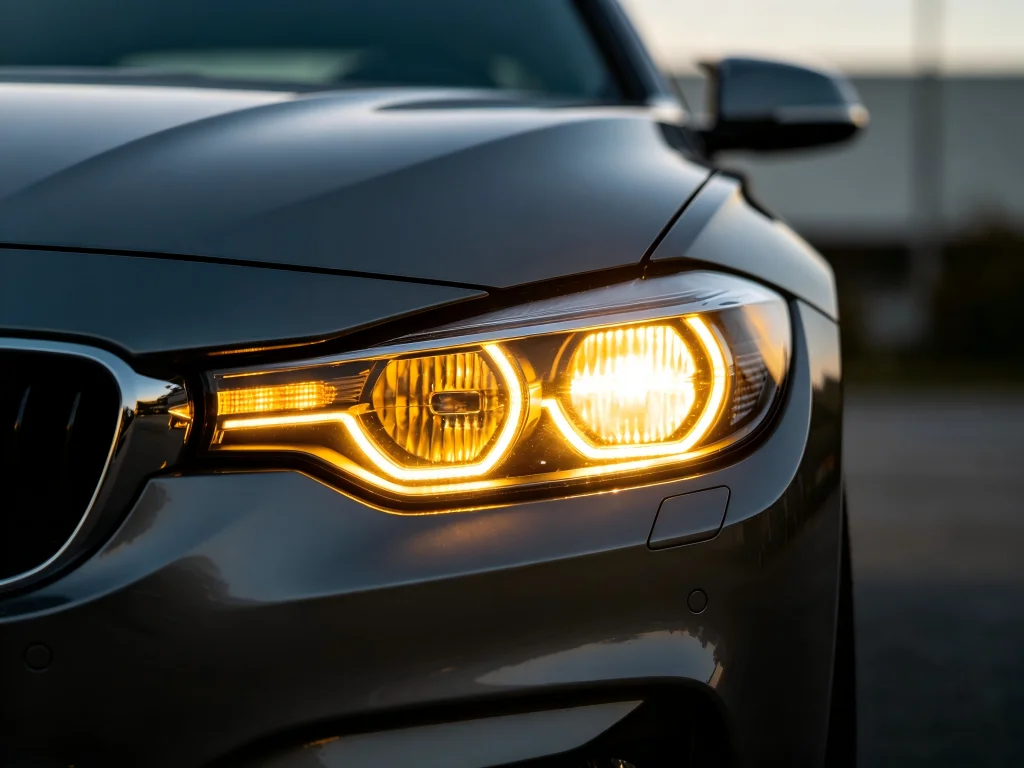
1. Understanding What Low Beams Actually Do
Low beams—also called dipped beams—are your primary source of nighttime illumination. Unlike high beams, which project light straight ahead for maximum distance, low beams are angled downward. This design serves two critical purposes: it illuminates the road immediately in front of your vehicle and prevents dazzling oncoming traffic.
Low beams are effective for vehicles traveling at speeds up to about 35-45 mph in ideal conditions. Beyond that, even the best low beams may not provide sufficient braking distance—that's why you need the brightest, most focused beam possible.
The low beam distance you can expect varies by technology:
| Technology | Typical Range | Lumens (Typical) | Durée de vie |
|---|---|---|---|
| Halogen | ~300 ft | 700-1,200 | 500-1,000 lm |
| HID (xénon) | ~400 pi | 2,500-3,500 | 2 000-3 000 h |
| LED (Premium) | ~450+ pi | 3,000-4,700+ | 30 000+ heures |
La technologie LED, comme la série Ultra 3 de GTR, produit jusqu'à 4 700 lumens avec un contrôle précis du faisceau qui place la lumière exactement là où vous en avez besoin—sur la route, pas dans les yeux des conducteurs venant en sens inverse.
2. Les trois technologies : une comparaison directe
2.1. Halogène : l'ancienne norme
Halogen bulbs have been the standard for decades. They are inexpensive and familiar. But the limitations are significant. Halogen low beams typically illuminate only about 300 feet—and that's when they are new. As they age, light output degrades considerably. The filaments are fragile and burn out regularly. And the light they produce is yellow and inefficient.
En résumé : L'halogène est l'option la moins chère au départ mais la plus chère à long terme. Vous remplacerez les ampoules fréquemment, et vous compromettez votre sécurité chaque nuit où vous conduisez.
2.2. HID (Xénon) : la technologie de transition
High-intensity discharge (HID) bulbs produce brighter, whiter light than halogen. They illuminate up to 400 feet. But they have significant drawbacks: they take time to warm up to full brightness, they require complex ballasts, and they are more expensive to replace. Switching from halogen to HID is also more complex than switching to LED.
En résumé : Le HID était une amélioration significative par rapport à l'halogène il y a dix ans. Aujourd'hui, le LED l'a surpassé dans tous les indicateurs significatifs.
2.3. LED : le gagnant évident
La technologie des diodes électroluminescentes (LED) représente l'état de l'art actuel. Les LED sont plus petites, plus efficaces et plus durables que toute autre alternative. Elles sont environ 80 % plus économes en énergie que l'halogène et durent plusieurs fois plus longtemps.
Mais le véritable avantage est le contrôle. Les ingénieurs peuvent concevoir des motifs de faisceau exacts avec les LED—plaçant la lumière précisément là où elle est nécessaire et la coupant nettement pour éviter l’éblouissement. C’est pourquoi le chipset personnalisé TST 7045 de GTR offre des performances aussi exceptionnelles.
En résumé : Le LED est la meilleure technologie disponible aujourd’hui. Le coût initial plus élevé est plus que compensé par une durée de vie plus longue, de meilleures performances et une consommation d’énergie plus faible.
3. Ce que signifient réellement les spécifications (et ce qu'il faut ignorer)
Walking into this purchase blind is expensive. Here’s what matters—and what doesn’t.
3.1. Lumens vs. Lux : la distinction cruciale
Most manufacturers advertise lumens—total light output. But lux measures light intensity on a specific surface. A bulb can produce high lumens but scatter light everywhere, wasting it. What matters is usable lux—light that reaches the road where you need it.
GTR Carbide low beams produce 640 lux of usable output—compared to just 100 lux from stock systems. That’s a 540% improvement in usable light, not just raw lumens.
3.2. Température de couleur : chaud vs. froid
Color temperature is measured in Kelvin (K). Lower numbers (3000K-4000K) appear yellow. Higher numbers (5000K-6000K) appear white or blue-white. Most drivers prefer 5000K-6000K for the best visibility and least eye strain.
3.3. Faisceau : la variable cachée
Le motif du faisceau détermine où la lumière va. Une coupure nette évite l'éblouissement des conducteurs venant en sens inverse. Une large diffusion éclaire les côtés de la route où des piétons et des animaux peuvent apparaître. Les meilleurs systèmes à LED—comme ceux de GTR—reproduisent le motif halogène d'origine tout en améliorant considérablement la luminosité et la mise au point.
Si le motif du faisceau est incorrect, aucune quantité de luminosité n'aidera. Vous éblouirez les autres conducteurs ou ne verrez pas ce qui se trouve devant vous.
4. Compatibilité : le premier filtre
Avant de considérer toute autre chose, confirmez la compatibilité. Votre véhicule utilise une taille d'ampoule spécifique : H11, 9005, 9006, H4, et d'autres. Consultez votre manuel du propriétaire ou recherchez votre véhicule en ligne. La compatibilité CANBUS peut également être requise pour éviter les codes d'erreur du tableau de bord.
GTR Lighting propose des phares à LED pour la plupart des modèles de véhicules populaires, avec une installation plug-and-play qui ne nécessite aucune modification.
5. Cinq questions que tout acheteur doit se poser
- Quelle quantité de lumière utile cela produit-il ? Ignorez les lumens bruts. Renseignez-vous sur le lux et la qualité du faisceau.
- Combien de temps cela durera-t-il ? Une ampoule bon marché qui grille en 6 mois n'est pas une bonne affaire. Les LED de qualité durent plus longtemps que le véhicule.
- Est-ce que cela respecte les normes de sécurité ? Recherchez la certification DOT. Les ampoules non certifiées peuvent être illégales et dangereuses.
- What is the beam pattern? Does it reproduce the original pattern with a sharp cutoff? Or will it scatter light and glare at other drivers?
- What do real owners say? Marketing claims are cheap. Real reviews reveal the truth.
6. What the market doesn't tell you
Here's the uncomfortable truth: many aftermarket headlights are poorly designed. They produce bright light that scatters everywhere, creating dangerous glare for oncoming drivers while failing to illuminate the road ahead. The EU and Canada have already moved toward Adaptive Driving Beam (ADB) technology — smart headlights that adjust automatically — but these are still illegal in the US.
Until ADB arrives, your best option is a high-quality LED system with precise beam control. Brightness without control is worse than useless—it's dangerous.
7. The GTR advantage: why we lead the category
GTR Lighting isn't just another brand on the shelf. We design our LED headlights from A to Z with one priority: putting usable light on the road where you need it.
- Custom TST 7045 chipset: Specifically designed for optimal beam control and reduced glare
- 4700 lumens output: Among the brightest in the category
- 54% more usable light: 640 lux vs 100 lux for original systems
- Plug-and-play installation: No modification required for most vehicles
- DOT compliant: Meets all federal safety standards
- Built to last: LED technology without fragile filaments that can fail
Independent reviews confirm the difference. One tester noted that GTR Carbide LEDs produce ”a more uniform coverage across the beam width and a more defined hot spot” than competitors. This is not marketing, it's engineering.
8. Real-world perspective: what drivers say
”I installed them on my Jeep and the brightness is incredible, much better than the SilverStar Ultras or Philips Crystal Vision Ultra.“ — GTR Customer
”These lights are perfect and super bright, as promised. I totally recommend them.“ — Verified Buyer
”The light is bright, smooth, and the angles are pre-set, so I didn't have to adjust the bulbs at all.“ — GTR Customer
These are not cherry-picked testimonials. It's the consistent feedback we receive from drivers who made the switch and experienced the difference firsthand.
9. Votre cadre de décision
Voici comment décider quels feux de croisement vous conviennent :
- Si vous conduisez principalement dans des villes bien éclairées et rarement la nuit : L’halogène peut suffire, mais vous compromettez toujours la sécurité.
- Si vous voulez une amélioration significative sans coût premium : Le HID offre une amélioration par rapport à l’halogène mais avec une complexité supplémentaire.
- If you drive regularly at night, on highways, or in rural areas: La LED est le seul choix rationnel. Les avantages en matière de sécurité justifient à eux seuls l’investissement.
- Si vous voulez la performance et la fiabilité absolues : Les phares LED GTR Lighting sont conçus pour dépasser toutes les normes.
Les feux de croisement dans le brouillard, la pluie et la neige exigent de la précision—pas seulement de la luminosité. Dans ces conditions, le faisceau focalisé de GTR maintient la lumière sur la route, sans la réfléchir dans vos yeux.
10. Faire l'investissement : ce que vous achetez vraiment
Lorsque vous achetez des feux de croisement LED haut de gamme, vous n’achetez pas seulement des ampoules. Vous achetez :
- Sécurité : The ability to see hazards before they become emergencies
- Reliability: No unexpected failures on dark roads
- Peace of mind: The confidence that your lighting will not let you down when you need it most
- Long-term value: Years of service compared to months with halogens
According to IIHS data, 51% of new vehicle headlight systems now earn a ”Good” rating — a sharp increase from previous years. The industry is moving toward better lighting. Don't let your vehicle fall behind.
11. Your Next Step
The research is done. The comparison is complete. Now it's time to act.
Visit https://www.rhgtr.com to find GTR LED low beam headlights for your vehicle. Check specifications, read reviews, and discover the difference precision lighting makes.
Your low beams are your first line of defense on the road. Make sure they're the best defense possible.
12. LED Low Beam FAQ
How far should low beams shine?
Low beams typically illuminate 150 to 200 feet ahead — about half a city block. Federal regulations require at least 150 feet. Premium LED systems can exceed 450 feet of effective illumination.
What is the difference between low beams and high beams?
Low beams are angled downward to illuminate the road without blinding oncoming vehicles. High beams project light straight ahead for maximum distance, but must be dimmed when other vehicles approach. The low beam symbol shows rays angled downward; the high beam symbol shows straight lines.
Are LED low beams legal?
Yes, when properly designed and DOT certified. GTR LED headlights meet all federal safety standards. Avoid uncertified bulbs that may be illegal and dangerous.
How long do LED low beams last?
Quality LEDs last over 30,000 hours — often the life of the vehicle. Compare that to 500 to 1,000 hours for halogens. You will likely replace your vehicle before replacing GTR LEDs.
Do I need to adjust my headlights after installing LEDs?
Quality LED systems like GTR's are designed to replicate factory beams and often require no adjustment. However, proper headlight alignment is always important: misaligned lights reduce visibility and blind other drivers.
Can I install LED low beams myself?
Most GTR LED headlights are plug-and-play, requiring no modification. Installation typically takes 15 to 30 minutes. Always consult your vehicle's manual and follow the provided instructions.
Why are some LEDs much cheaper than others?
Cheaper LEDs often use lower-quality chips, produce poor beams, scatter light inefficiently, and lack adequate thermal management. You get what you pay for. GTR uses custom TST 7045 chips, designed specifically for optimal performance.