
Стоя в отделе автозапчастей — или пролистывая бесконечные страницы товаров — варианты фар ближнего света могут показаться ошеломляющими. Галогенные, светодиодные, ксеноновые. Разные размеры ламп, разная цветовая температура, разные ценовые категории. И каждый бренд утверждает, что он лучший.
Low beam headlights need to be bright enough to see at least 150 feet ahead to meet federal safety standards — but the best systems illuminate much farther, giving you extra seconds to react.
This guide cuts through the marketing noise. We'll compare all the major technologies, explain what the specifications really mean, and give you the foundation to choose the right low beam headlights for your vehicle and driving conditions.
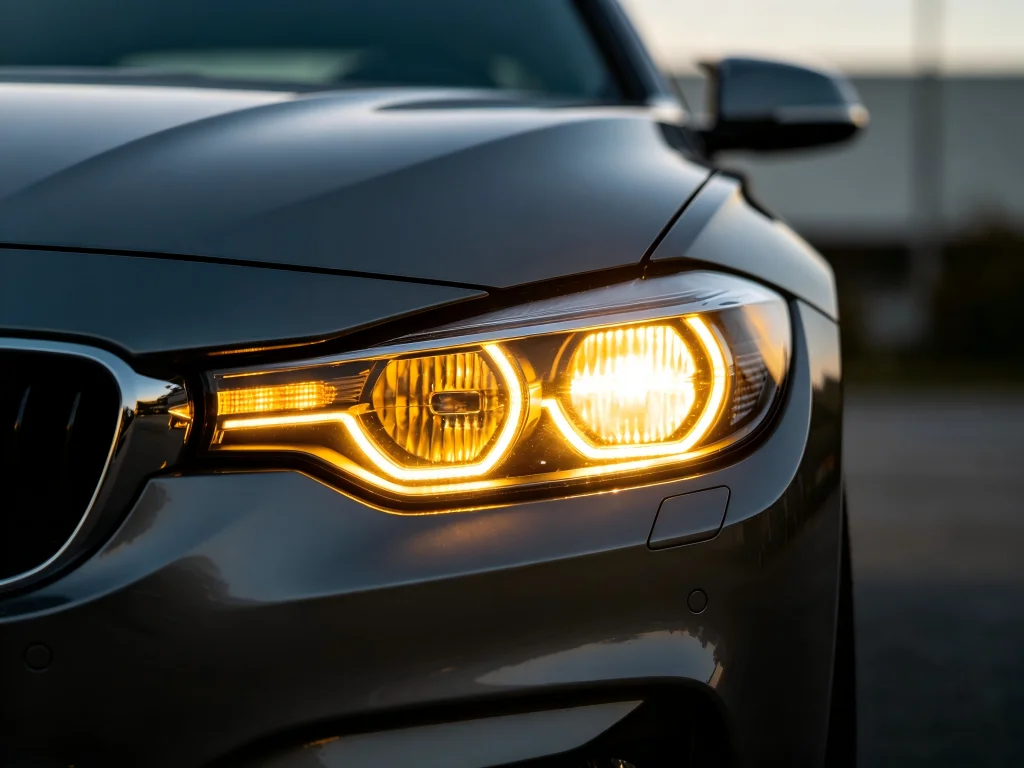
1. Understanding What Low Beam Headlights Actually Do
Low beam headlights — also called dipped headlights — are your primary source of illumination at night. Unlike high beams, which direct light straight ahead for maximum distance, low beams are aimed downward. This design serves two important purposes: it lights the road directly in front of your vehicle and prevents blinding oncoming traffic.
Low beam headlights are effective for vehicles traveling at speeds up to about 35-45 miles per hour in ideal conditions. Beyond that, even the best low beam may not provide sufficient stopping distance — so you need the brightest and most focused beam you can get.
The distance you can expect from low beam headlights depends on the technology:
| Technology | Typical Range | Lumens (Typical) | Продолжительность жизни |
|---|---|---|---|
| Галоген | ~300 feet | 700-1,200 | 500-1000 hours |
| HID (ксенон) | ~400 feet | 2,500-3,500 | 2000-3000 hours |
| LED (premium) | ~450+ feet | 3,000-4,700+ | 30,000+ hours |
LED technology, like in the GTR Ultra 3 series, provides up to 4700 lumens with precise beam control that directs light exactly where it's needed — onto the road, not into the eyes of oncoming drivers.
2. Three technologies: face-to-face comparison
2.1. Halogen: the old standard
Галогенные лампы были стандартом по умолчанию на протяжении десятилетий. Они недорогие и привычные. Но ограничения значительны. Галогенный ближний свет обычно освещает всего около 300 футов — и это когда они новые. По мере старения выход света значительно ухудшается. Нити накала хрупкие и регулярно перегорают. А свет, который они производят, желтый и неэффективный.
The bottom line: Галоген — самый дешевый вариант на начальном этапе, но самый дорогой в долгосрочной перспективе. Вам придется часто заменять лампы, и вы идете на компромисс с безопасностью каждую ночь, когда водите машину.
2.2. HID (xenon): transitional technology
Лампы высокой интенсивности разряда (HID) производят более яркий и белый свет, чем галогенные. Они освещают до 400 футов. Но у них есть существенные недостатки: им требуется время для прогрева до полной яркости, им нужны сложные балласты, и их замена дороже. Переход с галогена на HID также сложнее, чем переход на светодиоды.
The bottom line: HID was a significant improvement over halogen ten years ago. Today, LEDs have surpassed it in every meaningful metric.
2.3. Светодиод: явный победитель
Технология светоизлучающих диодов (LED) представляет собой современное состояние дел. Светодиоды меньше, эффективнее и долговечнее любой альтернативы. Они примерно на 80% энергоэффективнее галогенных и служат в несколько раз дольше.
But the real advantage is control. Инженеры могут проектировать точные формы луча с помощью светодиодов — размещая свет точно там, где он нужен, и резко обрезая его, чтобы избежать бликов. Именно поэтому специальный чипсет TST 7045 от GTR обеспечивает такую исключительную производительность.
The bottom line: Светодиод — лучшая технология, доступная сегодня. Более высокая начальная стоимость более чем компенсируется более длительным сроком службы, лучшими характеристиками и меньшим потреблением энергии.
3. Что на самом деле означают характеристики (и что игнорировать)
Покупать вслепую — дорогое удовольствие. Вот что действительно важно, а что нет.
3.1. Люмены против люкс: ключевое различие
Большинство производителей рекламируют люмены — общий световой поток. Но люкс измеряет интенсивность света на конкретной поверхности. Лампа может давать высокие люмены, но рассеивать свет повсюду, впустую. Важен полезный люкс— свет, который достигает дороги там, где он нужен.
Ближний свет GTR Carbide дает 640 люкс полезного излучения — по сравнению с всего 100 люкс у штатных систем. Это улучшение на 540% полезного света, а не просто сырых люменов.
3.2. Цветовая температура: теплый против холодного
Цветовая температура измеряется в Кельвинах (К). Более низкие значения (3000K-4000K) выглядят желтыми. Более высокие значения (5000K-6000K) выглядят белыми или сине-белыми. Большинство водителей предпочитают 5000K-6000K для наилучшей видимости и наименьшего напряжения глаз.
3.3. Форма светового пучка: скрытая переменная
Форма пучка определяет, where the light is directed. A sharp cutoff prevents glare for oncoming drivers. Wide spread illuminates the shoulders where pedestrians and animals may appear. The best LED systems—such as GTR—reproduce the factory halogen pattern, significantly improving brightness and focus.
If the beam pattern is wrong, no amount of brightness will help. You will either blind other drivers or not see what's ahead.
4. Compatibility: The First Filter
Before considering anything else, ensure compatibility. Your vehicle uses a specific bulb size: H11, 9005, 9006, H4, and others. Check your owner's manual or look up your vehicle online. You may also need CANBUS compatibility to avoid dashboard errors.
GTR Lighting offers LED headlights for most popular car models with plug-and-play installation, requiring no modifications.
5. Five Questions Every Buyer Should Ask
- How much useful light does it produce? Ignore raw lumens. Ask about lux and beam quality.
- How long will it last? A cheap bulb that burns out in 6 months is not a good deal. Quality LEDs outlast the car.
- Does it meet safety standards? Look for DOT certification. Non-certified bulbs may be illegal and dangerous.
- What is the beam pattern? Does it replicate the factory pattern with a sharp cutoff? Or will it scatter light and blind other drivers?
- What do real owners say? Marketing claims are cheap. Real reviews reveal the truth.
6. What the market doesn't tell you
Here's the ugly truth: many aftermarket headlights are poorly designed. They produce bright light that scatters everywhere, creating dangerous glare for oncoming drivers, while not illuminating the road ahead. The EU and Canada have already moved to adaptive driving beam (ADB) technology — smart headlights that adjust automatically — but they are still banned in the US.
Until ADB arrives, your best option is a high-quality LED system with precise beam control. Brightness without control is worse than useless — it's dangerous.
7. The GTR Advantage: Why We Lead the Category
GTR Lighting is not just another brand on the shelf. We design our LED headlights from scratch with one priority: delivering useful light on the road where you need it.
- Special TST 7045 chipset: Designed specifically for optimal beam control and reduced glare
- 4700 lumen light output: One of the brightest in the category
- 54% more useful light: 640 lux vs. 100 lux for stock systems
- Plug-and-play installation: No modification required for most vehicles
- DOT compliant: Meets all federal safety standards
- Built to last: LED technology without fragile filaments that can burn out
Independent reviews confirm the difference. One tester noted that GTR Carbide LEDs provide “more even coverage across the beam width and a sharper hot spot” than competitors. This is not marketing — this is engineering.
8. Real-world perspective: what drivers say
“I installed them in my Jeep, and the brightness is incredible, much better than SilverStar Ultras or Philips Crystal Vision Ultra.” — GTR customer
“These headlights are perfect and super bright, as promised. I fully recommend them.” — verified purchaser
“The light is bright, even, and the angles are preset, so I didn't have to adjust the bulbs at all.” — GTR customer
These are not cherry-picked reviews. This is consistent feedback we receive from drivers who have switched to these bulbs and experienced the difference firsthand.
9. Your decision-making system
Here's how to decide which low beam headlights are right for you:
- If you mostly drive in well-lit cities and rarely at night: Halogen may be sufficient, but you are still compromising on safety.
- If you want a significant improvement without a high price: HID offers an improvement over halogen, but comes with complexity.
- If you regularly drive at night, on highways, or in rural areas: LED is the only rational choice. The safety benefits alone justify the investment.
- If you want the absolute best performance and reliability: GTR Lighting LED headlights are designed to exceed all standards.
Low beam in fog, rain, and snow requires precision, not just brightness. In these conditions, GTR's focused beam keeps light on the road rather than reflecting it back into your eyes.
10. Making an investment: what you are actually buying
When you buy premium LED low beam bulbs, you are not just buying bulbs. You are buying:
- Safety: The ability to see hazards before they become emergencies
- Reliability: No unexpected failures on dark roads
- Peace of mind: Confidence that your lighting won't let you down when you need it most
- Long-term value: Years of service compared to months with halogen
According to IIHS data, 51% of headlight systems in new cars now receive a “Good” rating — significantly more than in previous years. The industry is moving toward better lighting. Don't let your car fall behind.
11. Your Next Step
Research done. Comparison complete. Now it's time to act.
Visit https://www.rhgtr.com to find GTR low-profile LED low beam headlights for your vehicle. Check the specs, read reviews, and experience the difference that precision lighting makes.
Your low beams are your first line of defense on the road. Make sure they are the best possible protection.
12. Frequently asked questions about low beam headlights
How far should low beam headlights shine?
Low beam headlights typically illuminate the road 150–200 feet ahead — about half a city block. Federal regulations require a minimum of 150 feet. Quality LED systems can provide effective illumination over 450 feet.
What is the difference between low beam and high beam headlights?
Low beam is directed downward to light the road without blinding oncoming traffic. High beam is directed straight ahead for maximum distance, but must be dimmed when other vehicles approach. The low beam symbol shows rays directed downward; the high beam symbol shows straight lines.
Are LED low beam headlights legal?
Yes, when properly designed and DOT certified. GTR LED headlights meet all federal safety standards. Avoid uncertified bulbs that may be illegal and dangerous.
How long do LED low beam bulbs last?
Quality LEDs last over 30,000 hours — often as long as the car itself. Compare that to 500–1,000 hours for halogen bulbs. You'll likely replace your car before GTR LEDs.
Do I need to align my headlights after installing LEDs?
Quality LED systems like GTR are designed to replicate factory light beams and often require no adjustment. However, proper headlight aiming is always important — misaligned light reduces visibility and blinds other drivers.
Can I install LED low beam bulbs myself?
Most GTR LED headlights plug directly in without modifications. Installation typically takes 15–30 minutes. Always consult your vehicle's manual and follow the included instructions.
Why are some LEDs much cheaper than others?
Cheaper LEDs often use inferior chipsets, produce poor light beams, scatter light inefficiently, and lack proper thermal management. You get what you pay for. GTR uses specialized TST 7045 chipsets designed specifically for optimal performance.