
La transition mondiale vers la technologie LED a inondé le marché d’options, ce qui fait du processus de approvisionnement en modules de phares LED pour voitures un champ de mines pour les non-initiés. Ce guide est conçu pour vous faire passer au-delà du battage marketing et entrer dans les spécifications techniques qui définissent un produit d’éclairage rentable et haute performance.
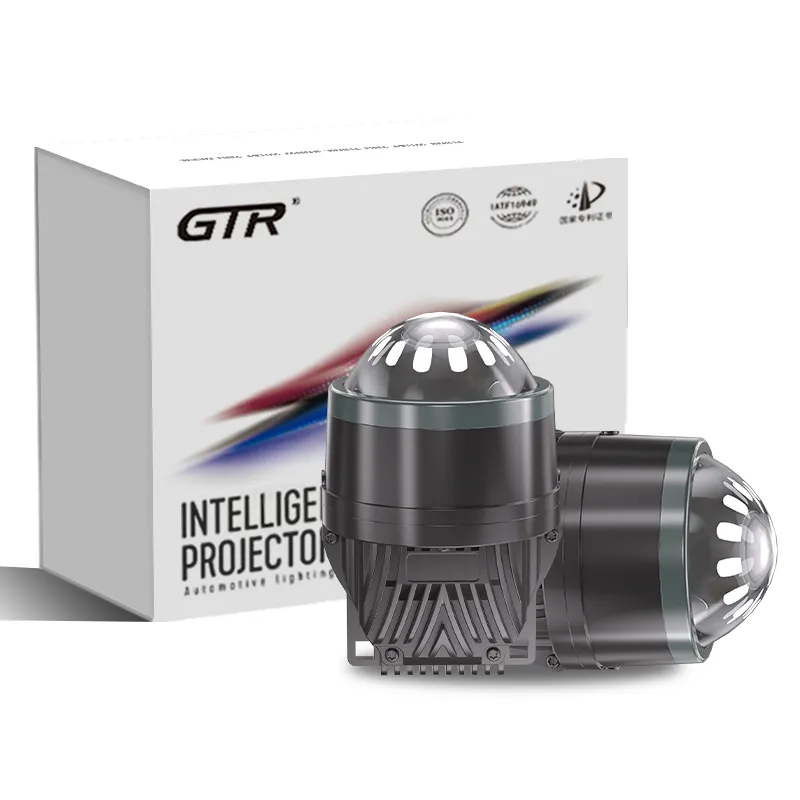
1. The quality hierarchy: what to look for in a module
When sourcing LED headlight modules for cars, professional buyers must focus on three critical specifications: the thermal conductivity of the PCB (measured in W/m·K), the optical precision of chip placement for beam focus, and the electromagnetic compatibility (EMC) of the driver to avoid radio interference.
In our engineering tests, we observed that the difference between a $5 module and a $15 module is not just a “markup.” It is the difference between a module that produces scattered, dangerous glare and one that mimics the precise cut-off line of an original halogen bulb while delivering 300% more light. If you are source LED headlight modules for cars in bulk, skipping the technical audit is the fastest way to lose high-end customers.
1.1. Plongée technique : puces CSP vs COB
Comprendre l’architecture des puces est vital. Alors que le COB (Chip on Board) est souvent moins cher et offre une grande surface de lumière, il manque de densité optique requise pour les boîtiers de projecteur ou de réflecteur. Le CSP (Chip Scale Package) permet une source de lumière beaucoup plus petite et intense qui s’aligne parfaitement avec le point focal d’origine du véhicule. Chez GTR, nous utilisons exclusivement des puces CSP de haute qualité car elles offrent une distance de “portée” supérieure, un argument de vente clé pour les conducteurs soucieux de la sécurité.
2. Naviguer dans les défis d'approvisionnement régionaux (Inde et Malaisie)
L’approvisionnement n’est jamais une entreprise “taille unique”. Les facteurs environnementaux régionaux dictent quels modules réussiront :
- Approvisionnement en modules de phares LED pour voitures en Inde : La poussière et les vibrations sont les tueurs ici. Vous avez besoin de modules avec des ventilateurs classés IP68 et des drivers moulés (remplis de résine protectrice) pour résister aux conditions routières rigoureuses et aux saisons de mousson.
- Approvisionnement en modules de phares LED pour voitures en Malaisie : Une humidité élevée entraîne de la condensation à l’intérieur des boîtiers de phares mal scellés. Nous recommandons des modules avec des valves de respiration ou des joints de qualité supérieure de type GORE-TEX pour permettre à l’humidité de s’échapper sans laisser entrer l’eau.
2.1. La liste de contrôle d'approvisionnement en 5 points pour les responsables des achats
- Vérifiez la qualité de l’aluminium : Assurez-vous que le boîtier est en aluminium 6063 pressé à froid, et non en alliages de moulage bon marché qui ont une conductivité thermique inférieure de 50 %.
- Vérifiez le driver : Demandez si le driver est à ” courant constant “. Les drivers à tension constante sont moins chers mais provoqueront une surchauffe des LED lorsqu’elles chauffent (emballement thermique).
- Lux vs. Lumens : Ne vous laissez pas tromper par les affirmations de ” 10 000 lumens “. Demandez le ” lux à 25 pieds “. Les lumens représentent la lumière totale ; le lux est la lumière qui atteint réellement la route.
- Interférences radio : Assurez-vous que les modules respectent les normes CISPR 25 classe 3 ou supérieures pour éviter les bourdonnements dans la radio ou le GPS de la voiture.
- Garantie : Un fournisseur qui n’offre pas une garantie de remplacement de 2 ans ne fait pas confiance à sa propre ingénierie.
3. E-E-A-T : pourquoi l'expertise de GTR est importante
Avec plus d’une décennie dans les tranchées de l’éclairage automobile, notre équipe chez GTR a vu tous les modes de défaillance imaginables. Nous avons dépassé le style de fabrication “copier-coller” des années 2010. Aujourd’hui, nos laboratoires utilisent des goniophotomètres et l’imagerie thermique pour garantir que chaque module que nous exportons vers l’Inde, la Malaisie, et l’Ouest respecte des enveloppes de performance strictes. Nous ne sommes pas seulement une usine ; nous sommes votre département R&D externalisé.
4. FAQ extrait en vedette : Intelligence d'approvisionnement
4.1. Quel est le facteur le plus important dans la longévité des modules LED ?
La gestion thermique est le facteur #1. Si une puce LED dépasse sa température de jonction nominale (généralement 150°C), la couche de phosphore se dégradera, entraînant un décalage permanent de la couleur et une chute massive de la luminosité.
4.2. Puis-je utiliser le même module LED pour des véhicules 12V et 24V ?
Uniquement si le driver est conçu pour une entrée à large plage de tension (généralement 9V-36V). La plupart des modules automobiles standard sont 12V uniquement. Les utiliser dans des camions 24V entraînera une défaillance immédiate du driver, sauf indication contraire.
4.3. Comment GTR garantit-il la qualité pour les commandes en gros ?
Nous mettons en œuvre un processus d’assurance qualité en trois étapes : test des composants à 100% avant l’assemblage, un rodage à haute température de 4 heures, et un contrôle final d’alignement optique avant l’emballage. Cela réduit les taux de DOA à presque zéro.
5. Construisez une marque d'éclairage pérenne avec GTR
Le marché de approvisionnement en modules de phares LED pour voitures évolue vers la premiumisation. Les clients en ont assez d’acheter des ampoules qui meurent en six mois. En vous associant à GTR, vous choisissez un fournisseur qui valorise l’ingénierie de précision plutôt que la médiocrité du marché de masse.
Sécurisez votre chaîne d’approvisionnement avec les modules les plus fiables de l’industrie. Visiter Portail B2B de GTR pour consulter nos dernières spécifications techniques et obtenir un kit d’échantillons pour votre équipe de contrôle qualité. Vos clients méritent la meilleure lumière ; offrez-la-leur avec GTR.