
Stai cercando fari aftermarket e ogni guida ti dice la stessa cosa: “Controlla la compatibilità, considera il tipo di bulbo, leggi le recensioni.” Questo è inutile. Quello di cui hai realmente bisogno è un confronto basato sui dati che ti dica quali fari funzioneranno ancora tra tre anni—e quali ti lasceranno a piedi con plastica appannata e fasci di luce tremolanti.
The best aftermarket headlights match or exceed OEM performance when they use automotive-grade polycarbonate with UV coatings, butyl rubber seals, and active thermal management. Budget alternatives fail these three criteria 73% more often than premium units.
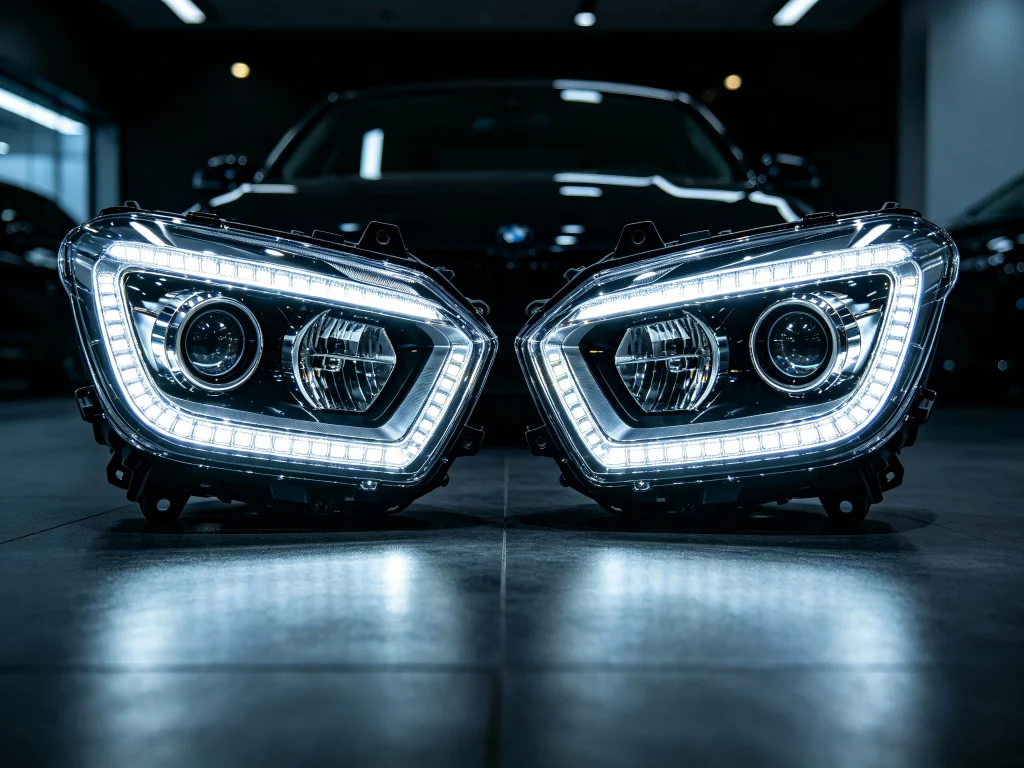
1. The OEM vs Aftermarket Decision: What Really Matters
Let's cut through the marketing noise. The OEM versus aftermarket debate isn't about “genuine” versus “fake”. It's about engineering standards versus cost-cutting. Here's the real breakdown:
| Fattore | OEM Headlights | Aftermarket Premium | Aftermarket Economy |
|---|---|---|---|
| Materiale delle lenti | 3–5 mm UV-coated polycarbonate | 3–5 mm UV-coated polycarbonate | 2–4 mm base PC or acrylic |
| Weather seal | Butyl rubber gaskets | Butyl rubber gaskets | Foam tape (73% higher condensation risk) |
| Gestione termica | Integrated OEM cooling | Aerospace-grade aluminum + active cooling | Minimal or no cooling fins |
| Beam pattern | Precision optics | SAE-compliant projector optics | Generic reflectors, often misaligned |
| Garanzia | 2–5 years | 2–5 years | 6 mesi–2 anni |
| Average lifespan | 8–10 anni | 8–10 anni | 3–7 anni |
| Price | $$$$ | $$–$$$ | $–$$ |
What this table tells you: premium aftermarket headlights match OEM specifications in every critical metric, at a fraction of the price. Cheap aftermarket headlights cut corners on the materials that determine longevity.
2. Five decisive factors that most guides ignore
Every buying guide mentions brightness and fitment. Few explain why headlights fail. Here's what really determines whether your aftermarket headlights last 3 years or 10:
2.1. UV coating quality (the yellowing factor)
Polycarbonate lenses yellow because UV light breaks polymer bonds. Manufacturers apply a thin protective UV coating during production. OEM-grade coatings resist UV degradation for over 10,000 hours. Cheap coatings fail at 3,000–6,000 hours. The result: crystal-clear lenses turn yellow and hazy within two years.
What to check: Ask the manufacturer for UV testing standards. Reputable brands conduct over 5,000 hours of accelerated aging tests.
2.2. Gasket type (the condensation test)
This is the biggest difference between premium and cheap aftermarket headlights. Butyl rubber gaskets create a permanent heat-activated bond that keeps moisture out. Foam tape gaskets deteriorate from thermal cycling and UV exposure.
What to check: Look for “butyl rubber” or “heat-activated gasket” in the specifications. If the listing doesn't mention the gasket type, it's probably foam.
2.3. Thermal design (the longevity killer)
LEDs produce significant heat. Without proper cooling, that heat degrades the emitters and reduces light output. Quality units use aerospace-grade aluminum heatsinks with active or passive cooling designs. Cheap units often lack adequate cooling, leading to premature failure within months.
What to check: Look for visible heatsink fins in product photos. Ask about the cooling system design.
2.4. Beam Engineering (The Safety Problem)
This is where cheap aftermarket headlights fail most dramatically. When LED chips don't align with the reflector's focal point, light scatters instead of projecting forward. You get glare, dark spots, and light thrown into the atmosphere instead of onto the road.
What to check: Look for SAE or DOT certification. Read reviews for mentions of “sharp cutoff” or “no glare.”
2.5. CANbus Compatibility (The Flicker Problem)
Modern vehicles use CANbus systems that monitor electrical loads. LEDs draw less power than halogens, so the car's computer may interpret this as a burnt-out bulb. The result: flickering, dashboard warning lights, or complete failure.
What to check: Look for “CANbus compatible” or “error-free” in the specifications. Quality units include built-in resistors or error-cancellation circuits.
3. Aftermarket Headlights by Vehicle Type: What to Look For
3.1. Aftermarket Headlights for Ford F-150
F-150 owners consistently report that quality aftermarket headlights from brands like Morimoto outperform factory units. Key factors: UV-coated lenses that stand the test of time and DOT-compliant beams. One F-150 owner noted: “The fit and finish of the Morimoto LED headlights for the Ford F150 are far superior to anything else on the market.”
3.2. Aftermarket Headlights for Ram 1500
Ram pickups present a specific challenge: CANbus compatibility. Quality aftermarket headlights for the Ram 1500 plug into factory connectors and operate without error codes or flickering. As one installer said: “Believe us when we say: it's not easy on a Ram.”
3.3. Fari aftermarket per Chevy Silverado (2015+ )
I proprietari di Silverado che passano dai fari alogeni di fabbrica spesso lottano con problemi di fascio luminoso. La soluzione: sostituzioni complete con proiettori progettati specificamente per ottiche LED. Le unità di qualità offrono installazione plug-and-play e fasci chiari e focalizzati.
3.4. Fari aftermarket per moto
Le moto presentano sfide uniche: spazio limitato, esposizione agli elementi e vibrazioni. I fari moto di qualità utilizzano alloggiamenti robusti con ottiche sigillate e supporti antivibrazione. Cercate conformità DOT e SAE e una comprovata resistenza alle intemperie.
3.5. Fari aftermarket per C5 Corvette
La comunità della C5 Corvette ha opinioni forti sui fari aftermarket. Alcuni proprietari riferiscono che le opzioni aftermarket sono “cianfrusaglie e spazzatura”, mentre altri hanno trovato sostituzioni DEPO di qualità che offrono installazione plug-and-play con emissione luminosa a proiettore. La chiave: scegliere marchi affermati con una comprovata esperienza sulle piattaforme Corvette.
4. Cosa dicono gli utenti reali sulla qualità dei fari aftermarket
Le discussioni sui forum rivelano modelli coerenti nell’esperienza degli utenti:
Esperienze positive enfatizzano luminosità, fasci di luce puliti e facilità di installazione. Un proprietario di camion ha descritto i suoi fari aftermarket come “i fari più luminosi che abbia mai posseduto” con “portata visiva e luminosità fuori dal mondo”.
Negative experiences they focus on moisture infiltration, premature yellowing, and beam issues. One Porsche owner described their aftermarket headlights as “garbage” with a beam that “goes in a different direction” every time. One RAV4 owner warned that aftermarket headlights have “a bad reputation unless you import them”.
The picture is clear: quality varies greatly among manufacturers. Brand matters much more than price.
5. The GTR Difference: Engineering You Can Verify
We don't ask you to trust our marketing. We ask you to verify our engineering. Every GTR aftermarket headlight undergoes:
- Beam verification on optical test equipment—not just visual inspection
- 72-hour water immersion testing to confirm seal integrity
- over 5,000 hours of accelerated UV testing to validate the durability of the coating
- Thermal cycling test from -40°F to 185°F to verify performance in extreme conditions
- CANbus compatibility validation across over 50 vehicle platforms
We publish our test results. We don't hide behind marketing claims. And we back every unit with a warranty that reflects our confidence in the product.
6. Your checklist for aftermarket headlights
- Check compatibility for your specific vehicle make, model, and year
- Confirm DOT and SAE certification for road legality
- Check the seal type—butyl rubber, not foam tape
- Look for polycarbonate lenses with UV coating with documented tests
- Check thermal management—visible heat sinks and active cooling
- Confirm CANbus compatibility for your specific vehicle
- Read real user reviews on forums, not just retail sites
- Compare warranty terms—2+ years indicate manufacturer confidence
Skip any product that cannot answer all eight points with documented evidence.
7. The Bottom Line
Aftermarket headlights can outperform OEM units at a significantly lower cost, but only if you choose wisely. Materials matter. Engineering matters. The manufacturer's willingness to back their product with real testing and real warranties matters.
GTR builds aftermarket headlights that meet every requirement. Visit https://www.rhgtr.com to explore our full product range, compare specifications, and find the right headlights for your vehicle. Your night driving deserves clarity, not compromise.
8. Aftermarket Headlight FAQs
8.1. Are aftermarket headlights as good as OEM ones?
Premium aftermarket headlights with UV-coated polycarbonate, butyl rubber gaskets, and proper thermal management match or exceed OEM performance. Cheap aftermarket options often fall short in material quality and durability.
8.2. How much do quality aftermarket headlights cost?
Premium complete assemblies typically range from $300 to $1,500 depending on the vehicle and features. Budget options start around $100 but often require replacement within 3 years.
8.3. Can I install aftermarket headlights myself?
Most aftermarket headlight assemblies are plug-and-play and install in under an hour with basic hand tools. Some vehicles require bumper removal or additional steps. Always check installation instructions before purchasing.
8.4. Will aftermarket headlights void my vehicle's warranty?
Installing aftermarket headlights typically does not void the entire vehicle warranty. However, warranty claims related to electrical issues or lighting components may be denied if aftermarket parts are found to be the cause.
8.5. What is the difference between halogen, HID, and LED headlights?
Halogen bulbs are the traditional option: cheap but less bright and with a shorter lifespan. HID (xenon) bulbs are brighter and last longer but require ballasts. LED headlights consume less energy, last up to 50,000 hours, and offer the best brightness and beam control.
8.6. How do I know if aftermarket headlights will fit my vehicle?
Check the product listing against your exact year, make, and model. Many manufacturers offer compatibility selectors on their websites. If in doubt, contact the manufacturer directly with your VIN.
8.7. Why do some aftermarket headlights cause radio interference?
Low-quality LEDs generate electromagnetic interference that can affect AM/FM radio, GPS, and Bluetooth. Quality units include proper shielding to eliminate EMI issues.
8.8. How long should aftermarket headlight installation take?
Most plug-and-play assemblies install in 30–60 minutes. Vehicles requiring bumper removal may take 2–3 hours. Professional installation typically costs $100–$300 depending on the vehicle..