
If you are staring at a product page with three different HB3 headlight bulb options and cannot figure out why one costs $15 and another costs $89, this guide is for you. The difference is not marketing fluff—it is engineering, materials, and manufacturing precision that determines whether your upgrade works as intended or becomes a frustrating return.
Most hb3 headlight bulb led listings bombard you with lumen numbers and wattage claims. These figures tell you almost nothing about real-world performance. What matters is how the bulb places light on the road, how it manages heat, and whether it plays nicely with your vehicle’s electrical system.
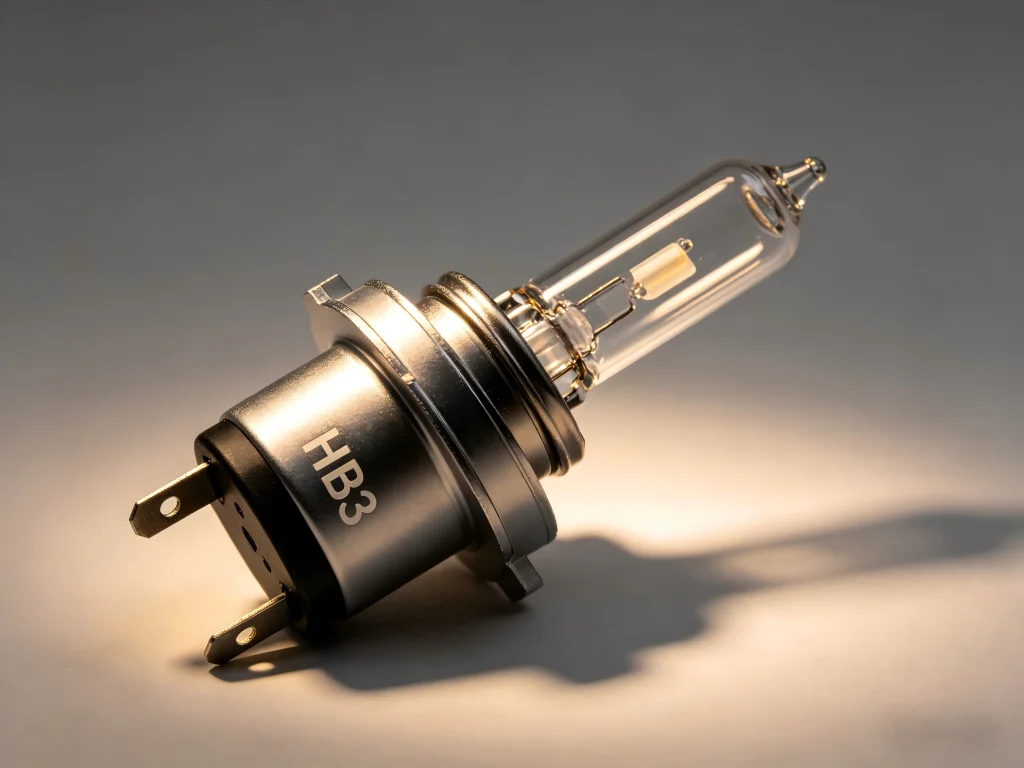
1. HB3 vs H11 vs 9005: Clearing Up the Confusion
HB3 and 9005 are the same bulb. HB3 is the international designation; 9005 is the North American trade name. Neither is interchangeable with H11, which uses a different base, wattage, and sealing design.
This is the single most common source of buyer error. A customer searches for “hb3 headlight bulb vs h11” because they look vaguely similar in photos. They are not.
Here is the breakdown:
| Specifiche | HB3 (9005) | H11 |
|---|---|---|
| Primary Use | High Beam | Low Beam / Fog |
| Halogen Wattage | 60-65W | 55W |
| Base Type | P20d | PGJ19-2 |
| Connector Style | Flat twin-pin | Plug-style |
| O-Ring Seal | Larger diameter | Smaller diameter |
The base tabs on an HB3 are wider than those on an H11. The rubber O-ring is a different size. Forcing an H11 into an HB3 socket will not seal properly, leading to moisture intrusion and foggy headlight housings over time.
Some vehicles—like the 2022 Mitsubishi Triton—use H11 for low beam and HB3 for high beam from the factory. If you are upgrading both, you need two different bulb types. This is not a situation where one size fits all.
2. Halogen vs LED: What Changes, What Stays the Same
A halogen HB3 bulb produces approximately 1,700 lumens at 3200K color temperature. A quality LED replacement can produce 4,000-6,000 usable lumens at 6000K—but only if the light is focused correctly. The wrong LED in the right socket is worse than the right halogen in that socket.
The physics problem is this: a halogen filament emits light from a tiny point. Your headlight reflector or projector is designed around that exact point. An LED chip emits light from a surface, not a point. If that surface is not positioned exactly where the filament was, the reflector cannot focus the beam properly.
The result is scattered light. Some of it goes where you need it. Most of it goes into trees, oncoming traffic, and the dark void at the edges of your vision.
2.1. The Precision Requirement Nobody Talks About
In our engineering testing, we have measured the impact of chip misalignment. When the LED light-emitting surface deviates by more than 0.5mm from the original filament position, the beam pattern begins to degrade noticeably. At 1mm, you are losing meaningful forward throw and creating glare.
This is why two LED bulbs with identical lumen ratings can perform completely differently. One places the chips at the filament position. The other does not.
3. Why Cheap HB3 LEDs Fail (And How to Spot Them)
Budget LED bulbs typically fail in three specific ways: thermal throttling reduces brightness after minutes of use, chip misalignment scatters light instead of focusing it, and integrated driver designs cook their own electronics.
When you search for an hb3 headlight bulb on mass-market platforms, you will see prices from $15 to $150. Based on our years of manufacturing experience, the bargain options are hiding specific compromises:
3.1. Thermal Throttling: The Hidden Dimming
LED chips produce light efficiently, but the junction where light is created gets extremely hot. Cheap bulbs use thin aluminum heatsinks or plastic housings that cannot dissipate this heat. The internal driver then reduces power to protect the chip.
The result: a bulb rated at 6,000 lumens might output only 2,500 lumens after 15 minutes of continuous use. In our lab tests, budget LEDs lost 30-40% of initial brightness within the first half hour of operation.
Quality alternatives use copper heat pipes and active cooling fans to maintain output. GTR bulbs, for example, maintain 95% of peak brightness even after two hours of continuous use.
3.2. Chip Alignment: The Beam Pattern Killer
As discussed above, the LED chips must sit exactly where the halogen filament was. Off by 1mm means your headlights scatter light everywhere except where you need it. This is not a minor issue—it is the difference between a legal, focused beam and a dangerous, glare-producing mess.
3.3. Driver Design: Heat Cooking Electronics
High-quality HB3 LED sets use external drivers—the small black box on the wire. This separates the heat-generating electronics from the heat-generating LED chips, extending system lifespan significantly. Cheap bulbs cram everything into one housing. The LED chips cook the driver electronics, leading to premature failure.
4. CANbus Compatibility: Will Your Car Reject the Upgrade?
Modern vehicles monitor bulb health using Pulse Width Modulation (PWM). When you install an LED that draws 25-35W instead of the expected 60-65W, the computer interprets this as a burned-out bulb. The result is flickering, dashboard error messages, or bulbs that refuse to illuminate.
This is particularly common in Honda, Toyota, Chrysler, Jeep, BMW, and Audi vehicles. Some drivers purchase “anti-flicker harnesses” or “resistor decoders” to solve this. Real-world feedback on these products is mixed.
One customer review for a popular anti-flicker harness noted: “Did not fix the flickering… installed in series with my LED headlight bulb and the lighting wire harness” on a 2019 Toyota Highlander Hybrid. Another review for a different brand reported that while it fixed DRL flicker, “it seems to activate the high beam when the DRL should be on” on a Jeep Wrangler.
The cleaner solution is a bulb with integrated CANbus circuitry designed to communicate with your vehicle’s ECU like the original bulb. GTR bulbs include this technology, achieving 95%+ compatibility without additional components.
5. Retail vs. Professional Grade: What You Get at Each Price Point
| Caratteristica | Retail Halogen (Sylvania, NAPA) | Generic Amazon LED | GTR Professional LED |
|---|---|---|---|
| Brightness | ~1,700 lumens | Initial high, drops rapidly | 4,000-6,000 sustained lumens |
| Color Temp | 3200K (yellow) | Variable, often 6500K+ | 6000K (daylight) |
| Durata della vita | 500-1.000 ore | Often fails within 6 months | 30,000+ hours |
| CANbus | Factory compatible | Rarely works without parts | Integrated, 95%+ compatible |
| Precisione del fascio | OEM standard | Scattered, glare-prone | 1:1 filament positioning |
| Progettazione termica | Passive (filament) | Thin aluminum, no fan | Copper heat pipes + active cooling |
| Garanzia | 1 year | 30-90 days | Long-term support |
Retail halogens from AutoZone or Repco are not bad products. They are OEM replacements—safe, legal, and reliable. But they represent the performance floor, not the ceiling.
Generic Amazon LEDs are a gamble. Some work adequately. Many fail within months due to thermal issues or compatibility problems. The return process alone can consume more time than the savings justify.
6. How to Verify a Bulb Before You Buy
Not all HB3 LED listings are honest. Here is a verification checklist based on our manufacturing experience:
- Look for specific alignment claims. Phrases like “1:1 filament positioning” or “halogen-matched light source” indicate engineering intent. Vague claims about “super bright” or “latest chip technology” tell you nothing.
- Check for active cooling. If the product photos show only a passive heatsink with no fan or heat pipe, the bulb will throttle. This is physics, not opinion.
- Search your vehicle model and “HB3 LED flicker.” If other owners of your specific car report issues, the bulb likely lacks adequate CANbus compatibility.
- Ignore peak lumen claims entirely. A “20,000 lumen” claim is physically impossible for a 12V automotive bulb. Look for sustained output data if available.
- Check the connector type. Your HB3 socket uses a specific P20d base. Some adapters and harnesses exist for custom wiring projects, but the bulb itself must match your factory socket without modification.
7. Domande frequenti
7.1. Is HB3 the same as 9005?
Yes. HB3 and 9005 are interchangeable names for the same bulb. HB3 is the international designation; 9005 is the North American trade number.
7.2. Can I use an HB3 LED bulb in my low beam housing?
No. HB3 is designed for high beam applications. Low beams require different beam patterns and cutoff lines to avoid blinding oncoming traffic. Using HB3 in a low beam housing is unsafe and illegal in most jurisdictions.
7.3. Do I need a decoder for my HB3 LED upgrade?
It depends on your vehicle. Many modern cars use PWM monitoring that rejects low-draw LEDs. GTR bulbs include integrated CANbus circuitry for 95%+ compatibility. Some vehicles—particularly certain BMW, Jeep, and Chrysler models—may still require additional components.
7.4. Why do cheap LED bulbs dim after a few minutes?
Thermal throttling. The LED chips are overheating because the cooling design is inadequate. The driver reduces power to prevent damage. This is why active cooling with heat pipes and fans matters.
7.5. Are retail bulbs from AutoZone or Repco good enough?
For basic replacement, yes. They are safe and legal. But they represent halogen-level performance. If you want significantly better visibility, you need a professional-grade LED with proper thermal management and beam precision.
7.6. What is the best color temperature for HB3 headlights?
6000K provides daylight-like illumination that reduces eye fatigue on long drives. Higher temperatures (6500K+) may appear “brighter” but scatter more in fog and rain, reducing actual visibility.
8. Making the Right Choice for Your Vehicle
The HB3 headlight upgrade market is full of options that look identical on paper but perform completely differently on the road. The difference is not in the specifications you can read—it is in the engineering you cannot see.
Precision chip alignment, active thermal management, and integrated CANbus compatibility are the three pillars of a quality LED upgrade. Without all three, you are gambling on a product that may fail, flicker, or scatter light dangerously.
For drivers who want the visibility upgrade without the trial-and-error, GTR offers HB3 LED solutions engineered as complete systems—not collections of parts. Visit https://www.rhgtr.com to explore our professional-grade options and find the exact fitment for your vehicle..