
The aftermarket lighting aisle is a minefield. One box promises “50,000 lumens” for $25. Another looks identical but costs $150. Both claim to be “DOT approved.” You have no idea which one is telling the truth, and the reviews are flooded with conflicting information. A led headlight bulb should be a simple upgrade. Instead, it has become a gamble. This guide exists to end that confusion.
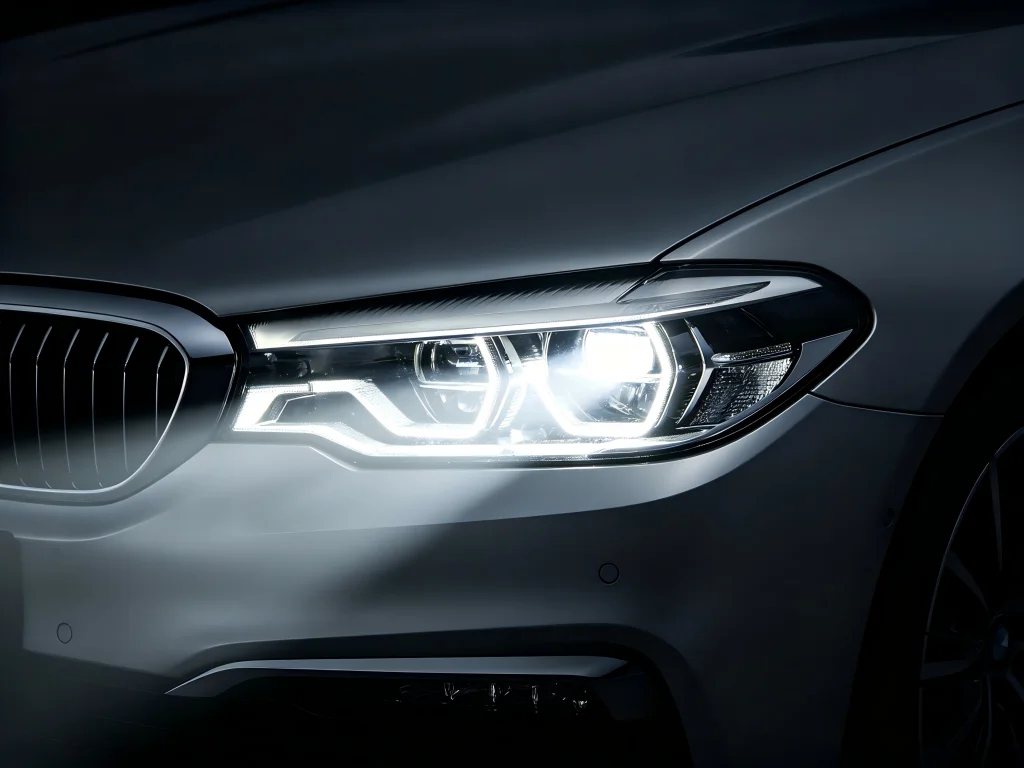
1. The Housing Problem: Why Most LED Retrofits Fail
The single most important factor determining LED retrofit success is whether the LED emitter position replicates the original halogen filament position. If the light source sits even 1-2mm off the optical focal point, the beam pattern scatters, creating glare and poor road illumination.
Headlight housings are precision optical instruments. They are designed around a very specific point in space where the halogen filament sits. Reflector bowls bounce light from that exact location forward in a controlled pattern. Projector lenses focus light from that same point through a cutoff shield.
Move the light source even slightly, and the entire optical system breaks down. This is not opinion. This is physics. A 2025 study in TRID confirmed that LED sources perform exceptionally well in projector housings but advised against their use in reflector configurations unless the emitter geometry precisely matches the original design.
This is why a $25 Amazon LED bulb and a $150 GTR bulb can both claim “H11 fitment” yet produce completely different results. The cheap bulb may physically fit. It may even be brighter in raw output. But without precise emitter positioning, that brightness scatters uselessly instead of reaching the road.
2. What Cheap LEDs Get Wrong (And Cost You More)
Walk through any online marketplace and you will see the same pattern repeated. Here is what separates a temporary fix from a permanent solution.
| 特徴 | Cheap Generic LEDs | GTR Engineered LEDs |
|---|---|---|
| Emitter Geometry | Oversized chips, poor alignment, no adjustable collar | 1:1 filament mimicry, precision placement, full rotation adjustment |
| 冷却システム | Weak fan or tiny passive heatsink | Heat pipe + dual ball-bearing turbo fan, sealed against moisture |
| Lumen Rating | Inflated (chip spec × number of chips, theoretical) | Measured at bulb level, honest real-world output |
| CANbus対応 | Often causes dashboard errors, flickering | Built-in decoding, error-free in most modern vehicles |
| Color temperature | Extreme blue (8000K+) or inaccurate, shifts over time | Balanced 6000K, stable across lifespan |
| 調整可能性 | None or minimal | Full rotation collar for perfect beam clocking |
| 保証 | 90日から1年 | Lifetime on Ultra series |
A forum member on F150Ecoboost.net captured the difference well: “There are straight up plug in bulbs that need no resistors or programing. Morimoto and GTR are 2 examples… the better quality are not found on Amazon or ebay and will cost more but they also work with the vehicles systems and last longer”.
Another driver, after trying multiple brands, noted that the GTR Ultra 3 produced “a very sharp cutoff and wide pattern, better than the old Supernova v.3… Minimal if any stray light above the cutoff”.
3. The Specs That Actually Matter (And the Ones That Don't)
Lumen numbers are the most misunderstood and most abused specification in the lighting industry. Here is what the marketing materials do not tell you.
3.1. Raw Lumens vs. Effective Lumens
Raw lumens measure total light emitted in all directions under laboratory conditions. Effective lumens measure what actually reaches the road. A bulb with 10,000 raw lumens but poor beam control can deliver less usable light than a 4,000-lumen bulb with precise optics. When comparing products, look for independent testing that measures road-relevant output, not chip specifications.
3.2. 色温度:6000Kの罠
Many drivers assume bluer light equals better visibility. The opposite is often true. Light above 6500K has shorter wavelengths that scatter more easily in rain and fog, creating a self-blinding effect. For practical night driving, 5000K to 6000K offers the best balance of contrast and weather penetration.
BulbFacts independent testing measured the GTR Ultra Series 3 at 5100K, noting it “looks clean and modern without getting overly blue. A very blue LED might look bright in a product photo, but it is not always better on wet pavement, in rain, or during long night drives”.
3.3. Cooling: The Silent Killer
LEDs produce heat at their base, not forward through the beam. If that heat cannot escape, the diode throttles its own output to protect itself. You get dimming over time. You get flickering. You get a bulb that dies within months. Active cooling through a properly designed fan, combined with a heat sink large enough to manage sustained output, is not optional. It is the difference between a bulb that works for a year and one that works for the life of your vehicle.
4. The CANbus Complication: Why Your Dashboard Warns You
Modern vehicles monitor their bulbs. When you install an LED that draws significantly less power than the halogen it replaced, the control unit interprets the reduced electrical load as a burned-out bulb. It throws a warning. It may even cut power to the circuit entirely.
This is where quality engineering becomes visible. HELLA’s technical guidance explains that CANbus-compatible bulbs “are equipped with additional electronic resistors or integrated decoders that simulate the typical electrical energy consumption of a conventional halogen bulb”. Without this, you are stuck with flickering lights and dashboard errors, or you are forced to add external resistors that clip into your wiring harness.
A BMW owner on a support forum described the frustration perfectly: standard LED bulbs flickered even after coding out monitoring functions. The solution required bulbs “explicitly CANbus compatible and designed for BMW (built-in resistors and electronics to handle PWM and cold/warm checks)”.
GTR bulbs include built-in decoding that resolves dashboard errors in most modern vehicles. For particularly sensitive platforms, compatible adapters are available. The key is choosing a bulb that addresses this from the start, not one that requires aftermarket fixes.
5. Independent Testing: What the Numbers Show
BulbFacts buys and tests products independently. No manufacturer pays for a review or provides free product. Their testing of the GTR Ultra Series 3 provides a useful benchmark for what “good” actually looks like.
In reflector housings, the Ultra 3 measured 1,498 lux low beam—a 302% increase over the halogen baseline. High beam measured 2,456 lux, a 180% increase. Glare measured 380 lux, which BulbFacts described as “not the lowest glare number we have tested, but it is also not concerning for this level of output”.
In projector housings, results were equally strong. Low beam measured 830 lux (261% over halogen). High beam measured 910 lux (106% over halogen). Critically, the beam quality held up: “The cutoff stayed clean, the width was good, and the hotspot was strong without getting messy”.
The conclusion from BulbFacts was measured but clear: “It is not cheap, and it is not magically perfect for every vehicle. No LED headlight bulb is. But based on our testing, the Ultra Series 3 is one of the easiest high-end LED kits to recommend if you want strong real-world output, good beam control, clean color, and a product that feels like it was built to last”.
6. Real Drivers, Real Results
Marketing claims are easy to write. What matters is what happens after installation, on actual roads, in actual weather.
A driver on a Camaro forum summarized the consensus on quality brands: “High-end brands like Diode Dynamics SL1 and GTR Lighting Ultra 2.0 are the safest bets for quality.” Their own experience: “Super precise beam pattern that doesn’t blind people… It’s a HUGE difference over stock halogens”.
Another owner, after upgrading a Honda Fit, put it simply: “The effect is really much better. Before, I did not dare drive on the highway at night”.
A daily commuter on unlit rural roads noted that with GTR, “I don’t lose sight of the road when there is oncoming traffic. Commuting stress has significantly been reduced”.
And from the F150 forum, a user who documented their upgrade history with photos confirmed: “The GTR have a very sharp cutoff and wide pattern… Minimal if any stray light above the cutoff”.
7. よくある質問
7.1. Will LED bulbs work in my reflector headlights?
They can, but reflector housings are less forgiving than projectors. The emitter must precisely replicate the halogen filament position. Look for bulbs with adjustable collars that allow you to fine-tune the beam pattern after installation. A 2025 TRID study advised caution with LED in reflectors and recommended halogen or HID unless the emitter geometry is verified.
7.2. Do I need CANbus adapters?
Some vehicles require them. GTR bulbs include built-in decoding that resolves dashboard errors in most modern vehicles. If your car is particularly sensitive (certain BMW, Audi, and Mercedes models), compatible adapters are available.
7.3. How do I clock the bulb correctly?
“Clocking” refers to rotating the bulb within its socket so the LED chips face the correct direction. Most quality bulbs include an adjustable collar. The general rule is that the chips should be oriented vertically (at 3 and 9 o’clock positions) for reflector housings. Incorrect clocking is one of the most common installation mistakes and causes beam pattern problems.
7.4. Are aftermarket LED bulbs legal?
Legality varies by jurisdiction. Factory-fitted LEDs are legal because the entire assembly is approved. Aftermarket LED bulbs in halogen housings occupy a gray area in many regions. The focus should always be on beam pattern and glare control, not just brightness. A properly engineered bulb that produces a clean cutoff is safer and more likely to pass inspection than a high-output bulb that scatters light.
7.5. How long do quality LED bulbs last?
GTR rates its Ultra series with a lifetime warranty. That is not marketing generosity. It is confidence in thermal engineering. A properly cooled LED bulb can last 15,000 to 30,000 hours or more, roughly 10 to 20 times the lifespan of halogen. The key variable is heat management. Cheap bulbs with inadequate cooling will fail early regardless of rated lifespan.
7.6. What about LED bulbs for motorcycles?
Motorcycles demand even more attention to vibration resistance and thermal durability. A led headlight bulb for bike applications face constant road shock and exposure to elements. GTR’s motorcycle-specific fitments are built to survive conditions that kill ordinary bulbs.
8. Why GTR Is the Answer for Drivers Who Are Done Guessing
GTR has been manufacturing automotive lighting since 2007. The facilities hold IATF16949 and ISO9001 certifications, the same quality standards used by OEM suppliers. Over 100 patents, including invention patents for dual-chip high/low beam modules and variable color temperature systems, represent decades of engineering investment.
But credentials alone do not make a product worth buying. What matters is what those credentials produce: a bulb that installs cleanly, aligns precisely, runs cool, and stays bright. A bulb backed by a lifetime warranty, not because we are generous, but because we are confident.
When you buy GTR, you are not buying a commodity. You are buying the end of a search. You are buying the confidence that comes from knowing your headlights will work when you need them, in the conditions that matter, for as long as you own the vehicle.
Visit https://www.rhgtr.com to find the exact fitment for your car, truck, or bike. The road ahead is waiting. See it clearly.
—
— SEO Information
—Article Angle Used: D. Deep Comparison & Buyer‘s Guide
SEO Title:
1. LED Headlight Bulb Buying Guide: What Works & What Wastes Money | GTR
2. LED Headlight Bulb Comparison: Cheap vs. Engineered | GTR
3. The Only LED Headlight Bulb Guide You Need Before Buying
Meta Description: Stop wasting money on cheap LED headlight bulbs that scatter light and fail early. Independent test data reveals what separates a proper upgrade from a temporary fix.。