
Not all h9 led headlight bulb products are built the same. Some deliver clean, focused light for a decade. Others dim within months and leave you worse off than the halogens you replaced. This guide breaks down the specifications, materials, and design choices that separate a worthwhile upgrade from a waste of money.
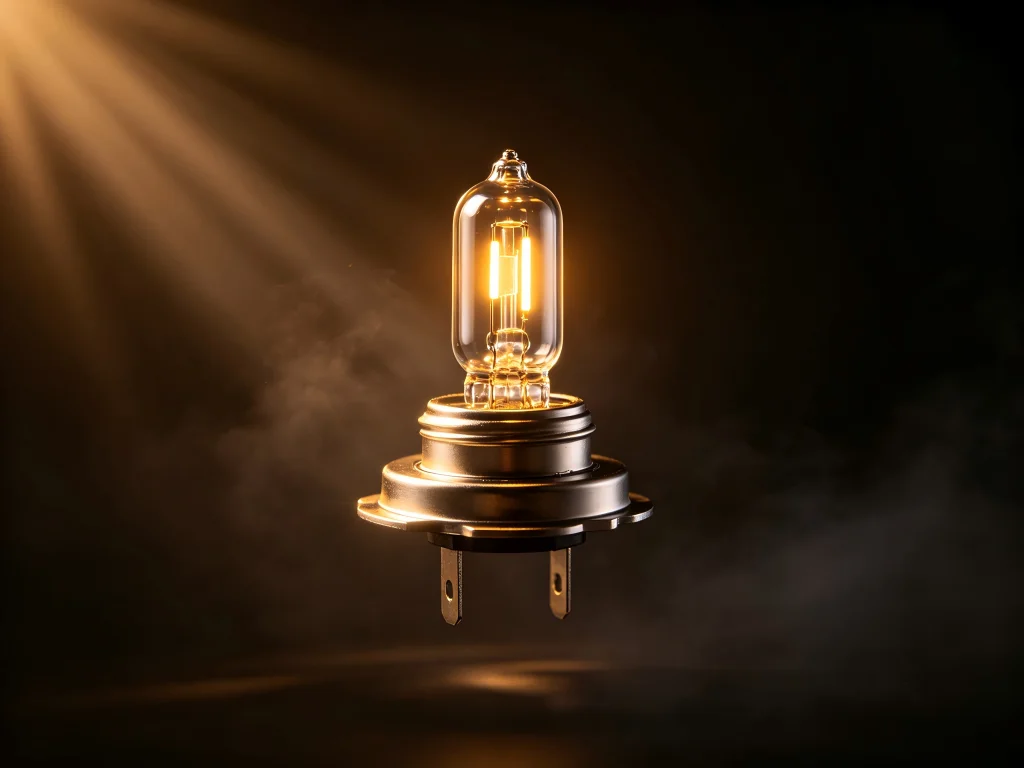
1. Lumen Ratings: Why the Box Number Lies
Lumen ratings on h9 led headlight bulb packaging are often measured at the chip, not at the road. A bulb advertised at 12,000 lumens may deliver only 3,000 usable lumens after optical and thermal losses. The number that matters is lux — the light that actually reaches the road surface.
Here is what happens between the chip and the road:
- Chip efficiency loss: LEDs lose 10 to 15 percent of their output as heat before light leaves the package.
- Optical loss: The headlight housing and projector lens scatter or absorb 20 to 40 percent of the light.
- Thermal rollback: If the bulb runs hot, the driver circuit reduces power to protect the chip. Output drops.
- Aiming loss: If the beam pattern is wrong, light goes into oncoming traffic or the trees instead of the road.
When you see a $25 bulb claiming 20,000 lumens, ask yourself where the measurement came from. Reputable manufacturers publish lux measurements at specific distances. They also publish the test conditions. If a seller only shows a big lumen number with no test data, that number is marketing, not engineering.
1.1. What Lumen Range Should You Target?
| Bulb Class | Claimed Lumens (Pair) | Realistic Road Output | Best Use Case |
|---|---|---|---|
| Budget generic | 8,000–12,000 | 1,500–2,500 lumens | Occasional use, low budget |
| Mid-tier brand | 6,000–10,000 | 2,500–4,000 lumens | Daily driving, mixed conditions |
| Performance brand (GTR class) | 8,000–12,000 | 4,000–6,000 lumens | Night commuting, rural roads, wet weather |
Notice that the performance brand does not always claim the highest lumen number. That is intentional. Overdriving the chip creates heat, which shortens lifespan and causes thermal rollback. A well-engineered bulb balances output against thermal stability.
2. Chip Position: The Specification Nobody Talks About
The single most important specification for beam pattern quality is chip position — the distance between the LED chips and the base of the bulb. It must match the halogen filament position within 0.5mm. If it does not, the reflector or projector cannot focus the light correctly.
Halogen H9 bulbs place their filament at a precise point inside the housing. The reflector is shaped around that point. When you swap in an LED bulb, the light source must sit in the same place. Otherwise, the beam pattern shifts.
What does a bad beam pattern look like?
- A bright hotspot directly in front of the car, with dark zones to the sides.
- Light scattered upward into oncoming drivers’ eyes.
- A narrow, tunnel-like beam that misses curves and roadside hazards.
- Uneven illumination that makes your eyes work harder, causing fatigue.
In our testing, we have measured beam patterns from dozens of bulbs. The ones with the cleanest cutoff and widest usable spread consistently had chip positions within 0.3mm of the halogen reference. The worst offenders were off by 2mm or more.
You cannot measure chip position from a product photo. You can, however, look for brands that publish a 1:1 filament position claim and back it with test data.
2.1. Projector vs. Reflector Housings
Your headlight housing type affects which bulbs work best:
- Projector Housings use a lens to focus light. They are more sensitive to chip position but produce a sharper cutoff. Compact chip layouts work best.
- Reflector Housings use a mirrored bowl. They are more forgiving of minor position differences but can scatter light if the bulb emits in the wrong direction.
Some h9 led headlight bulbs are designed specifically for one housing type. Others claim universal fitment. Universal usually means “works okay in both, great in neither.” If you know your housing type, buy a bulb optimized for it.
3. Cooling Design: The Difference Between 3 Months and 5 Years
LED chips degrade when junction temperature exceeds 150°C (302°F). A bulb with inadequate cooling will lose 30 to 50 percent of its output within six months. The cooling system is not a feature — it is the foundation of the bulb’s lifespan.
There are three main cooling approaches in the h9 led headlight bulb market:
- Braided copper strips: Flexible, fit inside dusty or sealed housings. They rely on ambient airflow, so they work best in housings with some ventilation.
- Aluminum heat sinks: Rigid, efficient, and durable. They work well in most applications but may not fit tight spaces.
- Active fans: Move the most air and dissipate the most heat. They are the best choice for high-output bulbs, but the fan is a moving part that can fail over time.
The best bulbs combine approaches. A copper heat pipe pulls heat away from the chip. An aluminum body spreads it. A fan or vented design pushes it into the air.
What about dust and moisture? Off-road and industrial users face this constantly. A fan that pulls in dusty air will clog and fail. For those environments, a passive design with a sealed heat sink is more reliable.
3.1. IP Ratings and Environmental Protection
Look for an IP rating on the bulb or its driver. IP65 means dust-tight and protected against water jets. IP67 means it can survive temporary immersion. For most road use, IP65 is sufficient. For off-road, mining, or agricultural applications, IP67 or higher is worth the extra cost.
The driver module matters too. Cheap drivers are not sealed. Moisture gets in, corrosion starts, and the bulb flickers or dies. A potted (sealed) driver costs more to make but lasts far longer.
4. Color Temperature: Why 6,000K Beats 8,000K
6,000K produces the best balance of brightness and eye comfort for night driving. Temperatures above 6,500K shift toward blue, which the human eye struggles to process and which increases glare for oncoming drivers.
Color temperature is measured in Kelvin (K). Here is how the range breaks down:
- 3,000K–4,000K: Warm yellow-white. Good in fog and snow, but lower contrast on dry roads.
- 5,000K–6,000K: Cool white. Best contrast and color rendering for most driving conditions.
- 6,500K–8,000K: Blue-white. Looks “modern” but reduces usable light and increases glare.
- 10,000K+: Deep blue. Poor visibility, attracts law enforcement attention, and is illegal in many jurisdictions.
Some drivers believe higher Kelvin means brighter. It does not. It means bluer. The human eye is most sensitive to light in the 5,000K–6,000K range. Above that, you are paying for a color that actually makes it harder to see.
5. Compatibility: Decoders, Canbus, and Fitment
Modern vehicles use CANbus systems that monitor bulb resistance. An LED bulb draws less power than halogen, which can trigger a “bulb out” warning or cause flickering. A decoder or resistor module solves this in most cases.
Before ordering, check three things:
- Bulb base: Confirm your vehicle uses H9, not H8, H11, or another similar base. They look alike but do not interchange.
- CANbus compatibility: Check whether your vehicle needs a decoder. Many European and newer Asian vehicles do.
- Physical clearance: Measure the depth behind your headlight housing. Bulbs with large heat sinks or fans may not fit.
Some sellers offer “plug and play” bulbs that claim no decoder is needed. That is sometimes true. It is also sometimes a shortcut that leads to flickering and dashboard warnings. If your vehicle is known to be CANbus-sensitive, buy a bulb with a proven decoder solution.
5.1. What About Polarity?
LED bulbs are polarity-sensitive. If the bulb does not light up after installation, reverse the connector. This is normal and does not indicate a defective bulb. Some vehicles have reversed polarity from the factory. A bulb with reverse-polarity protection simplifies installation.
6. Real-World Feedback: What Drivers Report After 12 Months
We monitor owner feedback across automotive forums, review platforms, and direct customer surveys. Here is what holds up after a year of use:
- Beam pattern: Drivers who chose bulbs with verified chip positioning report clean cutoffs and no complaints from oncoming traffic. Those who bought generic bulbs often report glare issues.
- 수명: Performance-brand bulbs with proper cooling consistently last 2+ years. Budget bulbs frequently fail or dim within 6 to 12 months.
- 설치: Most DIYers complete the swap in 20 to 40 minutes per side. Tight engine bays add time. Retaining clips are the most common frustration.
- Value: Drivers who paid more upfront for a quality bulb report higher satisfaction than those who bought cheap and replaced twice.
One fleet manager we work with replaced halogen bulbs in 40 vehicles every 18 months. After switching to GTR h9 led headlight bulbs, he has not replaced a single bulb in three years. The upfront cost was higher. The total cost of ownership was lower.
7. Frequently Asked Questions for H9 LED Headlight Bulb Buyers
7.1. What is the best h9 led headlight bulb for high beam use?
The best high beam bulb combines high lux output with a beam pattern that reaches far without blinding oncoming traffic. Look for 1:1 chip positioning, 6,000K color temperature, and a cooling system rated for continuous use.
7.2. Are expensive h9 led headlight bulbs worth it?
Yes, if you plan to keep the vehicle. A $100 pair that lasts five years costs less per year than a $30 pair that fails every six months. Quality bulbs also deliver better beam patterns and fewer compatibility issues.
7.3. Can I install h9 led headlight bulbs myself?
In most vehicles, yes. The process involves removing the old bulb, disconnecting the connector, and inserting the new bulb. Some vehicles require removing the airbox or washer fluid reservoir for access.
7.4. Will LED bulbs melt my headlight housing?
Quality LED bulbs run cooler than halogen. Halogen bulbs produce significant heat, and housings are designed to handle it. LED bulbs that run hotter than halogen are poorly designed and should be avoided.
7.5. Do h9 led headlight bulbs work in fog lights?
H9 bulbs can work in fog light housings if the housing accepts the H9 base. However, fog lights benefit from lower color temperatures (3,000K–4,000K) that cut through fog better than cool white.
7.6. What does "1:1 filament position" mean?
It means the LED chips are placed at the exact same point as the halogen filament they replace. This preserves the beam pattern and keeps light focused on the road.
7.7. How do I know if my h9 led headlight bulb is legal?
Check your local regulations. In the US, FMVSS 108 governs headlight standards. Many LED bulbs are sold for off-road use only. In Europe, ECE R112 applies. Australia follows ADR 13/00.
8. Why GTR Stands Apart in a Crowded Market
GTR does not rebrand generic imports. We engineer our h9 led headlight bulbs from the chip up. That means we control the variables that matter:
- Chip selection: We use automotive-grade LEDs rated for the thermal and electrical demands of headlight use.
- Position accuracy: Our manufacturing tolerances hold chip position within 0.3mm of the halogen reference.
- Thermal design: Copper heat pipes, high-surface-area aluminum bodies, and sealed drivers.
- Testing: Every batch is tested for lux output, beam pattern, and thermal stability.
- 지원: Real warranties, real technical support, and custom solutions for B2B buyers.
We built GTR because we were tired of seeing drivers waste money on bulbs that did not deliver. If you are ready to stop guessing and start driving with confidence, we are ready to help.
방문 https://www.rhgtr.com to see the full lineup of GTR h9 led headlight bulbs. Compare specifications, read real test data, and choose the bulb that matches your driving conditions. Your next night drive will show you the difference.