
1. Introduction: The Rise of the 50 Watt LED Street Light
Street lighting has undergone a quiet revolution. For decades, the orange glow of high-pressure sodium (HPS) lamps defined our nocturnal landscapes, consuming significant energy and requiring frequent maintenance. The shift to LED technology promised a brighter, more efficient future, but early adoption was often a game of over-lighting or underperformance. Enter the 50 watt LED street light—a product category that has emerged as the modern sweet spot for a vast array of municipal, commercial, and residential applications. Its rise is not accidental; it represents the perfect convergence of technological maturity, energy efficiency mandates, and practical lighting design. This fixture delivers the precise illumination needed for safety and visibility without the energy waste of its predecessors, effectively replacing 150-250W HID fixtures. As cities and towns worldwide prioritize sustainability and cost reduction, the 50W LED has become the go-to standard for lighting secondary roads, residential streets, parking lots, and pathways, marking a definitive step toward smarter, more responsible urban infrastructure.
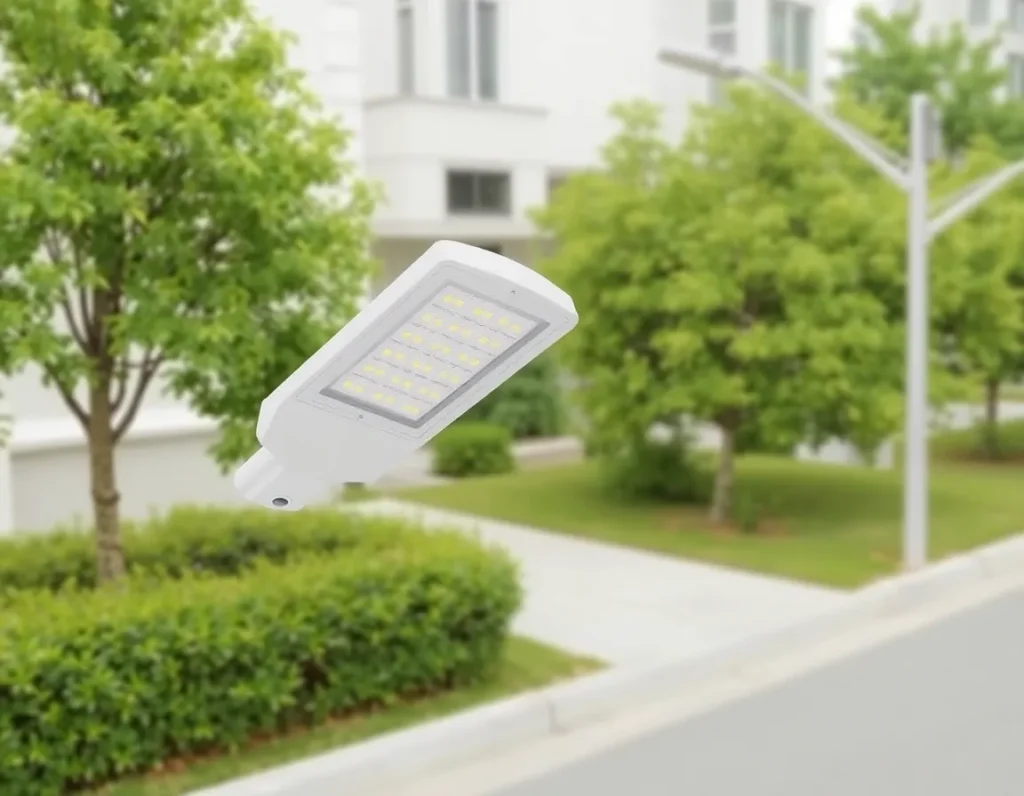
2. What is a 50 Watt LED Street Light? Defining the Modern Standard
A 50 watt LED street light is a solid-state lighting fixture designed for outdoor roadway and area illumination, consuming approximately 50 watts of electrical power. But this simple wattage figure only tells part of the story. The “modern standard” is defined not by power draw alone, but by its performance output and intelligent design. Unlike traditional lighting where wattage correlated loosely with brightness, LED technology decouples these concepts. A 50W LED fixture is engineered to produce a highly efficient light output, typically ranging from 4,500 to 8,500 lumens, depending on the model and optical design. This range is strategically chosen to meet the illumination requirements for a wide spectrum of public and private spaces without over-lighting, which causes glare and light pollution, or under-lighting, which compromises safety.
At its core, this fixture is a system. It integrates high-efficacy LED chips, advanced thermal management to ensure long life, precision optics to control light distribution, and a robust housing rated for harsh outdoor environments (commonly IP65 or IP66). Crucially, the modern 50W LED street light is often “selectable” or “tunable,” meaning installers can configure its wattage, color temperature, and sometimes even its beam pattern in the field to match the exact needs of a project. This flexibility, combined with a typical lifespan exceeding 70,000 hours, transforms it from a simple bulb replacement into a long-term infrastructure asset. It is the definitive answer for projects seeking to achieve high-quality, reliable, and future-proof lighting without the excessive energy consumption of legacy systems.
3. Key Benefits: Why 50W LED Street Lights Are a Smart Investment
Choosing a 50W LED street light is a strategic decision that pays dividends across multiple fronts. The benefits extend far beyond a lower electricity bill, impacting maintenance budgets, environmental goals, and public safety.
3.1. Substantial Energy and Cost Savings
This is the most immediate and quantifiable advantage. By consuming up to 70% less energy than the high-pressure sodium or metal halide fixtures they replace, 50W LED lights drastically reduce operational expenses. For a municipality or business with hundreds of fixtures, this translates to tens of thousands of dollars in annual savings. The lower wattage also reduces demand on electrical infrastructure, potentially deferring costly upgrades.
3.2. Superior Light Quality and Safety
LEDs provide crisp, white light with excellent color rendering compared to the monochromatic yellow of HPS lamps. This improves visibility, allowing drivers and pedestrians to better discern colors, contrasts, and details at night, which is critical for safety. The precision optics of LED fixtures ensure light is directed onto the roadway and sidewalks, minimizing wasteful and dangerous glare and light trespass into adjacent properties.
3.3. Minimal Maintenance and Long Lifespan
With a rated life of 70,000 hours or more, a quality 50W LED street light can operate for over 15 years before needing replacement. This eliminates the frequent relamping cycles associated with traditional lights, slashing labor and material costs for maintenance crews. The robust construction and lack of fragile filaments or glass also make them highly resistant to vibration and impact.
3.4. Environmental Sustainability
The dramatic reduction in energy consumption directly lowers carbon emissions associated with electricity generation. Furthermore, LEDs contain no mercury or other hazardous materials common in HID lamps, making disposal safer and easier. Their long life also means less material waste over time.
3.5. Durability and Reliability
Engineered for outdoor use, these fixtures feature die-cast aluminum housings for optimal heat dissipation and are sealed to IP65/66 standards, making them dust-tight and resistant to powerful water jets. They operate reliably in extreme temperatures, from -40°F to 122°F, ensuring consistent performance year-round.
4. Technical Specifications Explained: Lumens, CCT, Voltage, and More
To make an informed choice, understanding the key technical specifications of a 50W LED street light is essential. These numbers define its performance, compatibility, and suitability for your project.
4.1. Lumens: The Measure of Light Output
Lumens (lm) measure the total quantity of visible light emitted. For a 50W LED street light, lumen output typically ranges from 4,000 to 8,500 lm. A common benchmark is around 6,500 lumens, which provides ample illumination for most residential and secondary road applications. Always prioritize lumens over watts when assessing brightness.
4.2. Correlated Color Temperature (CCT)
Measured in Kelvins (K), CCT describes the color appearance of the light. For street lighting, the most common choices are:
- 3000K (Warm White): Offers a softer, amber-toned light. Often preferred in historic districts or residential areas for its less intrusive, cozy feel.
- 4000K (Neutral White): A balanced, crisp white light. A popular compromise that provides good visibility without being too harsh.
- 5000K (Cool White): A bright, daylight-mimicking white. Maximizes visual acuity and is frequently specified for roadways, parking lots, and security-sensitive areas.
Selectable CCT fixtures offer the flexibility to choose after purchase.
4.3. Voltage and Input Power
Modern LED drivers are highly adaptable. Most commercial-grade 50W LED street lights support a wide input voltage range, such as 120-277V AC or even 100-480V. This universal compatibility simplifies inventory and installation across different electrical systems, whether for a standard 120V circuit or a 277V commercial grid.
4.4. Optical Distribution (IESNA Types)
This defines the shape and spread of the light beam. Common distributions for street lights include:
- Type II: Short to medium throw, ideal for wider roads or area lighting.
- Type III: Medium throw, rectangular pattern, perfect for mounting at the side of a roadway.
- Type IV: Forward-throw pattern, suitable for mounting in the center of a pathway or narrow road.
- Type V: Circular, symmetrical distribution for lighting intersections or center-mounted applications.
4.5. Additional Critical Specs
- CRI (Color Rendering Index): A measure of how accurately colors appear under the light. A CRI of 70+ is standard, but 80+ is available for areas where color distinction is important.
- IP Rating (Ingress Protection): A two-digit code like IP65. The first digit (6) indicates total dust protection. The second digit (5) protects against low-pressure water jets. IP66 offers protection against powerful jets.
- Power Factor (PF): A value above 0.90 indicates efficient use of electrical power, reducing strain on the grid.
- Dimming: Many models support 0-10V dimming, allowing for smart controls and further energy savings during low-traffic hours.
5. Design and Features: From Cobraheads to Area Lights
The 50W LED platform comes in various form factors, each tailored for specific mounting scenarios and aesthetic preferences. Understanding these designs ensures you select a fixture that not only performs well but also integrates seamlessly into its environment.
5.1. Cobrahead Street Lights
The quintessential roadway luminaire. Named for its distinctive shape, the cobrahead design is optimized for side-of-pole mounting over roadways. It features a streamlined, often asymmetrical housing that projects light in a controlled rectangular pattern (typically Type III or Type V) onto the street, minimizing uplight. Modern LED cobraheads are far sleeker than their HID ancestors, with improved thermal fins and often a “photobioic” or “full-cutoff” design to reduce glare. This is the standard choice for municipal street lighting projects.
5.2. Area and Parking Lot Lights
These fixtures are designed for broad, uniform illumination of open spaces. They often have a square or rectangular profile with a glass or polycarbonate lens and provide a symmetrical (Type V) or slightly asymmetrical (Type II) distribution. Area lights are commonly used in parking lots, pedestrian plazas, loading docks, and around commercial buildings. Their design prioritizes wide-area coverage with high vertical illumination to enhance safety and security in three-dimensional spaces.
5.3. Decorative and Architectural Styles
For settings where aesthetics are paramount—such as downtown districts, parks, campuses, and residential communities—decorative 50W LED lights are available. These include bell lights, lantern-style fixtures, and acorn globes. They incorporate the efficient 50W LED engine into housings that complement traditional or historic architecture while delivering modern performance. Despite their ornamental look, they maintain the necessary IP ratings and optical control.
5.4. Key Physical Features
- Thermal Management: Effective heat sinking is critical for LED longevity. Look for fixtures with extensive, extruded or die-cast aluminum heat sinks that passively dissipate heat.
- Mounting Options: Standard mounting includes slipfitter (for mounting directly onto a tenon), yoke (arm mount for extended reach), and trunnion mounts. Ensure compatibility with your existing poles.
- Materials: High-quality aluminum housing with a corrosion-resistant powder-coat finish is standard. Lenses are made from impact-resistant tempered glass or polycarbonate.
- Smart Ready: Increasingly, fixtures are being designed with built-in ports or drivers compatible with networked lighting controls for adaptive dimming and monitoring.
6. How to Choose the Right 50W LED Street Light for Your Project
Selecting the optimal fixture requires a methodical approach that balances technical requirements, site conditions, and long-term value.
6.1. Assess the Application and Lighting Requirements
Begin by defining the space. Is it a local residential street, a commercial parking lot, a bike path, or a downtown sidewalk? Each application has different illuminance (measured in footcandles) and uniformity standards. Consult IESNA (Illuminating Engineering Society) guidelines or local ordinances. The required light level will dictate the necessary lumen output and beam distribution (Type II, III, IV, or V).
6.2. Determine the Optimal Color Temperature (CCT)
Consider the surrounding environment and community preferences. For general roadways and security, 4000K or 5000K offers excellent visibility. For residential areas or historic zones, 3000K may be mandated or preferred to reduce blue light emission and create a warmer ambiance. Selectable-CCT fixtures provide valuable future-proofing.
6.3. Verify Electrical Compatibility
Check the voltage of your existing infrastructure. Choose a fixture with a driver that matches your supply (e.g., 120V, 277V, or the versatile 120-277V). Also, confirm if dimming capabilities are needed for integration with smart city systems or dusk-to-dawn photocells.
6.4. Prioritize Quality and Certifications
Do not compromise on build quality. Look for independent certifications that validate performance and safety:
- UL Listed: Ensures electrical safety.
- DLC Premium: A certification for high efficiency and quality; often required for utility rebates.
- IP65/IP66: Guarantees weatherproof durability.
- LM-79 & LM-80 Reports: Provide verified data on lumen output, efficacy, and lumen depreciation over time.
6.5. Evaluate Total Cost of Ownership (TCO)
Look beyond the initial purchase price. Calculate the TCO by factoring in:
- Energy savings over the fixture’s lifespan.
- Reduced maintenance costs (fewer replacements, lower labor).
- Potential utility rebates for DLC-qualified products.
- Warranty length and coverage (a 7-year or longer warranty is a strong indicator of manufacturer confidence).
6.6. Consider Future-Proofing and Flexibility
Opt for fixtures with selectable wattage and CCT. This allows you to fine-tune the installation or adapt to changing needs without replacing the entire unit. Also, consider if the design allows for easy retrofitting onto existing poles to minimize installation costs.
By systematically working through these criteria, you can confidently specify a 50 watt LED street light that delivers optimal performance, reliability, and return on investment for your specific project, ensuring well-lit, safe, and sustainable spaces for years to come.
7. Installation, Maintenance, and Lifespan Considerations
Once you’ve selected the ideal 50 watt LED street light for your project, proper installation and an understanding of long-term care are crucial to realizing its full benefits. While these fixtures are designed for durability, attention to detail during setup and a proactive maintenance plan will ensure decades of reliable, cost-effective illumination.
7.1. Installation Best Practices
Installation typically involves mounting the fixture to an existing or new pole via a slipfitter, arm, or yoke mount. Key considerations include:
- Voltage Verification: Confirm the fixture’s input voltage (e.g., 120-277V AC, 480V) matches your site’s electrical supply. Many modern 50W LED street lights feature universal voltage drivers (120-277V), simplifying retrofits.
- Pole Compatibility: Ensure the mounting bracket fits the pole’s diameter. A secure fit is vital for wind resistance and long-term stability.
- Photocontrol/Dimming Integration: If using photocells for dusk-to-dawn operation or 0-10V dimming systems for adaptive lighting, follow the manufacturer’s wiring diagram precisely. Proper grounding and surge protection (often built-in to 4-5KV standards) are non-negotiable for protecting the electronics from voltage spikes.
- Aiming and Spacing: Adhere to the fixture’s photometric report (IES file) to determine optimal mounting height, spacing, and tilt. A Type III optical distribution, common for roadways, throws light in a long, rectangular pattern. Correct aiming prevents dark spots and light trespass onto adjacent properties.
7.2. Maintenance and Lifespan
A primary advantage of LED technology is its dramatically reduced maintenance burden. A quality 50W LED street light boasts a rated lifespan of 70,000 hours or more. In practical terms, operating 12 hours per night, this translates to over 15 years of service before significant lumen depreciation (often defined as L70, when output falls to 70% of initial lumens).
Maintenance is largely passive but should include periodic visual inspections. Check for:
- Dirt Accumulation: While fixtures are rated IP65 or IP66 for dust and water ingress, lenses can accumulate dirt, insects, or salt spray in coastal areas, reducing light output. A simple cleaning every 1-2 years can restore full performance.
- Physical Damage: Inspect for cracks in the housing or lens, which could compromise the IP rating.
- Thermal Management: Ensure vents or heat sinks are not obstructed by debris, nests, or snow, as proper heat dissipation is critical to LED longevity.
Unlike traditional HID lamps that fail catastrophically, LEDs gradually dim. This predictable performance allows for planned, group relamping cycles rather than costly emergency call-outs for individual failures, a significant operational savings.
8. Solar-Powered 50W LED Street Lights: An Off-Grid Solution
For locations where grid connection is impractical, prohibitively expensive, or where sustainability goals are paramount, solar-powered 50W LED street lights offer a compelling off-grid alternative. These integrated systems combine a high-efficiency photovoltaic (PV) panel, a battery storage unit, a charge controller, and the LED fixture into a standalone lighting solution.
8.1. How They Work
During daylight hours, the solar panel converts sunlight into electricity, which is stored in a deep-cycle lithium or lead-acid battery. An intelligent charge controller manages this process, preventing overcharging. At dusk, a photocell or timer activates the 50W LED module, drawing power from the battery to provide illumination throughout the night. Advanced models feature motion sensors to boost brightness to full power (e.g., 8,500 lumens) when activity is detected, conserving battery life by operating at a lower output during idle periods.
8.2. Key Advantages and Considerations
The benefits are substantial: zero electricity bills, no trenching for power lines, rapid deployment, and complete immunity to grid outages. They are ideal for rural roads, pathways, parks, parking lots in remote areas, and disaster relief zones.
However, successful deployment requires careful planning:
- Solar Insolation: Site assessment is critical. The panel must receive direct, unobstructed sunlight for most of the day. Shading from trees or buildings drastically reduces charging efficiency.
- Autonomy Days: The system must be sized to provide sufficient light during consecutive cloudy or rainy days (typically 3-5 days of autonomy). This often means a larger PV panel and battery capacity than the nominal 50W load would suggest.
- Battery Life and Environment: Batteries are the system’s lifespan-limiting component. Lithium-ion batteries offer longer life, better performance in temperature extremes, and smaller size than lead-acid but at a higher upfront cost. Proper thermal management for the battery compartment is essential.
- Fixture Integration: Many solar street lights use an integrated “all-in-one” design. Ensure the LED component itself maintains the high-quality specifications—such as proper thermal management, optical control, and robust surge protection—expected from a grid-tied 50 watt LED street light.
9. Cost Analysis: Price, ROI, and Energy Savings
The decision to upgrade to or install new 50W LED street lights is heavily influenced by financials. A comprehensive cost analysis reveals that while the initial investment is higher than traditional options, the long-term savings are transformative.
9.1. Initial Purchase Price
The price for a single commercial-grade 50W LED street light fixture typically ranges from $175 to $450. This variance depends on features like selectable wattage/CCT, optical precision, brand, certifications (DLC Premium listings command a premium but often qualify for rebates), and housing material. Integrated solar-powered units have a higher upfront cost, often between $500 and $1,200 per unit, as they include the PV panel, battery, and controller.
9.2. Energy Savings: The Core of ROI
This is where LED technology shines. A 50W LED fixture producing 6,500 lumens typically replaces a 250-400W high-pressure sodium (HPS) or metal halide lamp. The energy savings are immediate and substantial.
Example Calculation: Consider replacing a 250W HPS fixture operating 4,000 hours annually (approx. 11 hours/night).
- HPS Annual Energy Use: 250W 4,000 hrs = 1,000,000 Wh = 1,000 kWh.
- 50W LED Annual Energy Use: 50W 4,000 hrs = 200,000 Wh = 200 kWh.
- Annual Energy Savings: 800 kWh.
At an average commercial electricity rate of $0.12/kWh, this saves $96 per fixture, per year. For a municipality or developer with hundreds of fixtures, the annual savings escalate rapidly into tens of thousands of dollars.
9.3. Maintenance and Relamping Savings
Traditional HPS lamps require relamping every 3-5 years (12,000-24,000-hour lifespan). Each service call involves labor, equipment (bucket trucks), and the cost of the lamp and ballast. With a 70,000-hour LED lifespan, these recurring costs are virtually eliminated for 15+ years. The reduction in maintenance logistics and costs is a major component of the total return on investment.
9.4. Calculating Return on Investment (ROI)
ROI is calculated by considering total savings versus the net installed cost. The formula is straightforward:
ROI (%) = (Total Savings – Net Project Cost) / Net Project Cost * 100
Total Savings include cumulative energy savings and avoided maintenance costs over the analysis period.
Net Project Cost is the installed cost minus any utility or government rebates for energy-efficient lighting.
For a grid-tied project, a simple payback period (initial cost divided by annual savings) is often between 2 to 5 years. Given a 15+ year lifespan, the subsequent 10+ years represent almost pure financial gain and risk mitigation against rising energy costs.
For solar projects, the ROI calculation differs as it avoids ongoing energy costs entirely. The payback is benchmarked against the cost of trenching and connecting to the grid, which can be astronomical in remote areas, making solar the cost-effective choice from day one.
10. Summary of Key Points
The 50 watt LED street light has established itself as the modern standard for efficient, effective, and sustainable outdoor illumination. Its adoption represents a smart, forward-thinking investment for municipalities, commercial properties, and residential communities alike.
- Efficiency & Performance: Delivering 6,500+ lumens, a 50W LED effectively replaces legacy 250W+ fixtures, offering superior light quality with better color rendering and uniform distribution while slashing energy consumption by 70-80%.
- Technical Flexibility: Available in various CCTs (3000K-6000K), voltages, and optical distributions (Type II-V), with advanced features like selectable wattage and CCT, dimming capabilities, and robust IP65/IP66 ratings for durability.
- Informed Selection: Choosing the right fixture requires analyzing lumens and uniformity (not just wattage), understanding CCT and CRI for the application, verifying electrical compatibility, and prioritizing quality certifications (DLC, UL, IP rating).
- Long-Term Value: With a lifespan exceeding 70,000 hours and minimal maintenance needs, these lights offer dramatic savings in both energy and operational costs. The total cost of ownership is significantly lower than traditional technologies.
- Off-Grid Potential: Solar-powered versions provide a viable, zero-energy-cost solution for remote or environmentally sensitive areas, though they require careful site-specific sizing and planning.
- Strong Financial Case: The compelling ROI, driven by direct energy savings and reduced maintenance, often yields a payback period of just a few years, followed by over a decade of net positive cash flow.
By upgrading to a well-specified 50W LED street light system, stakeholders achieve more than just brightened streets—they invest in enhanced safety, environmental responsibility, and long-term fiscal health.
11. Frequently Asked Questions (FAQ)
11.1. What area can a single 50W LED street light effectively cover?
Coverage depends heavily on the fixture’s optical distribution (IES Type), mounting height, and desired light level (measured in foot-candles or lux). As a general guideline, a 50W LED with a Type III medium distribution mounted at 15-20 feet can adequately illuminate a two-lane residential street or a parking lot aisle, with poles spaced approximately 60-80 feet apart. For precise spacing and layout, always consult the manufacturer’s photometric data or request a lighting simulation.
11.2. Are 50W LED street lights bright enough to replace my existing 150W HPS lights?
In almost all cases, yes—and often with improved visibility. While wattage measures power consumption, lumens measure light output. A 50W LED producing 6,500 lumens can easily match or exceed the useful light output of a 150W HPS lamp (which may produce 10,000+ lumens but loses significant output due to fixture degradation and poor color rendering). The whiter, more uniform light of the LED often creates a perceptibly brighter and safer environment at a fraction of the energy use.
11.3. What does "selectable wattage and CCT" mean, and why is it useful?
This feature allows you to configure the fixture’s power output (e.g., 30W/50W/80W) and correlated color temperature (e.g., 3000K/4000K/5000K) via dip switches or a simple controller after installation. This is incredibly useful for inventory standardization, future-proofing, and fine-tuning. You can order one fixture model and adjust it on-site to prevent over-lighting, match adjacent fixtures, or adapt to changing community preferences for light color.
11.4. How do I know if my existing poles can support a new 50W LED fixture?
Most 50W LED street lights are designed for easy retrofit. The primary considerations are: 1) Electrical: Ensure the existing wiring and photocontrol are compatible with the LED’s voltage input. 2) Mounting: Check that the new fixture’s mounting bracket (slipfitter, arm, etc.) matches the pole’s top diameter and bolt pattern. 3) Weight & Wind Load: LED fixtures are often lighter than the HID fixtures they replace, so structural load is rarely an issue. However, for areas with extreme wind, verify the fixture’s wind resistance rating.
11.5. What is the difference between IP65 and IP66 ratings?
Both are high ingress protection ratings. IP65 means the fixture is “dust-tight” and protected against low-pressure water jets from any direction. IP66 offers a higher level of water protection, being resistant to powerful water jets. For most street lighting applications exposed to rain and wind-blown dust, IP65 is perfectly adequate. IP66 may be specified for harsher environments like coastal areas with salt spray or locations subject to frequent high-pressure cleaning.
11.6. Can I connect a 50W LED street light to a traditional photocell?
Yes, in most cases. Ensure the photocell is rated for the LED’s low wattage load (a 50W load is fine for most photocells). Some LEDs have built-in drivers compatible with 3-wire (line, load, neutral) photocell setups. For 0-10V dimming or smart controls, you will need a compatible photocell/driver and proper wiring.
11.7. Do solar-powered 50W LED street lights work in winter or cloudy climates?
They can, but the system must be specifically engineered for such conditions. This requires oversizing the solar panel and battery bank to account for shorter daylight hours, lower sun angles, and consecutive cloudy days (“autonomy days”). In regions with very long, dark winters, a hybrid system or a grid-tied connection may be a more reliable solution than a purely off-grid solar light.