
1. Introduction: The Great Headlight Debate – HID vs LED for Projector Beams
For any driver looking to improve their vehicle's nighttime visibility, the central question quickly becomes: which is better, hid or led for projector headlights? This is not just a minor accessory choice; it is a critical decision that impacts safety, aesthetics, and performance. Projector headlights, with their sharp, focused beam patterns, have become the modern standard, but their effectiveness depends entirely on the light source placed inside them. The two dominant technologies vying for supremacy are High-Intensity Discharge (HID, or Xenon) and Light Emitting Diode (LED). Each has passionate advocates and distinct technological lineages. This guide cuts through the hype and glare to deliver a clear, detailed comparison. We will explore the fundamental role of the projector housing, break down the science behind each bulb type, and compare them head-to-head across all key metrics – from raw lumen output and color temperature to longevity, power consumption, and cost. By the end, you will have the knowledge to move beyond the debate and make an informed, confident decision for your specific vehicle and driving needs.
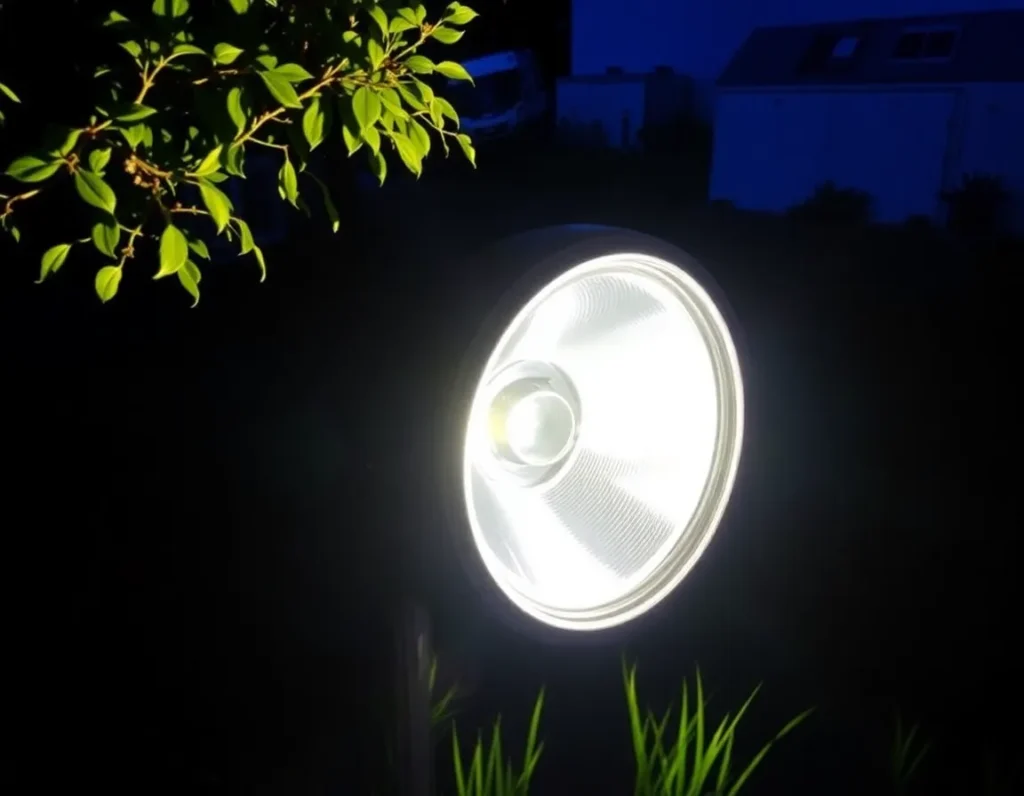
2. Understanding Projector Headlights: The Essential Foundation
Before diving into the HID vs. LED debate, it is crucial to understand the stage where this battle is fought: the projector headlight housing. Unlike traditional reflector housings, which simply reflect light from a bulb in a mirrored bowl, projector headlights use a more sophisticated optical system. At its heart is an ellipsoidal reflector bowl that captures light from the source (the bulb) placed at its focal point. This light is then directed forward through a condenser lens and, most importantly, a front cutoff shield. This shield is the key to the projector's magic – it creates the sharp horizontal cutoff line in the beam pattern, preventing light from scattering upward and blinding oncoming drivers.
The shaped light finally passes through a clear front projection lens, which further focuses and distributes the beam onto the road in a precise, controlled pattern. This design is why projector housings are non-negotiable for high-performance light sources like HID and LED bulbs. Reflector housings are designed for the specific light emission pattern of a halogen filament; installing a brighter, differently shaped HID or LED bulb in a reflector will cause massive glare and hot spots, creating a dangerous and illegal lighting condition. The projector's engineered optics are what allow the intense white light of HID and LED systems to be tamed and used effectively, maximizing useful road illumination while minimizing glare. In essence, the projector is the essential enabler that makes the advanced performance of HID and LED technology safe and viable on the road.
3. HID (Xenon) Headlights: Technology, Pros and Cons
High-Intensity Discharge (HID) headlights, commonly called Xenon lights, represent a significant technological leap over halogen. They produce light not with an incandescent filament, but by creating an electric arc between two electrodes inside a quartz glass capsule filled with xenon gas and metal salts. This process requires a high-voltage starter (or ballast) to ignite the arc – often producing an initial surge of over 20,000 volts – and a stable ballast to regulate the current once the arc is established. A notable characteristic of HID systems is their brief warm-up period; they start with a bluish-white light that shifts to a stable pure white as the metal salts vaporize and reach full operating temperature.
3.1. Pros of HID Headlights
- Superior Lumen Output and Reach: Historically, HID systems set the standard for raw light output, often producing significantly more lumens than halogens and early LEDs. This translated into exceptional distance lighting, or “reach”, making them favorites for drivers on dark, open roads.
- Excellent Road Penetration: The specific spectral characteristics of HID light, particularly at lower color temperatures like 4300K-5000K, are less susceptible to scattering in adverse conditions such as fog, rain, or light snow compared to some cool-white LEDs, offering better contrast and penetration.
- Mature and Proven Technology: Having been factory-installed in vehicles for decades, HID technology is well understood, and quality aftermarket kits are widely available.
- Distinctive Appearance: The characteristic color and arc-based light source provided a premium, high-tech aesthetic that defined luxury and high-performance vehicles for years.
3.2. Disadvantages of HID Headlights
- Warm-up Time: Requiring 5 to 15 seconds to reach full brightness is a real safety disadvantage in situations where immediate full illumination is needed, such as when flashing high beams.
- Complex Installation: Retrofitting requires installing bulbs, ballasts, and often wiring harnesses. Ballasts must be securely mounted and protected from moisture, making installation more involved than a simple bulb replacement.
- Potential for Glare: Even in projector housings, poorly aligned or low-quality HID kits can produce excessive glare. The orientation of the lamp's arc tube is also critical for a correct beam pattern.
- Durability Concerns: Reactors and igniters are additional points of failure. Vibration can also be an enemy of internal electrodes over a long period.
- Higher Power Consumption at Startup: Although efficient in steady state, the initial ignition peak demands a lot from the vehicle's electrical system.
4. LED Headlights: Technology, Advantages, and Disadvantages
Light Emitting Diode (LED) headlights represent the solid-state revolution in automotive lighting. They generate light by passing current through a semiconductor material, causing electrons to release energy in the form of photons—a process called electroluminescence. A single LED chip is tiny and incredibly bright, but it also produces intense heat at its semiconductor junction. Therefore, modern automotive LED bulbs are complex assemblies. They feature an array of high-power LED chips mounted on a circuit board, a sophisticated driver (a solid-state equivalent of an HID ballast) to regulate power, and, most critically, an integrated heat sink—often using aluminum fins or a fan—to actively dissipate heat and prevent rapid degradation.
4.1. Advantages of LED Headlights
- Instant On/Off: LEDs illuminate and reach full brightness instantly, without warm-up delay. This allows for immediate full illumination and enables advanced features such as dynamic cornering lights and communication-based lighting systems.
- Exceptional Energy Efficiency: LEDs convert a much higher percentage of electrical energy into visible light, rather than heat (compared to halogens and HID), placing less load on the alternator and the vehicle's electrical system.
- Extremely Long Lifespan: With no filament to burn out or gas to degrade, a properly cooled LED assembly can last tens of thousands of hours—often exceeding the lifespan of the vehicle itself.
- Compact and Robust Design: The solid-state construction makes LEDs highly resistant to vibration and shock. Their compact size also gives designers more flexibility in headlight styling.
- Wide Color Temperature Range: LEDs can be engineered to produce very pure white light (typically 5000K-6000K) that many drivers subjectively prefer for its modern, crisp appearance.
4.2. Disadvantages of LED Headlights
- Heat Management is Critical: Although efficient, the intense heat at the chip junction must be managed. Poor heatsink design or a faulty cooling fan can lead to catastrophic failure and melted components.
- Potential for Glare with Poor Quality Optics: Because LEDs emit light from a flat array of multiple chips, rather than a single point source like an HID arc or halogen filament, replicating the perfect focal point in a projector designed for another technology can be challenging. Low-quality LED bulbs often produce beam patterns with disturbing hot spots, dark spots, and excessive scatter.
- Higher Initial Cost for Quality Units: A truly well-designed LED conversion kit, with proper optics and thermal management, typically costs more than a mid-range HID kit.
- Cold Weather Performance: Ironically, LEDs can be too efficient; they produce very little waste heat, which can allow snow and ice to accumulate on the headlight lens in winter climates, unlike halogen or HID lights that generate enough heat to melt them.
5. Direct Comparison: HID vs. LED in Key Performance Categories
With the individual technologies explained, a head-to-head comparison reveals how they stack up in the real world. This is where the choice between hid or led for projector headlights becomes concrete.
5.1. Brightness and Light Output
The battle of brightness has evolved. For years, HID maintained a clear advantage in raw lumen output. A quality 35-watt 4300K HID system could produce around 3,200 lumens, surpassing halogens. Modern high-performance LED chips have closed this gap dramatically. Top-tier LED bulbs can now match or even slightly exceed the lumen output of equivalent HID systems. However, lumens alone do not tell the whole story. HID light, due to its arc source and spectral properties, often appears to have better “throw” or distance penetration in a well-designed projector. LED light can be exceptionally bright and white, but its perception is sometimes more of a “flood” type, illuminating a wide area intensely but with slightly less perceived reach. For most drivers, both technologies provide a massive and satisfying upgrade over halogen.
5.2. Beam Pattern and Focus
This is arguably the most critical category for a successful retrofit. HID bulbs, with their light emanating from a small, distinct arc gap, closely mimic the point-source characteristic of a halogen filament. This makes it easier for them to work harmoniously with the optics of a projector designed for halogen (a “retrofit” HID). The beam pattern typically remains sharp and clean, with a defined cutoff line. LED bulbs, with their multiple chips spread over a surface area, struggle to replicate a perfect point source. The result in many aftermarket LED bulbs is a beam pattern that loses sharpness, develops multiple cutoff lines or disturbing shadows, and can scatter light above the cutoff, causing glare. The best LED solutions use carefully positioned chips and integrated shields to mimic the position of a filament, but achieving optical perfection is more challenging and varies greatly from product to product.
5.3. Color Temperature and Visibility
HID systems offer a range typically from 3000K (yellow) to 8000K+ (deep blue), but the sweet spot for combined output and visibility is 4300K-5000K (bright white with a hint of warmth). This range provides excellent color rendering and cuts through weather well. LEDs are commonly found in the 5000K-6500K range, producing a very pure, “daylight” white that many find attractive for its modern appearance and high contrast in dry conditions. However, some drivers find that the very cool white light of higher Kelvin LEDs can create more back-glare from road signs and offers slightly less contrast in rain or fog compared to warmer HID light. The choice here is partly subjective, tied to aesthetic preference and typical driving conditions.
5.4. Longevity and Reliability
LED has a decisive theoretical advantage. A well-cooled LED system has an estimated lifespan of 30,000 to 50,000 hours or more, making it essentially a “lifetime” component. HID bulbs have a finite lifespan, typically between 2,000 and 5,000 hours — still much longer than halogen, but subject to eventual failure. However, real-world reliability depends on build quality. A cheap LED with a faulty fan will die quickly due to heat. The ballast of an HID system is an additional component that can fail, often due to moisture ingress or electrical issues. For pure and predictable longevity, with fewer points of failure, LED has the advantage.
5.5. Energy Efficiency and Electrical Load
This is another clear victory for LED technology. A typical LED headlight bulb consumes between 20-30 watts per side to produce light equivalent to a 35-watt HID or a 55-watt halogen. More importantly, it does so without the high-voltage startup spike required by HID ballasts. This lower, more stable consumption is gentler on the vehicle's wiring, switches, and alternator, making LEDs the more efficient choice from an electrical system standpoint.
5.6. Cost Analysis (Initial and Long-Term)
The initial cost is complex. Entry-level HID kits can be very cheap, but they often suffer from low reliability and color shift. A quality HID kit with reputable ballasts (e.g., Philips, Osram) and bulbs represents a solid mid-range investment. High-performance LED kits from trusted brands generally carry a higher upfront price, reflecting the cost of the chips, driver, and cooling system. In the long run, the much longer lifespan of LED means you will likely never need to replace it, potentially saving on bulb replacement costs in the future. When considering longevity and efficiency, the total cost of ownership often favors LED, despite the higher initial price for a quality product.
6. Installation, Compatibility, and Cost Considerations
Choosing between HID and LED technology for your projector headlights is not just about performance; it is about what works with your vehicle and your budget. The installation process, compatibility with the specific projector housing, and the total cost of ownership are critical factors that will determine your satisfaction with the upgrade.
6.1. Installation Complexity and DIY Feasibility
For the average DIY enthusiast, LED kits are generally the simplest and cleanest installation. A typical LED conversion kit includes the bulb, an integrated driver (or a small separate module), and necessary adapters. The process usually involves connecting the LED bulb to the factory headlight socket, securing the driver module with zip ties in the engine bay, and ensuring the cooling fan or heat sink has adequate space. There is no need to find mounting locations for bulky ballasts or route high-voltage wiring, making the installation less intrusive.
HID kits are more complex. They require mounting two ballasts per headlight — one for the low beam and often one for the high beam if it's a bi-xenon setup. You must find safe, heat-resistant locations for these boxes and route the high-voltage wiring from the ballast to the bulb, ensuring it stays away from moving parts and sharp edges. The ballasts also need a reliable 12V power connection, sometimes requiring you to tap into factory wiring or use relay harnesses for stable power. This added complexity increases installation time and the potential for error, making professional installation a more attractive option for HID systems.
6.2. Vehicle Compatibility and Projector Housing Matching
This is the most important technical consideration. Projector housings are optically designed for a specific light source. Using the wrong bulb can result in poor performance and glare for other drivers.
HID bulbs in halogen projectors are a notorious mismatch. The arc distance (the light-emitting part) of an HID bulb is in a different location than the filament in a halogen bulb. This misalignment scatters light, creating an uneven beam pattern with excessive glare and “hot spots,” defeating the purpose of the projector's sharp cutoff. For HIDs to work correctly, they must be installed in projectors specifically designed for HID bulbs, which have different focal points and reflectors.
LED bulbs present a similar but evolving challenge. Early LED bulbs struggled to mimic the 360-degree light emission of a halogen filament, causing dark spots in the beam pattern. Modern high-quality LED bulbs are designed with chips positioned to mimic the exact size and position of a halogen filament (or HID arc). This “filament-style” or “360-degree” design is crucial for a clean beam pattern in a projector housing. Before purchasing any kit, check if the bulb is marketed as compatible with projector housings and look for customer beam pattern photos. The safest option is to choose a kit from a reputable brand known for proper optical engineering.
6.3. Comprehensive Cost Breakdown
The financial aspect goes beyond the sticker price.
- Initial Purchase Price: Entry-level HID kits can be found for under $50, but they are almost universally poor quality, with unreliable ballasts and bulbs that change color quickly. A quality HID kit from brands like Philips, Osram, or Morimoto typically ranges from $150 to $300+. A high-performance LED kit from brands like Diode Dynamics, GTR Lighting, or Morimoto also generally falls in the $200 to $400 range. While LED often has a higher entry point, the difference has narrowed significantly for well-designed products.
- Installation Cost: If you don't do it yourself, HID installation will generally cost more in labor due to its complexity. Consider an additional $100-$200 for professional installation of an HID system compared to a simpler LED setup.
- Long-Term Operating Cost: This is where LED shines. With a lifespan of 30,000+ hours, an LED kit will likely outlast the vehicle itself. HID bulbs, while durable, will eventually need replacement (typically every 2,000-5,000 hours). Replacing a pair of quality HID bulbs can cost $100-$200. LEDs eliminate this future expense. Additionally, the lower power consumption of LEDs puts less stress on the vehicle's electrical system, a hidden long-term benefit.
- Total Cost of Ownership: When you add up the initial cost, potential installation fees, and future replacement bulbs, a quality LED kit often proves to be the more cost-effective choice over a 5-10 year period, despite its potentially higher upfront cost.
7. Regulamentações Legais e de Segurança para Atualizações de Reposição
Atualizar seus faróis não é uma zona livre. Existem regulamentações para garantir a segurança rodoviária para você e todos os outros. Ignorá-las pode resultar em multas, reprovação na inspeção veicular e, o mais importante, criar um ambiente de condução perigoso.
7.1. Conformidade com o Departamento de Transportes (DOT) e SAE
Nos Estados Unidos, o Departamento de Transportes (DOT) estabelece os Padrões Federais de Segurança de Veículos Automotores (FMVSS). Para iluminação, o DOT geralmente se refere aos padrões de desempenho estabelecidos pela SAE International (anteriormente Sociedade de Engenheiros Automotivos). Um sistema de farol “em conformidade com o DOT” significa que atende a esses padrões SAE para padrão de feixe, intensidade e controle de ofuscamento.
Isto é crítico: A conformidade diz respeito a toda a unidade de farol montada, não apenas à lâmpada. Mesmo se você instalar uma lâmpada HID ou LED marcada com DOT em um alojamento não projetado para ela, o padrão de feixe resultante quase certamente não estará em conformidade. O alojamento e a lâmpada devem ser projetados como um conjunto correspondente. É por isso que os faróis de equipamento original (OE) da fábrica estão sempre em conformidade, e por isso existem projetores de “retrofit” de reposição projetados para lâmpadas HID para trabalhos personalizados.
7.2. A Questão Crítica do Ofuscamento e do Alinhamento
Kits HID/LED instalados incorretamente ou incompatíveis são uma das principais causas de ofuscamento perigoso dos faróis. Quando a fonte de luz não está no ponto focal correto, o projetor não consegue controlar adequadamente o feixe. A luz se espalha acima da linha de corte, cegando o tráfego que se aproxima. Isso não é apenas um incômodo; é um grande risco de segurança que reduz a visão de outros motoristas e aumenta o risco de acidentes.
Mesmo com um kit perfeitamente compatível, o alinhamento do farol é fundamental. Após qualquer instalação de farol ou substituição de lâmpada, os faróis devem ser devidamente alinhados. Este é um procedimento simples, muitas vezes feito gratuitamente ou a baixo custo em oficinas. O alinhamento correto garante que seu feixe ilumine a estrada de forma eficaz sem ofuscar os olhos de outros motoristas. Muitos estados incluem verificações de alinhamento dos faróis em seus protocolos de inspeção de segurança veicular.
7.3. Leis de Inspeção por Estado
Os regulamentos são aplicados em nível estadual. Os estados com “inspeção de segurança” são os mais rigorosos. Nesses estados, um veículo deve passar por uma inspeção anual ou bienal. Um inspetor pode e irá reprovar um veículo por:
- Padrão de feixe de farol não conforme (muito brilho, cor incorreta).
- A presença de certas cores (por exemplo, lâmpadas azuis ou roxas, que geralmente são restritas à aplicação da lei).
- Faróis que não estão devidamente alinhados.
Mesmo em estados sem inspeção, a aplicação da lei pode emitir multas por “equipamento impróprio” ou faróis que causam brilho excessivo. A melhor prática é garantir que seu upgrade seja projetado como um sistema compatível e seja instalado e alinhado profissionalmente.
8. Fazendo a Escolha Certa: Um Guia de Decisão para Seu Veículo
Com todos os dados técnicos em mãos, como você decide? A melhor escolha entre HID ou LED para faróis de projetor depende das suas prioridades específicas, do seu veículo e do seu orçamento. Use este guia para navegar até a sua solução ideal.
8.1. Cenário 1: Escolha HID Se…
- Máxima Saída de Luz Bruta é Sua Prioridade Máxima: Você dirige muito em estradas rurais ou rodovias à noite e quer o feixe mais brilhante e de maior alcance absoluto. Um sistema HID de 5500K de alta qualidade em um projetor HID adequado ainda é o padrão de referência em termos de lúmens puros.
- Você Tem Projetores HID OEM: Se o seu veículo veio de fábrica com projetores HID e as lâmpadas diminuíram ou falharam, substituí-las por lâmpadas HID de especificação OEM ou de alta qualidade de reposição é a escolha correta e compatível. Não coloque lâmpadas LED em projetores HID de fábrica sem verificar a compatibilidade óptica perfeita.
- Você Está Fazendo um Retrofit Personalizado: Se você está disposto a abrir os alojamentos dos faróis para instalar projetores específicos para HID (como os da Morimoto ou peças OEM de outros veículos), você está construindo um sistema de iluminação de primeira linha onde o HID se destaca.
8.2. Cenário 2: Escolha LED Se…
- Você Quer um Desempenho Moderno e Equilibrado: Você busca excelente brilho, capacidade de acendimento instantâneo, luz mais branca e eficiência energética superior em um único pacote. A tecnologia LED oferece o melhor perfil de desempenho geral para a maioria dos motoristas.
- Facilidade de Instalação e Confiabilidade Importam: You are planning a DIY installation and want a simpler, plug-and-play solution, without ballasts to assemble and with minimal wiring. The exceptional lifespan and durability of LEDs also mean a true “install and forget” experience.
- Your Vehicle Has Halogen Projectors: To upgrade factory halogen projector housings, a high-quality LED bulb designed for projectors is often the better and safer choice than an HID kit. It is more likely to produce a clean beam pattern without the glare and reliability issues of an incompatible HID setup.
- Cold Weather Performance is Key: If you live in a climate with harsh winters, the instant full brightness of LEDs in freezing temperatures is a significant advantage over HIDs.
8.3. Quick Decision Checklist
- Check the Housing: What do you have? (Halogen projector, HID projector, or reflector?).
- Set Your Budget: Include possible professional installation.
- Rank your priorities: Is it maximum brightness (HID), overall modern performance (LED), or lowest long-term cost (LED)?
- Check compatibility: Only buy bulbs specifically designed for your housing type from reputable brands.
- Plan installation and alignment: Consider the time for DIY or professional help and always align the headlights after installation.
9. Resumo dos Pontos-Chave
The debate between HID and LED for projector headlights reveals two mature technologies with distinct strengths. HID (Xenon) systems produce intense, broad light output and have a long history, but suffer from a warm-up period, higher electrical load, and greater complexity. LED technology offers instant illumination, exceptional energy efficiency, incredibly long lifespan, and a more compact form factor, making it increasingly the preferred choice for modern upgrades.
The main takeaway is that the projector housing itself is not universal. Its optics are tuned for a specific light source. Installing an HID bulb in a halogen projector, or even an LED not designed for it, will likely create a poor, non-compliant, and glaring beam pattern. Compatibility is key.
From a practical standpoint, LED kits generally offer easier installation, lower long-term operating costs, and performance that meets or exceeds the needs of most drivers. HID retains an advantage in maximum raw output for specialized applications and is the right choice for vehicles originally equipped with it. Regardless of your choice, always prioritize kits from reputable manufacturers, ensure proper installation, and have the headlights professionally aligned to ensure safety, compliance, and optimal performance on the road.
10. Frequently Asked Questions (FAQ)
10.1. Can I simply put HID or LED bulbs in my original projector headlights?
It depends entirely on what your original projectors were designed for. If you have halogen projectors, a high-quality LED bulb designed for projectors is most likely to work well. Putting HID bulbs in halogen projectors almost always causes excessive glare and a poor beam pattern. If you have factory HID projectors, you should replace the bulbs with HID bulbs. Always research the specific compatibility for your vehicle.
10.2. Which is brighter: HID or LED?
In terms of raw lumen output measured at the bulb, a high-quality HID system is typically brighter. However, “brightness” on the road is also about beam pattern focus and color temperature. A well-focused LED beam can appear subjectively brighter and more useful due to its whiter light, even if its lumen count is slightly lower. For most drivers, the difference in effective road illumination is negligible.
10.3. Are LED headlights legal?
Yes, LED headlights are legal if they are part of a compliant headlight assembly. This means that 1) They are original factory equipment, or 2) The aftermarket LED bulb is certified (e.g., DOT/SAE compliant) and used in a housing that produces a legal beam pattern without excessive glare. The burden is on the user to ensure the final result is compliant. Many cheap, non-compliant LED bulbs flood the market, so buying from a reputable automotive lighting brand is crucial.
10.4. Why are my new HID/LED lights flickering?
Flickering is almost always an electrical issue. For HIDs, it usually indicates a faulty ballast, a poor ground connection, or vehicle voltage fluctuations. For LEDs, it is usually caused by a Canbus error (the vehicle's computer detecting lower power draw and thinking the bulb is burned out) or an incompatible or low-quality driver. Solutions include installing a relay harness for stable power (HID) or using a Canbus decoder or error eliminator (LED).
10.5. Do I need a conversion kit or can I just buy bulbs?
You will always need a kit. For HID, this includes bulbs, ballasts, and wiring. For LED, this includes bulbs with integrated or separate drivers and wiring. You cannot simply screw an HID or LED “bulb” into a socket intended for a halogen bulb and expect it to work — the electrical systems are completely different.
10.6. What color temperature (Kelvin) should I choose?
For optimal visibility, stay between 5000K and 6000K. This range produces a pure, bright white light with a slight cool tint. It offers excellent contrast for seeing road details and is easier on the eyes over long periods than higher, bluer temperatures. Avoid going above 6500K, as the light becomes increasingly blue/purple, reduces useful light output, scatters more in fog/rain, and is more likely to be illegal and annoy other drivers.
10.7. How long do HID and LED bulbs last?
HID bulbs have a good lifespan, typically rated between 2,000 and 5,000 hours. LED bulbs have a dramatically longer lifespan, often rated from 30,000 to 50,000 hours or more — essentially the life of the vehicle in normal use.