
Every brand claims their D3S HID bulb is the best. Every listing says “brighter,” “longer-lasting,” and “OEM-quality.” But the prices range from $25 to $200 for what looks like the same product. So what’s actually worth your money? This guide cuts through the marketing and tells you exactly what matters—and what doesn’t—when buying a D3S HID headlight bulb.
1. What Exactly Is a D3S HID Bulb? (And Why "D3S" Matters)
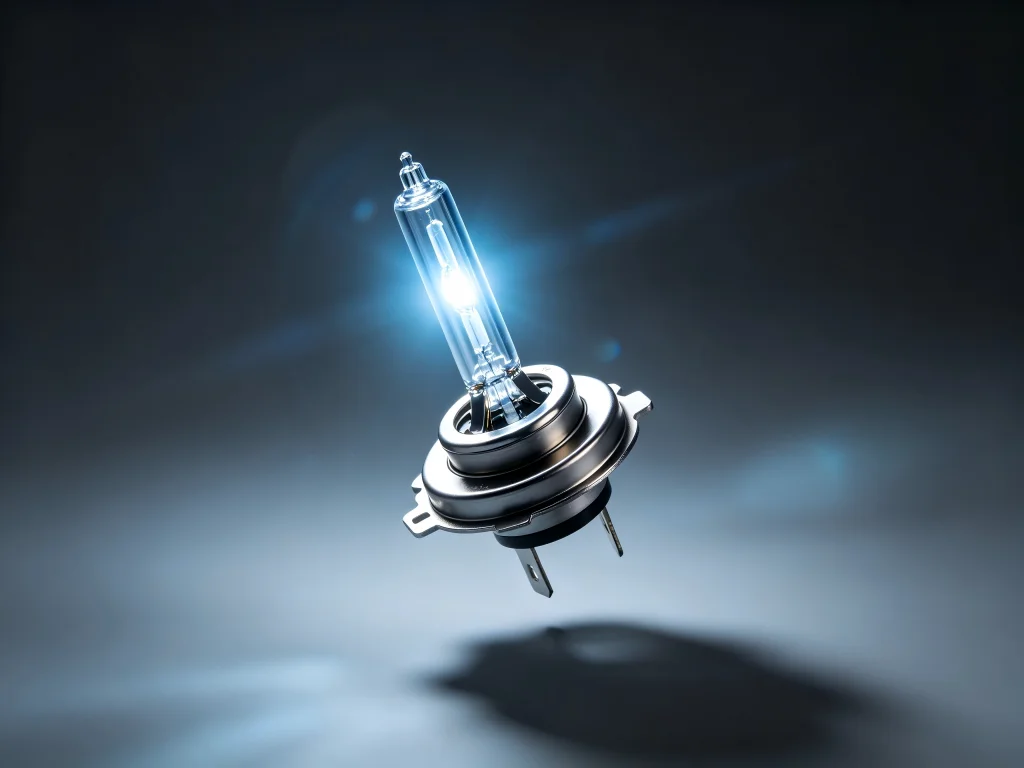
A D3S HID bulb is a mercury-free, 42V DC discharge lamp with a built-in igniter and PK32d-5 base, designed exclusively for projector-style headlight housings.
The D3S designation is an international standard (IEC 60061). The “D” stands for discharge (HID). The “3” indicates the electrical architecture—42V DC with an integrated igniter. The “S” means shielded, which means it’s designed for projector headlights that use a cutoff shield to shape the beam.
D3R, by contrast, is for reflector housings and has a painted section that blocks part of the light output.
Here’s the critical takeaway: D3S bulbs are not interchangeable with D1S, D2S, or D4S. Even if the base looks similar, the voltage requirements and igniter configurations are completely different. Installing the wrong bulb can damage your ballast—a repair that can cost $300 or more.
2. D3S HID vs LED Conversion: The Honest Comparison
This is the biggest decision you’ll make. Here’s the real breakdown—not the marketing fluff:
| Factor | D3S HID (OEM Replacement) | D3S LED Conversion |
|---|---|---|
| Brightness | 2,800–3,800 lumens per bulb | 4,000–10,000+ lumens claimed (varies wildly) |
| Время разогрева | 3–5 seconds to full brightness | Instant on |
| Продолжительность жизни | 2,500–5,000 hours | 30,000–60,000 hours |
| Beam pattern | Designed for your projector housing—360° light emission | Can be inconsistent; some LEDs don’t match the housing’s optics |
| Color consistency | Shifts over time (pink/purple near failure) | Stable throughout lifespan |
| Cold weather | Can struggle and take longer to warm up | Consistent performance in all conditions |
| Установка | Direct 1:1 replacement | Plug-and-play into existing ballast |
Here’s the reality that few sellers will tell you: LED conversion bulbs may not perform as well in your specific housing. One Jeep owner reported that while LEDs were better for short-to-medium range, they lost “a bit of throw on high.” Another forum member warned that even if you could physically fit an LED, “it’s unlikely an LED would be any brighter, particularly inside the same housing.”
LEDs last longer and turn on instantly. But if the beam pattern doesn’t match your projector’s optics, you’re trading visibility for convenience.
Our recommendation at GTR? Stick with HID if you want predictable, housing-optimized performance. Consider LED only if you’re willing to accept potential trade-offs in beam pattern and throw distance.
3. Color Temperature: What 4300K, 5000K, and 6000K Actually Mean
Color temperature is measured in Kelvin (K). Higher numbers look “cooler” (bluer), but they don’t necessarily mean better visibility.
| Kelvin | Внешний вид | Best suited for | Trade-offs |
|---|---|---|---|
| 4300K | Warm white, OEM standard | All-round visibility, wet roads, fog | Less “modern” looking |
| 5000K | Pure white | Brightness + style balance | Slightly less penetration in rain than 4300K |
| 6000K | Ice white (cool) | Modern appearance, matches LEDs | Reduced visibility in fog and rain |
According to Diode Dynamics, who measure color temperatures in their photometric testing lab, 6000K is the most popular aftermarket choice because it matches best with most LEDs. But popularity doesn’t equal performance. 4300K delivers the best all-round visibility, especially in adverse weather. 6000K looks great but may reduce your ability to see in rain or fog.
Choose based on your priorities. If you drive in rain or fog regularly, 4300K is the smarter choice. If you want the modern look and don’t mind the trade-off, 6000K works.
4. OEM vs Aftermarket: What "OEM-Quality" Actually Means
Philips and Osram are the actual OEM suppliers for most major automakers. When you buy a Philips D3S bulb, you’re getting the same quality that came in your car from the factory.
But not all “OEM-grade” bulbs are equal. Many generic brands use the phrase loosely—they may look similar, but the arc tube quality, gas mixture, and ceramic base materials are completely different. The result? A D3S HID bulb that looks OEM on the shelf but performs like a cheap knockoff on the road.
One reviewer put it bluntly: “Brighter than Chinese brands but still not brighter than the OEM.” Another noted: “After a few months, the lighting is less bright than the OEMs.”
When you buy a D3S HID headlight bulb replacement, you’re not just buying light output—you’re buying reliability, consistency, and peace of mind. OEM-grade from a trusted supplier matters.
5. Questions to Ask Before Buying Any D3S HID Bulb
- Does this bulb match my vehicle’s exact D3S specification? Check your owner’s manual or the existing bulb. D3S is not interchangeable with D1S, D2S, or D4S.
- Who actually manufactured this bulb? Philips and Osram are the OEM suppliers for most automakers. Generic brands may not meet the same standards.
- What’s the real lifespan—not the marketing claim? Quality D3S HID bulbs last 2,500–5,000 hours. Cheap ones often fail within 3–12 months.
- Will this bulb work with my existing ballast? D3S bulbs operate at 42V DC with a built-in igniter. If the specs don’t match, you risk ballast damage.
- What’s the return policy if it fails? If a seller charges 50% restocking fees on defective bulbs, that’s a red flag.
6. Real Driver Experiences: What Forums and Reviews Actually Say
One driver shared on a forum: “Replacing the stock HID bulbs with the Philips D3S HID-style units provided a straightforward, plug-and-play upgrade for my 2016 Suburban LTZ.” Another noted: “The Philip one which my Audi has costs more than $100 each. To change a set would cost me more than $200. The Sinoparcel bulb delivers similar results but at a fraction of the price.”
But the low-price experience is mixed. One reviewer warned: “Bought them twice… both times the bulb burnt out in less than 2 months.” Another reported: “After about 3 months left bulb started flickering, so I put the original bulb back in. After 12 months the right bulb started flickering.”
The pattern is clear: cheap D3S HID bulbs are a gamble. Some work fine. Most don’t last. And when they fail, you’re back to square one—except now you’ve wasted time, money, and patience.
7. Frequently Asked Questions About D3S HID Bulbs
Q: Can I convert my D3S HID system to LED?
Yes, but with caveats. LED conversion bulbs plug into your existing ballast and offer instant-on and longer lifespan. However, beam pattern can be inconsistent because LEDs don’t always match your projector housing’s optics.
Q: How do I know if my vehicle uses D3S bulbs?
Check your owner’s manual, look at the existing bulb for “D3S” markings, or search your vehicle model + “headlight bulb size.” D3S is common in Audi, BMW, Mercedes, GMC, Chevrolet, and many other makes with factory HID systems.
Q: Why do HID bulbs shift color over time?
As HID bulbs age, the arc tube degrades and the gas mixture changes. This causes the light to shift from white toward pink or purple—usually a sign of imminent failure.
Q: Is 35W the only option for D3S bulbs?
Yes. D3S bulbs are limited to 35W by the standard. Using a higher-wattage bulb can damage your ballast and wiring.
Q: Should I replace D3S bulbs in pairs?
Yes. HID bulbs dim over time, so replacing only one side will leave you with mismatched brightness and color. Always replace both.
Q: What does the “66340” code mean on Osram D3S bulbs?
“66340” is Osram’s specific manufacturer code for a standard 35W D3S HID bulb. All Osram D3S bulbs start with this number.
8. Make the Right Choice for Your D3S HID System
You’ve done the research. You’ve read the comparisons. You know the difference between genuine quality and marketing hype. Now it’s time to make a decision that actually improves your driving experience—not one that leaves you back under the hood in six months.
GTR D3S HID bulbs deliver the performance your vehicle was designed for. OEM-grade materials. Precise 42V DC specifications. Consistent beam patterns. No flickering. No premature failure. Just reliable light, mile after mile.
Посетите www.rhgtr.com to find the right D3S HID bulb for your vehicle. Because your headlights shouldn’t be a constant source of frustration—they should just work.