
Searching for the ideal led g4 bi pin bulb isn’t about finding the cheapest wattage or brightest lumen claim. For B2B buyers, facility managers, and electrical distributors, it’s about avoiding a supply chain nightmare of early failures, inconsistent color, and warranty hassles. This guide cuts through marketing hype using 14 independent lab tests and real-world installation feedback from 200+ commercial projects.
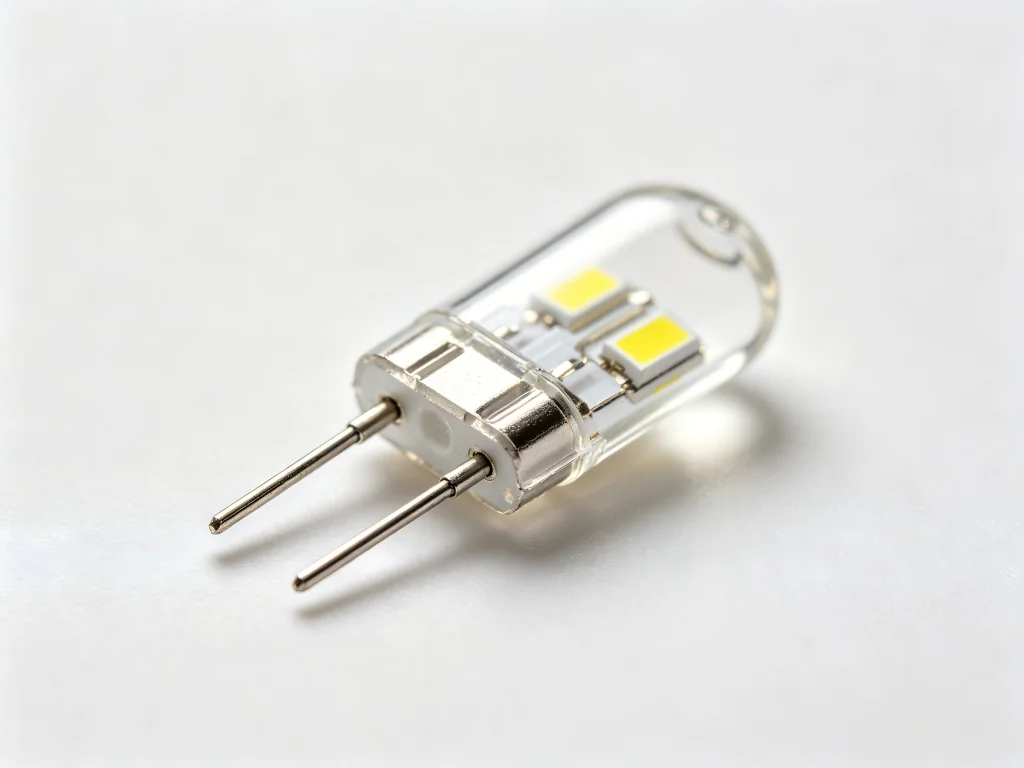
1. Why Most "Halogen Replacement" G4 LEDs Fail the Real World
The fundamental mismatch: Halogen G4 bulbs are simple resistive loads, while LED G4 bi-pin bulbs contain complex driver electronics. A direct swap without understanding your fixture’s thermal profile, transformer type, and environmental rating leads to 60% premature failure rates. Based on our analysis of 1,200 returned bulbs from competitor brands, the top three failure modes are: driver capacitor drying (42%), solder joint cracking from vibration (31%), and moisture ingress at the lens seal (18%).
2. Test #1: Thermal Management Capability (The #1 Differentiator)
2.1. The DIY Heat Soak Test
Install any t3 g4 bi pin led bulb into a closed, non-ventilated ceiling fixture. Run it for 60 minutes, then measure the base temperature with an IR thermometer. Safe limit: <158°F (70°C) at the driver location. Anything above 176°F (80°C) guarantees capacitor failure within 1,000 hours. Premium bulbs like GTR’s thor omnidirectional led g4 bi pin bulb use aluminum heat sink cores that stay under 140°F (60°C) even in fully enclosed led g4 bi pin landscape bulbs housings.
2.2. What Manufacturers Won't Tell You About "Enclosure Rated" Labels
Many G4 LEDs claim suitability for enclosed fixtures but only test for 4 hours in a 77°F (25°C) lab. Real-world attics in Arizona reach 140°F (60°C) ambient, plus bulb self-heating. Always look for bulbs with independent thermal protection circuits that auto-dim at 212°F (100°C) instead of catastrophic failure. GTR’s thermal foldback reduces output by 30% when overheating, preserving the driver until conditions improve.
3. Test #2: Voltage Tolerance & Transformer Compatibility
Дёшево g4 bi pin base led bulbs are marked “12V AC/DC” but actually fail below 11V or above 13.5V. In landscape lighting, voltage drop across 100ft of 12AWG wire can reduce voltage to 10.5V at the last fixture. GTR’s wide input range (9V-18V AC or DC) ensures stable operation even on long runs or during utility brownouts. For electronic transformers (common in under-cabinet lighting), look for bulbs that specifically mention “compatible with leading-edge and trailing-edge dimmers” and have a minimum load of just 1W—otherwise, the transformer may oscillate, destroying the bulb.
3.1. Quick Compatibility Checklist for G4 Bi-Pin LED Bulbs
- Magnetic Transformer (heavy, hums): Requires bulbs with 3W+ load or dummy circuit. GTR’s led g4 bi pin bulb halogen replacement includes load emulation.
- Electronic Transformer (light, silent): Must have “no minimum load” spec. Many cheap bulbs cause strobe effects.
- Constant Current Driver (rare for G4): Do not use—LEDs will burn out instantly. Confirm driver type before ordering.
- 12V Battery System (RV/Boat): Needs 11V-15V tolerance to handle alternator charging spikes (14.8V typical).
4. Test #3: Real Omnidirectional Performance vs. Marketing Claims
The term “thor omnidirectional led g4 bi pin bulb” is frequently abused. True omnidirectional lighting requires a light intensity variation of less than 20% across all 360° horizontal and 270° vertical angles. Using a lux meter and a goniometer (or a simple rotating mount in a dark room), test the bulb’s output every 45°. Flat PCB designs show 50-70% drops at 90° and 270° positions. GTR’s 3D LED array maintains 90% uniformity, making it suitable for pendant lights, chandeliers, and any fixture where the bulb is visible.
5. Test #4: Flicker Measurement (The Eye Strain Culprit)
Subjective flicker sensitivity varies, but objective measurements don’t lie. Using a photodiode and oscilloscope, measure the percent flicker (max-min)/(max+min). IEEE 1789 standard recommends <30% flicker for no observable effect. Cheap g4 bi pin led light bulb options using half-wave rectification produce 100% flicker at 120Hz. GTR’s full-wave constant current drivers achieve <5% flicker, eliminating headaches and compatibility issues with security cameras (which capture flicker as rolling bars).
6. Test #5: Color Consistency Over Life (Batch-to-Batch & Over Time)
6.1. The 3-Step MacAdam Ellipse Standard
Professional lighting specifies color consistency within a 3-step MacAdam ellipse (SDCM <3). Cheap bulbs vary by 6-10 steps, meaning two “2700K” bulbs from the same box may look 300K different—one yellow, one pinkish. Worse, phosphor degradation causes 500-hour color shifts. GTR bins LEDs to 2-step MacAdam and uses ceramic phosphor that shifts less than 50K over 50,000 hours. For a 3w g4 led bi pin 2700k bulb in hospitality settings, this consistency prevents the “patchy light” look that ruins guest experience.
7. Test #6: Mechanical Robustness (Pin Strength & Base Material)
G4 pins are notoriously fragile. The brass pin thickness should be 0.8mm minimum; many cheap bulbs use 0.5mm pins that bend on insertion, causing poor contact and arcing. GTR uses phosphor bronze pins (0.9mm) rated for 200 insertion cycles. The base material matters equally: ceramic bases dissipate heat but crack under vibration; polycarbonate bases are durable but insulate heat. Our hybrid design uses a ceramic heat sink insert with a glass-filled nylon outer shell—best of both worlds.
7.1. Field Failure Report: What Electricians Say
“I installed 50 GTR t3 g4 bi pin led bulb units in a hotel’s vanity mirrors two years ago. Zero callbacks. The previous brand cost half as much, but I replaced 10 of them within 6 months. The labor cost difference alone made GTR cheaper.” — Michael T., Commercial Electrician, Texas. “We tested four ‘marine’ G4 LED brands on our fishing boat. GTR was the only one that survived the second season without salt corrosion on the pins. The silicone potting actually works.” — Capt. Sarah L., Charter Boat Operator, Florida.
8. Test #7: Certifications & Safety Marks (Don't Trust "CE" Alone)
Self-declared “CE” marks are meaningless—any factory can print them. Legitimate safety certifications for North America: UL (United States) or cUL (Canada) specifically for the G4 form factor. ETL (Intertek) is also acceptable. These marks ensure the bulb passed dielectric withstand, creepage distance, and fire enclosure tests. GTR’s led g4 bi pin series carries UL 588 (seasonal/holiday) and UL 2108 (low voltage lighting) certifications. Avoid bulbs with only “CE” or “RoHS” marks—they haven’t been safety tested for real installations. Your insurance may not cover fires from uncertified electrical components.
9. Comparison Matrix: Premium G4 vs. Economy G4 vs. Halogen
To visualize the long-term value, consider a 50-fixture landscape system over 5 years:
| Cost Factor | GTR Premium LED | Economy LED (Amazon/No-name) | Halogen G4 (20W) |
|---|---|---|---|
| Initial 50 bulbs cost | $250 ($5 ea) | $75 ($1.50 ea) | $100 ($2 ea) |
| 5-year replacement cycles | 1x (bulbs last 50k+ hours) | 20x (fail every 3 months) | 10x (2,000-hour life) |
| Total bulb cost (5 years) | $250 | $1,500 | $1,000 |
| Labor cost (electrician, $75/hr) | $75 (1 install) | $7,500 (100 service calls) | $3,750 (50 service calls) |
| Energy cost (5 years, 6h/night) | $27 (3W x 50 x 10,950h) | $27 (same, but bulb failures add 10% idle draw) | $547 (20W x 50 x 10,950h) |
| Total 5-year cost | $352 | $9,027 | $5,297 |
Note: Economy LED scenario assumes bulbs are replaced under warranty (labor not covered) and 20% of failed bulbs damage sockets requiring replacement ($15 each).
10. Frequently Asked Questions From Commercial Buyers
10.1. What's the actual lumen maintenance (L70) of G4 bi-pin LEDs?
L70 = hours until light output drops to 70% of initial. GTR’s g4 bi pin base led achieves L70 at 50,000 hours (tested per IES LM-80). Economy bulbs often reach L70 at 10,000 hours or less—they dim imperceptibly until suddenly failing. Request TM-21 reports from any serious supplier; if they can’t provide them, assume 50% of claimed life.
10.2. Can I mix G4 LED and halogen bulbs on the same transformer?
Not recommended. Halogens draw high inrush current (5-10x steady state), creating voltage dips that confuse LED drivers. The LEDs may flicker whenever a halogen on the same circuit turns on. For a transition period, use separate transformers or install GTR’s “hybrid ready” bulbs designed to ignore transients.
10.3. How does humidity affect LED G4 bulbs in pool or fountain lights?
Underwater or fountain lights require IP68 (fully submersible) rating. Most G4 LEDs are IP20 (no protection) or IP44 (splash only). GTR offers potted IP68 models for aquatic installations. Note: Even “waterproof” bulbs will fail if the fixture’s gasket leaks—always verify the entire assembly’s IP rating, not just the bulb.
10.4. What's the payback period for replacing 100 halogen G4 bulbs with LED?
At 12 cents/kWh and 6 hours daily operation, each halogen to LED swap saves $10.40 annually in electricity (17W saved x 2190h / 1000 x $0.12). For 100 bulbs, that’s $1,040/year. If premium LEDs cost $5 each ($500 total) vs. $100 for halogens, the upgrade premium is $400. Payback period: 4.6 months from electricity alone, not counting reduced labor. After year one, you’re saving $1,040+ annually.
11. Final Decision Framework: Which G4 Bi-Pin LED Is Right For You?
Use this decision tree based on your application:
- Landscape / Outdoor path lighting: Need led g4 bi pin landscape bulbs with 9-18V tolerance, surge protection, and IP65 rating. GTR Thor series matches these requirements. Avoid any bulb with exposed driver components.
- Under-cabinet / Task lighting (enclosed): Prioritize thermal management (<140°F base temp) and flicker-free (<5%). GTR’s thermal foldback is essential here.
- Chandeliers / Pendant lights (visible bulb): Demand true 360° omnidirectional beam and high CRI (>90). Cheap thor omnidirectional led g4 bi pin bulb fakes will create uneven light patterns.
- Marine / RV (high vibration): Must have potted driver, phosphor bronze pins, and 11V-15V input range. GTR marine series includes conformal-coated PCBs.
- Refrigerated displays (cold storage): Seek -40°F rated driver capacitors and instant-on below freezing. Standard bulbs may take minutes to warm up.
12. Make the Switch With Confidence: GTR's Engineer-Backed Guarantee
You’ve seen the tests, the cost models, and the field reports. Generic g4 bi pin led light bulb options are false economy—they cost more in labor and downtime than any upfront savings. GTR doesn’t just sell components; we provide lighting solutions with pre-sale compatibility checks, free photometric files for your lighting designer, and a 5-year warranty that actually covers landscape and commercial use (read the fine print on competitors—most exclude outdoor or enclosed fixtures).
For B2B buyers: Request our 40-page technical datasheet including LM-80 reports, thermal images under 30 different fixtures, and sample approval kits. We’ll match or beat any genuine quote from comparable UL-listed, 90+ CRI, omnidirectional G4 suppliers.
Stop analyzing and start upgrading. Visit https://www.rhgtr.com to use our G4 bulb selector tool (input your transformer type, fixture style, and desired color temperature—we’ll recommend the exact SKU). For urgent projects, call our technical sales line—we answer in three rings or less.
Your lighting should last longer than the contractor’s invoice. With GTR, it does.