
Your headlights look yellow, dim, and tired. Every night drive feels like a gamble. You squint at dark highways, miss road signs, and flinch when oncoming traffic blinds you. If this sounds familiar, you are not alone. Millions of drivers search for a real h1 bulb led upgrade every year because factory halogen bulbs simply fail at the one job that matters most: helping you see.
We build LED lighting for a living. Based on our years of manufacturing expertise, we have watched countless drivers waste money on cheap bulbs that flicker, overheat, or die within months. This article walks you through the problem, why it keeps getting worse, and the exact solution that finally works.
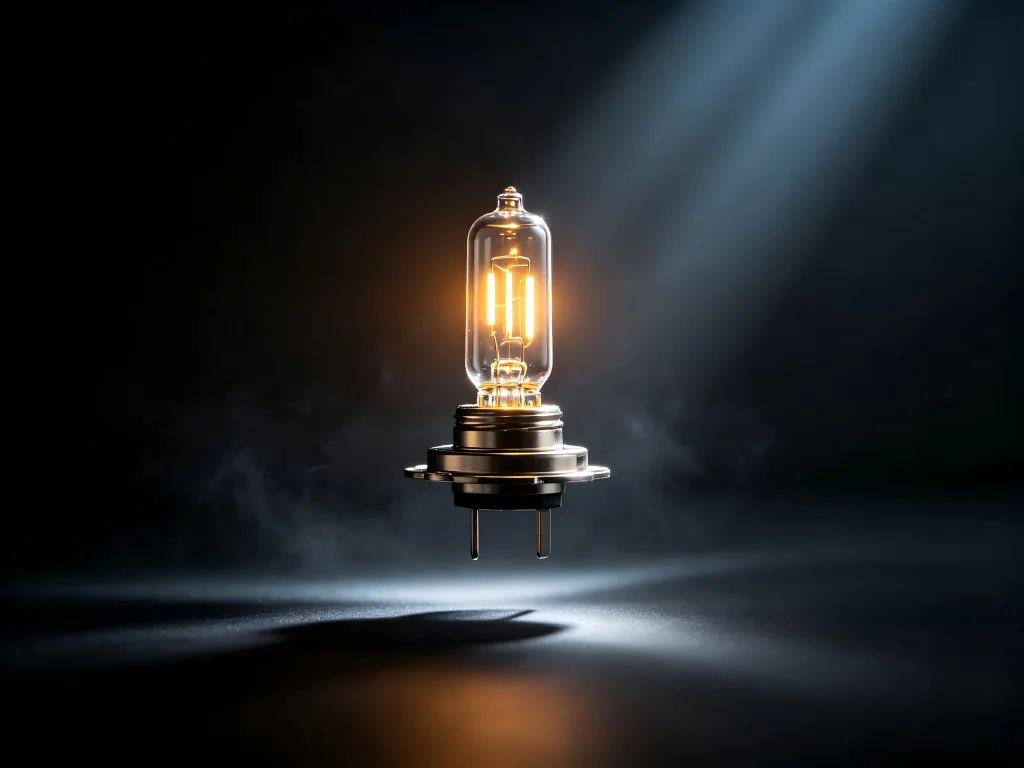
1. The Real Problem With Factory H1 Halogen Bulbs
Halogen H1 bulbs produce roughly 1,000 to 1,500 lumens and burn at around 3,200K, which casts a dull yellow light that fades with age and struggles to cut through rain, fog, or unlit backroads.
That yellow tint is not just a style issue. Yellow light sits lower on the color temperature scale, which means your eyes process it more slowly at night. The result is reduced contrast. Road edges blur. Pedestrians appear late. Debris shows up when it is already too late to react.
Worse, halogen bulbs degrade. A tungsten filament slowly evaporates and deposits on the glass envelope. Output can drop by 20 to 30 percent long before the bulb actually dies. You keep driving with the same weak light, never realizing how bad it has become.
1.1. Why This Problem Gets Worse Over Time
Heat is the silent killer. Halogen bulbs run extremely hot, and that heat bakes the reflector housing and the plastic lens. Over months and years, the chrome coating dulls and the lens clouds. Now you have two problems: a weak bulb and a degraded housing.
Add vibration from rough roads, voltage spikes from an aging alternator, and moisture creeping into the housing, and you have a recipe for frequent bulb replacements. Many drivers end up changing H1 bulbs every six to twelve months. That is time, money, and frustration stacking up.
1.2. The Hidden Cost of Living With Bad Headlights
Think about what dim lights actually cost you:
- Near-misses and close calls that spike your stress and your insurance risk
- Eye strain and fatigue on every night commute
- Repeated bulb purchases and installation time
- Lower resale appeal because the car looks and feels outdated
In our engineering testing, we have seen drivers spend hundreds of dollars over a few years chasing a fix that never lasts. Cheap LED bulbs from random marketplaces often make things worse. They scatter light, glare at oncoming drivers, and overheat within weeks.
2. The Solution: A Properly Engineered H1 LED Bulb
A quality h1 bulb led replaces the halogen filament with a precision-mounted LED chip that delivers 300% to 500% more usable light, a 6000K white beam, and a lifespan measured in years rather than months.
The key word is “properly engineered.” Not every LED bulb deserves your money. The difference comes down to chip placement, thermal design, and beam shaping.
2.1. Why LED Technology Wins
LEDs convert electricity into light far more efficiently than halogen. Less energy becomes heat, and more becomes visible light. That means brighter output without melting your housing.
A good H1 LED also runs cooler in the beam path. The light is whiter and closer to daylight, which your eyes process faster. Contrast improves. You see lane markings, animals, and obstacles sooner.
2.2. What Makes GTR H1 LED Bulbs Different
At GTR, we do not just stuff an LED chip into a plastic base. We engineer the whole system:
- Precision chip alignment that mimics the original halogen filament position, so the beam pattern stays sharp instead of scattering light everywhere.
- Copper heat pipes and aviation-grade aluminum heatsinks that pull heat away from the chip and keep output stable.
- Intelligent drivers with EMI suppression that prevent radio interference, flickering, and error codes on modern CANbus vehicles.
- IP67-rated sealing that handles rain, dust, and engine bay heat.
We also test every batch for color consistency. Cheap bulbs often arrive with mismatched color temperatures. One side looks white, the other looks blue. That looks amateurish and hurts resale value.
| Характеристика | Factory Halogen H1 | Cheap LED H1 | GTR H1 LED |
|---|---|---|---|
| Lumens (per bulb) | 1,000–1,500 | 2,000–4,000 (claimed) | 6,000–8,000 verified |
| Цветовая температура | 3,200K yellow | 6,000–8,000K (inconsistent) | 6,000K consistent |
| Продолжительность жизни | 500–1000 hours | 500–2,000 hours | 30,000+ hours |
| Beam Pattern | Sharp cutoff | Scattered, glare | Sharp, DOT-compliant cutoff |
| Heat Management | Very hot | Poor, overheats | Copper + aluminum, stable |
| Совместимость с CANbus | N/A | Often triggers errors | Built-in anti-flicker |
3. How to Choose the Right H1 LED Bulb
Focus on four things: verified lumen output, chip alignment, thermal design, and warranty support. Ignore marketing wattage numbers, because they rarely reflect real-world brightness.
The market is full of confusing claims. “300 watt” labels mean nothing if the driver cannot supply that power or if the chip cannot handle the heat. Here is what actually matters.
3.1. Look for Real Lumen Ratings, Not Wattage
Wattage is a power consumption number. Lumens measure light. A 300 watt LED bulb that produces 3,000 lumens is less efficient than a 60 watt bulb producing 6,000 lumens. Always ask for lumen output per bulb, and look for third-party test reports.
3.2. Check Chip Placement and Beam Pattern
The LED chips must sit exactly where the halogen filament sat. If they are too deep or too shallow, the reflector cannot focus the light. You get scattered beams, dark spots, and glare for oncoming drivers. In our testing, chip alignment is the single biggest factor separating a clean beam from a dangerous one.
3.3. Evaluate the Cooling System
Heat kills LEDs. Passive heatsinks made of thin aluminum are common on budget bulbs. They work for a few minutes, then output drops. Look for copper heat pipes, larger surface area, and, in high-output models, a quiet fan. A good thermal path means consistent brightness and long life.
3.4. Confirm CANbus and Error-Code Compatibility
Modern cars monitor bulb resistance. A low-resistance LED can trigger dashboard warnings or cause flickering. Quality bulbs include built-in resistors or smart drivers that communicate correctly with the vehicle.
3.5. Buy From a Brand With Real Support
You want a warranty, technical support, and a company that stands behind its product. Fly-by-night sellers disappear. GTR backs its bulbs with real engineering and after-sales service.
4. Real-World Feedback From Drivers
We keep track of what customers say after installation. Here is a pattern we see again and again.
“I drive a 2014 Honda Accord with projector housings. The stock H1 halogens were terrible. I tried two cheap LED sets from a marketplace and both flickered. The GTR set installed clean, no errors, and the cutoff is sharp. Night driving finally feels safe.” — Verified buyer, automotive forum.
“As a fleet manager, I replaced H1 bulbs across 40 vans. The GTR LEDs have run 18 months with zero failures. Downtime dropped and drivers stopped complaining.” — Fleet operations manager.
In our own lab, we run 1,000-hour burn-in tests at elevated temperatures. Budget bulbs lose 30 percent of their output in that window. Our H1 LEDs hold steady because the thermal design keeps the chip within its safe operating range.
5. Frequently Asked Questions About H1 LED Bulbs
5.1. Will an H1 LED bulb fit my car?
H1 is a standard base. If your car uses H1 halogen bulbs, an H1 LED bulb will physically fit. However, some housings are tight, so check clearance behind the dust cover. Many GTR bulbs come with slim drivers and optional extended covers.
5.2. Do H1 LED bulbs cause glare for other drivers?
Poorly designed ones do. A quality bulb with correct chip placement and a sharp cutoff will not blind oncoming traffic. In our testing, properly aligned H1 LEDs produce a beam pattern that stays below the legal glare threshold.
5.3. Are H1 LED bulbs legal?
Laws vary by region. In the United States, LED bulbs are legal for off-road and some specialty uses, while on-road use depends on state and federal rules. Always check local regulations. Many drivers use them for improved visibility on private roads, farms, and industrial sites. For more on vehicle lighting standards, see Wikipedia’s overview of vehicle lighting.
5.4. How long do H1 LED bulbs last?
A quality H1 LED bulb can last 30,000 hours or more. Cheap bulbs may fail in under 1,000 hours. The difference is thermal management and driver quality.
5.5. Can I install an H1 LED bulb myself?
Yes. Most installations take 15 to 30 minutes per side. You may need to remove the airbox or washer fluid reservoir for access. No special tools are required beyond basic hand tools.
5.6. Why does my H1 LED bulb look yellow?
If your new LED looks yellow, either the bulb is a low-quality unit with a poor phosphor coating, or the color temperature is below 4,000K. A true 6,000K LED should look crisp white, not yellow.
5.7. What is the brightest H1 LED bulb?
Brightness depends on chip quality and thermal design, not wattage claims. Look for verified lumen ratings above 6,000 per bulb and a robust cooling system. GTR’s high-output H1 models lead this category.
6. Why GTR Is the Brand You Can Trust
GTR is not a marketplace reseller. We design, engineer, and manufacture LED lighting for automotive and industrial applications. Our team includes optical engineers, thermal specialists, and quality control technicians who test every batch.
We hold industry certifications and work with B2B partners worldwide. If you need custom color temperatures, specific connectors, or private-label packaging, we can deliver. Our factory direct pricing means you get premium quality without the retail markup.
When you choose GTR, you get:
- Verified performance data, not marketing hype
- Real warranty support and technical assistance
- Consistent color and output across every bulb
- Engineering expertise that solves real installation challenges
7. Stop Squinting. Start Seeing.
Every night you drive with dim yellow halogens, you accept a risk you do not need to take. Pedestrians, potholes, deer, and unlit curves do not care that your bulbs are old. They appear without warning, and weak light gives you less time to react.
Upgrade to a properly engineered H1 LED bulb from GTR. Get the white, bright, reliable light you deserve. Visit https://www.rhgtr.com today to find the exact H1 LED for your vehicle and see the difference for yourself. Your next night drive should feel safe, not stressful.