
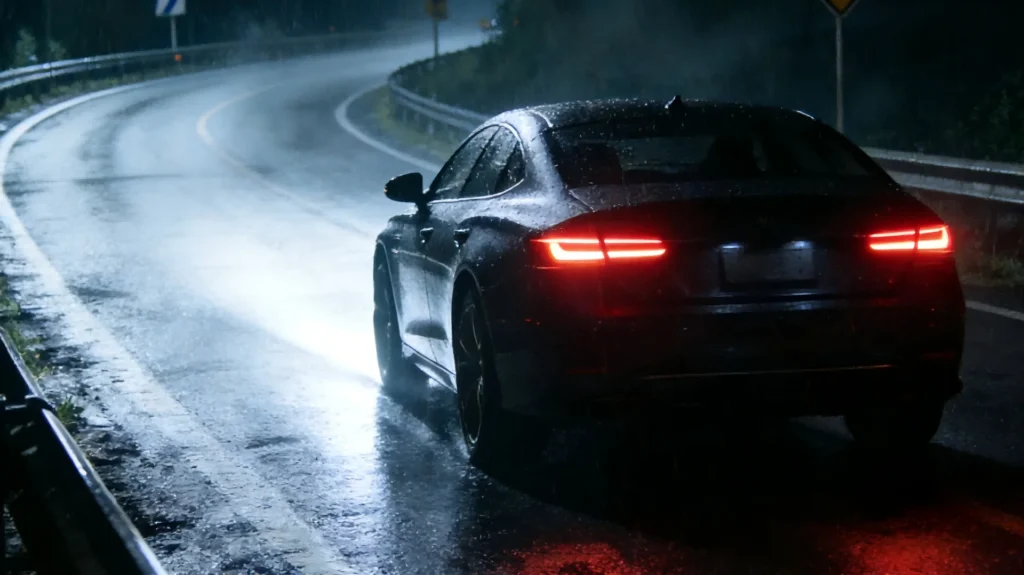
Imagine this scenario: It is 11:00 PM on a rural highway. Rain is lashing against your windshield, absorbing the faint yellow beams of your stock headlights. You find yourself squinting, leaning forward, knuckles white on the steering wheel, trying to spot deer, debris, or the edge of the road. This is not just uncomfortable; it is dangerous. The problem isn’t your eyesight—it is likely your antiquated lighting technology. For drivers seeking a proven solution to penetrate the darkness, upgrading to hid headlights acts as the ultimate remedy for poor visibility.
1. The Core Problem: Why Halogens Fail You
Most vehicles, even recent models from manufacturers like Toyota or Ford, still roll off the assembly line with halogen bulbs to cut manufacturing costs. The fundamental issue with hid headlights vs halogen lies in the intensity and color.
Halogen lights typically output around 1,000 lumens. Over time, the tungsten filament degrades, and the bulb dims further. Moreover, the color temperature is usually around 3200 Kelvin—a warm yellow. While adequate for dry city driving, yellow light struggles to provide contrast in adverse weather conditions. It gets “swallowed” by wet asphalt, leaving you with the sensation that your lights aren’t even turned on.
2. The Solution: High-Intensity Discharge (HID) Technology
The solution to this safety gap is replacing the filament with an arc of plasma. HID headlights function much like industrial stadium lights or lightning. Inside the bulb, Xenon gas and metal salts are ignited by high voltage.
2.1. Why This Solves the Visibility Crisis
- 300% More Light: A standard 35W HID kit produces roughly 3,000 to 3,500 lumens. This triple increase in output illuminates hazards much earlier, giving you critical reaction time at highway speeds.
- Superior Contrast: HIDs usually operate in the 4300K to 6000K range. This white light mimics daylight. The human eye is evolutionarily adapted to see best in sunlight. Objects on the road—like pedestrians or road signs—reflect white light more effectively than yellow light, creating sharper contrast.
- Wider Coverage: Because the light source is more intense, the beam pattern often spreads wider, illuminating the ditches where animals often lurk before darting out.
3. Implementing the Fix: Application Scenarios
Not all upgrades are created equal. Implementing this solution requires understanding your specific vehicle’s setup. Let’s look at how this applies to common vehicle types.
3.1. Scenario A: The European Sedan (BMW, Audi, Mercedes)
Many older luxury cars came with HIDs, but usually only on high-trim models. Lower trims have “Projector Halogens.” These cars are the perfect candidates for an HID conversion. Since the car already has a projector lens (the glass ball in the headlight), installing an HID kit will result in a crisp, sharp beam pattern that looks factory-installed.
3.2. Scenario B: The Pickup Truck (Ford F-150, Silverado)
Trucks often have large reflector bowls. If you put a powerful HID bulb in a reflector designed for a halogen, you might solve your visibility problem but create a new one: blinding other drivers. In this case, the solution involves using HIDs with specific bulb types (like H7R) designed to reduce glare, or better yet, performing a “projector retrofit” to focus that intense light properly.
4. How to Select the Right HID Solution
When browsing hid vs halogen vs led options to solve your visibility issues, you might wonder which is brighter hid or led. While LEDs are popular for their instant-on capability, HIDs often provide better light density and distance in bad weather, which is exactly when you need the solution most.
To ensure the solution works long-term, consider these factors:
- UV Quartz Glass: Ensure the HID bulbs use UV-cut quartz glass. Cheap glass allows UV radiation to escape, which can yellow your plastic headlight lenses over time, bringing you back to the problem of dim lights.
- Weatherproofing: Since the ballast sits in the engine bay, it must be waterproof. Look for potted internals (filled with epoxy) to prevent vibration and moisture damage.
- Warm-up Speed: In the past, HIDs took 10-15 seconds to reach full brightness. Modern “Fast Start” ballasts have reduced this to mere seconds, making them safer for everyday use.
5. Installation: Making the Upgrade Work
Upgrading to hid headlights is a moderate DIY project. Here are the steps to ensure a successful integration:
- เข้าถึงหลอดไฟ: Remove the dust cover from the back of the headlight assembly.
- Insert the HID Bulb: Carefully place the HID bulb into the socket. Crucial Tip: Never touch the glass of an HID bulb with bare fingers. The oils from your skin will cause the glass to bubble and shatter once it heats up.
- Connect the Ballast: Connect the bulb to the ballast, and the ballast to the factory wiring.
- Check Polarity: If the light doesn’t turn on, reverse the plug connecting to the factory harness. LEDs and HIDs are polarity sensitive.
6. Why GTR is Your Visibility Partner
When safety is the priority, component quality cannot be compromised. จีทีอาร์ has established itself as a leader in high-performance lighting solutions. Unlike generic brands that overstate their lumen ratings, GTR provides honest, lab-tested data.
For drivers specifically looking to solve the “dim light” problem, GTR’s HID kits feature advanced ASIC digital chips in the ballasts. This monitors the bulb’s health and power draw in real-time, ensuring that the light output remains stable even if your car’s voltage fluctuates. Furthermore, GTR offers comprehensive warranty support, ensuring that your solution to nighttime driving anxiety is permanent.
7. FAQ: Troubleshooting Your New Lights
7.1. Will HIDs melt my wiring?
No. Standard halogen bulbs draw 55 Watts. Most HID kits draw only 35 Watts once running. They are actually less stressful on your car’s wiring harness than the original bulbs.
7.2. Why do my HIDs flicker when I start the car?
This is often due to the car’s Daytime Running Light (DRL) system sending a pulsed voltage signal. You may need a capacitor link or a relay harness to provide a steady 12V signal to the ballasts.
7.3. Can I install HIDs in high beams?
It is possible, but generally not recommended unless you have “bi-xenon” projectors. HIDs take a few seconds to warm up to full brightness, which makes them less ideal for “flashing” your high beams.
7.4. Is 55W brighter than 35W?
Yes, 55W HID kits are brighter, but they generate significantly more heat and can reduce the lifespan of the bulb. For most drivers, 35W is the sweet spot of brightness and reliability.
7.5. Do HIDs work in rain?
Yes, provided you choose the right color temperature. 4300K to 5000K is ideal for rain. Avoid 8000K (blue) or higher, as blue light scatters in rain and fog, causing glare back into your eyes.