
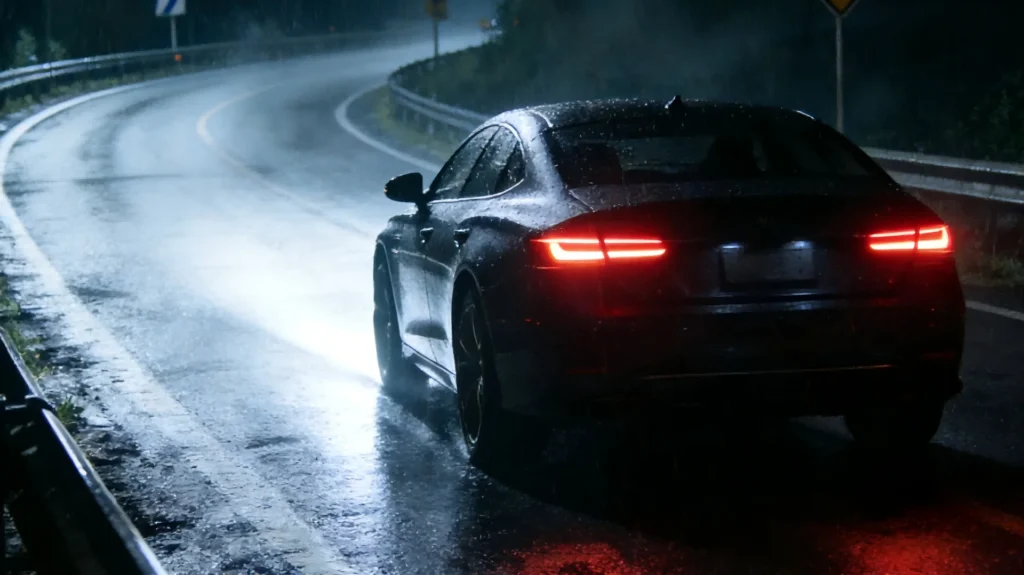
Hãy tưởng tượng tình huống này: Lúc 11 giờ đêm trên một đường cao tốc nông thôn. Mưa đang quất vào kính chắn gió của bạn, hấp thụ những tia sáng vàng mờ nhạt từ đèn pha nguyên bản. Bạn thấy mình nheo mắt, nghiêng người về phía trước, các khớp ngón tay trắng bệch trên vô lăng, cố gắng phát hiện hươu, mảnh vỡ hoặc mép đường. Điều này không chỉ khó chịu; nó nguy hiểm. Vấn đề không phải là thị lực của bạn—mà có thể là công nghệ chiếu sáng lỗi thời của bạn. Đối với những người lái xe đang tìm kiếm một giải pháp đã được chứng minh để xuyên qua bóng tối, nâng cấp lên đèn pha HID chính là phương thuốc tối thượng cho tầm nhìn kém.
1. Core Problem: Why Halogen Lights Disappoint You
Most vehicles, even new models from manufacturers like Toyota or Ford, still roll off the assembly line with halogen bulbs to cut production costs. The fundamental issue of HID vs halogen headlights lies in intensity and color.
Halogen bulbs typically emit around 1,000 lumens. Over time, the tungsten filament degrades and the bulb dims. Moreover, the color temperature is usually around 3200 Kelvin—a warm yellow. Although sufficient for driving in dry city conditions, yellow light struggles to create contrast in adverse weather. It gets “swallowed” by wet road surfaces, making you feel like your lights aren't even on.
2. The Solution: High-Intensity Discharge (HID) Technology
The solution to this safety gap is replacing the filament with a plasma arc. HID headlights work like industrial stadium lights or lightning. Inside the bulb, Xenon gas and metal salts are ignited by high voltage.
2.1. Why This Solves the Visibility Crisis
- Over 300% brighter: A standard 35W HID kit produces about 3,000 to 3,500 lumens. This triple output illuminates hazards much earlier, giving you crucial reaction time at highway speeds.
- Superior contrast: HIDs typically operate in the 4300K to 6000K range. This white light mimics daylight. The human eye has evolved to see best in sunlight. Objects on the road—like pedestrians or signs—reflect white light more effectively than yellow light, creating sharper contrast.
- Wider beam range: Vì nguồn sáng mạnh hơn, chùm sáng thường lan rộng hơn, chiếu sáng các rãnh nơi động vật thường ẩn nấp trước khi lao ra.
3. Triển khai Giải pháp: Các Tình huống Ứng dụng
Không phải mọi nâng cấp đều giống nhau. Triển khai giải pháp này đòi hỏi hiểu rõ cấu hình cụ thể của xe bạn. Hãy xem cách áp dụng cho các loại xe phổ biến.
3.1. Tình huống A: Sedan Châu Âu (BMW, Audi, Mercedes)
Nhiều xe sang cũ được trang bị HID, nhưng thường chỉ trên các phiên bản cao cấp. Các phiên bản thấp hơn có “Halogen dạng thấu kính chiếu”. Những chiếc xe này là ứng viên hoàn hảo cho việc chuyển đổi HID. Vì xe đã có thấu kính chiếu (bóng thủy tinh trong đèn pha), việc lắp bộ HID sẽ tạo ra chùm sáng rõ ràng, sắc nét trông như được lắp từ nhà máy.
3.2. Tình huống B: Xe bán tải (Ford F-150, Silverado)
Xe tải thường có chóa phản xạ lớn. Nếu bạn lắp bóng HID công suất cao vào chóa phản xạ được thiết kế cho halogen, bạn có thể giải quyết vấn đề tầm nhìn nhưng tạo ra vấn đề mới: làm chói mắt các tài xế khác. Trong trường hợp này, giải pháp là sử dụng HID với loại bóng cụ thể (như H7R) được thiết kế để giảm chói, hoặc tốt hơn, thực hiện “độ lại thấu kính chiếu” để tập trung ánh sáng mạnh đó một cách hợp lý.
4. Cách Chọn Giải pháp HID Phù hợp
Khi duyệt các tùy chọn hid vs halogen vs led để giải quyết vấn đề tầm nhìn của bạn, bạn có thể thắc mắc cái nào sáng hơn hid hay led. Trong khi đèn LED được ưa chuộng nhờ khả năng bật sáng tức thì, đèn HID thường cung cấp mật độ ánh sáng và khoảng cách chiếu xa tốt hơn trong thời tiết xấu, đúng lúc bạn cần giải pháp nhất.
Để đảm bảo giải pháp hoạt động lâu dài, hãy xem xét các yếu tố sau:
- UV-cut quartz glass: Ensure HID bulbs use UV-cut quartz glass. Cheap glass allows UV radiation to escape, which can yellow your plastic headlight housings over time, bringing you back to the dim headlight problem.
- Weather resistance: Since the ballast is in the engine bay, it must be water-resistant. Look for one with a fully potted (epoxy-filled) interior to prevent vibration and moisture damage.
- Startup speed: Previously, HID lights took 10-15 seconds to reach full brightness. Modern “Quick Start” ballasts have reduced this to just a few seconds, making them safer for daily use.
5. Installation: Executing a successful upgrade
Upgrading to HID headlights is a moderate DIY project. Here are the steps to ensure a successful integration:
- Accessing the bulb: Remove the dust cover from the back of the headlight assembly.
- Installing the HID bulb: Carefully place the HID bulb into the socket. Important tip: Never touch the glass of an HID bulb with bare hands. Oil from your skin will cause the glass to bubble and shatter when heated.
- Ballast Connection: Connect the bulb to the ballast, and the ballast to the vehicle's original wiring.
- Check Polarity: If the light does not turn on, reverse the plug connected to the original wiring. LED and HID lights are polarity-sensitive.
6. Why GTR is Your Vision Partner
When safety is the top priority, component quality cannot be compromised. GTR has established itself as a leader in high-performance lighting solutions. Unlike generic brands that exaggerate lumen ratings, GTR provides honest, lab-tested data.
For discerning drivers who want to solve the “dim light” problem, GTR's HID kits feature advanced ASIC digital chips in the ballast. This monitors the bulb's health and power consumption in real time, ensuring stable light output even when your vehicle's voltage fluctuates. Furthermore, GTR offers comprehensive warranty support, ensuring your solution to nighttime driving worries is permanent.
7. FAQ: Troubleshooting Your New Lights
7.1. Will HID lights melt my wiring?
No. Standard halogen bulbs draw 55 Watts. Most HID kits draw only 35 Watts when operating. They actually put less strain on your vehicle's wiring than the original bulbs.
7.2. Why do my HID lights flicker when I start my car?
This is usually caused by the vehicle's daytime running lights (DRL) sending a pulsed voltage signal. You may need a capacitor link or a relay wiring harness to provide a stable 12V signal to the ballast.
7.3. Can I install HID lights for my high beams?
This is possible, but generally not recommended unless you have “bi-xenon” headlights. HID lights take a few seconds to warm up to maximum brightness, which makes them less than ideal for “flashing” headlights.
7.4. Is W brighter than 35W?
Yes, 55W HID kits are brighter, but they generate significantly more heat and can reduce bulb lifespan. For most drivers, 35W is the ideal balance between brightness and reliability.
7.5. Do HID lights work in the rain?
Yes, as long as you choose the right color temperature. 4300K to 5000K is ideal for rainy conditions. Avoid 8000K (blue) or higher, as blue light scatters in rain and fog, causing glare.