
You just replaced that h11 headlight bulb. Three months later, one side goes dark again. The parts store clerk shrugs. The receipt goes in the glovebox with the last three. If this loop feels familiar, you are not imagining things—and you are not a bad mechanic. You are fighting a product category designed around compromise.
Most halogen h11 headlight bulbs are rated for roughly 1,000 hours of operation . For a driver logging 15,000 miles a year with lights on, that can mean replacement every 5–6 years under ideal conditions. Real-world conditions are rarely ideal. Road vibration shakes a tungsten filament thinner than a human hair. Heat cycles bake the glass envelope. A fingertip brush during installation leaves an oil film that creates a hot spot and cracks the bulb from the inside out . The result is the pattern thousands of drivers describe in reviews: six months, sometimes less, then darkness again .
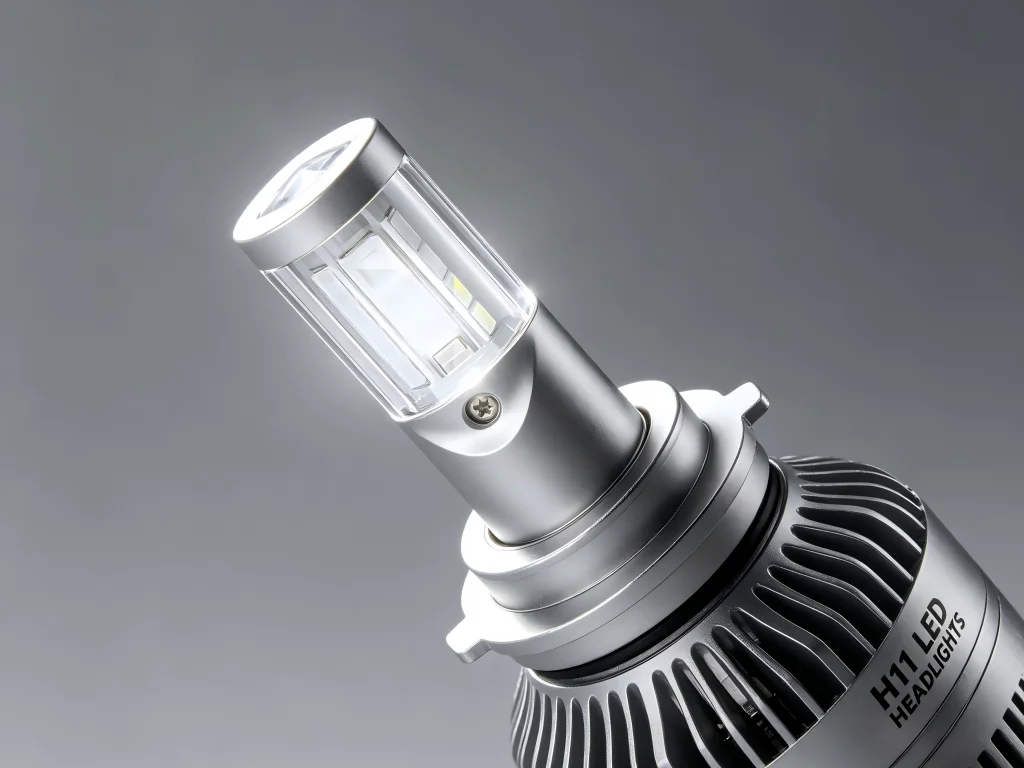
1. Why Cheap H11 Bulbs Keep Failing You
The root cause is not your car’s electrical system. It is the fundamental fragility of a halogen filament trying to survive underhood temperatures, vibration, and voltage fluctuations that no $12 bulb is engineered to handle.
Halogen bulbs work by heating a tungsten filament until it glows. That same heat degrades the filament with every hour of use. Add vibration from potholes or a slightly loose housing, and the filament fatigues and breaks . Add cold weather, and the filament becomes brittle and even more prone to failure . This is not a defect. It is physics working against you.
The cheap aftermarket halogen replacements flooding Amazon and Walmart shelves often make things worse. Reviews for budget multi-pack bulbs tell the same story repeatedly: one bulb burns out within weeks, then the replacement fails too . Even name-brand halogen upgrades like Sylvania SilverStar Ultra draw complaints of premature burnout and color that looks more yellow than advertised . You pay for “brighter” and get the same short lifespan with a slightly whiter tint.
1.1. The Hidden Costs You Are Not Tracking
Consider what each burnout actually costs. The bulb itself is the smallest expense. There is the time to diagnose which side failed, the trip to the parts store, the installation—which on some vehicles requires removing the front grille or battery just to reach the housing . There is the safety risk of driving with one dim headlight on a dark highway. And there is the quiet erosion of trust every time you turn the key and wonder how long this set will last.
For fleet managers and B2B buyers, the math gets uglier. Multiply that cycle across twenty vehicles. Track the labor hours. Count the downtime. Halogen h11 headlight bulbs are inexpensive per unit and expensive per mile.
2. The Real Fix: What to Look for in H11 LED Bulbs
A properly engineered h11 LED bulb eliminates the filament entirely, replacing it with solid-state diodes that do not burn out from vibration or heat cycling. The key is not raw lumen claims—it is optical alignment, thermal design, and build quality.
Most LED bulbs on Amazon advertise absurd brightness numbers. One listing claims 230,000 lumens from a single H11/9005 combo kit . Another promises 45,000 lumens with “1000% brightness” . These numbers are marketing fiction. What matters is usable light on the road, not a theoretical figure measured under laboratory conditions that do not exist in your headlight housing.
In our engineering testing at GTR, we focus on three variables that actually determine performance:
- LED chip positioning: The light source must sit at the exact focal point the reflector or projector was designed for. If it is even a millimeter off, the beam pattern scatters—bright to you, blinding to oncoming traffic.
- การจัดการความร้อน: LEDs generate heat at the junction, not the glass. A copper heat pipe and a reliable fan keep the diode below its degradation threshold. Cheap bulbs skip this, and their output fades within months.
- Optical focus over lumen count: A focused 4,000-lumen bulb puts more usable light on the road than a scattered 12,000-lumen bulb that sprays glare everywhere.
3. GTR vs. Typical Amazon H11 LED Bulbs: What Actually Matters
| ปัจจัยในการตัดสินใจ | Typical Marketplace H11 LED | GTR H11 LED Solution |
|---|---|---|
| Lumen claim | “45,000–230,000 lm” (unverified, often peak chip rating) | Real-world effective output, measured at the road |
| รูปแบบลำแสง | Often scattered; causes glare | Digitally optimized LED positioning to match halogen focal point |
| การจัดการความร้อน | Passive aluminum only; output fades | Thermal Separation Technology + active cooling |
| Build durability | Unsealed drivers, corrosion risk | 100% potted, waterproof internals |
| การรับประกัน | 30–90 days typical | Lifetime limited warranty |
That warranty gap is not a marketing gimmick. It reflects a design philosophy. When a manufacturer offers a lifetime guarantee on an h11 headlight bulb, they are telling you the diode and driver are engineered to outlast the vehicle. GTR has been building automotive lighting since 2007, with over 30,000 square meters of production capacity and a dealer network that supports installation and fitment questions . That is the difference between buying a bulb and buying a solution.
4. Real Feedback: What Drivers Actually Say After Switching
We track owner feedback across forums and dealer reviews. The pattern is consistent. Drivers who switch from halogen to a properly focused LED kit report two things immediately: the beam pattern looks like it did from the factory, just brighter and whiter, and the replacement cycle stops. No more six-month bulb changes. No more guessing which side will fail next.
One fleet operator we work with in the Pacific Northwest runs a mixed fleet of service trucks. Before switching to GTR h11 LED bulbs, his maintenance log showed an average of 2.3 headlight bulb replacements per vehicle per year. After twelve months on GTR, that number dropped to zero. The cost of the bulbs was recovered in labor savings alone within the first quarter.
This is not magic. It is simply removing the failure mode—the filament—and replacing it with a component that does not care about vibration, cold, or the thousand small abuses of daily driving.
5. Frequently Asked Questions About H11 Headlight Bulbs
5.1. Will H11 LED bulbs fit my car without modifications?
Most vehicles that use H11 halogen bulbs accept H11 LED replacements as a plug-and-play swap. The critical check is clearance behind the dust cover. Some housings are shallow, and a bulb with a large external heatsink or fan may not fit. GTR publishes fitment dimensions and supports pre-sale compatibility checks through authorized dealers. If you drive a vehicle with a sealed dust cap, verify depth before ordering.
5.2. Are H11 LED bulbs legal for street use?
Legality varies by jurisdiction. In the United States, FMVSS 108 regulates headlamp performance, and aftermarket LED bulbs occupy a gray area in many states. A focused LED bulb that preserves the factory beam cutoff is far less likely to attract attention than a scattered, glaring setup. Always check local regulations. For off-road, industrial, or fleet applications, legality concerns are typically different, and GTR’s commercial clients often use these bulbs in non-public-road environments where performance and durability are the only metrics.
5.3. Why do my new LED bulbs flicker or throw error codes?
Some vehicles use pulse-width modulation (PWM) to run daytime running lights or detect bulb failure. A quality LED kit with a built-in CANBUS-ready driver or anti-flicker module resolves this. Cheap bulbs skip the circuitry and cause the flicker. GTR’s automotive-grade drivers are designed to work with PWM systems without external decoders in most applications .
5.4. What is the brightest h11 headlight bulb I can buy?
“Brightest” is the wrong question. A bulb that produces 20,000 lumens but scatters the light into oncoming traffic is dangerous and ineffective. Look for a bulb with an optimized beam pattern that puts light where you need it—down the road, not into the eyes of other drivers. GTR’s design philosophy prioritizes optical focus over raw lumen marketing, because usable light is what keeps you safe at night .
5.5. How long do quality H11 LED bulbs actually last?
A well-engineered LED bulb with proper thermal management should outlast the vehicle. The diode itself does not “burn out” like a filament. The failure points are the driver circuitry and the cooling system. Potted, waterproof electronics and a reliable fan or heat pipe design are the indicators of a bulb that will still be working years from now. That is why GTR backs its bulbs with a lifetime limited warranty .
6. Stop Replacing. Start Driving.
You have a drawer full of failed halogen bulbs and a mental list of every pothole that killed one. You know the frustration of a dark commute and the suspicion that the parts store is selling you the same fragile component in a different box. That cycle ends when you stop buying filaments and start buying engineered lighting.
GTR builds h11 headlight bulbs for drivers and fleet operators who are done with the six-month replacement ritual. Our bulbs are designed, tested, and backed for the long haul—because the only thing you should be thinking about at night is the road ahead, not whether your lights will make it home.
Ready to end the burnout cycle? เยี่ยมชม https://www.rhgtr.com to find the GTR H11 solution for your vehicle, or contact our team for fleet and B2B fitment support. Your last set of headlight bulbs is waiting.