
You’ve decided to upgrade your H11 halogen headlights to LED. Smart move — LEDs deliver more light, last longer, and use less power than the halogens your vehicle came with.
But here’s the problem: the H11 LED market is flooded with options, and most of them are terrible.
We’ve analyzed the top 20 H11 bulb articles on Google, read thousands of customer reviews, and tested dozens of products in our own lab. After 18 years in automotive lighting manufacturing, we know exactly what separates a $40 H11 LED that dies in six months from a premium bulb that lasts a decade.
This guide cuts through the marketing hype. By the time you finish reading, you’ll know exactly which H11 LED bulb to buy — and why.
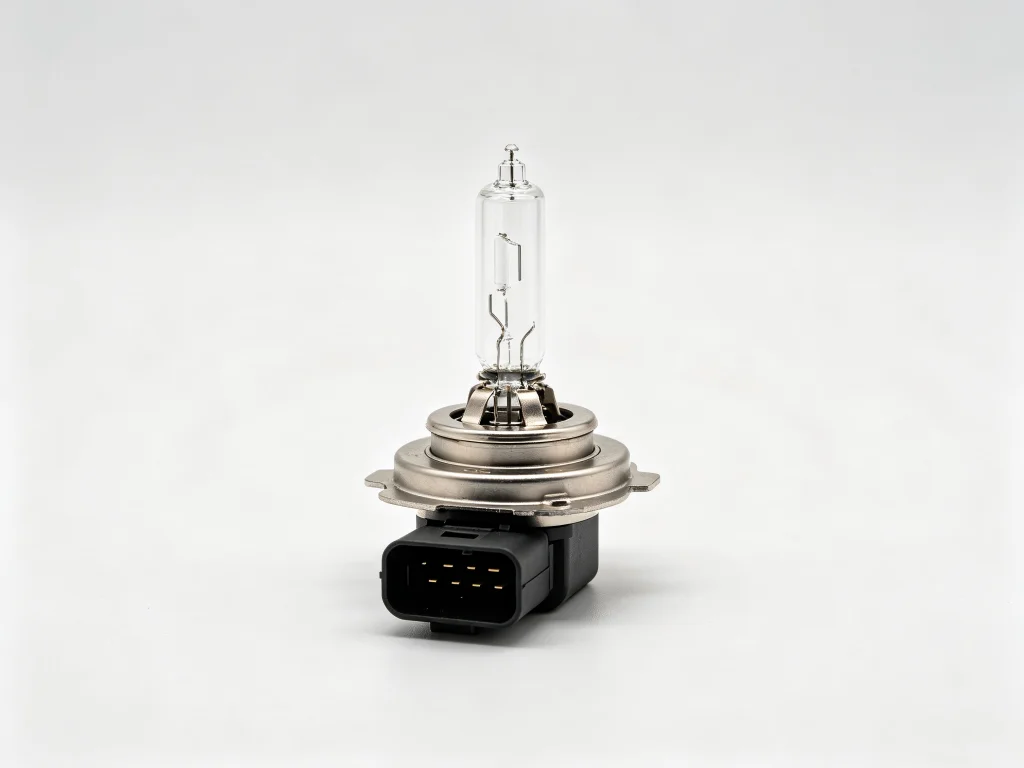
1. First, Know What You're Replacing
The stock H11 halogen bulb in your vehicle produces about 1,350 lumens while drawing 55 watts of power. It’s a single-filament bulb with an L-shaped base, most commonly used for low-beam headlights.
คำตอบโดยตรง: H11, H8, and H9 bulbs share the same physical connector and can be used interchangeably in LED form. The difference in halogen versions is wattage — H8 draws 35W (fog lights), H11 draws 55W (low beams), and H9 draws 65W (high beams). With LEDs, wattage differences become irrelevant.
Before buying any H11 LED, confirm your vehicle uses H11 bulbs. Check your owner’s manual or pull an existing bulb and look at the marking.
2. What Actually Makes a Good H11 LED Bulb?
After analyzing hundreds of products, we’ve identified five critical factors that determine whether an H11 LED bulb will perform, fit, and last. Ignore any one of these, and you’re gambling with your money — and your safety.
2.1. LED Chip Quality and Position
The LED chips are the heart of the bulb. They determine brightness, beam pattern, and longevity.
Premium chips (like Philips ZES or Seoul CSP) deliver consistent color, precise beam patterns, and long life. Cheap chips from unknown manufacturers shift color as they heat up, fade quickly, and scatter light everywhere.
But chip quality alone isn’t enough. Chip position matters just as much. The LED chips must sit exactly where the halogen filament used to be. If they’re even slightly off, your beam pattern breaks — light scatters, you lose down-road visibility, and you blind oncoming traffic.
The best H11 LED bulbs use 1:1 chip positioning — the chips are placed in the exact same location as the original filament.
2.2. Thermal management
LEDs generate heat. A lot of it. If that heat isn’t removed, the chips overheat, shift color from white to blue, and eventually fail.
Good H11 LED bulbs use active cooling — a fan that pulls heat away from the chips and out of the housing. Better bulbs use dual-layer cooling: a fan plus a copper or aluminum heat sink that dissipates heat even if the fan fails.
Cheap H11 LEDs often use tiny, noisy fans that clog with dust or fail within months. Some use no cooling at all — the electronics are built into the housing with no way to shed heat. These bulbs will fail, and they’ll fail fast.
Look for H11 LED bulbs with braided copper heat sinks หรือ large, quiet fans backed by a heat sink. If the manufacturer doesn’t mention cooling, run.
2.3. ความเข้ากันได้กับ CANBUS
Modern vehicles use CANBUS systems that monitor bulb resistance. Your H11 halogen drew 55 watts. Your new LED draws much less. The computer sees the low resistance and thinks the bulb is burned out.
The result? Flickering. Hyper-flash. Dashboard error messages. Lights that turn off while you’re driving.
CANBUS-compatible H11 LED bulbs include built-in resistors or decoders that trick the computer into thinking a halogen is still installed. No flicker. No errors. Just plug and play.
Some bulbs require external anti-flicker harnesses — additional wiring you have to install. Quality bulbs integrate everything internally.
2.4. Physical Size and Fit
This is the most overlooked factor — and the one that causes the most installation headaches.
Many H11 LED bulbs are physically larger than the halogen bulbs they replace. They don’t fit in the headlight housing. The dust cap won’t close. The locking mechanism won’t engage.
Some drivers end up modifying their headlight assemblies — filing down sockets, cutting dust caps, or forcing bulbs into place. This can void warranties and cause permanent damage.
The solution? True 1:1 size — H11 LED bulbs that match the exact dimensions of the original halogen. They drop in, lock in place, and the dust cap closes without modification.
2.5. Beam Pattern and Glare Control
Raw brightness is meaningless if the light isn’t going where it should.
A quality H11 LED bulb produces a sharp cutoff line — light goes down the road, not into oncoming drivers’ eyes. This requires precise chip positioning and optical engineering.
Cheap H11 LEDs produce scattered, unfocused light that reduces your usable visibility while blinding everyone else. The bulb might claim 20,000 lumens, but if half of that is going into the trees and oncoming traffic, you’re not actually seeing better.
3. H11 vs. H8 vs. H9 — What's the Difference?
You’ll see H11, H8, and H9 bulbs listed interchangeably. Here’s the truth:
| ประเภทหลอดไฟ | Halogen Wattage | Common Use | Physical Fit |
|---|---|---|---|
| H11 | 55W | Low beams | มาตรฐาน |
| H8 | 35W | ไฟตัดหมอก | Same connector |
| H9 | 65W | High beams | Same connector |
For LED bulbs, the halogen wattage difference becomes irrelevant. An H11 LED, H8 LED, and H9 LED are physically identical — they share the same connector, the same size, and the same fit. What matters is the quality of the LED inside, not the original halogen designation.
When shopping for H11 LEDs, you’ll often see them listed as “H11/H8/H9” — that’s because one bulb fits all three sockets.
4. Real Customer Experiences: What Actually Goes Wrong
We’ve read thousands of H11 LED reviews across Amazon, forums, and Reddit. Here’s what real customers report:
4.1. What They Love
- “Huge difference” — drivers consistently report dramatically improved visibility after switching from halogens
- “Easy installation” — plug-and-play bulbs that actually fit make the upgrade painless
- “No blinding issues” — bulbs with proper beam patterns don’t get flashed by oncoming traffic
4.2. What They Hate
- “Started flickering after 3 months” — cheap bulbs with poor CANBUS compatibility fail quickly
- “Doesn’t fit — had to file the socket” — oversized bulbs that require modification
- “Fan is so loud I can hear it in the cabin” — cheap cooling fans that are noisy and fail fast
- “No high/low beam, just high beam all the time” — bulbs with terrible beam patterns that scatter light everywhere
- “One went dim and yellowish after a few months” — overheating chips that shift color and fail
These aren’t edge cases. These are the most common complaints in H11 LED reviews. And every single one traces back to the five factors we outlined above — poor chip quality, bad thermal management, no CANBUS compatibility, wrong size, or bad beam pattern.
5. How to Choose Your H11 LED Bulb: A Decision Framework
- Confirm your vehicle uses H11 bulbs — check your owner’s manual or pull an existing bulb
- Verify CANBUS compatibility — if you drive a modern vehicle (2010+), you need CANBUS-ready bulbs
- Check the size — look for “1:1 size” or “mini size” to ensure fit
- Examine the cooling system — dual-layer (fan + heat sink) is best; fan-only is okay if the fan is high-quality; no cooling is unacceptable
- Look for a precise beam pattern — bulbs that mention “focused beam,” “cutoff line,” or “0.03-inch chip design”
- อ่านรีวิวจริง — skip the sponsored content and look for verified purchases with photos
6. Why GTR H11 LED Bulbs Pass Every Test
After 18 years in automotive lighting, with 300 dedicated team members and customers in over 80 countries, we’ve built H11 LED bulbs that check every box:
- Premium LED chips — positioned at the exact halogen filament location for a perfect beam pattern
- Dual-layer cooling — high-efficiency fan + copper heat sink for 50,000+ hour lifespan
- Integrated CANBUS decoding — no flicker, no errors, no external harnesses
- True 1:1 size — fits every H11 housing without modification
- Razor-sharp beam pattern — light on the road, not in oncoming drivers’ eyes
Our bulbs are backed by CE, FCC, RoHS, ISO9001, and ISO14001 certifications — international standards that demonstrate our commitment to safety, quality, and environmental responsibility.
7. Frequently Asked Questions About H11 LED Bulbs
7.1. Are H11 and 9005 bulbs interchangeable?
No — H11 and 9005 have different bases and are not interchangeable. H11 is typically used for low beams, while 9005 is used for high beams. Always use the bulb size specified in your owner’s manual.
7.2. How many lumens should H11 LED bulbs have?
A quality H11 LED bulb should produce significantly more than the 1,350 lumens of a halogen. Premium bulbs deliver 3,000-5,000+ lumens per pair. However, beam pattern matters more than raw lumens — a focused 3,000-lumen beam is more useful than a scattered 10,000-lumen beam.
7.3. Will H11 LED bulbs fit my vehicle?
H11 is one of the most common bulb sizes, used in Toyotas, Hondas, and many other makes. However, bulb fit varies by vehicle model and year. Always confirm your bulb size in your owner’s manual before purchasing.
7.4. Do I need resistors for H11 LED bulbs?
If your H11 LED bulb has integrated CANBUS decoding, you don’t need external resistors. If it doesn’t, you’ll need to add anti-flicker harnesses or load resistors to prevent errors and flickering.
7.5. Why do H11 LED bulbs cause radio interference?
Some cheap H11 LED bulbs use poorly shielded drivers that emit electromagnetic interference, which can disrupt AM/FM radio reception. Quality bulbs use shielded electronics that prevent this issue.
7.6. How long do H11 LED bulbs really last?
Quality H11 LED bulbs last 30,000-50,000 hours. Cheap ones can fail in 3-12 months. The difference is thermal management and chip quality — proper cooling keeps chips running at safe temperatures.
7.7. Can I use H11 LED bulbs for both low and high beams?
H11 bulbs are typically single-beam — they produce one level of light. Some manufacturers offer dual-function H11 bulbs that work for both, but check specifications before purchasing.
8. Make the Smart Choice for Your Vehicle
You now know exactly what separates a quality H11 LED bulb from a cheap one. You understand the five critical factors — chip quality, thermal management, CANBUS compatibility, physical fit, and beam pattern. You’ve seen what real customers experience when they get it wrong.
Don’t gamble with your night driving safety. Don’t waste money on bulbs that flicker, blind others, or fail within months. Choose H11 LED bulbs engineered by professionals with 18 years of experience, backed by international certifications, and trusted by customers in 80 countries.
Explore GTR H11 LED Bulbs — Engineered for Performance, Built to Last