
Standing in the lighting aisle, staring at rows of bulbs, wondering which one to buy? You’re not alone. The halogen vs LED decision isn’t as simple as “LED is better.” Each technology has strengths and weaknesses. This guide cuts through the marketing hype and gives you the facts you need to make the right choice for your specific situation.
1. Halogen Bulbs vs LED: The Core Difference
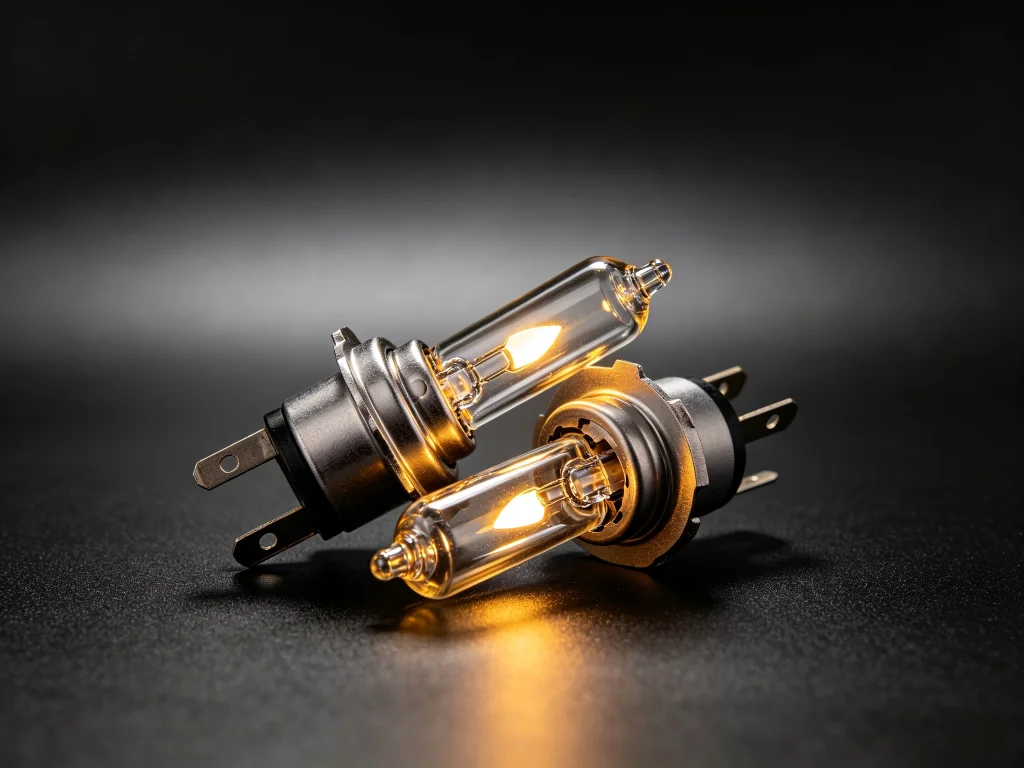
Halogen bulbs produce light by heating a tungsten filament to approximately 4,500°F inside a quartz capsule filled with halogen gas. The halogen gas captures evaporated tungsten particles and redeposits them onto the filament through the halogen cycle, extending lifespan compared to traditional incandescent bulbs.
LED bulbs produce light through electroluminescence — electrons moving across a semiconductor material and releasing energy as photons. No filament. No extreme heat. Just efficient, directed light.
This fundamental difference drives every other comparison between the two technologies.
2. Head-to-Head Comparison: Halogen vs LED
| เมตริก | Halogen Bulbs | LED Bulbs |
|---|---|---|
| ประสิทธิภาพการใช้พลังงาน | 16-24 lumens per watt | 80-100+ lumens per watt |
| อายุการใช้งานเฉลี่ย | 1,000-3,000 hours | 25,000-50,000 ชั่วโมง |
| การแสดงสี (CRI) | 100 (สมบูรณ์แบบ) | 80-95+ (varies widely) |
| เวลาอบอุ่นร่างกาย | ทันที | ทันที |
| Heat Production | Very high (95% energy as heat) | Low (80-90% energy as light) |
| ค่าใช้จ่ายล่วงหน้า | ต่ำ | ปานกลางถึงสูง |
| Dimmability | Excellent | Varies (requires compatible dimmer) |
| UV/IR Emission | Low UV, significant IR | Negligible UV, minimal IR |
3. When to Choose Halogen Bulbs
Despite LED’s advantages, halogen bulbs remain the better choice in specific scenarios. Here’s when you should stick with halogen:
- You need perfect color rendering. Halogen bulbs have a Color Rendering Index of 100 — the same as natural sunlight. If you’re an artist, designer, or anyone who needs to see colors accurately, halogen is unmatched. Cheap LEDs can make colors appear dull or shift hues entirely.
- Your fixture requires it. Some older fixtures, particularly in automotive applications, are designed specifically for halogen bulbs. Retrofitting LED may require modifications or may not work correctly. In the UK, fitting aftermarket LED bulbs into headlight units designed for halogen is generally illegal for road use.
- You want instant, full brightness. Halogen bulbs reach full brightness instantly with no warm-up time. While modern LEDs also offer instant-on, some lower-quality LEDs may have slight delays or reduced brightness until warm.
- You’re in a cold climate. Halogen bulbs generate significant heat, which can melt snow or ice on automotive headlight lenses. LEDs generate very little heat, so in snowy conditions, LED lenses may become covered and reduce visibility.
- You need smooth dimming. Halogen bulbs dim smoothly and consistently with standard dimmer switches. LED dimming performance varies widely and may require specific dimmers.
4. When to Choose LED Bulbs
LED technology has improved dramatically. Here’s when LED is the obvious choice:
- You want to save on energy bills. LEDs use 75-90% less energy than halogen bulbs for the same light output. That translates to real savings over time.
- You hate changing bulbs. An LED bulb can last 10 to 25 times longer than a halogen bulb. Install an LED once and forget about it for years.
- Your fixtures are in hard-to-reach places. Vaulted ceilings, recessed lighting, outdoor fixtures — anywhere that’s a pain to access benefits from LED’s longevity.
- You want to reduce heat output. Halogen bulbs get dangerously hot. LEDs stay cool to the touch even after hours of operation. This matters in enclosed fixtures or spaces where heat buildup is a concern.
- Regulations require it. In many regions, halogen bulbs are being phased out or banned for general lighting. Choosing LED now means you won’t face availability issues later.
5. The Hidden Costs: What Nobody Tells You
Here’s where the halogen vs LED decision gets complicated. The upfront cost comparison doesn’t tell the full story.
5.1. Halogen's Hidden Costs
- Replacement frequency. A halogen bulb lasting 2,000 hours needs replacement 10+ times over the lifespan of a single LED bulb. Each replacement costs time, effort, and money.
- Energy waste. 95% of the energy a halogen bulb consumes becomes heat, not light. You’re paying for heat you don’t want.
- Dimming over time. Halogen bulbs gradually lose brightness. A bulb at 75% of its life produces significantly less light than a new one. You’re not getting consistent performance.
5.2. LED's Hidden Costs
- Higher upfront price. Quality LEDs cost more upfront than halogen bulbs.
- Compatibility issues. Not all LEDs work with existing dimmers or fixtures. You may need to upgrade dimmers or modify fixtures.
- Quality variation. Not all LEDs are created equal. Cheap LEDs may have poor color rendering, flicker, or fail prematurely. You get what you pay for.
6. How to Choose the Right Halogen Bulb
If you’ve decided halogen is right for your application, here’s what to look for:
6.1. Check Your Bulb Type
Every fixture requires a specific bulb size and base type. For automotive applications, common types include H1, H4, H7, H11, 9003, 9005, and 9006. For home lighting, common types include A19, GU10, MR16, G9, and R7s. Check your existing bulb or fixture manual to confirm the correct type. Installing the wrong bulb can cause wiring damage, melt housings, or fail to focus light correctly.
6.2. Consider Brightness and Color Temperature
Brightness is measured in lumens. Standard H11 bulbs produce about 1,350 lumens, while high-performance variants can reach 2,100 lumens. Color temperature is measured in Kelvin. Lower Kelvin ratings (3,000K) emit yellow light ideal for fog and rain, while 5,000K bulbs provide white illumination for clear conditions.
6.3. Look for Quality Construction
Not all halogen bulbs are the same. Premium bulbs feature reinforced filaments, anti-vibration coatings, and pure gas mixtures that extend lifespan. Look for bulbs from manufacturers with ISO 9001 and SAE certifications.
6.4. Replace in Pairs
For automotive applications, always replace halogen bulbs in pairs. Both headlights age together, and replacing only one creates uneven brightness and beam patterns.
7. Frequently Asked Questions About Halogen and LED Bulbs
7.1. Are halogen bulbs being banned in 2026?
Regulations vary by region. In the EU, halogen bulbs now score F or G on energy labels and are practically banned for general lighting. The UK phased out halogen bulb sales in 2021. However, automotive halogen bulbs and specialty applications often have exemptions. Check your local regulations for specific guidance.
7.2. Can I replace halogen bulbs with LED in my car?
In many regions, fitting LED bulbs into headlight units designed for halogen is illegal for road use. The beam pattern may not be correct, causing glare for other drivers. Always check local regulations before making the switch. If you want LED lighting, consider replacing the entire headlight unit with one designed for LED.
7.3. Which is brighter: halogen or LED?
LED bulbs produce more lumens per watt. A 15-watt LED can be as bright as an 85-watt halogen. However, halogen bulbs often produce a warmer, more natural light that some users prefer.
7.4. Do halogen bulbs use more electricity than LED?
Yes. LEDs use 75-90% less energy than halogen bulbs for the same light output. This is one of the primary reasons regulations are phasing out halogen bulbs for general lighting.
7.5. How long do halogen bulbs last compared to LED?
Halogen bulbs typically last 1,000 to 3,000 hours. LED bulbs typically last 25,000 to 50,000 hours. That means one LED bulb can outlast 10 to 25 halogen bulbs.
7.6. Which type of bulb has better color rendering?
Halogen bulbs have a perfect CRI of 100, matching natural sunlight. LED color rendering varies widely — premium LEDs can achieve 95+ CRI, while budget LEDs may be significantly lower. For color-critical applications, halogen remains the gold standard.
7.7. Are halogen bulbs safe?
Halogen bulbs are safe when used properly. However, they operate at extremely high temperatures and pose burn and fire hazards if installed incorrectly or touched with bare hands. LEDs are cooler and generally safer in enclosed fixtures.
8. Making Your Decision: A Simple Framework
Still unsure? Ask yourself these three questions:
- What’s my priority? If light quality and color accuracy matter most, choose halogen. If energy savings and longevity matter most, choose LED.
- What does my fixture require? Check your fixture specifications. Some fixtures work best with one technology over the other.
- What do regulations require? Check your local regulations. Some regions have phased out halogen for general lighting.
9. Why GTR Should Be Your Halogen Bulb Supplier
If you’ve decided halogen is right for your application, choose a supplier that doesn’t cut corners. GTR combines German-engineered filament technology with rigorous ISO 9001 and SAE quality standards. Our halogen bulbs feature premium gas mixtures and quartz glass that extend operational life by up to 30% compared to conventional halogens.
Whether you need automotive halogen bulbs, specialty lighting, or bulk orders for commercial applications, GTR delivers consistent quality you can count on.
เยี่ยมชม www.rhgtr.com to browse our full range of premium halogen bulbs. Find your bulb type. Get the quality you deserve. And make the right choice for your application.