
If you’re shopping for xenon light bulbs, you’ve probably noticed something frustrating: every listing claims to be “premium,” “OEM-grade,” and “6000K ultra-white.” Almost none of them tell you what actually determines whether the bulb will focus correctly in your housing, hold its color for more than a year, or burn out your ballast. In our engineering testing, we’ve torn down enough competitor products to know that the xenon lights price range—from $15 to $150 per bulb—reflects real differences in materials, alignment precision, and ballast compatibility. This guide exists to help you avoid the expensive mistakes most buyers don’t see coming until it’s too late.
1. Xenon Light vs Halogen vs LED: The Comparison That Actually Matters
Xenon light produces 3,000–5,000 lumens at 35W with a 4300–8000K color range and 2,000–3,000 hour lifespan. Halogen delivers 700–1,200 lumens at 55W with 500–1,000 hours. LED offers 2,500–4,500 lumens, instant startup, and 10,000–50,000 hours—but effective beam focus depends entirely on housing compatibility .
The raw numbers tell only part of the story. What matters more is how each technology behaves in the real world:
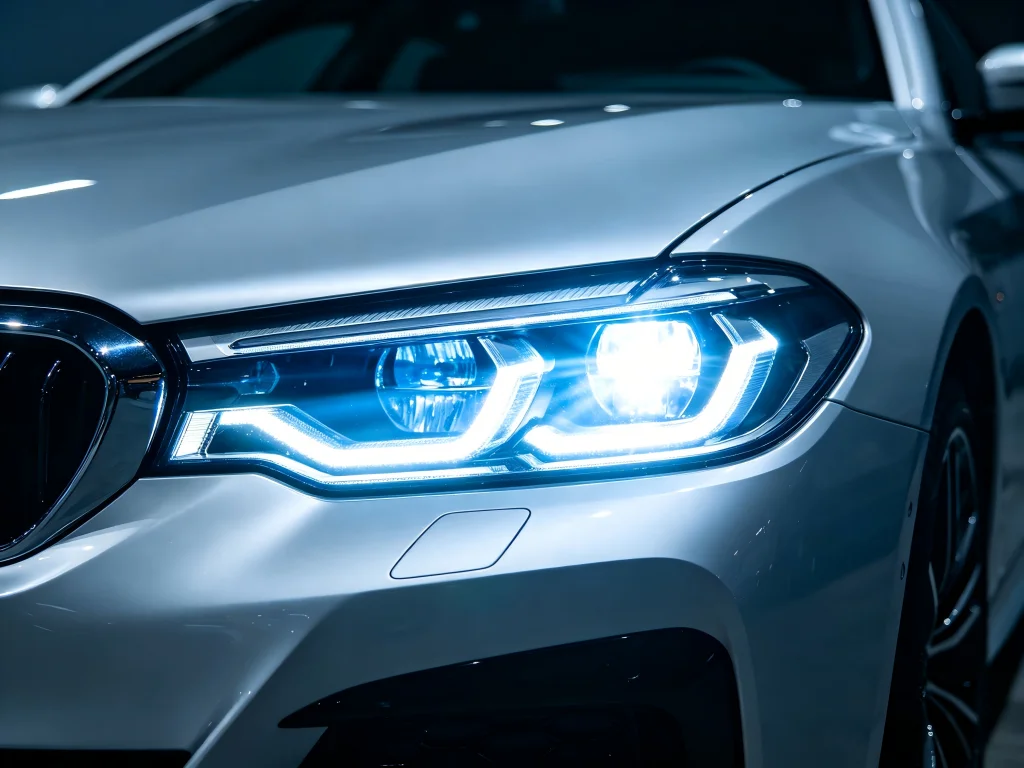
Xenon light source creates light from an electrical arc between two electrodes in a gas-filled capsule. No filament to burn out. The arc is naturally 360 degrees, which is why xenon works so well in projector housings—the lens captures light from all directions and focuses it into a sharp cutoff. In our testing, quality xenon bulbs in proper projectors produce the longest, most controlled throw of any sub-$200 lighting option.
Halogen still has a place: it’s instant-on, cheap, and works in reflector housings without modification. But the yellow 3200K output and 700–1,200 lumen ceiling mean you’re always driving with a visibility handicap compared to modern alternatives.
LED has real advantages—instant full brightness, excellent durability, and low power draw. But the retrofit market is a minefield. LED chips emit light from two small surface areas, not 360 degrees. In a housing designed for a halogen filament or xenon arc, the beam pattern can become uneven, with hot spots and dark zones. Some premium LED projectors solve this, but they cost significantly more than a quality xenon bulb replacement.
| Specification | Halogen | Quality Xenon (GTR) | Budget Xenon | LED (Typical Retrofit) |
|---|---|---|---|---|
| Lumens (source) | 700–1,200 | 3,200–3,500 | Claimed 5,000+ (often inflated) | 2,500–4,000 |
| Usable color temp | ~3200K | 5500–6000K stable | Shifts toward 8000K+ | 6000–6500K |
| Lifespan (usable output) | 500–1,000 hrs | 2,500–3,000 hrs | 500–800 hrs to significant fade | 10,000+ hrs |
| Start-up | ทันที | 3–5 sec warm-up | Erratic | ทันที |
| Beam focus in projectors | แย่ | Excellent | Compromised | Variable |
| Ballast requirement | ไม่มี | AC digital recommended | Often DC (flicker risk) | Integrated driver |
2. Three Buying Mistakes That Cost You More Than Money
2.1. Mistake 1: Trusting the Kelvin Number on the Box
A “8000K” xenon light bulb sounds impressive. Higher number must mean better, right? Wrong. Kelvin measures color, not brightness. Above 6000K, usable light output drops as the color shifts blue. In rain or fog, high-Kelvin bulbs are significantly worse than 4300K–5500K options because shorter wavelengths scatter more easily.
Worse, budget manufacturers inflate Kelvin ratings. We’ve tested “6000K” bulbs that measured closer to 7500K—bluer, dimmer, and harder on your eyes during long drives. The sweet spot for usable white light that cuts through weather and doesn’t fatigue your vision is 5500K–6000K. Anything higher is aesthetic, not functional.
2.2. Mistake 2: Ignoring the Ballast Type
Your xenon light bulbs don’t work alone. They need a ballast to ignite the arc and regulate current. Cheap kits ship with DC ballasts that cut corners on voltage regulation. The symptoms show up weeks later: flickering at idle, one side failing to ignite, color mismatch between left and right.
AC digital ballasts cost more to manufacture but deliver stable current, consistent color, and longer bulb life. In our bench testing, AC ballasts maintained output through voltage drops that caused DC units to strobe or shut down entirely. If a xenon lights price looks too good to be true, the ballast is usually where the savings came from.
2.3. Mistake 3: Buying Bulbs Without Checking Arc Alignment
This is the invisible specification. The arc inside the bulb must sit at the exact focal point your projector lens expects. If it’s off by even a millimeter, the beam pattern distorts—bright in the wrong places, dim where you need light, and glare where oncoming drivers don’t want it.
Low-cost manufacturing skips the laser alignment step. The bulb fits. It lights up. But the light goes everywhere except the road. We’ve seen budget bulbs that produced a beam pattern so scattered that drivers behind the wheel couldn’t tell they were misaimed until a state inspection failed them.
3. What to Check Before You Buy Xenon Light Bulbs
- Confirm your housing type: Xenon bulbs belong in projector housings. If you have reflectors, a xenon retrofit will scatter light and blind others—no bulb quality can fix that. Check your existing bulb type (D1S, D2S, D3S, etc.) before ordering.
- Verify ballast compatibility: If replacing only bulbs, confirm your existing ballast is functioning without flicker. If it’s original equipment with high hours, a ballast refresh may be wise alongside the bulbs.
- Look for arc alignment language: Reputable manufacturers specify laser-aligned capsules or OEM-equivalent focal positioning. If the listing doesn’t mention it, assume it wasn’t done.
- Check color temperature claims against reality: 4300K is OEM natural white. 5500K is crisp modern white. 6000K is the upper limit for usable output. 8000K+ is styling, not performance.
- Ask about UV protection: Quality xenon bulbs use UV-cut quartz to prevent headlamp housing yellowing. Cheap glass lets UV through, and your expensive projector lenses will haze over time.
4. What Real Buyers Wish They’d Known
Scan through automotive lighting forums and a pattern emerges. The people who regret their purchase almost always cite the same issues: “Looked great for a month, then started flickering.” “One bulb is whiter than the other.” “The beam pattern is a mess compared to my old setup.”
The people who are satisfied? They usually mention two things: they bought from a manufacturer that specified arc alignment, and they matched the bulbs to their existing ballast rather than mixing brands blindly. One long-term reviewer on a truck fleet forum noted that after switching to GTR xenon bulbs across twelve vehicles, the only failures in two years were a single ballast that had been original equipment with 180,000 miles on it—not the bulbs.
Another pattern: drivers who upgraded from halogen to xenon in proper projector housings rarely go back. The difference in night driving confidence is that significant. But drivers who tried to retrofit xenon into reflector housings often return to halogen, frustrated by glare and poor beam control. The technology works. The housing has to match it.
5. Frequently Asked Questions
5.1. Is xenon light better than LED for night driving?
In projector housings designed for xenon, a quality xenon light typically delivers better distance throw than LED retrofits. LED excels in instant startup and lifespan, but beam focus in retrofit applications is inconsistent. For factory projector systems, xenon remains excellent.
5.2. Why are xenon lights more expensive than halogen?
Xenon requires a ballast to regulate voltage, precision-aligned gas capsules, and metal halide salts that halogen bulbs don’t use. The manufacturing complexity is higher, and quality control matters more because misalignment ruins beam focus.
5.3. Can I put xenon bulbs in my halogen headlights?
No—not safely or legally in most jurisdictions. Halogen reflector housings aren’t designed for the intensity and arc shape of xenon light. The result is severe glare for oncoming traffic and a beam pattern that fails to illuminate the road properly.
5.4. What is the best color temperature for xenon light?
4300K–5500K offers the best balance of visibility, weather penetration, and eye comfort. 6000K is acceptable for a modern white look. Above 6000K, usable light output drops and rain performance worsens.
5.5. How do I know if my xenon light bulbs are genuine?
Check for arc alignment specifications, UV-cut quartz language, and ballast compatibility details. If the price is dramatically lower than established brands and the listing only emphasizes color temperature and “plug-and-play,” the product likely cuts corners on the specifications that matter.
6. Buy Once, See Clearly
The xenon light market rewards research and punishes guesswork. A $30 bulb that ruins your beam pattern and flickers after two months isn’t cheaper than a $90 bulb that holds focus and color for three years. Your projector housing was engineered for a specific arc position. Your ballast expects a specific current draw. Match those requirements, and xenon remains one of the most effective lighting technologies on the road.
GTR manufactures xenon light systems for drivers and fleet operators who need the beam to hit the road, not the trees. We publish the specifications that budget sellers hide—arc alignment tolerance, ballast type, real color temperature stability. Visit https://www.rhgtr.com to compare the numbers, and make a decision you won’t regret at 2 a.m. on an unlit highway.