
Choosing a Bi‑LED projector means sorting through inflated lumen claims, vague “50,000 hour” life ratings, and price points from $40 to $400. Here’s the engineering reality behind the specs – and how to identify the upgrades that actually outperform HID projectors without failing within a year.
1. What Exactly is a Bi‑LED Projector? (And Why the “Bi” Matters)
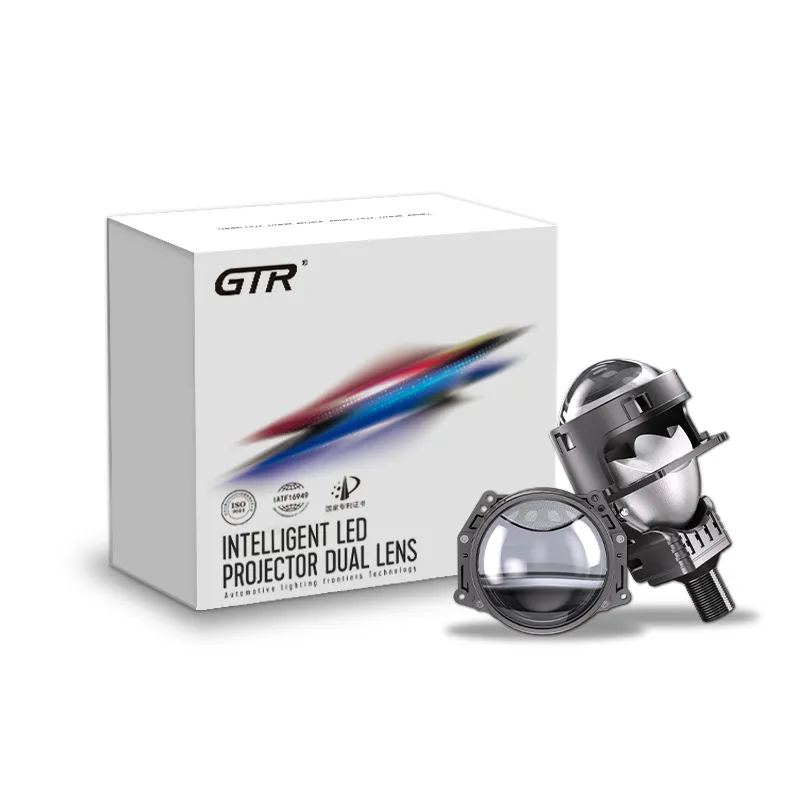
A Bi‑LED projector headlight integrates both low‑beam and high‑beam functions into a single projector lens structure. Unlike single‑beam projectors – which require separate high‑beam and low‑beam assemblies – a Bi‑LED lens uses one high‑intensity LED chip[reference:11]. A mechanical shutter controlled by an electromagnetic solenoid moves up (low beam, creating a sharp cutoff line) or down (high beam, releasing full light output)[reference:12].
This single‑module design reduces weight, simplifies wiring, and eliminates bulb alignment issues. However, it also concentrates thermal load and introduces a moving part that can fail if poorly engineered. Understanding this trade‑off is the first step toward a smart purchase.
The “bi” versus “single beam” distinction shows up constantly in search queries like “bi led projector vs led projector”. The answer is simple: Bi‑LED handles both beams; single‑beam handles only one. Unless you’re building a dedicated high‑beam auxiliary setup, Bi‑LED practically always wins.
The best Bi‑LED projectors also deliver led projector advantages and disadvantages worth weighing against HID. LEDs turn on instantly, consume less power, and typically outlast HID bulbs (which often fail around 2,000 hours)[reference:13]. On the other hand, some budget Bi‑LED units produce narrower or less intense output than good HID systems[reference:14]. Premium brands have solved this, but it remains a real differentiator.
2. Spec Wars: The 7 Metrics That Actually Matter
Manufacturers throw numbers at you. Most of them are useless for real‑world comparison. Here’s what matters.
2.1. Real Lumens vs “LED Chip Lumens”
Many listings advertise “6,000 lumens” based on what the raw LED chip can theoretically produce. That number drops by 30–50% after passing through the lens, reflector bowl, and protective cover. Legitimate manufacturers quote actual output lumens at the lens face or provide candela (lux) measurements at specific distances.
A High‑quality 2.5‑inch Bi‑LED projector typically delivers 2,500–3,000 real lumens on high beam – more than sufficient for safe night driving. Claims above 5,000 lumens from a single 3‑inch projector are either inflated or dangerous (glare risk).
2.2. Lux at 10 Meters (or Candela Peak)
Lumens measure total light output. Lux measures intensity on a specific area – what you actually see on the road. A projector that spreads light poorly may have decent lumens but unusable beam patterns. Industry standards like SAE J1383 require specific minimum lux readings at multiple test points.
One reputable Bi‑LED projector on the market delivers 86W total power with 3892 lumens on high beam and lux readings reaching 1807 lux at 10 meters[reference:15]. That’s excellent, real‑world performance. Compare that to a cheap projector claiming “10,000 lumens” that produces less than 500 lux at 10m – the difference is immediately visible.
2.3. Color Temperature (Kelvin)
Most Bi‑LED projectors output between 5000K and 6500K – cool white to slightly blue. 5500K approximates natural daylight and typically provides the best contrast. Higher Kelvin (6000K+) looks “cooler” but offers poorer wet‑road visibility and may attract police attention[reference:16]. For year‑round driving, 5000K–6000K is optimal.
2.4. Cutoff Sharpness and Color Fringe
The low‑beam cutoff line should be sharp but not excessively colored. A thin blue/purple fringe at the cutoff edge is common and acceptable – in fact, some retrofit enthusiasts prefer it. However, excessive color or a “blurry” cutoff indicates poor optics[reference:17]. You can evaluate this only through real beam pattern photos, not specs.
2.5. Beam Width and Intensity Distribution
Some projectors produce a narrow “spotlight” with very high but very narrow intensity. Others create a wide, even spread that illuminates shoulders and road edges. Good Bi‑LED projectors balance both: intense enough to see far ahead (2+ seconds reaction time) and wide enough to spot hazards entering from the side.
2.6. Thermal Design (Cooling System)
No spec sheet lists “thermal margin” unfortunately. But check heatsink material (copper > aluminum), fan type (dual‑bearing > sleeve), and housing ventilation. If the manufacturer hides photos of the cooling system, assume it’s inadequate.
2.7. Certification Marks (DOT/ECE/Self-Certification)
Legitimate manufacturers obtain certification from recognized bodies. Chinese‑made projectors sometimes claim “DOT certified” without actually undergoing testing. Look for projectors that comply with regulations – a good Bi‑LED projector meets safety rules like DOT or ECE[reference:18].
3. Comparison Table: Bi‑LED vs HID vs Halogen Reflector
|Feature|Bi‑LED Projector|Bi‑Xenon (HID) Projector|Halogen Reflector||Output Intensity|3,000–5,000lm (real)|2,500–3,500lm|800–1,200lm| |High Beam Switching|Instant (shutter)|Instant (shutter)|Separate bulb| |Warm‑Up Time|None|5–15 seconds to full output|None| |Power Consumption|35–70W|35–55W (+ ballast)|50–65W| |Lifespan (Hours)|30,000–50,000|2,000–3,000 (bulb)|400–800| |Components Needed|Projector + harness (often included)|Projector + ballast + bulbs + igniters + harness|Reflector housing + H4/H7 bulb| |Relative Cost|$$–$$$|$$ (bulbs) + $$$ (projectors)|$| |Glare Potential (when aimed)|Low to none (sharp cutoff)|Low to none (sharp cutoff)|High|
4. Cost Breakdown: Why “Cheap” Often Costs More
Walk through actual ownership costs for three Bi‑LED projector tiers:
Budget ($40–80 per pair): Buying cheap Bi‑LED projectors from unknown brands. You’ll save $100‑200 upfront. Then six months later you’re buying another set – or paying a shop to troubleshoot wiring. Average 18‑month cost: $150–250 with significantly lower performance throughout.
Midrange ($120–200 per pair): Recognizable names but still entry‑level optics. You’ll likely get acceptable performance for 2–3 years. Thermal management remains a weak point. Average 18‑month cost: $120–200 if they survive. But you may still experience dimming or flicker under heavy use.
Premium ($250–400 per pair): GTR and other specialized brands. Copper‑core heatsinks, tested solenoids, guaranteed beam patterns, and complete install kits. You’ll pay more upfront and then drive with consistent, high‑output lighting for the life of your vehicle. Average 18‑month cost: $250–400 – with the key difference being zero deterioration and zero repeat purchases.
Experienced retrofit enthusiasts confirm this math. The Morimoto M‑LED projectors are more expensive than budget HID retrofits, but unlike HID setups, you don’t need bulbs, ballasts, igniters, or relay harnesses – just the projectors and some shrouds[reference:19]. That’s a single purchase for a complete system.
5. Real Owner Experiences: What Retrofit Veterans Actually Recommend
After reading hundreds of forum threads across HIDPlanet, ToyotaNation, and CorvetteForum, certain patterns emerge. Owners who used high‑quality Bi‑LED projectors report overwhelmingly positive experiences. The instant switching, clean cutoff, and modern appearance consistently win praise[reference:20].
On the performance side, newer‑generation Bi‑LED projectors have closed the gap with HID. As one Corvette owner noted after switching from HID to LED projectors: “The new M‑LED projectors are the best Bi‑LED projector in the retrofitting world. It’s better than any Bi‑xenon, brighter than a D2S 5.0 with a CBI and 50w ballast, and 10% brighter than its closest LED‑based competitor.”[reference:21]
That said, installation difficulty is a consistent theme. One owner who retrofitted a ’06 Scion xB admitted struggling with wiring: “The projector has two sets of wires – positive and negative for the low beam, and positive and negative for the high‑beam solenoid”[reference:22]. This is straightforward to anyone who’s done car electrical work, but it’s not plug‑and‑play for complete beginners.
Another owner on a Nissan Xterra forum shared their hard‑won lesson: “If adding additional components like LED” accent lighting, “you will need to wire them up with an additional relay/wiring harness as the factory wiring does not like the additional components”[reference:23]. This matches GTR’s recommendation: always use the included relay harness, even for a basic retrofit.
The downside some owners note is color temperature inflexibility. “Unlike HID with variety of bulbs Kelvin temperature selection, I’m stuck with the 6000K LEDs” – a valid point for those wanting ultra‑warm halogen color temps[reference:24]. But for most drivers, 5000–6000K offers the best visibility.
6. Installation Reality Check: What Shops and DIYers Should Know
Even a great Bi‑LED projector fails with poor installation. Here’s what experienced retrofitters and professional shops have learned after hundreds of builds:
- Never skip the relay harness. Factory wiring for halogen bulbs can’t handle the current of Bi‑LED projectors. A harness pulls power directly from the battery and uses the factory plug only for signal, preventing voltage drop and flicker[reference:25].
- Aim the cutoff properly. After installation, aim so the cutoff line sits slightly below horizontal at 25 feet – test with the vehicle on level ground, 25 feet from a wall. A slight downward angle protects oncoming drivers.
- Seal every gap. Moisture kills Bi‑LED projectors faster than overheating. Use butyl rubber sealant around every opening after reassembling headlight housings. Pay special attention to the wiring entry point.
- Match projector size to your housing. Standard passenger vehicles use 2.5‑inch or 3‑inch projectors. Oversized units may not fit inside factory housings or may block cooling airflow.
- Verify beam polarity before final assembly. Some Bi‑LED projectors require specific wiring polarity for the high‑beam solenoid. Test with a 12V power source before sealing your headlights.
One retailer offered realistic advice about professional installation: “Some of these kits can be quite complicated to install, and you might need help from a professional if you don’t have any experience with installing them”[reference:26]. There’s no shame in hiring a qualified shop – the labor cost is tiny compared to a second purchase after a failed DIY attempt.
7. GTR Bi‑LED Projectors: Where Engineering Meets Experience
GTR’s approach to Bi‑LED projectors differs from generalist lighting brands because we’re not a bulb company that added projectors to a catalog. We started with the physics of thermal management and light projection, then built every component around those requirements.
Our proprietary copper‑core heatsink design keeps LED junction temperatures under 85°C even at continuous 70W operation – well below the 105°C threshold for rapid lumen degradation. The dual‑bearing fan is rated for 60,000 hours, meaning it outlasts the LEDs it protects. We use OEM‑grade CREE LED chips, not unbranded Chinese components.
Our housings are machined from 6061 aluminum alloy, not cast or stamped, ensuring consistent thermal conductivity and mechanical precision. The aspheric lens is ground to 0.01mm tolerances, producing an ECE‑certified cutoff line with minimal chromatic aberration.
Every GTR Bi‑LED projector includes:
- Complete relay harness with waterproof connectors
- DIY‑friendly mounting brackets for universal fitment
- High‑beam solenoid pre‑wired to industry‑standard polarity
- Installation manual with torque specs and aiming diagrams
- QR code linking to full video walkthrough
We don’t hide behind marketing terms. Our product pages show real lux readings taken with calibrated meters, beam pattern photos from actual garage installations, and thermal imaging of operating temperatures. That’s the level of transparency budget brands cannot match.
8. Final Verdict: Make Your Purchase Decision With Confidence
A new set of Bi‑LED projectors will transform your night driving experience – if you choose wisely. The upgrade from halogen reflectors to a quality Bi‑LED projector is comparable to switching from standard definition to 4K. You’ll see deer before they reach the shoulder. You’ll spot debris in time to swerve. You’ll stop squinting and start driving relaxed.
But only if you avoid the three killer mistakes:
- Believing inflated lumen claims
- Skipping the relay harness
- Buying projectors with inadequate thermal management
GTR has eliminated those variables. Our Bi‑LED projectors deliver verified performance, complete installation support, and the durability to outlive your vehicle. We offer a 2‑year manufacturer warranty because we know how every component performs after 5,000 hours of continued use.
Ready to upgrade? ہٹا دیں www.rhgtr.com to browse our projector lineup, view independent test data, and request a custom quote for your vehicle. Not sure which model fits your housing? Our technical support team responds to every inquiry within 24 hours – just send your year/make/model.