
Bạn đã quyết định nâng cấp lên đèn pha projector. Động thái thông minh. Nhưng vấn đề ở đây là: thị trường tràn ngập các lựa chọn, và hầu hết chúng đều là rác. Thấu kính nhựa rẻ tiền. Chùm sáng luộm thuộm. Lumen hứa hẹn không bao giờ thành hiện thực. Và đó là trước khi bạn bắt đầu lắp đặt.
This guide cuts through the noise. We'll compare technologies, debunk common pitfalls, and give you the exact criteria to distinguish professional-grade projector headlights from overpriced junk. By the end, you'll know exactly what to buy—and what to avoid.
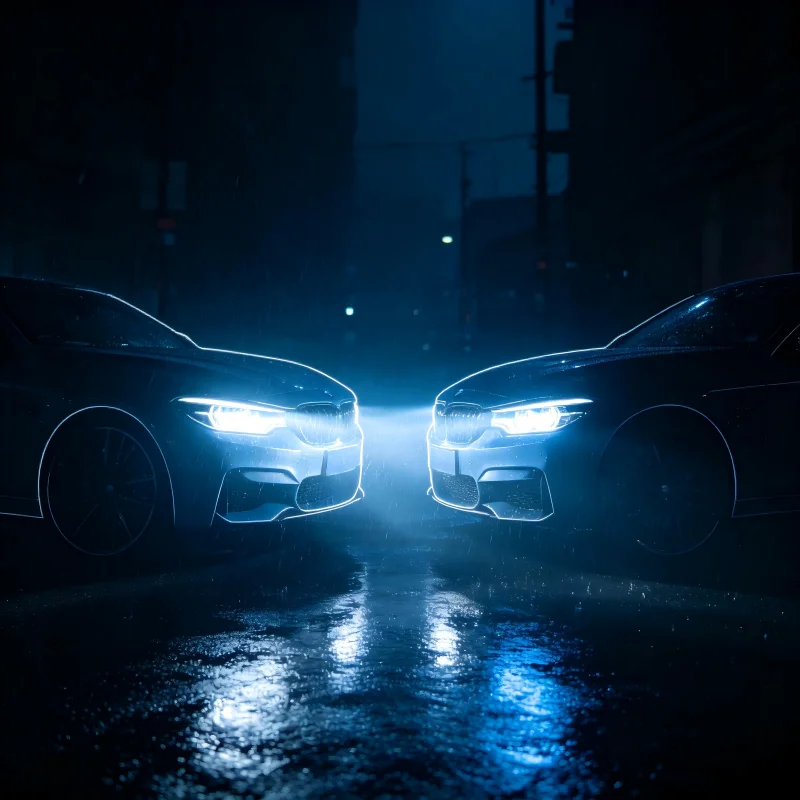
1. Projector vs Reflector: The Real Truth
The fundamental difference is how each system controls light. Reflector headlights use a mirrored bowl to reflect light forward. It's simple, cheap, and produces a wide, scattered beam. Projector headlights use a lens and cutoff shield to focus light into a precise, controlled beam.
But here's what most guides won't tell you: a poorly made projector is worse than a decent reflector. The lens can distort. The shield can vibrate. The reflector bowl can be misaligned. So when someone says “projectors are always better,” they're oversimplifying.
| Tính năng | Projector Headlights | Reflector Headlights |
|---|---|---|
| Beam focus | Sharp, controlled, clear beam | Wide, scattered, less clear |
| Glare for oncoming traffic | Minimal (when properly aligned) | Higher risk |
| Best bulb type | HID, LED, halogen | Mostly halogen |
| Chi phí | Higher | Lower |
| Upgrade capability | Excellent | Limited |
Conclusion? If you want maximum visibility and safety, projector headlights are the right choice—provided you choose a quality unit. If you are on a tight budget and mainly drive in well-lit cities, reflector headlights can still serve you adequately.
2. Compare light sources: Halogen vs HID vs LED
Your projector headlight housing is only as good as the light source inside it. Here's how the three main options stack up.
2.1. Halogen: The baseline
Halogen bulbs are cheap, widely available, and produce warm light (3,000K–4,000K). But they're inefficient, dim (around 1,000–1,500 lumens), and have a short lifespan (500–1,000 hours). They work in projector housings, but why would you want them?
2.2. HID (Xenon): The former king
HID bulbs produce intense, bright light (3,000–5,000 lumens) with a cool white or slightly blue tint. They're proven in projector housings and offer excellent beam control. But they require ballasts, take a few seconds to warm up, and have a shorter lifespan (2,000–3,000 hours) than LEDs.
2.3. LED: The new standard
LEDs are the future. They turn on instantly, are energy-efficient, durable (30,000–50,000 hours), and produce bright, clean light. The catch? Performance varies greatly between manufacturers. A cheap LED bulb in a projector headlight housing can produce a worse beam than halogen. However, quality LEDs from reputable brands outperform them all.
Our recommendation: If you're buying new projector headlights, choose LED. The technology has matured, prices have dropped, and the performance gap vs HID is now negligible—while the lifespan advantage is huge.
3. Bi-LED advantage: One unit, two beams
Traditional projector headlights only handle the low beam. You need a separate high beam source. Bi-LED projector headlights integrate both functions into a single unit using a movable shutter.
When the shutter is raised, it blocks part of the light, creating the low beam pattern. When you switch to high beam, the shutter lowers and the full light is released.
Why this matters: Bi-LED projector headlights are more compact, more efficient, and produce more consistent light quality because both beams come from the same source. If you are upgrading, choose bi-LED over single beam every time.
4. What to look for: GTR purchasing checklist
Based on our years of manufacturing experience, here is the exact checklist we recommend you use to evaluate any projector headlight purchase.
4.1. Beam pattern accuracy
This is non-negotiable. A proper projector produces a sharp horizontal cut-off with a clean step on the driver's side (for left-hand traffic markets). If the cut-off is blurry, wavy, or non-existent, walk away. Request goniophotometer test reports from the manufacturer—this is the industry standard for measuring beam patterns.
4.2. Lens quality
Cheap projectors use acrylic lenses that yellow, warp, or become cloudy over time. Quality units use glass or AR-coated polycarbonate lenses that resist UV and maintain clarity. Ask about lens material. If they can't tell you, that's a red flag.
4.3. Thermal management
LEDs generate heat. If heat isn't properly dissipated, performance drops and lifespan shortens. Look for active cooling (fans) or passive cooling (large heat sinks) in the shell design. GTR devices use an integrated cooling system that maintains stable power even in harsh conditions.
4.4. Build quality and sealing
The projector housing must be completely sealed against moisture. Condensation inside the lens is a sign of poor manufacturing. Check IP rating—IP67 or higher indicates good weather resistance. Also check the housing material. ABS plastic is good; cheap, brittle plastic is not.
4.5. Compatibility and installation
Not all projectors fit every vehicle. Verify lens diameter (2.5", 3.0", etc.), mounting type, and connector type before purchasing. For motorcycles, confirm the size (7-inch type is common) and voltage (12V or 24V). GTR offers vehicle-specific solutions for popular models like RAM 1500 projector headlights and projector headlights for Tata Punch, ensuring a perfect fit.
4.6. Certification and Compliance
Legitimate manufacturers hold DOT, ECE, or SAE certifications for their products. These are not optional—they are proof that the product has been tested and meets minimum safety standards. If a supplier cannot provide certification documents, do not buy from them.
5. The hidden costs of "cheap" projector headlights"
Let's talk about the $50 projector headlights you see on an auction site. Here's what you're really buying:
- Poor optics — blurry cutoff, hot spots, and dark zones that reduce visibility
- Poor thermal management — LEDs overheat and dim within a few months
- Weak housing — cracks, leaks, and condensation issues
- No support — if it breaks, you're on your own
One forum user described the cheap headlights they bought: “The bracket is not sturdy. It doesn't look good at night. The beam is terrible. I always have to turn on the high beams just to see the road.” Another said: “The worst lights I've ever seen. The left light barely works and the right light doesn't reflect at all.”
Quality costs more upfront. But in the long run, it's much cheaper—in performance, safety, and peace of mind.
6. GTR: Engineering you can trust
At GTR, we don't cut corners. projector headlights designed from the ground up with premium components:
- precision-machined elliptical reflector for a consistent and precise beam
- high-quality glass or AR-coated lens stays clear for years
- integrated active cooling system for sustained LED performance
- IP67 weather-sealed resists moisture and dust
- fully DOT/ECE compliant documentation available upon request
- vehicle-specific fitment for cars, trucks, and motorcycles
Whether you need H4 projector headlights Compatible with classic cars, rugged light housings for your Ram 1500, or compact light housings for motorcycles, GTR provides professional-grade lighting that performs as promised.
7. Frequently Asked Questions
7.1. Can I use LED bulbs in my existing halogen projector housing?
Generally, not well. The LED chip is positioned differently than the halogen filament, which changes the focal point. The result is often a poor beam pattern with excessive glare. Some newer “mini projector” LED bulbs attempt to address this, but results vary. The safest approach is to replace the entire projector headlight designed for LED.
7.2. What is the difference between 2.5" and 3.0" projector lenses?
The lens diameter affects the width and intensity of the beam. Larger lenses (3.0″) typically produce a wider, more even beam. Smaller lenses (2.5″) are more compact and easier to install in tighter housings. The best choice depends on your vehicle and preferences.
7.3. How do I properly align my projector headlights?
Park 20–30 feet from a wall on a level surface. Turn on your headlights. The top of the low beam cutoff should be at or slightly below the height of the headlight from the ground. Most projector housings have adjustment screws for vertical and horizontal alignment.
7.4. Are projector headlights worth the upgrade cost?
Yes, the safety benefits alone are worth it. Better visibility means fewer accidents. Fewer accidents mean fewer injuries, fewer insurance claims, and less stress. When you factor in the lifespan of LED projector headlights (over 30,000 hours), the cost per year of use is minimal.
7.5. Do projector headlights work for motorcycles?
Sure thing. Projector headlights for motorcycles are increasingly popular. The focused beam pattern is especially valuable for motorcycles, where every foot of visibility matters. Look for components with good waterproofing and vibration resistance.
8. Make the right choice—from the very first time
Your upgrade projector headlights is one of the most impactful changes you can make to your vehicle. It improves safety, enhances appearance, and makes every ride more enjoyable. But only if you choose wisely.
Don't be fooled by flashy marketing or surprisingly low prices. Use the checklist in this guide. Verify the beam pattern. Check certifications. Demand quality. And when you're ready to make a decision that prioritizes performance and safety over shortcuts, choose GTR.
Explore our full range of projector headlights at www.rhgtr.com. From models that fit each vehicle to universal solutions, we have the right lighting for your needs. Shop with confidence. Ride with clarity. Upgrade to GTR today.