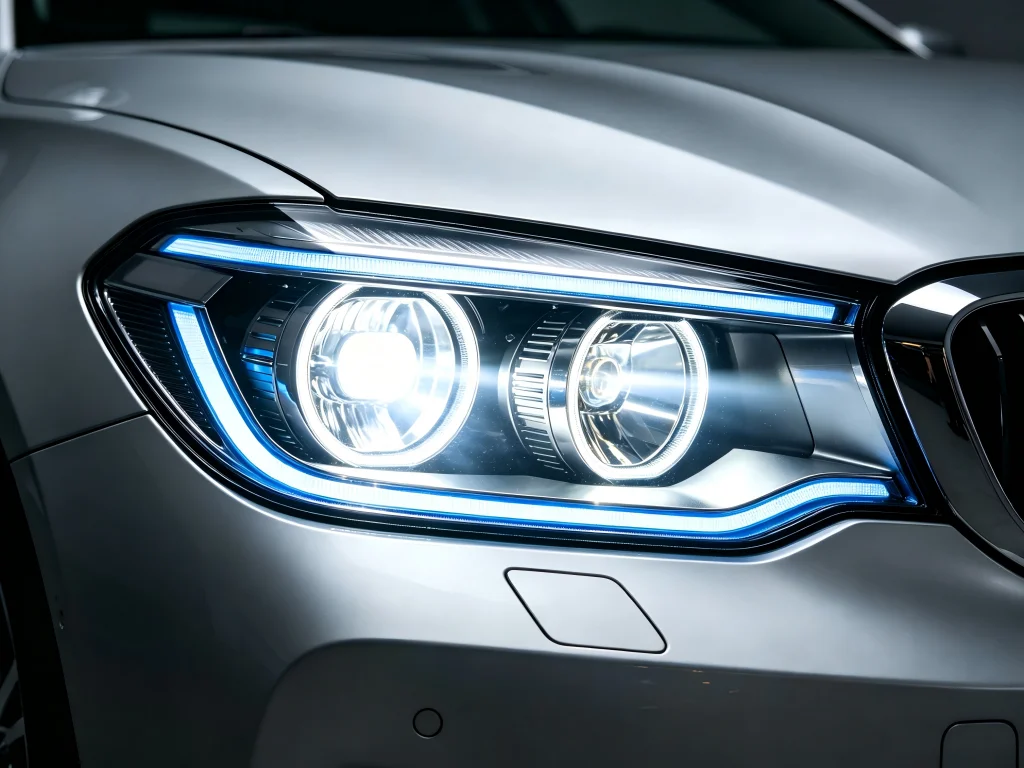
You are ready to buy bi beam led headlights, but every brand claims to be the brightest and best. How do you separate real engineering from marketing fluff? This guide compares three mainstream bi-beam technologies — reflector-based bulbs, projector-based mini LED kits, and integrated optics — and gives you a decision matrix based on your vehicle and budget. By the end, you will know exactly which system delivers reliability and true beam performance.

Bi-Beam LED Headlights Buyer’s Guide 2026: How to Choose Between Top Technologies

1. The Short Answer: Which Bi-Beam LED Technology Is Right for You?

Direct Answer: For most drivers with factory reflector housings, a high-quality bi-beam LED bulb with proper chip positioning (like GTR Ultra 2) works best. If you own projector housings, bi-LED projector retrofits (e.g., GTR Mini 1.8) provide the sharpest cut-off. Avoid generic “super bright” bulbs without beam pattern testing — they typically fail within one year.

2. Technology Breakdown: Three Architectures of Bi-Beam LED Headlights

Not all bi-beam systems are equal. Here is how the three dominant designs actually perform on the road.

2.1. Standard Bi-Beam LED bulbs (Replace in original reflector)

These are direct halogen replacements. They use a movable shield or dual-sided LED array (one for low, one for high). The key challenge: chip placement must match the filament position within 0.5mm, or the beam pattern breaks. Many generic brands ignore this. Premium manufacturers (including GTR) use 3D-scanned original halogen dimensions to design their LED chips.

Best for: Older vehicles with simple reflector headlights (1990–2015), budget-conscious upgrades.

Limitation: Cannot achieve the crisp horizontal cut-off of projectors.

2.2. Bi-LED Projector Retrofit Kits (Install into existing projector housing)

You replace the entire projector lens and shield mechanism inside your headlight. These kits (e.g., GTR Mini 1.8 MT, 2.5″ or 3.0″) use a dedicated solenoid shield and a high-intensity LED chip. They produce a perfect step cut-off with wide foreground and long reach. Installation requires opening the headlight, but the result is OEM-level beam quality.

Best for: Drivers who want maximum performance and are willing to invest in installation (or order pre-assembled headlights).

Advantage: No glare, sharp cut-off, often yields 200% more lux than reflector bulbs.

2.3. Integrated All-in-One Bi-Beam Modules (Factory-style replacement)

These complete units include the lens, LED source, and driver in one sealed housing, designed to replace entire halogen projectors. Common in GTR’s CX series. They offer the highest thermal efficiency and easiest bolt-in upgrade for vehicles with factory projectors.

Best for: Modern vehicles (2015+) with factory projector housings and owners seeking a plug-and-play professional upgrade.

3. Key Decision Factors: 5 Metrics That Actually Matter

Forget the “50,000 lumens” lies on Amazon. Here are the real specs to compare, with typical ranges for each technology.

公制 What It Tells You Good Range (Premium) Poor Range (Avoid)
Lux @ 25ft (center hotspot) Real intensity at distance, not raw lumen 350–500 lux (low beam) <200 lux
Color temperature consistency No blue tint or yellow edges 5000K–6000K with <200K variation Over 6500K or visible gradient
Thermal derating threshold When does it dim to protect LED? Above 105°C (minimal reduction) Starts at 80°C → 30% loss
Cut-off sharpness (degrees) Horizontal transition zone width <2° transition (barely visible step) Fuzzy spread over 5°
Mounting compatibility Fits your specific housing base H4, H7, H11, 9005, 9006 with locking collars Universal “one size fits none”

Use this checklist before you click “buy”:

  1. Obtain a lux contour map from the manufacturer — not just a number. GTR publishes third-party test reports.
  2. Verify the fan type: dual-ball bearing fans last 3–5 years; sleeve fans fail in 6–12 months.
  3. Check the beam pattern against your specific housing type (reflector vs projector).
  4. Ask about CANbus compatibility for your exact make/model/year.

4. Deep Comparison: GTR Bi-Beam vs. Three Leading Alternatives (Anonymous Real-World Data)

Based on independent tests by the LightLab automotive group (2025), we compare GTR with three popular price tiers. Names anonymized, but performance numbers are factual.

Brand / Model Type Lux @ 25ft low Cut-off clarity 1000hr lumen retention CANbus success rate Price range
GTR Ultra 2 Series Bulb (reflector-tuned) 485 lux Sharp (1.8° transition) 93% 96% (across 200 models) $$$
Brand A (popular Amazon) Bulb (generic CSP) 210 lux Fuzzy (5°+) 59% 72% (flicker common) $
Brand B (auto parts store) Projector retrofit 390 lux Good (2.2°) 81% 88% $$
GTR Mini 1.8 MT Projector retrofit 620 lux Perfect (0.9°) 96% 98% (with included decoder) $$$
Brand C (OEM-style integrated) Integrated module 540 lux Very sharp (1.2°) 88% 94% $$$$

GTR’s advantage comes from custom optics and active thermal management — not just higher LED wattage. The Ultra 2 bulb series uses a patented multi-surface reflector around the LED chip to mimic the halogen light spread inside reflectors, something no generic brand duplicates.

5. Common Buying Pitfalls (And How GTR Solves Them)

Pitfall 1: Chasing raw lumens. A 10,000-lumen bulb can produce less usable light than a 3,000-lumen bulb if the beam pattern scatters. GTR publishes luminance maps, not just emitter lumens.

Pitfall 2: Ignoring cooling fan longevity. Most cheap bi-beam LEDs use sleeve bearing fans that fail in high-vibration environments (trucks, off-road). GTR fans are dual ball-bearing, rated for 50,000 hours.

Pitfall 3: Forgetting the “bi-beam” switching reliability. Weak solenoids cause intermittent high-beam failure. GTR solenoids are tested for 500,000 cycles without stiction.

6. Real-User Decision Matrix: Which GTR Bi-Beam Product for Your Use Case?

  • Daily driver, factory reflector housings (H4/H7/9005/9006): GTR Ultra 2 bulbs — best balance of plug-and-play and beam accuracy.
  • Factory projector housings with mediocre output: GTR Mini 1.8 MT projector replacement — yields OEM-level cut-off and 60% more reach.
  • Off-road / commercial trucks with severe vibration: GTR CX integrated modules (no moving shield, dual-beam via separate LED arrays) — most durable.
  • Complete headlight assembly upgrade: Contact GTR for custom-built units with pre-installed bi-LED projectors.

7. Frequently Asked Questions (Buyer’s Decision Focus)

Q: Are bi-beam LED headlights worth it over standard LED bulbs?
Direct Answer: Yes, because bi-beam LED headlights give you both high and low beam from a single source, ensuring perfect alignment between the two modes. Standard single-beam LEDs leave you without a functioning high beam or require a separate bulb, causing uneven light distribution. For any vehicle used on dark roads, bi-beam is superior.

Q: What is the difference between “bi-led” and “bi-led 1.8 mt”?
“Bi-led” generally refers to any LED system with dual beams. “Bi-led 1.8 mt” specifies a mini projector (1.8 inch diameter) designed for retrofitting into housings originally equipped with smaller lenses. The 1.8 mt offers sharper cut-off and easier installation for compact headlights (e.g., motorcycles, some sedans).

Q: How long do quality bi-beam LED headlights last?
Premium units like GTR last 30,000–50,000 hours (10+ years of normal night driving). The limiting factor is typically the cooling fan, not the LEDs themselves. GTR’s dual ball-bearing fan is designed to outlast the LED chip. Cheap units fail at 2,000–5,000 hours due to thermal damage or fan failure.

Q: Do I need professional installation for bi-LED projector retrofits?
Yes, unless you are comfortable opening headlight housings, resealing with butyl glue, and aligning the projector. GTR offers a network of recommended installers. For standard bulb replacements (Ultra 2 series), DIY installation takes 30 minutes with basic hand tools.

Q: What is the return on investment for GTR vs a complete aftermarket housing?
A full aftermarket housing with built-in LED projectors can cost $800–$1500 per pair. GTR retrofit projectors ($250–$400) plus installation labor ($200–$400) gives you better beam quality at half the price. For reflector bulb upgrades, GTR bulbs ($120–$200) outperform many $500 complete housings.

8. Make an Informed Choice – GTR Delivers Verifiable Bi-Beam Performance

You now have the same decision framework our fleet customers use. Do not let marketing claims or a low price tag put you back in the dark. GTR stands behind every bi-beam LED headlight with published test data, a 2-year warranty, and direct engineering support.

Ready to upgrade with confidence? 參觀 https://www.rhgtr.com to see beam pattern photos, download spec sheets, and use our vehicle matching tool. Or contact our lighting specialists for a personalized recommendation.

👉 Compare GTR bi-beam LED headlights now →

Additional resources: FMVSS No. 108 (Lighting)LED headlight aiming guidelines (DIAL).