
The global automotive lighting market is shifting rapidly. As halogen and HID become relics of the past, the demand for high-intensity LED solutions has skyrocketed. Specifically, the search for a reliable Hyperboloid Bi-LED lens manufacturer has become a priority for high-end retrofitters and Tier-1 suppliers. But with hundreds of suppliers in Asia, how do you distinguish between a marketing gimmick and genuine optical innovation?
1. Defining the Hyperboloid Advantage in Automotive Lighting
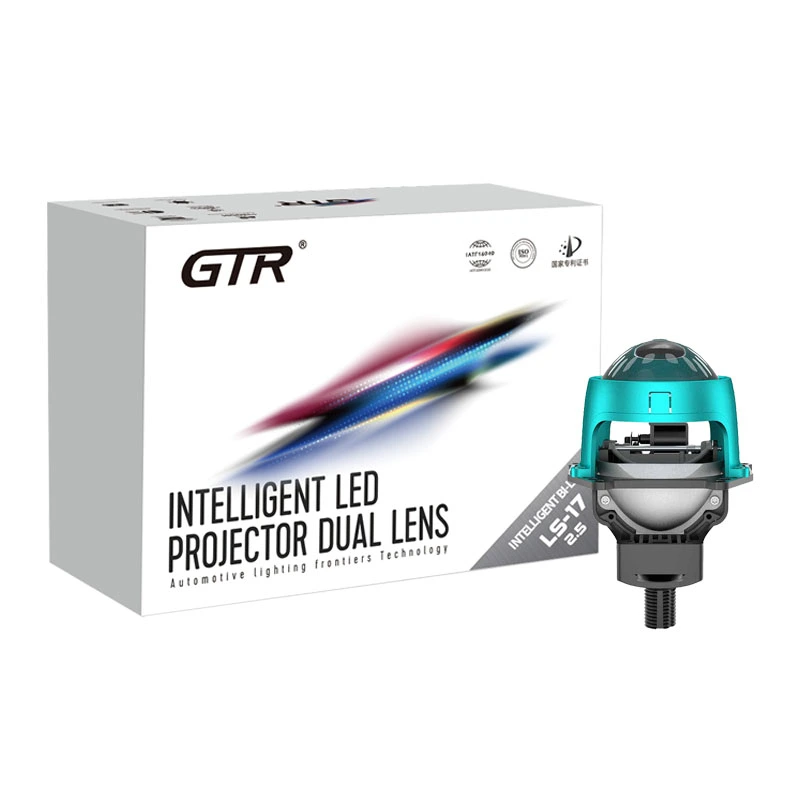
A professional Hyperboloid Bi-LED lens manufacturer produces optics characterized by dual-focus points that maximize both peripheral width and long-range illumination. This technology uses complex geometric curves (hyperboloids) to eliminate the “dimming” effect common in traditional spherical lenses, providing a 40% increase in usable light.
In the world of high-end car modifications, the “hyperboloid” tag is often thrown around loosely. However, true hyperboloid technology requires precision-molded HD glass and a specific internal reflector geometry. As an industry leader, GTR focuses on the intersection of material science and light management to ensure our lenses outperform the competition in both lumen output and heat dissipation.
2. Red Flags When Choosing a Hyperboloid Bi-LED Lens Manufacturer in China
Sourcing from a Hyperboloid Bi-LED lens manufacturer in China offers incredible cost advantages, but only if you avoid these common pitfalls:
- Resin Lenses Masquerading as Glass: Many low-cost suppliers use acrylic or resin lenses that yellow and crack under UV exposure. Always demand high-transmittance quartz glass.
- Inflated Lumen Ratings: If a supplier claims 50,000 lumens for a single projector, they are likely quoting “theoretical” chip lumens, not “effective” lumens. Trust actual LUX measurements at 25 meters.
- Outdated Cooling Systems: High-output LEDs generate intense heat at the junction. A manufacturer without dual ball-bearing fans or liquid-cooled copper pipes is selling you a product destined to fail within a year.
2.1. Material Comparison: What Drives the Price?
Understanding the internal components is key to making an informed purchasing decision. Our engineering team suggests evaluating the following:
| Component | Premium (GTR Grade) | Budget/Generic |
|---|---|---|
| LED Chipset | Custom Automotive Grade (High-Temp Resistant) | Generic COB or Low-Wattage SMD |
| Reflector Bowl | Vacuum Electroplated Aluminum | Spray-painted Plastic |
| Lens Clarity | Ultra-Clear HD Quartz (99% Transmittance) | K9 Glass or Plastic (90% Transmittance) |
| Driver Logic | External Canbus-Ready Intelligent Driver | Internal Non-Regulated Driver |
3. How to Verify a Manufacturer’s Expertise
When vetting a Hyperboloid Bi-LED lens manufacturer, you should look for “Experience” (the ‘E’ in high-quality content). Ask for their testing protocols. For instance, at GTR, we conduct salt spray tests for corrosion resistance and vibration tests to simulate years of driving on rough terrain. If a manufacturer cannot provide a video of their Integrating Sphere or Goniophotometer in action, they are likely a trading company rather than a factory.
Furthermore, check for compliance with international standards such as E-Mark (Europe) or DOT (USA) guidelines. While many retrofit parts are for “off-road use,” adhering to these beam pattern standards ensures your products won’t cause legal issues for your end-users.
4. Featured Snippet: Choosing the Best Supplier
To choose the best Hyperboloid Bi-LED lens manufacturer, prioritize those with in-house CNC machining and optical coating capabilities. A top-tier supplier should offer a minimum 2-year warranty, provide real-world beam pattern photos (not renders), and use 6063 aviation aluminum for superior thermal management.
4.1. Top 5 Questions to Ask During the Inquiry Phase:
- What is the color temperature stability over 1,000 hours of continuous use?
- Do you offer OEM/ODM services for custom lens etching or housing colors?
- Which LED chip brand is utilized, and what is its maximum operating temperature?
- Does the hyperboloid lens utilize a dual-reflector or a single-reflector setup?
- What is the MOQ (Minimum Order Quantity) for a custom-branded driver?
5. The Future of Night Driving: Why Partner with GTR?
The automotive industry is moving toward “Smart Lighting.” As a forward-thinking Hyperboloid Bi-LED lens manufacturer, GTR is already integrating adaptive components into our lens designs. Our commitment to transparency and high-performance engineering ensures that your business stays ahead of market trends.
Whether you are looking to dominate the local retrofit market or supply high-quality components to a national retail chain, your journey begins with the right optics. Don’t settle for “bright” when you can have “precise.” Reach out to our technical sales team at GTR (ledcxr.com) for a comprehensive catalog and wholesale pricing today. Let’s illuminate the road together.