
Walk into any auto parts store or browse Amazon, and you will find LED bulbs automotive for $20, $30, or $50. The listings scream about “50,000 lumens” and “800% brighter”. They have thousands of reviews. They look like a bargain. They are not a bargain. They are a gamble with your safety.
本指南戳破行銷炒作。根據我們在汽車LED照明領域多年的製造專業,我們詳細分析是什麼讓$70 LED套件能使用5年,而$15套件卻在6個月內就壞掉。.
Direct Answer: The seven critical factors that determine LED bulbs automotive quality are: chip type and placement, thermal management, CANbus compatibility, beam pattern accuracy, color temperature, driver quality, and housing construction. Most cheap bulbs fail on at least four of these seven factors.
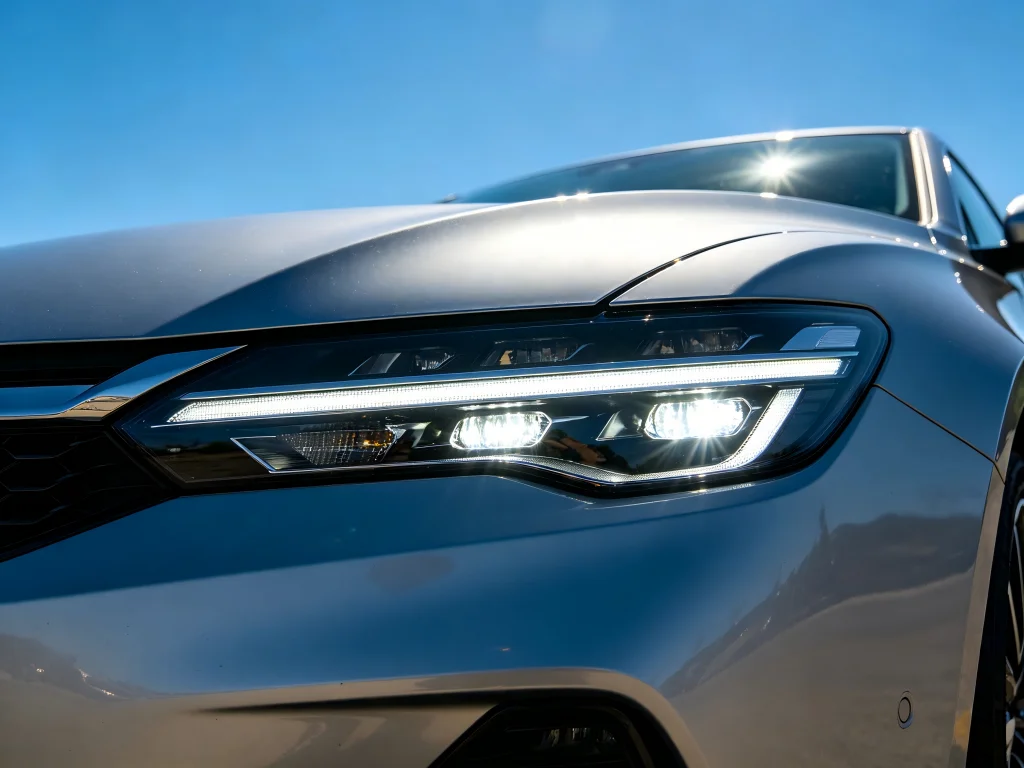
1. Factor 1: LED Chip Type and Placement — The Foundation of Performance
The LED chip determines brightness, beam pattern, and how well the bulb mimics the halogen filament position. This is critical for a clean cutoff in projector housings and proper light distribution in reflectors.
Here are the three chip types you will see in 2026:
| 晶片類型 | Best Suited For | Advantages | 缺點 |
|---|---|---|---|
| Philips ZES (Luxeon Z ES) | 投射式燈具 | 光束精準度的黃金標準。缺陷率低。6000K色溫下色彩一致性極佳 | 每瓦亮度中等 |
| CSP(晶片級封裝) | 反射器外殼 | 每瓦亮度高於ZES。更緊湊。製造成本更低 | 隨著時間推移更容易受到熱應力的影響 |
| Cree XHP / XPG | 高輸出應用 | 卓越的耐用性 | 較大的封裝使燈絲位置匹配更加困難 |
But chip type is only half the story. The position of the chip matters just as much — if not more. The closer the LED emitters mimic the position of the original halogen filament, the better your housing can control the beam. Better placement usually means better cutoff, stronger distance lighting, and less scatter.
2. Factor 2: Thermal Management — The #1 Killer of LED Bulbs Automotive
Many people assume LEDs run cool. They do not. Approximately 70-80% of the electrical energy input into an LED is converted into heat. Poor heat dissipation leads to an increase in junction temperature, which drastically decreases LED life.
Quality LED bulbs automotive use one of three cooling approaches:
| 冷卻類型 | How it works | Advantages | 缺點 |
|---|---|---|---|
| Fan cooling (active) | Small fan moves air across a heat sink | Higher brightness potential. Better heat control. Longer lifespan under regular use | Slight noise. Larger size may cause fitment issues. Moving parts that may wear over time |
| Fanless (Passive) | Heat sink only, no moving parts | Completely silent. No moving parts to fail | Lower heat dissipation capacity. May struggle in high-output applications |
What to look for:
- 熱分離 — Quality LED bulbs automotive place the LED die on a separate thermal plane from the driver circuit
- 散熱器設計 — 更大的表面積意味著更好的被動散熱
- 有風扇與無風扇 — 風扇冷卻燈泡能散發更多熱量,但有些風扇會隨著時間變大聲或提前失效。無風扇燈泡更簡單,但並非每種設計都能在高輸出應用中充分散熱
- 恆定電流驅動器 — 接受任何輸入電壓,將其平滑化並進行調節
3. Factor 3: CANbus Compatibility — Or Why Your Dashboard Keeps Screaming at You
Modern vehicles use CANbus systems that monitor bulb status by measuring resistance. LED bulbs automotive draw far less power than halogens. The system interprets this as a burned-out bulb and triggers error codes or flickering.
Incompatible resistance values are one of the most common problems. Low-budget LED light sources feature electronics that merely simulate a bulb and are therefore not identified by the control unit.
Direct Answer: CANbus-compatible LED bulbs automotive have built-in electronic resistors or integrated decoders that simulate the typical electrical energy consumption of a conventional halogen bulb. This keeps the control unit happy — no error codes, no flickering.
HELLA, a leading automotive lighting authority, recommends “using genuine parts or high-quality, branded products. These are designed to work reliably in electrical monitoring systems and do not generate error messages”.
4. Factor 4: Beam Pattern Accuracy — Seeing vs. Blinding
Raw brightness means nothing if the light goes everywhere except the road. A halogen headlamp is designed around a specific filament position. If your LED chips are even slightly off, the beam pattern breaks.
Just a 2mm shift can mess up the beam pattern entirely. The result: reduced forward visibility, dark spots, and dangerous glare for oncoming traffic.
Quality LED bulbs automotive position their chips exactly where the halogen filament would be. This ensures the beam pattern matches the original design — sharp cutoff in projector housings, proper light distribution in reflectors, zero glare.
5. Factor 5: Color Temperature — Style vs. Safety
Color temperature is measured in Kelvin (K). Lower = warmer/yellower. Higher = cooler/bluer.
| 色溫 | 外觀 | 最適合 |
|---|---|---|
| 4300K–5000K | Pure white (daylight) | Year-round driving, all weather conditions |
| 6000K | Cool white with slight blue tint | Show cars, dry-weather applications |
| 6500K以上 | Bluish-white | Off-road only. Poor visibility in rain/fog |
For year-round driving, choose automotive LED lights in the 4300K–5000K range. Save the 6000K bulbs for show cars or dry-weather applications. Higher color temperatures scatter more in rain and fog, reducing effective visibility.
6. Factor 6: Driver Quality — The Component Nobody Talks About
The LED chip gets all the attention. But the driver — the electronic component that regulates power to the LED — is equally important. Cheap drivers cannot handle voltage spikes, leading to premature failure, flickering, or complete shutdown.
Quality LED bulbs automotive use constant-current drivers that take any incoming voltage, smooth it out, and regulate it. This ensures consistent brightness regardless of your vehicle’s electrical fluctuations.
7. Factor 7: Housing Construction — Built to Last or Built to Fail
The housing protects the LED chip, driver, and cooling system from moisture, dust, and vibration. Cheap LED bulbs automotive use plastic housings that warp under heat. Quality bulbs use aircraft-grade aluminum housings that dissipate heat and protect internal components.
Look for IP67 or IP68 waterproof ratings for protection against dust and moisture. And check for a warranty — quality manufacturers stand behind their products.
8. LED 與鹵素燈與 HID:正面對決比較
| 特點 | 鹵素 | HID (Xenon) | LED |
|---|---|---|---|
| 壽命 | 450–1,000 hours | ~2,500 hours | 30,000–50,000 hours |
| Brightness | 700–1,200 lumens | ~3,000 lumens | 3,000–6,000+ lumens |
| Energy Draw | 高 | 中等 | 低 |
| 前期成本 | $5–$20 | $50–$150 | $20–$150+ |
| 安裝 | Simple plug-and-play | May need professional installation | Plug-and-play (CANbus-compatible models) |
Direct Answer: LED bulbs automotive offer the best long-term value despite higher upfront costs. They last 30-50 times longer than halogens, draw significantly less power, and produce brighter, more focused light. The only downside? You must choose quality — cheap LEDs fail quickly.
9. What Independent Testing Reveals
We have tested dozens of LED bulbs automotive in our engineering facilities. Here is what we found:
- GTR Lighting Ultra 2 outperformed every other set of LEDs in a recent headlight shootout. It delivered 709% brighter output than the original halogen bulb.
- GTR Ultra 3 delivered 475% brighter low beams and 742% brighter high beams compared to stock halogen bulbs in Honda Civic testing.
- Cheap Amazon LEDs often fail within 6 months due to poor thermal management, with beam patterns that scatter light and create dangerous glare.
10. Frequently Asked Questions About LED Bulbs Automotive
10.1. Are LED bulbs automotive better than halogen?
Direct Answer: Yes — quality LED bulbs automotive are superior to halogen in every measurable way: lifespan (30-50x longer), brightness (3-5x brighter), energy efficiency (significantly lower draw), and beam focus. The only advantage halogen retains is lower upfront cost and heat output that melts snow off headlights.
10.2. How many lumens do I need for LED bulbs automotive?
Raw lumen numbers are often exaggerated. Focus on lux (light reaching the road) rather than lumens (total light produced). A quality LED bulb automotive with 2,000-3,500 lumens and proper beam focus will outperform a cheap bulb claiming 50,000 lumens with scattered light.
10.3. Do LED bulbs automotive require special installation?
Most quality LED bulbs automotive are plug-and-play. However, you may need to install load resistors or CANbus decoders if the bulbs do not have built-in compatibility. Always check fitment — some LED bulbs are larger than halogens and may not fit tight housings.
10.4. Will LED bulbs automotive melt my headlight housing?
No — LEDs generate less heat at the beam than halogens. However, heat builds up at the base where the chip and electronics are located. Quality thermal management prevents this heat from damaging the housing or the bulb itself.
10.5. Why do some LED bulbs automotive cost $20 while others cost $150?
The difference is engineering. Cheap LEDs use low-grade chips, plastic housings, inadequate heat sinks, and no CANbus compatibility. Quality LEDs use automotive-grade chips, aluminum housings, copper heat sinks, active cooling, and integrated CANbus decoders. You get what you pay for.
10.6. Can I use LED bulbs automotive in reflector headlights?
Yes — but only if the LED chips are positioned exactly where the halogen filament would be. Many cheap LEDs ignore this, causing scatter and glare. Quality bulbs designed for reflector housings produce proper beam patterns.
11. The Bottom Line: Quality Costs More. But Cheap Costs Everything.
You now know the seven factors that separate quality LED bulbs automotive from cheap junk. You understand why CANbus compatibility matters, why thermal management determines lifespan, and why beam pattern accuracy affects both your visibility and everyone else’s safety.
Here is the hard truth: That $30 Amazon LED kit is not a bargain. It is a gamble. It might work for three months. It might flicker from day one. It might blind oncoming traffic. It might fail on a dark highway at midnight.
GTR Lighting does not gamble with your safety. Every GTR LED bulb automotive is engineered with premium automotive-grade chips, advanced thermal management, integrated CANbus compatibility, and filament-perfect chip placement. Independent testing proves GTR is 742% brighter than halogen and outperforms every competitor in head-to-head shootouts.
參觀 www.rhgtr.com today. Find the exact LED bulbs automotive for your vehicle. Upgrade once. Upgrade right. Drive with confidence.