
Sourcing LED projector headlights for B2B distribution or fleet installation requires more than comparing prices. This guide breaks down the technical specifications, certification requirements, and supplier evaluation criteria that separate quality products from costly mistakes.
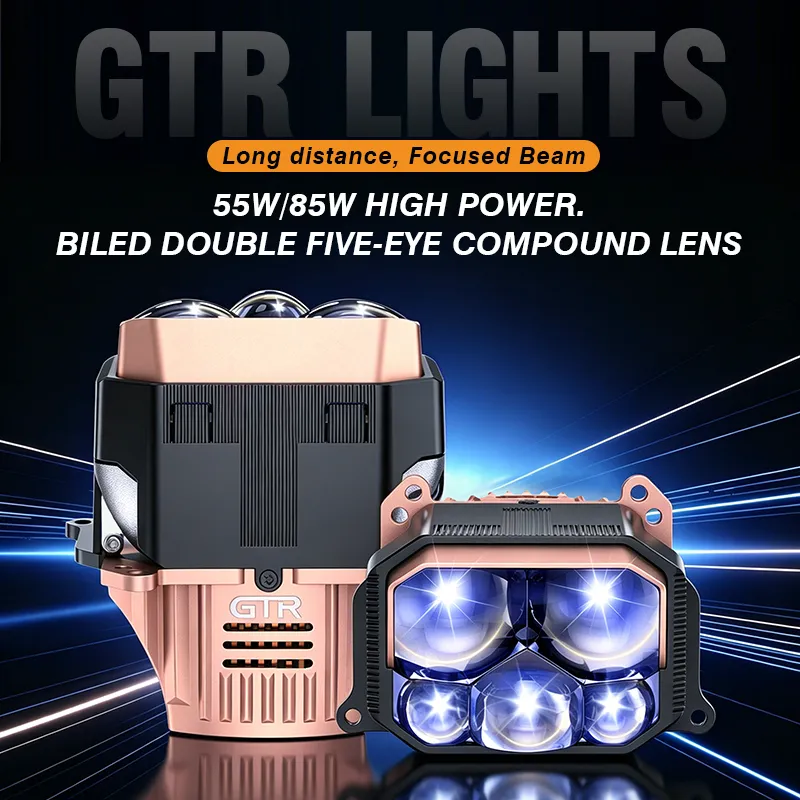
1. The State of the LED Projector Headlight Market
The global LED headlight market is expanding at a compound annual growth rate of 10% to 20%. Asia and North America are the primary consumption regions, with China serving as the largest global production and supply base. For B2B buyers, this presents both opportunity and risk: a vast supplier base, but vast differences in quality.
Understanding the difference between projector and reflector headlights is the first step in making an informed sourcing decision. Projector headlights use a lens and cutoff shield to produce a focused, sharp beam. Reflector headlights use a reflective bowl to cast light forward in a broader pattern. For most B2B applications, projector designs offer superior performance and safety.
2. Projector vs. Reflector: The Technical Comparison
| 特點 | LED Projector Headlights | LED Reflector Headlights |
|---|---|---|
| Beam pattern | Focused, sharp cutoff, uniform | Wide, scattered, less defined |
| Glare Control | Excellent – cutoff shield prevents upward scatter | Moderate – potential glare if not properly aimed |
| Down-Road Visibility | Superior – concentrated hotspot | Moderate – more peripheral, less focused |
| Peripheral Illumination | Good, but focused forward | Better – wider side illumination |
| Complexity | Higher – lens, shield, precision optics | Lower – simpler reflective design |
| 成本 | 較高 | 較低 |
| 最佳應用 | Highway driving, safety-critical, premium vehicles | Urban driving, budget-conscious, older vehicles |
Academic research consistently demonstrates the superiority of LED light sources over HID and halogen in projector configurations. However, the same study advises against using LED sources in reflector headlights, recommending halogen and HID instead. This is a critical distinction for B2B buyers: selling LED reflector headlights may expose your customers to suboptimal performance.
3. Bi-LED Projector Headlights – The Premium Option
Bi-LED projector headlights use a single projector lens module to switch between high beam and low beam using electromagnetic valves or electronic controls. This integrated design offers:
- Precise light pattern control – reduces glare and improves road illumination uniformity
- Integrated thermal management – heat dissipation and drive circuits built into the module
- Simplified installation – stronger compatibility and easier mounting
For B2B buyers serving the premium or performance segments, Bi-LED projector headlights represent the highest-value product category.
4. Critical Specifications – What Actually Matters
4.1. Beam Pattern Quality – The #1 Factor
A good beam pattern is extremely wide, has a flat and razor-sharp cutoff line, and a bright, focused hotspot. It provides perfectly even light distribution without blotches or dark spots.
Evaluate beam pattern using these criteria: razor-sharp cutoff line, wide edge-to-edge coverage, smooth and even distribution, and a bright, well-defined hotspot.
4.2. Real Brightness – Lux Over Lumens
Ignore advertised lumen numbers. Focus on lux—the focused intensity of light on the road at a distance. High lux in the hotspot is the only true measure of long-range performance.
For reference, quality projector headlights typically deliver 4,000 to 6,000 lumens per bulb with excellent optics. But a projector with 2,000 lumens and superior optics will outperform one with 5,000 lumens and poor optics.
4.3. Color Temperature – The Visibility Sweet Spot
5000K to 6000K approximates natural daylight and reduces visual fatigue. Higher temperatures (6500K+) appear blue and may reduce visibility on wet roads. Lower temperatures appear yellow and may look dated.
4.4. Thermal Management – The Longevity Factor
LED projectors typically last 15,000–30,000 hours depending on thermal design. Proper cooling and quality drivers dramatically increase LED longevity. Look for:
- Aluminum heat sinks – quality materials and sufficient surface area
- 主動散熱(風扇) – effective but adds a potential failure point
- Thermal pathways – efficient heat transfer from chip to heatsink
4.5. Certifications – Non-Negotiable for B2B
Reputable manufacturers hold certifications including IC, RoHS, FCC, and EPR_Germany_Packing for global compliance. For European markets, ECE R10 and R112 certifications are essential. Do not source from suppliers who cannot provide documentation for relevant certifications.
5. Vehicle-Specific Compatibility
Different vehicles have different headlight housings, mounting styles, and optical requirements. GTR manufactures projector headlights for specific applications:
- Maruti Suzuki Ertiga – halogen projector headlamps as standard, upgradeable to LED
- Suzuki Wagon R – aftermarket projector options available with electric leveling motors
- Maruti Suzuki Ciaz – LED projector headlights available on select models
- Tata Nexon – LED projector headlights equipped on higher trims
- Kia Sonet – LED projector headlights with DRLs on GT Line trim
For B2B buyers, stocking vehicle-specific units reduces customer returns and installation issues. Universal fit products may seem attractive for inventory management, but they often lead to compatibility problems and dissatisfied end users.
6. Supplier Evaluation – Beyond the Price Quote
Selecting the right supplier goes beyond price comparisons—it requires rigorous technical due diligence and quality assurance protocols. Here is what to look for:
- Transaction history – Review order volume, buyer feedback, and dispute resolution rates on B2B platforms. Look for ≥4.5/5.0 ratings and ≥95% on-time shipment performance.
- Manufacturing capability – Does the supplier have in-house R&D, mold development, and thermal stability testing?
- Certification documentation – Request and verify all relevant certification documents before placing orders.
- Sample testing – Always test samples before committing to large orders. Evaluate beam pattern, brightness, and thermal performance in real conditions.
- Customization capability – Can the supplier support OEM, ODM, or private-label services?
B2B buyers typically discover suppliers through digital platforms like Alibaba.com, industry expos (e.g., Canton Fair), or direct factory audits. Each channel has advantages; the most successful buyers use multiple sourcing channels.
7. Pricing Benchmarks and Value Analysis
Sample pricing for LED projector headlights from Chinese suppliers ranges from $22–$35 per unit depending on specifications and order volume. However, effective procurement focuses on total value rather than unit price alone.
Consider these factors in your total cost calculation:
- Return rate – Higher-quality products have lower return rates, reducing handling costs
- Customer satisfaction – Better products generate repeat business and referrals
- Warranty claims – Premium products rarely fail, reducing warranty exposure
- Brand reputation – Supplying quality products builds your brand over time
8. Common Pitfalls in LED Projector Headlight Sourcing
8.1. Pitfall 1: Chasing the Lowest Price
The cheapest suppliers often cut corners on optics, thermal management, and certifications. The result? Products that fail, perform poorly, or violate regulations. The cost savings evaporate when returns, complaints, and warranty claims start rolling in.
8.2. Pitfall 2: Ignoring Beam Pattern Quality
Lumen numbers are easy to advertise. Beam pattern quality requires testing. Do not rely on specification sheets alone. Test samples on a proper beam pattern wall.
8.3. Pitfall 3: Overlooking Thermal Design
A beautiful projector housing with poor thermal management is a failure waiting to happen. Verify heat sink quality and thermal pathways before committing to large orders.
8.4. Pitfall 4: Assuming Universal Fit
“Universal” often means “fits nothing properly.” Vehicle-specific designs deliver better performance and fewer installation issues.
9. Frequently Asked Questions for B2B Buyers
9.1. What certifications should LED projector headlights have?
At minimum, look for IC, RoHS, FCC, and EPR_Germany_Packing for global compliance. For European markets, ECE R10 and R112 are essential. Always verify documentation before purchasing.
9.2. How do I evaluate a supplier's quality?
Review transaction history and ratings on B2B platforms, request and test samples, verify certification documentation, and if possible, conduct a factory audit. Look for ≥4.5/5.0 ratings and ≥95% on-time shipment.
9.3. What is the difference between Bi-LED and standard LED projector headlights?
Bi-LED projector headlights use a single lens module to switch between high and low beam using electromagnetic controls. Standard LED projectors typically have separate high and low beam functions. Bi-LED offers better integration and often superior beam control.
9.4. What MOQ should I expect from manufacturers?
MOQ varies widely. Some suppliers accept 12 sets as a minimum mixed order. Others require container quantities. Match supplier MOQ to your sales volume and storage capacity.
9.5. How important is thermal management for LED projector headlights?
Critical. Poor thermal design reduces LED lifespan from 30,000 hours to months. Quality aluminum heat sinks and proper thermal pathways are non-negotiable for reliable products.
9.6. Should I source universal or vehicle-specific LED projector headlights?
Vehicle-specific units offer better fit, superior performance, and fewer installation issues. Universal products may seem convenient for inventory but often lead to customer dissatisfaction and returns. For B2B distribution, vehicle-specific is the safer choice.
10. Making the Right Sourcing Decision
The LED projector headlight market offers enormous opportunity for B2B buyers who understand the technology and know how to evaluate suppliers. But the gap between a good product and a bad one is vast—and the consequences of choosing poorly extend beyond lost revenue to damaged reputation and unsafe products.
Do not let price be your only decision factor. Do not rely on marketing claims. Test products. Verify certifications. Evaluate beam patterns. Understand thermal design. These are the steps that separate successful B2B buyers from those who learn expensive lessons.
GTR combines engineering expertise, certification compliance, and vehicle-specific design to deliver LED projector headlights that perform. Whether you are sourcing for distribution, fleet installation, or retail, GTR products meet the standards your customers expect.
參觀 https://www.rhgtr.com to explore our B2B offerings, request samples, or discuss customization options for your market.