
You’re past the “should I upgrade?” stage. You know you want LED light bulbs for cars. The question now is: which ones?
Walk into any auto parts store or scroll through Amazon, and you’ll face a wall of options. Different brands. Wildly different prices. Spec sheets full of numbers that seem designed to confuse rather than inform.
This guide cuts through the noise. We’re going to compare what actually matters — not marketing fluff, but the engineering decisions that determine whether your LED headlight bulbs for car will deliver brilliant, reliable performance or leave you frustrated in the dark.
By the end, you’ll know exactly what to look for, what to avoid, and why the most expensive option isn’t always the best — and the cheapest is almost never a bargain.
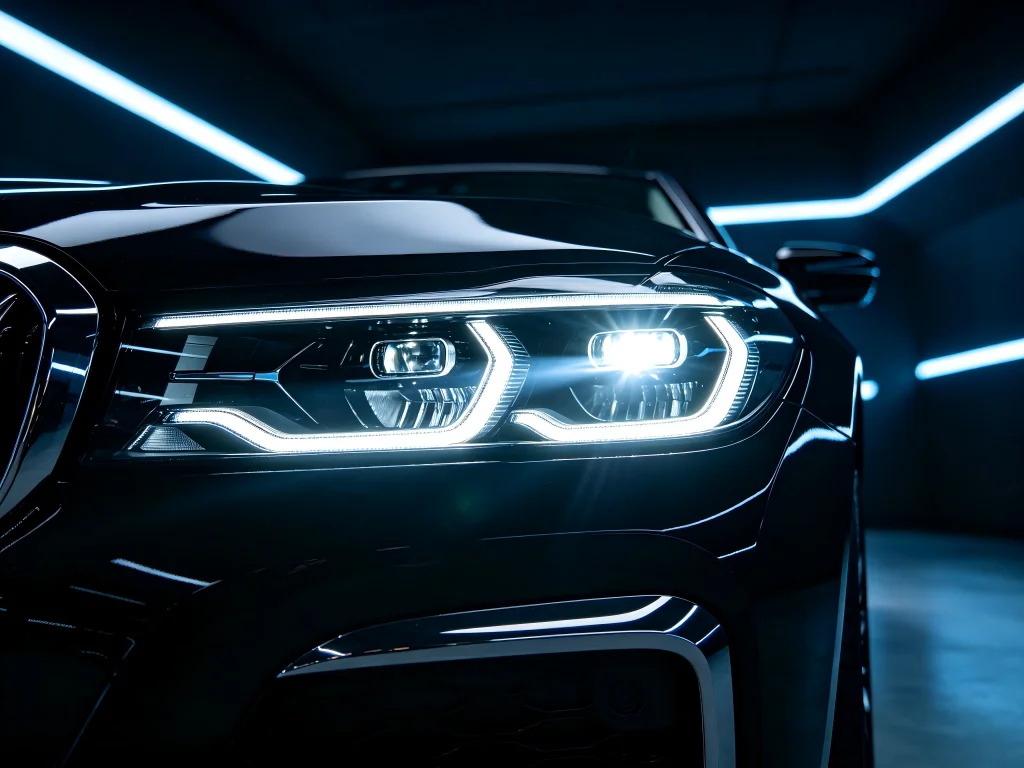
1. First: The Bulb Type You Actually Need
Before we dive into performance comparisons, let’s get the basics right. Because the best LED bulb in the world won’t help you if it doesn’t fit your vehicle.
Every vehicle uses a specific headlight bulb type — H11 for low beams, 9005 for high beams, H4 or 9007 for dual-beam systems. You can find yours in:
- Your vehicle owner’s manual
- Online bulb finder tools (enter year, make, and model)
- The label on your current bulb (remove it and check the base)
Direct Answer: The most common LED headlight bulb sizes are H11 (low beams), 9005 (high beams), H7, H4/9003 (dual beam), and 9012. Always verify your vehicle’s specific bulb type before purchasing — buying the wrong size means it won’t plug in at all.
But bulb type is just the start. Physical fitment matters too. LED bulbs are often larger than halogens due to added components like cooling fans and drivers. Some vehicles have tight headlight housings where a bulky LED simply won’t fit.
Look for bulbs with integrated drivers (built into the base) rather than separate external boxes if space is tight. Compare full dimensions — including the cooling system and connector length — with the available space in your headlight assembly.
2. The Great LED vs. Halogen vs. HID Debate
Let’s settle this once and for all.
| Feature | Halogen | HID (Xenon) | LED |
|---|---|---|---|
| العمر الافتراضي | 500-1,000 ساعة | 2,000-3,000 hours | 25,000-30,000+ hours |
| الكفاءة | ~25 lm/W | ~80-100 lm/W | ~90-110 lm/W |
| Instant On | نعم | No (warm-up time) | نعم |
| إخراج الحرارة | High (heat radiated backward) | Moderate | Low (heat at chip, must be managed) |
| درجة حرارة اللون | ~3000 كلفن (مائل للاصفرار) | ~4300K-6000K | ~5000K-6500K |
| Typical Cost | $10-$30/pair | $80-$200/pair | $50-$150+/pair |
LEDs win on every metric that matters for daily driving. They last 20-30 times longer than halogens, use less power, turn on instantly, and produce a cleaner, whiter light that improves visibility.
The only area where halogens still compete is upfront cost. But when you factor in replacement frequency, the total cost of ownership heavily favors LEDs.
HIDs sit in the middle — brighter than halogens, but with warm-up delays, shorter lifespans than LEDs, and more complex installation.
3. Fan vs. Fanless LED Headlight Bulbs: Which Cooling System Wins?
Heat is the enemy of LED performance. Here’s how different cooling approaches compare in the real world.
3.1. Fan-Cooled (Active Cooling)
These bulbs use a tiny built-in fan to actively draw heat away from the LED chip.
Advantages:
- Superior heat dissipation — supports higher brightness output
- Maintains consistent performance even in hot environments
- Better longevity under regular use
Disadvantages:
- Slight operational noise (typically inaudible inside the vehicle)
- Fan can fail if cheaply made
- Slightly larger form factor
3.2. Fanless (Passive Cooling)
These rely on aluminum heat sinks to dissipate heat through natural convection.
Advantages:
- Completely silent
- More compact, easier to install in tight spaces
- No moving parts to fail
Disadvantages:
- Limited cooling capacity — struggles with high-output bulbs
- Performance degrades faster in hot conditions
- Typically lower power output
Direct Answer: For most drivers, fan-cooled LED bulbs offer the best balance of performance and longevity. The active cooling allows for higher brightness output while maintaining safe operating temperatures. Fanless designs work for lower-output applications or vehicles with exceptionally tight housings, but they can’t match the thermal performance of active cooling for high-lumen bulbs.
4. Beam Pattern: The Most Overlooked Factor in LED Headlight Bulbs for Car
Here’s where most buyers go wrong. They chase lumen numbers while ignoring beam pattern — and end up with less usable light than their old halogens.
A proper beam pattern ensures:
- Light stays directed on the road where you need it
- Glare is minimized for oncoming traffic
- No dark spots or uneven coverage
- Proper distance visibility (hotspot focused correctly)
The secret to a good beam pattern is 1:1 filament positioning. The LED chips must sit in precisely the same location as the halogen filament. This allows your vehicle’s reflector housing to do its job — projecting light forward in a controlled, legal beam.
Bulbs that don’t achieve 1:1 positioning produce scattered light. You see bright spots and dark areas. The light that should be on the road ends up in oncoming drivers’ eyes or wasted illuminating trees and signs.
In our testing, we’ve seen “20,000 lumen” bulbs produce less usable road light than a 1,000-lumen halogen — because the beam pattern was completely wrong.
5. The Lumen Lie: What Advertised Numbers Really Mean
Here’s an uncomfortable truth about the LED headlight bulb for car price market: most advertised lumen numbers are meaningless.
Many sellers boast “12,000 lumens per pair” or even “25,000 lumens per bulb.” But those numbers are often measured in an integrating sphere with zero regard for distribution. It’s like measuring how loud a speaker is without caring whether the sound is clear or distorted.
The reality: a functioning automotive LED system (including the driver and heat sink) typically operates at an efficiency of 90-110 lumens per watt. A 43W bulb like the GTR Ultra 3 produces around 4,700 raw lumens — which is already significantly brighter than halogen.
If you see a product claiming 25,000 lumens per bulb, it would need to pull over 220W of actual power — enough to potentially melt a plastic headlight housing and stress your factory wiring.
What to look for instead:
- Independent test results — not manufacturer claims
- Lux measurements (light on the road) rather than raw lumens (light from the bulb)
- Beam pattern photos showing actual light distribution
- Real-world reviews from drivers with your vehicle model
6. CANbus Compatibility: The Error Message Nightmare
Modern vehicles use CANbus systems to monitor electrical components. When you install LED bulbs that draw less power than halogens, the system detects a mismatch and triggers a warning light.
Some bulbs are “CANbus-ready” with built-in decoders that simulate the correct electrical load. Others require external resistors or cancellation modules.
What to check:
- Does the bulb advertise CANbus compatibility?
- Does your specific vehicle model have known CANbus issues? (Check forums)
- Will you need additional components (resistors, decoders) beyond the bulbs themselves?
Bulbs that aren’t CANbus-ready will cause flickering, error messages, or in some cases, complete failure of the headlight circuit.
7. Real-World Test Results: How GTR Ultra 3 Compares
Independent testing tells a clear story. Out of over 250 LED bulbs tested by the Headlight Revolution team, the GTR Ultra 3 produced the highest lux readings ever recorded in a Honda Civic’s reflector housing.
Performance metrics from independent testing:
- 742% brighter than stock halogen in the Civic’s reflector housing
- 58% brighter than the next brightest competitor in Jeep Wrangler testing
- 83% brighter than original halogen in the same Wrangler test
- 87% brightness retention after a typical 27-minute drive
- 43W power draw — efficient enough for any vehicle’s electrical system
These aren’t lab numbers. These are real-world measurements from actual vehicles, using standard testing protocols.
8. Color Temperature: Which Kelvin Rating Is Right for You?
Color temperature is measured in Kelvins (K) and determines the color of the light emitted.
| درجة حرارة اللون | Appearance | الأفضل لـ |
|---|---|---|
| 3000K | Warm yellow | Fog lights, vintage vehicles |
| 4300K-5000K | Natural white | All-weather driving, cuts through rain/fog better |
| 5000K-6000K | Crisp white | Most drivers — balanced visibility |
| 6000K+ | Blue-white | Styling preference, but reduced visibility in poor weather |
Direct Answer: For most driving conditions, 5000K-6000K offers the best balance. It produces a clean white light that improves clarity without being too harsh or bluish. Avoid going above 6000K — the bluish tint scatters more in rain, fog, and snow, reducing visibility.
9. Build Quality and Materials: What Premium Engineering Looks Like
Premium LED bulbs cost more for a reason. Here’s what you’re paying for:
LED Chip Quality: Premium brands use chips from Osram, Lumileds, or high-quality CSP (Chip Scale Package) designs. Cheap bulbs use unbranded chips that degrade faster and produce inconsistent light.
Heat Management Materials: Quality bulbs use copper heat pipes, precision-machined aluminum heat sinks, and high-grade thermal paste. Cheap bulbs use basic aluminum fins with poor thermal contact.
العزل المائي: Look for IP67 or IP68 ratings for protection against dust and moisture. This matters — your headlight housing isn’t completely sealed, and moisture ingress will kill cheap bulbs quickly.
EMC Compliance: Electromagnetic Compatibility ensures your bulbs don’t interfere with other vehicle electronics like radios, TPMS sensors, or navigation systems.
10. Frequently Asked Questions About LED Headlight Bulbs for Car
Can I put LED bulbs in my car if it came with halogen?
Yes, you can retrofit LED bulbs into halogen housings, but the results depend entirely on the bulb’s design. Look for 1:1 filament positioning to ensure proper beam patterns. Note that in the US, this retrofit technically violates FMVSS 108 — check your local regulations.
Can I replace car bulbs with LED without professional installation?
Most LED bulbs are designed for plug-and-play installation — no special tools or wiring required. However, some vehicles have tight housings that make installation tricky, and some require CANbus decoders. Always check fitment reviews for your specific vehicle.
What’s a good LED headlight bulb for car price range?
Quality LED headlight bulbs typically cost $50-$150 per pair. Below $50, you’re likely sacrificing chip quality, cooling design, or CANbus compatibility. Above $150, you’re paying for premium branding or specialized features.
How long do LED bulbs for cars actually last?
Quality LEDs are rated for 25,000-30,000 hours — roughly 20-30 times longer than halogen. But lifespan depends on thermal management. Poor cooling can reduce lifespan to under 5,000 hours. Look for active cooling (fan) for the best longevity.
Will LED headlight bulbs for car blind other drivers?
Only if the beam pattern is wrong. Proper 1:1 positioning ensures the light stays on the road where it belongs. Cheap bulbs with scattered beams are the primary cause of LED glare complaints.
Why do my LED headlights flicker after installation?
Flickering is almost always a CANbus communication issue. Your vehicle’s computer sends diagnostic pulses that standard LEDs react to. CANbus-ready bulbs with built-in decoders fix this.
Are aftermarket LED bulbs legal in the US?
Factory-installed LED systems are legal. Aftermarket LED replacement bulbs in halogen housings technically violate FMVSS 108 and are not approved by NHTSA. Enforcement varies by state, but it’s a real legal exposure to be aware of.
What’s the difference between single-beam and dual-beam LED bulbs?
Single-beam bulbs operate as either low beam OR high beam — not both. Vehicles with separate bulbs for each function need two individual single-beam bulbs. Dual-beam bulbs (like H4 and 9007) combine both functions into one unit.
11. خطوتك التالية: اختر الأداء، وليس الوعود
You now know more about LED light bulbs for cars than 95% of drivers. You understand beam patterns, cooling systems, CANbus compatibility, and the difference between advertised lumens and usable light.
You also know that the cheapest option isn’t a bargain — it’s a gamble with your safety. And the most expensive option isn’t always the best — you’re paying for what’s inside, not just the brand name.
The GTR Ultra 3 delivers what matters: real-world performance validated by independent testing. 742% brighter than stock halogen in some vehicles. 87% brightness retention after extended driving. CANbus-ready. 1:1 filament positioning. Active cooling engineered for longevity.
Over 250 LED bulbs tested. The GTR Ultra 3 came out on top. Not because of inflated numbers — because of superior engineering that translates to better visibility, every time you drive.
Don’t settle for bulbs that flicker, scatter light, or fail after six months. Don’t gamble with your night driving safety to save a few dollars.
قم بزيارة GTR Lighting today and find the right LED headlight bulbs for your vehicle. See the difference that precision engineering makes — on the road, where it actually counts.