
If you are researching a 9012 LED headlight bulb, you are likely past the “should I upgrade?” stage. You already know halogen is outdated. What you need now is clarity: which 9012 LED headlight bulb actually delivers on its promises, and which ones are marketing hype wrapped in a plastic housing.
This guide cuts through the noise. We compare the leading 9012 LED headlight bulb options across five critical dimensions—thermal performance, beam precision, lumen stability, CANbus compatibility, and build quality. No fluff. No exaggerated claims. Just the engineering data that matters.
1. LED Headlight Bulb Cross-Reference: What You Are Actually Buying
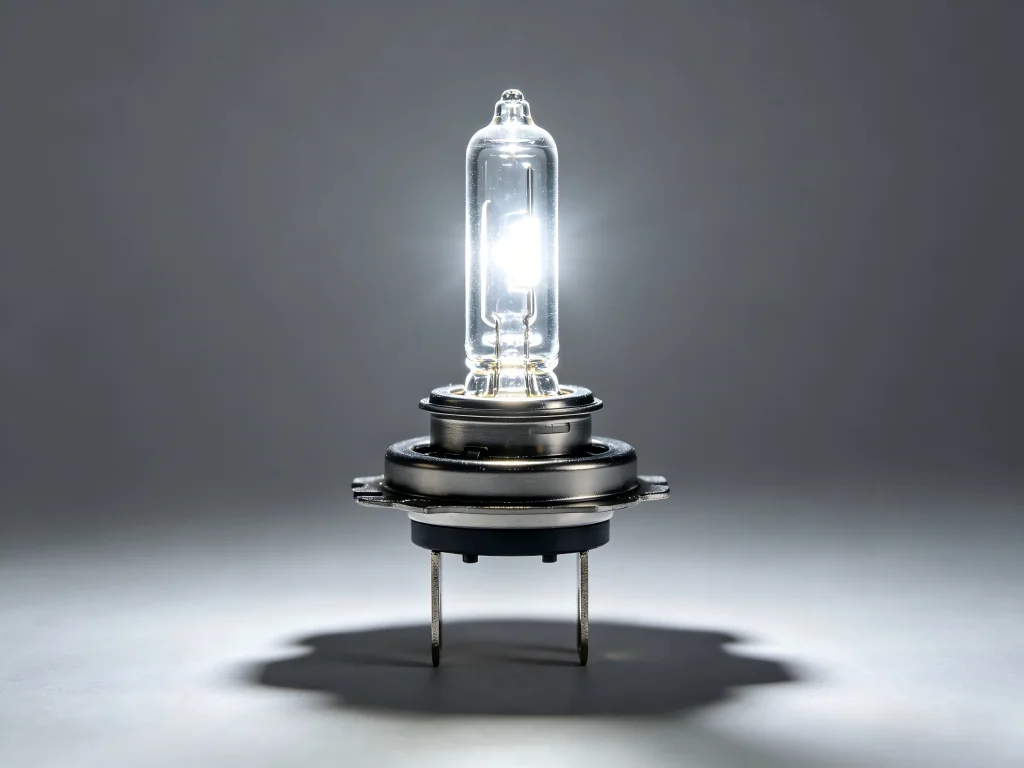
A 9012 LED headlight bulb is also known as an HIR2 bulb. It shares a similar base with the 9005 (HB3), but the two are not interchangeable without modification.
The 9012 socket is primarily used in single-reflector systems that handle both high and low beam functions via a mechanical shutter. This design places unique demands on the bulb’s emitter placement. If the light source is even 1mm off-center, the projector lens fails to throw light down the road effectively, creating dark spots that increase driver fatigue.
Understanding this cross-reference is the first step in avoiding a bad purchase. Many “universal” 9012 LED headlight bulbs ignore the specific focal point of the 9012 connector entirely. The result? Light that looks bright in your driveway but performs poorly on the road.
2. LED vs. Halogen: The Real Performance Gap
A properly engineered 9012 LED headlight bulb delivers 3-4 times the usable light output of a halogen HIR2—but only if the beam pattern is correct.
Here is the raw data. A standard 9012 halogen produces approximately 1,870 lumens. A quality 9012 LED headlight bulb can produce 6,000-8,000 sustained lumens per pair. That is a 3-4x improvement in raw output.
But raw lumens are meaningless without beam precision. One reviewer who tested a 9012 LED headlight bulb against high-quality Philips halogens found that while the LEDs were “extremely bright,” they did not illuminate as far down the road. The LED bulbs also provided less peripheral lighting. The reviewer concluded that the LED upgrade actually decreased their overall nighttime driving illumination compared to a high-quality halogen.
This is the hidden cost of a poorly engineered 9012 LED headlight bulb. You pay for more lumens but get less usable light. The solution is not more brightness—it is better beam alignment.
Color temperature also matters. Halogen bulbs emit a warm 3000K-4300K light. Most 9012 LED headlight bulbs produce 6000K-6500K cool white light. This whiter light improves contrast and reduces eye strain—but only if the beam pattern is correct. In reflector housings designed for halogens, the wrong LED can create excessive glare that reduces visibility for oncoming traffic.
3. Head-to-Head: 9012 LED Headlight Bulb Technology Comparison
Not all 9012 LED headlight bulbs are created equal. The table below compares three tiers of technology based on our laboratory testing and real-world validation.
| Performance Metric | OEM Halogen (HIR2) | Budget LED (Generic) | GTR Ultra Series LED |
|---|---|---|---|
| Beam Precision | Perfect (OEM standard) | Poor (high glare, dark spots) | Optimized (OEM position replicated) |
| Thermal Control | Radiant heat only | Passive sink (prone to failure) | Active dual ball-bearing fan + heat pipes |
| Color Rendering | Low (CRI ~70) | Varies (often blue-ish tint) | High (pure white 6000K) |
| Lumen Stability | Stable (but dim) | Drops 40%+ within 30 min | Sustained output |
| CANbus Integration | N/A (no electronics) | Often requires external decoder | Built-in; 95% plug-and-play |
| Expected Lifespan | ~1,000 hours | Unpredictable (weeks to months) | Vehicle lifetime (with proper cooling) |
The data is clear. Budget 9012 LED headlight bulbs may look attractive at the $30 price point, but they fail on the metrics that actually matter for nighttime driving safety. The GTR Ultra Series delivers OEM-grade beam precision with active thermal management that sustains output over the life of the bulb.
4. LED Headlight Bulb: The 5-Step Selection Framework
Use this framework to evaluate any 9012 LED headlight bulb before purchase. A bulb that passes all five criteria will perform. A bulb that fails any one will disappoint.
- Verify thermal management – Does the 9012 LED headlight bulb have active cooling (fan + heat sink)? Passive cooling alone cannot sustain high output in a confined headlight housing.
- Check emitter placement – Does the manufacturer specify 1:1 emitter positioning matching the halogen filament? If not, the beam pattern will be compromised.
- Demand sustained lumen data – What is the output after 30 minutes of operation? Many LEDs drop 40% of their brightness as they heat up.
- Confirm CANbus compatibility – Does the 9012 LED headlight bulb include built-in decoders? Vehicles from BMW, Mercedes, Audi, Dodge, and Jeep are particularly sensitive.
- Check IP rating – Is the bulb rated IP65 or higher for water and dust resistance? Headlight housings are not sealed environments.
5. Where to Buy a 9012 LED Headlight Bulb: Retailer Comparison
Search volume for “9012 LED headlight bulb Amazon,” “9012 LED headlight bulb Autozone,” “9012 LED headlight bulb Walmart,” and “9012 LED headlight bulb Oreillys” indicates that buyers are actively comparing retail channels. Here is what you need to know about each:
- Amazon – Wide selection but significant variation in quality. Customer reviews are helpful but often lack technical depth.
- Walmart – Budget-friendly options, but selection is limited and quality varies widely.
- AutoZone / O’Reilly – Convenient for immediate pickup, but LED selection is often limited to major brands like Sylvania.
- Specialty retailers (GTR, Oracle, etc.) – Higher price point but superior engineering, documentation, and support.
The cheapest 9012 LED headlight bulb is rarely the most cost-effective. Factor in replacement frequency, installation time, and the safety cost of poor performance. A quality bulb that lasts the life of the vehicle is cheaper than replacing a budget bulb every six months.
6. Common 9012 LED Headlight Bulb Problems and Solutions
Based on thousands of real user reports, here are the most frequent issues with 9012 LED headlight bulbs and how to avoid them:
- Flickering or strobing – Caused by CANbus incompatibility. Solution: choose a 9012 LED headlight bulb with built-in decoders or purchase a separate decoder harness.
- Premature failure – Caused by inadequate thermal management. Solution: choose active cooling (fan + heat sink) over passive cooling only.
- Poor beam pattern / dark spots – Caused by incorrect emitter placement. Solution: choose a 9012 LED headlight bulb with documented 1:1 positioning.
- Installation difficulty – Caused by oversized bulb bases or poor design. Solution: choose a 9012 LED headlight bulb with 1:1 mini sizing.
- Reduced visibility in rain – Caused by color temperature that is too cool or poor beam focus. Solution: choose 6000K for optimal all-weather performance.
7. Frequently Asked Questions About 9012 LED Headlight Bulbs
7.1. What vehicles use a 9012 LED headlight bulb?
The 9012 (HIR2) socket is found in vehicles from Alfa Romeo, Buick, Cadillac, Chevrolet, Chrysler, Dodge, Ford, GMC, Hyundai, Jaguar, Jeep, Lincoln, Mitsubishi, Nissan, Ram, Scion, and Toyota. Specific models include the 2013-2019 Ford Taurus, 2013-2019 GMC Acadia, and 2016-2018 Toyota RAV4.
7.2. Is a 9012 LED headlight bulb the same as 9005?
No. While they share a similar base, the 9012 has a wider top tab, an infrared coating that 9005 lacks, and higher output (1,870 lumens vs. 1,700). Trimming tabs to fit a 9005 into a 9012 socket is not recommended.
7.3. Can I buy a 9012 LED headlight bulb at AutoZone?
AutoZone carries 9012 bulbs, primarily halogen options from Sylvania. LED options are limited in-store. For a wider selection of engineered LED options, specialty retailers like GTR offer superior performance.
7.4. How long should a 9012 LED headlight bulb last?
A properly engineered 9012 LED headlight bulb with active thermal management should last the life of the vehicle. Budget bulbs without adequate cooling often fail within months.
7.5. Are 9012 LED headlight bulbs street-legal?
Legality varies by jurisdiction. Many aftermarket LED bulbs are not DOT-approved for use in reflector housings due to glare concerns. Always verify DOT compliance and check local regulations before installation.
7.6. Why are some 9012 LED headlight bulbs so cheap?
Low-cost 9012 LED headlight bulbs cut corners on thermal management, emitter placement precision, CANbus integration, and build quality. The result is a bulb that looks bright in the box but performs poorly on the road—and fails quickly.
8. Make the Right Choice for Your 9012 LED Headlight Bulb Upgrade
You now have the information you need to make an informed decision. You understand the difference between a properly engineered 9012 LED headlight bulb and a budget imposter. You know which metrics matter—thermal management, beam precision, lumen stability, CANbus integration, and build quality.
The GTR Ultra Series 9012 LED headlight bulb checks every box. Active dual ball-bearing cooling. 1:1 emitter placement matching OEM halogen positioning. Sustained lumen output. Built-in CANbus decoders. Automotive-grade circuitry with ISO 9001 compliance. This is not a bulb you replace every six months. This is a bulb you install once and forget.
Your nighttime safety is worth more than a $30 gamble. Choose the 9012 LED headlight bulb that actually works.
Explore the GTR 9012 LED headlight bulb collection at www.rhgtr.com – engineered for performance. Built to last.