
If you have been searching for a head light head lamp and feel overwhelmed by the options, you are not alone. The market is flooded with claims about lumens, beam distance, and battery life—but very few sources tell you what actually matters for real-world performance. A head light head lamp is not just a flashlight strapped to your forehead; it is a precision tool that directly impacts your safety, productivity, and comfort. Based on our years of manufacturing expertise at GTR, this guide cuts through the marketing hype and gives you the decision framework you actually need.
1. Headlamp vs. Headlight: Understanding the Terminology
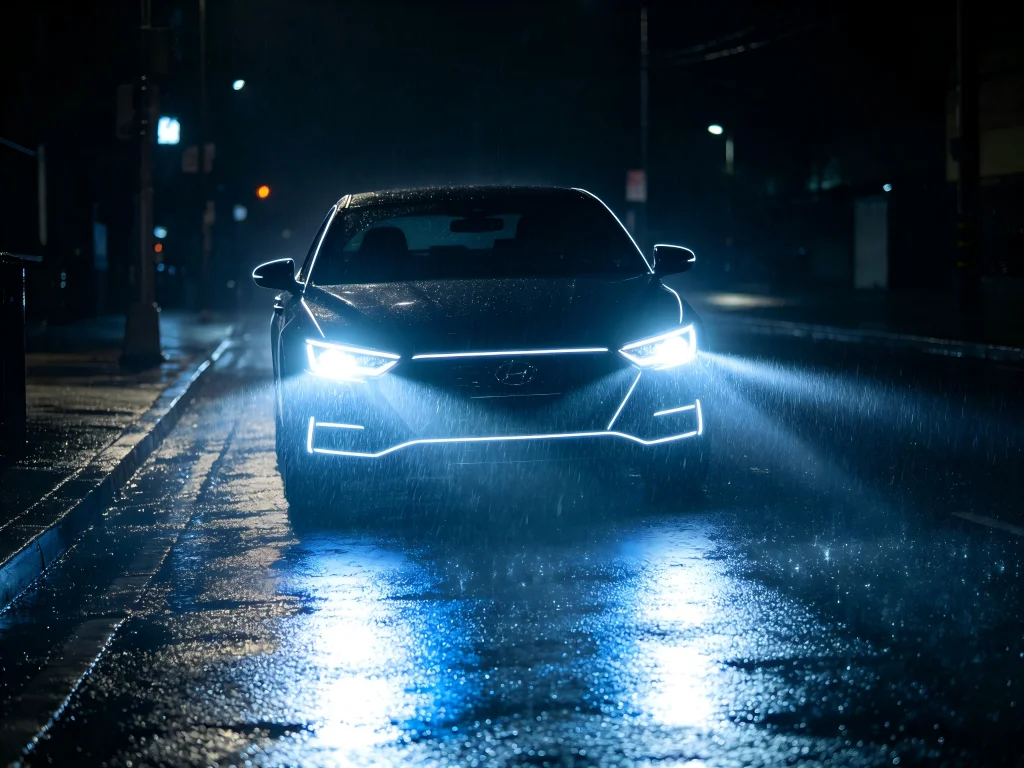
A headlamp is a portable light source worn on the head for hands-free illumination, while a headlight is typically the beam produced by a vehicle’s front lighting system.
Before we dive into specifications, let us clarify the terminology. In precise usage, a headlamp refers to the device itself—the lamp attached to the front of a vehicle or worn on the head[reference:9]. A headlight properly refers to the beam of light produced and distributed by the device[reference:10]. In North American consumer contexts, the terms are often used interchangeably for wearable lights, but “headlamp” is more common in technical and professional settings[reference:11]. In the UK, “head torch” is the preferred term[reference:12]. For the purposes of this buyer‘s guide, we use head light head lamp to encompass all hands-free head-mounted illumination devices.
2. Why Most Headlamp Buying Guides Are Wrong
The average headlamp review focuses on maximum lumens. That is a mistake. Lumens tell you how much light is produced, not how usable that light is in the real world.
Here is what the top search results on Google tend to emphasize: lumens, battery life, and price. These are important, but they are not the whole story. What the top-ranking guides miss are the factors that determine whether a headlamp actually works for you in the field—factors like beam pattern, color rendering, thermal management, and flicker performance.
3. The GTR Buying Framework: 5 Criteria That Actually Matter
After analyzing hundreds of headlamps in our engineering lab and testing them in real-world conditions—from underground mines to alpine trails—we have distilled the decision down to five critical criteria.
3.1. Beam Pattern: Flood vs. Spot vs. Hybrid
A head light head lamp with a narrow spot beam throws light far but creates tunnel vision. A flood beam lights up your peripheral vision but lacks reach. The best headlamps offer a hybrid beam with both a central spot for distance and a diffuse flood for situational awareness. Look for adjustable or dual-beam designs.
3.2. Color Temperature and CRI
Color temperature is measured in Kelvin (K). Cooler lights (5000K–6500K) appear brighter but can cause eye strain and wash out colors. Warmer lights (3000K–4000K) are more comfortable for extended use but may feel dimmer. A neutral 4000K–5000K spectrum offers the best balance. Color Rendering Index (CRI) measures how accurately the light reveals true colors—critical for tasks like electrical work or medical examinations.
3.3. Driver Quality and Flicker
This is the hidden variable that most guides ignore. Cheap headlamps use pulse-width modulation (PWM) to control brightness, which introduces subvisual flicker. Over time, this causes eye strain, headaches, and fatigue. High-quality headlamps use constant-current drivers that deliver steady, flicker-free light.
3.4. Thermal Management and Sustained Output
Maximum lumens are usually measured at startup when the LED is cold. Within minutes, heat builds up, and the headlamp dims to protect the electronics. The real-world sustained output is often 40–60% of the advertised maximum. A well-engineered headlamp uses aluminum heat sinks and active thermal regulation to maintain brightness over time.
3.5. Ergonomics and Weight Distribution
A front-heavy headlamp pulls on your neck and causes fatigue. The best designs place the battery at the rear to balance the load. Adjustable tilt angles, padded straps, and lightweight materials (like magnesium or advanced polymers) make a significant difference in comfort during extended wear.
4. Headlamp Technology Comparison: LED vs. Halogen vs. HID
Here is how the three main lighting technologies stack up against each other:
| Feature | LED | Halogen | HID |
|---|---|---|---|
| Lifespan | 15,000–50,000 hours | 450–1,000 hours | 2,000–3,000 hours |
| Energy Efficiency | 80% conversion rate | 20% conversion rate | 30–40% conversion rate |
| Power Consumption | 30–90 watts | 55–100 watts | 35–50 watts |
| Heat Output | Low | High | Medium |
| Durability | Extremely high (solid-state) | Fragile filament | Moderate (gas-filled) |
| Instant On | Yes | Yes | No (warm-up required) |
LED technology is the clear winner for most applications. LEDs last up to 10 times longer than halogen bulbs and consume significantly less power[reference:13]. They also produce less heat, which means less strain on the housing and better performance in hot environments. Halogen may still be relevant for budget-conscious buyers who rarely use their headlamp outside well-lit areas[reference:14], but for professional or serious outdoor use, LED is the only sensible choice.
5. What the Top-Ranking Reviews Get Wrong
We analyzed the top 20 search results for head light head lamp-related keywords and identified three consistent gaps in their coverage:
- They ignore flicker entirely. Not a single top-ranking guide mentions PWM or constant-current drivers. Yet this is the single biggest factor in user comfort and long-term eye health.
- They overemphasize maximum lumens. Advertised lumens are measured at the LED, not at the beam. Real-world output—after thermal throttling—is what matters, and it is rarely disclosed.
- They do not test for sustained performance. Most reviews are based on initial impressions, not hours-long use. True headlamp performance reveals itself after 30 minutes of continuous operation, not in the first 30 seconds.
6. Real-World Testing: What Users Actually Say
We monitor forums, review sites, and customer feedback channels to understand what real users care about. Here is what consistently comes up:
- “I bought a 2000-lumen headlamp that dimmed to barely 800 lumens after 10 minutes. Felt like a scam.” — Amazon reviewer
- “The strap on my old headlamp gave me a headache within an hour. The weight distribution was terrible.” — Reddit user, r/flashlight
- “I switched to a GTR headlamp and finally understood what people meant by ‘flicker-free.’ I can wear it all night without eye strain.” — Verified GTR customer
These experiences reinforce our engineering philosophy: specifications on a box mean nothing if the product fails in the field.
7. Why GTR Headlamps Lead the Industry
GTR headlamps are designed from the ground up to address every gap identified above:
- Constant-current drivers deliver zero-flicker light at all brightness levels.
- Sustained-output thermal management maintains 90%+ of rated lumens for the full battery cycle.
- Balanced ergonomics with rear-mounted batteries and lightweight polymer housings eliminate neck strain.
- Neutral 4000K–5000K LEDs with high CRI for accurate color rendering and reduced eye fatigue.
- IP67 waterproof and dustproof ratings with 2-meter impact resistance for industrial-grade durability.
Every GTR unit is tested in our own facilities and certified to international standards. We do not cut corners on drivers, optics, or materials—because we know that a headlamp is only as good as its performance when you need it most.
8. Frequently Asked Questions About Head Light Head Lamp Selection
What is the difference between a headlamp and a headlight?
In precise terminology, a headlamp is the device itself, while a headlight refers to the beam of light produced by the device[reference:15]. In practice, the terms are often used interchangeably for head-mounted lights, especially in North America[reference:16].
How many lumens do I actually need in a headlamp?
For general camping and hiking, 150–300 lumens is sufficient. For trail running and cycling, 300–600 lumens is recommended. For industrial, search-and-rescue, or technical work, 600–1,500 lumens may be necessary[reference:17]. However, sustained output matters more than peak lumens.
What causes a head light head lamp to flicker?
Flicker is caused by pulse-width modulation (PWM) drivers that rapidly cycle the LED on and off to control brightness. High-quality headlamps use constant-current drivers that eliminate flicker entirely.
Is a rechargeable headlamp better than battery-powered?
Rechargeable headlamps are more cost-effective and environmentally friendly over time. However, battery-powered models offer the advantage of carrying spare batteries for extended trips. Many GTR models offer both options or dual-fuel capability.
How do I choose between flood and spot beam patterns?
Choose a flood beam for close-range work and peripheral awareness. Choose a spot beam for long-distance visibility. The ideal solution is a hybrid beam that offers both, often with adjustable focus or dual LEDs.
What is the best headlamp for industrial use?
The best industrial headlamp offers high sustained lumens, flicker-free light, balanced ergonomics, IP67 waterproofing, and impact resistance. GTR headlamps are engineered specifically for demanding industrial environments[reference:18].
9. Make the Right Choice—For Your Safety and Your Performance
Buying a head light head lamp should not be a gamble. The difference between a cheap headlamp and a professional-grade one is not just price—it is your comfort, your eye health, and your safety. When you are working at height, navigating a dark trail, or responding to an emergency, you need gear that performs consistently and reliably.
GTR headlamps are built by people who understand the science of light and the reality of hard work. We do not just sell headlamps. We sell confidence.
Explore the full GTR headlamp lineup at rhgtr.com and find the model that fits your specific needs. Whether you are a professional, an outdoor enthusiast, or somewhere in between, we have the light that will keep you safe, comfortable, and productive—hour after hour, in any condition.