
You are shopping for auto headlamps. Maybe your factory lights are dim. Maybe one side burned out. Maybe you just want better visibility at night. Whatever the reason, you have quickly discovered that the market is flooded with confusing claims, misleading specifications, and products that range from genuinely excellent to dangerously inadequate.
This guide cuts through the noise. We will compare the three main auto headlamp technologies — halogen, HID, and LED — break down the critical factors that separate quality from junk, and give you the tools to make a smart purchase decision.
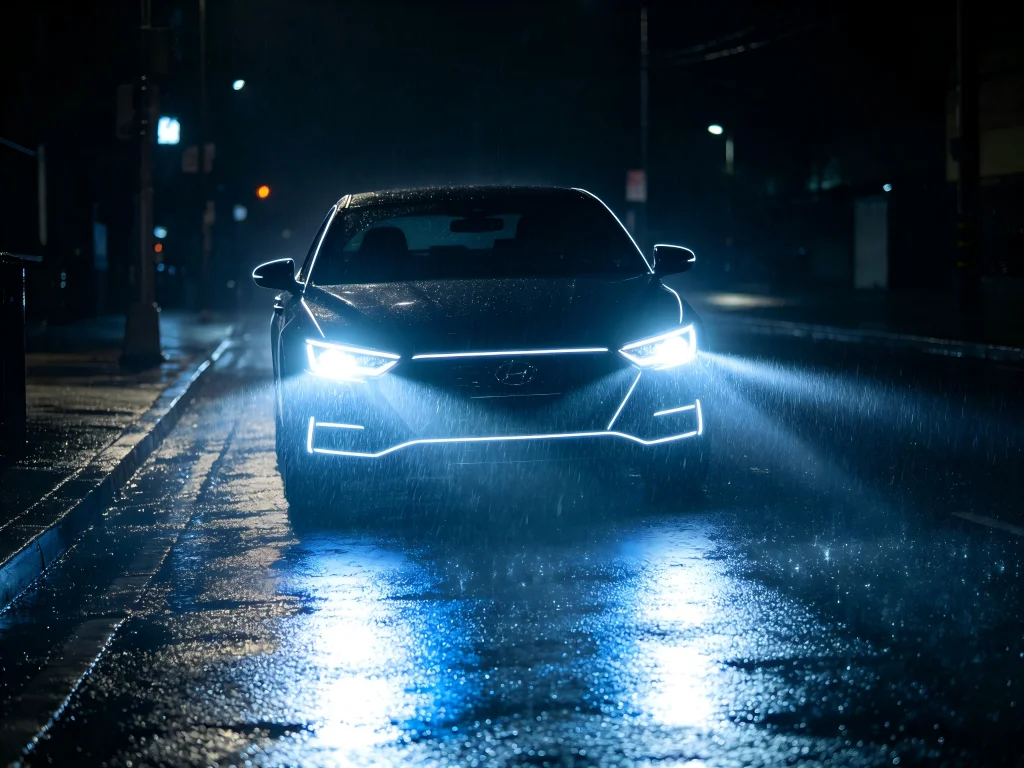
1. Auto Headlamps Technology Comparison: The Big Three
1.1. Halogen: The Old Standard
Halogen auto headlamps work by passing an electrical current through a tungsten filament enclosed in a halogen gas-filled quartz bulb. The halogen gas allows the filament to burn at higher temperatures than standard incandescent bulbs, producing more light.
Pros: Inexpensive ($10–$30 per bulb), widely available, easy to replace, predictable beam patterns in housings designed for them.
Cons: Short lifespan (500–1,000 hours), low efficiency (more heat than light), dimmer than HID and LED alternatives, fragile.
Who it is for: Budget-conscious drivers with older vehicles who want a quick, inexpensive replacement. But if you are looking for better visibility, halogen is not the answer.
1.2. HID / Xenon: The Bright Middle Child
Descarga de alta intensidad (HID) auto headlamps produce light through an electrical arc between two electrodes in a xenon gas-filled bulb. No filament means no burning out in the traditional sense — but the arc does degrade over time.
Pros: Significantly brighter than halogen — roughly 3× the lumens, better color temperature (bright white light), more efficient than halogen.
Cons: Expensive ($100+ per pair), require a warm-up time to reach full brightness, short lifespan relative to LED (2,000–3,000 hours), and crucially — aftermarket HID kits in halogen housings produce dangerous glare because the arc point geometry does not match the housing design.
Who it is for: Drivers who want a brightness upgrade and have factory HID housings. If your car came with halogen from the factory, do not retrofit HID — you will blind oncoming traffic and may get pulled over.
1.3. LED: El estándar moderno
Light-Emitting Diode (LED) auto headlamps are semiconductor devices that emit light when powered by an electrical current. No filaments. No gas. No warm-up time. Just instant, efficient, and long-lasting light.
Pros: Very long lifespan (30,000–50,000 hours), highly efficient, instant-on with no warm-up, compact design allows for better optics, produce a bright white light that improves visibility.
Cons: Higher upfront cost (though prices have dropped significantly), quality varies wildly between brands, and — like HID — poorly designed LED retrofits in halogen housings produce scatter and glare.
Who it is for: Anyone who wants the best combination of brightness, efficiency, and longevity. The key is choosing a well-engineered LED system — not the cheapest kit on Amazon.
2. The Critical Factor Most Buyers Ignore: Housing Compatibility
This is the single most important concept in auto headlamps upgrading, and it is the one most frequently ignored in product marketing.
Here is the reality: Headlight housings are designed around specific light source geometry. A reflector housing is shaped to direct light from a specific filament position in a specific direction. A projector housing focuses light through a lens from a specific arc or emitter position.
When you put a different light source — an LED emitter or HID arc — in a position that differs from the original filament position, the optics no longer work as intended. The result:
- Scattered light in random directions instead of a focused beam
- Hot spots that do not illuminate the road effectively
- Glare that blinds oncoming drivers
Projector housings are more forgiving of LED retrofits because the lens helps focus the light. But even then, you are gambling on whether the aftermarket LED emitter matches the original bulb’s focal point. Most do not.
The GTR solution: Complete headlamp assemblies designed from the ground up for LED technology. No retrofits. No compromises. The optics, the heat sinks, the beam pattern — everything is engineered to work together.
3. Auto Headlamps Buyers: 7 Tests to Avoid Costly Mistakes
Based on our years of manufacturing expertise and extensive testing, here are the critical factors that separate quality auto headlamps from dangerous imitations:
- Effective Lumens vs. Raw Lumens: Many brands advertise “50,000 lumens” — but raw lumens measured at the emitter mean nothing. What matters is effective lumens — the light that actually reaches the road. GTR bi-LED headlamps deliver 92% effective lumens retention.
- Beam Pattern Consistency: A good beam should have a sharp cutoff with a 15-degree angled step-up at the center. No scatter. No color fringe. No hard transitions.
- Gestión térmica: LEDs degrade permanently if operated above maximum junction temperature for extended periods. Quality systems use heat pipes, active cooling fans, or both. GTR uses dual heat pipes plus a silent fan running at 12,000 RPM.
- Temperatura de color: 5,000K to 6,000K (bright white) is ideal for nighttime visibility. Lower temperatures produce yellow light (better for fog). Higher temperatures produce blue/purple light (looks “cool” but reduces usable visibility).
- Regulatory Compliance: FMVSS 108 (US) and ECE regulations (Europe) define photometric, geometric, and marking requirements. Reputable brands publish their compliance data. Cheap imitations do not.
- Lifespan Rating: Quality LEDs are rated for 30,000–50,000 hours. If a product does not publish a lifespan rating, assume it is low.
- Independent Reviews: Look for third-party testing, not just marketing claims. Independent reviewers have consistently ranked GTR among the top performers.
4. Auto Headlamps FAQ: Your Top Questions Answered
Are LED auto headlamps better than HID?
Yes — for most drivers. LEDs offer longer lifespan (30,000–50,000 hours vs. 2,000–3,000 hours), instant-on with no warm-up, and better efficiency. HID may produce slightly more raw lumens in some configurations, but LED technology has closed that gap significantly.
Can I put LED bulbs in my halogen headlights?
You can, but the results vary dramatically. A well-designed LED retrofit with the correct emitter geometry for the housing can improve output. Poorly designed ones produce scatter and glare worse than the halogen they replaced. The safest option is a complete LED headlamp assembly designed for your vehicle.
How bright should my auto headlamps be?
A halogen bulb produces roughly 3,200 lumens. Quality LED headlamps reach up to 12,000 lumens. But remember — effective lumens matter more than raw numbers. A well-focused 4,700-lumen LED (like the GTR Ultra 3) will outperform a scattered 10,000-lumen cheap kit every time.
How long do LED auto headlamps last?
Quality LEDs are rated for 30,000–50,000 hours. At average usage (1–2 hours per night), that translates to 15–25 years of service. GTR’s dual-array modules are rated for 50,000 hours.
Why do my headlights look yellow or foggy?
Polycarbonate lenses oxidize over time, turning yellow and hazy. This can cut light output by 50–80%. Lens restoration ($15–$25 DIY kit) or replacement lenses often produce a bigger improvement than a bulb upgrade in a hazy housing.
Are expensive auto headlamps worth it?
Generally, yes — but only if you are paying for engineering, not just branding. The difference between a $50 LED kit and a $200 GTR system is not just marketing. It is optics, thermal management, beam pattern consistency, and regulatory compliance. Cheap headlamps can actually make your nighttime visibility worse due to scatter and glare.
5. Auto Headlamps Comparison: Key Metrics at a Glance
| Característica | Halogen | HID / Xenon | LED (Quality) | LED (Cheap) |
|---|---|---|---|---|
| Vida útil | 500–1,000 horas | 2.000–3.000 h | 30.000–50.000 h | 5,000–10,000 hours |
| Brillo | ~3,200 lumens | ~8,000–10,000 lumens | ~10,000–12,000 lumens | Varies (often overstated) |
| Tiempo de calentamiento | Instantaneous | 3–5 seconds | Instantaneous | Instantaneous |
| Efficacy | Low | Moderado | Alta | Low (poor thermal design) |
| Retrofit Compatibility | N/A (factory) | Poor in halogen housings | Varía ampliamente | Poor (scatter/glare) |
| Cost (per pair) | $10–$30 | $100+ | $150–$300+ | $30–$80 |
| Beam pattern quality | Predictable | Excellent (factory only) | Excellent (well-engineered) | Poor to dangerous |
6. Why GTR Stands Above the Competition
After reviewing the technology, the housing compatibility issue, and the critical buying criteria, one brand consistently emerges as the benchmark: GTR Lighting.
Engineering, Not Marketing: GTR does not play the “50,000 lumens” game. They publish both raw and effective lumens — and their bi-LED headlamps deliver 92% effective lumens retention.
Thermal Management That Works: Most LED failures are caused by heat, not the LEDs themselves. GTR’s dual heat pipe + silent fan design keeps the modules cool, ensuring the rated 50,000-hour lifespan.
Beam Pattern Precision: Independent testers have noted that GTR’s beam feels “calm” — no flicker, no hard transitions, no color fringe. That is what happens when optics are engineered for the emitter, not adapted from a halogen design.
Regulatory Compliance: GTR headlamps comply with FMVSS 108 and ECE standards — meaning they are legal, safe, and produce a beam pattern that does not blind oncoming traffic.
Proven Performance: Independent reviews have ranked the GTR Ultra 3 as the best H11 LED headlight on the market, with the Ultra 2 delivering almost 400% more brightness than a stock halogen bulb.
7. Your Next Step: Upgrade with Confidence
You now have everything you need to make an informed auto headlamps purchase. You understand the technologies. You know the critical factors that separate quality from junk. And you have seen why GTR is the choice of drivers who refuse to compromise on visibility and safety.
Do not settle for dim, scattered, or unreliable lighting. Do not gamble on cheap kits that promise the world and deliver glare. Choose auto headlamps engineered to perform — every time you drive, every time you park, every time you need them most.
Visita https://www.rhgtr.com to explore the full GTR collection and find the perfect headlamp upgrade for your vehicle.