
Entra en cualquier tienda de autopartes o busca bombillas automotrices cerca de mí, y te enfrentarás a una pared de opciones. Halógenas. LED. HID. Diferentes tamaños. Precios muy diferentes. Afirmaciones de “50,000 lúmenes” y “garantía de por vida” que suenan demasiado buenas para ser verdad, porque generalmente lo son.
Based on our years of manufacturing experience at GTR and extensive head-to-head testing on hundreds of vehicle models, we have created this comprehensive buying guide for automotive bulbs . We will cut through the marketing hype, expose hidden pitfalls, and give you the decision framework that actually works.
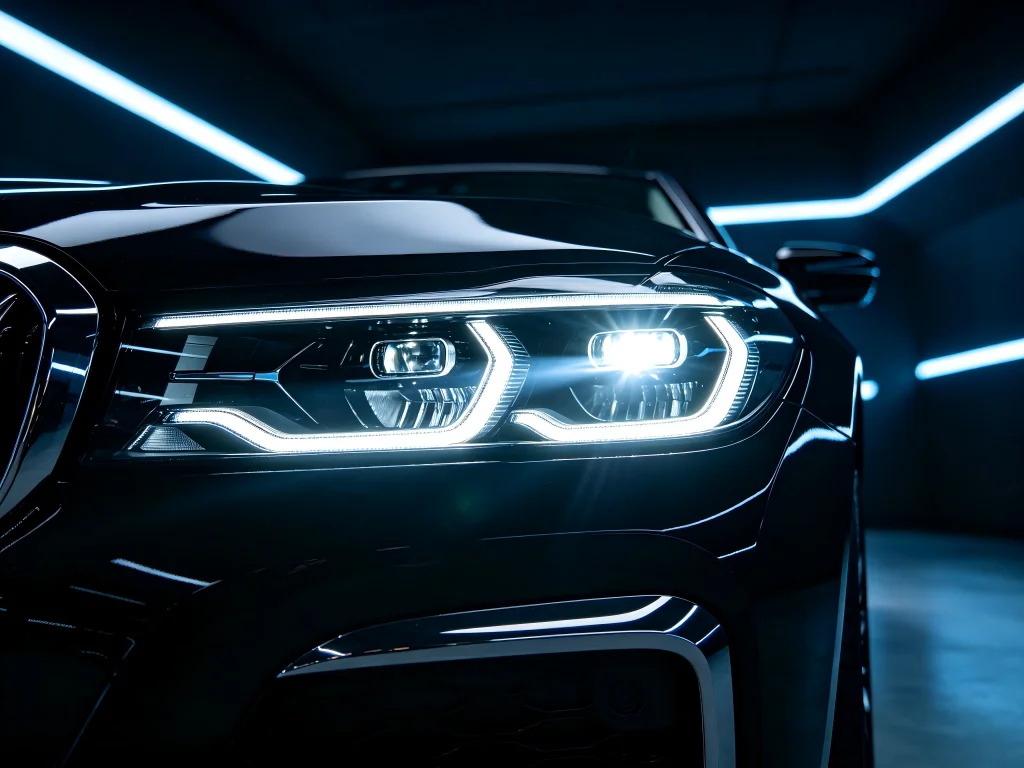
1. Respuesta Directa: ¿Qué Bombilla Automotriz Debería Comprar?
Respuesta Directa: Para la mayoría de los conductores, las bombillas automotrices LED con geometría de filamento halógeno 1:1 y compatibilidad CAN-bus integrada ofrecen el mejor equilibrio de brillo, longevidad y fiabilidad. Las bombillas halógenas solo son adecuadas para conductores conscientes del presupuesto con vehículos más antiguos, mientras que las bombillas HID son cada vez más obsoletas debido a su complejidad y vida útil más corta en comparación con los LED modernos.
2. Entendiendo los Tres Tipos de Bombillas Automotrices
Antes de sumergirnos en las comparaciones, necesita entender qué hace realmente cada tecnología. Los tipos de bombillas automotrices se dividen en tres categorías distintas, cada una con principios de funcionamiento fundamentalmente diferentes.
2.1. Halógena: El Estándar Probado y Verdadero
Las bombillas halógenas funcionan pasando una corriente eléctrica a través de un filamento de tungsteno dentro de una envoltura de cuarzo llena de gas halógeno. El filamento se calienta a aproximadamente 4,500°F y emite luz. El gas halógeno redeposita el tungsteno evaporado de vuelta al filamento, extendiendo su vida útil.
Pros:
- Opción menos costosa—típicamente $10-$30 por bombilla
- Ampliamente disponible en bombillas de luz automotriz Walmart, bombillas de luz automotriz Canadian Tire, bombillas de luz automotriz Home Depot, y en todas las tiendas de autopartes
- Easy to replace with basic tools
- Predictable beam pattern in housings designed for them
Cons:
- Shorter lifespan: 500-1,000 hours
- Warm, yellowish light (around 3,000K) that does not provide optimal color contrast
- Less efficient—90-95% of energy is converted to heat
- Degrades noticeably over time; a bulb at 75% of its life produces significantly less light than a new one
- Fragile; vulnerable to thermal shock and vibration damage
2.2. HID (Xenon): The Pioneer of Brightness
High-intensity discharge bulbs produce light via an electric arc between two electrodes inside a glass cylinder filled with xenon gas. The arc creates an intensely bright plasma that emits a cold, blue-white light.
Pros:
- Significantly brighter than halogen: 2-3 times the lumens
- Cooler color temperature (4,000-6,000K) closer to daylight
- More efficient than halogen
- Lifespan of 2,000-3,000 hours
Cons:
- The most expensive of the three types
- Requires a ballast to regulate power
- Takes several seconds to reach maximum brightness after startup
- Complex installation: often requires professional help
- Retrofit HID kits in halogen housings produce significant glare because the arc point geometry does not match what the housing was designed for
- Factory HID systems are excellent; retrofitted HIDs in halogen housings are problematic
2.3. LED: The modern standard
Light-emitting diodes are semiconductors that emit light when an electric current passes through them. Unlike halogen and HID, there is no filament to burn out or gas to ionize.
Pros:
- Longer lifespan: 30,000-50,000 hours
- Most efficient: use 40-80% less energy than halogen
- Instant on with immediate full brightness
- Clean, bright white light (5,000-6,500K) providing excellent color contrast
- Durable: no filament to break from vibration
- Available in virtually all bulb sizes
Cons:
- Quality varies greatly: cheap LEDs can be worse than halogen
- CAN bus compatibility issues in modern vehicles if not designed correctly
- Heat management is critical; poor thermal design leads to rapid degradation
- The beam pattern depends on correct emitter geometry; poorly designed LEDs create scatter and glare
3. Head-to-head comparison: Which car bulb wins?
| Factor | Halogen | HID (Xenon) | LED |
|---|---|---|---|
| Vida útil | 500-1,000 hours | 2,000-3,000 hours | 30,000-50,000 hours |
| Brightness (lumens) | ~1,000 | 2-3 times halogen | Varies; quality units 6,000-12,000+ per set |
| Efficacy | Low | Moderado | Alta |
| Temperatura de color | ~3,000K (yellow) | 4,000-6,000K (white-blue) | 5,000-6,500K (blanco) |
| Costo por bombilla | $10-30 | $50-150+ | $30-150+ |
| Instalación | Bricolaje simple | Complejo; a menudo profesional | Bricolaje simple si es enchufable |
| Patrón del haz | Precisión de fábrica en carcasas halógenas | Problemático en carcasas halógenas | Depende del diseño; la geometría 1:1 funciona perfectamente |
4. Los factores ocultos que determinan si sus bombillas de luz para automóvil realmente funcionan
Esto es lo que la tabla de bombillas automotrices y el empaque del producto no le dicen. Estos son los factores de decisión reales que separan una gran mejora de un error costoso.
4.1. Geometría del patrón de haz: el factor más pasado por alto
Las carcasas de los faros están diseñadas alrededor de una geometría específica de la fuente de luz. Una carcasa reflectora está formada para dirigir la luz desde una posición específica del filamento. Una carcasa de proyector enfoca la luz a través de una lente desde una posición específica de arco o emisor.
When you place a different light source in a position that differs from the original, the optics no longer work as intended. The result is scattered light, hot spots that don't illuminate the road effectively, and blinding glare for oncoming drivers.
That's why GTR bulbs are designed with 1:1 halogen filament placement. Our LED chips are placed in exactly the same position as the original halogen filament, so your vehicle's optics work as designed. The result: a focused beam that actually illuminates the road, not the trees or the eyes of oncoming drivers.
4.2. CAN-bus compatibility: or why your dashboard lights up like a Christmas tree
Most vehicles manufactured after 2010 use CAN-bus systems that monitor the electrical resistance of each bulb. A functional halogen bulb consumes about 55 watts and presents a specific resistance. An LED consumes about 20 watts: the system sees this lower resistance and assumes the bulb is burned out.
This triggers error messages on the dashboard, hyper-fast turn signals, and flickering headlights.
GTR Carbide Series 2.0 bulbs solve this with a built-in CAN-bus integration circuit that simulates the full electrical load of a halogen bulb. No external resistors. No wire cutting. No coding. Just plug and play.
4.3. Thermal management: the silent killer of LEDs
LED chips generate significant heat at the junction where the chip meets the circuit board. If this heat is not dissipated, the LED's light output degrades, a phenomenon called lumen depreciation, and the bulb fails prematurely.
Common cooling systems include passive aluminum heat sinks, active fan cooling, and copper heat pipe systems. For B2B buyers and serious enthusiasts, LED bulbs with fan cooling offer the best balance between performance and lifespan.
GTR bulbs use advanced thermal management with constant current drivers that regulate power and prevent overheating. This ensures consistent brightness and maximum lifespan.
4.4. Gross lumens vs. usable lumens: the marketing myth
Here's a dirty secret of the automotive bulbs industry: most lumen ratings are measured at the LED chip under ideal conditions, not the light that actually reaches the road.
A bulb claiming 20,000 lumens might produce only 5,000 usable lumens on the road if the beam pattern is scattered. Meanwhile, a well-designed bulb with 6,000 gross lumens could deliver 5,500 usable lumens because the beam is focused correctly.
GTR bulbs deliver up to 10 times more usable light than competitors. That's not marketing hype: it's the result of proper 1:1 filament geometry that ensures the light goes where it's supposed to go.
5. Dónde comprar bombillas automotrices: una comparación de minoristas
Tienes opciones al comprar automotive bulbs. Así es como se comparan:
5.1. Grandes superficies (Walmart, Canadian Tire, Home Depot)
Convenientes y accesibles, pero la selección se limita a bombillas halógenas básicas y opciones LED de gama baja. Bombillas para automóviles Walmart y minoristas similares suelen tener marcas económicas que pueden carecer de compatibilidad CAN-bus y una gestión térmica adecuada. Puede haber servicios de instalación disponibles, pero a menudo los realizan técnicos generales, no especialistas en iluminación.
5.2. Tiendas de autopartes (AutoZone, O'Reilly, Advance Auto)
Mejor selección y personal con conocimientos. Estas tiendas suelen tener opciones halógenas y LED de gama media. Pueden buscar el tamaño de bombilla correcto para tu vehículo. Sin embargo, su selección de LED puede carecer de las características avanzadas (geometría 1:1, integración CAN-bus) que garantizan un rendimiento adecuado.
5.3. Fabricantes especializados en iluminación (GTR, Philips, Osram)
Comprar directamente a fabricantes como GTR te da acceso a la mejor ingeniería, compatibilidad adecuada y soporte experto. Estás comprando a una empresa que diseña y prueba automotive bulbs para vivir, no a un minorista que vende miles de productos diferentes.
6. Preguntas frecuentes sobre bombillas para automóviles
6.1. ¿Puedo reemplazar las bombillas halógenas por bombillas LED en mi coche?
Sí, pero la calidad de la bombilla LED importa enormemente. Un LED mal diseñado en una carcasa halógena producirá dispersión y deslumbramiento. Un LED correctamente diseñado con geometría de filamento 1:1 y compatibilidad CAN-bus, como las bombillas GTR, funcionará perfectamente.
6.2. ¿Vale la pena pagar más por bombillas para automóviles de calidad?
La calidad importa más que el precio. Un LED $30 con ingeniería adecuada superará a un halógeno $10 y durará 30 veces más. Un LED $150 con mal diseño tendrá un rendimiento inferior y puede dañar la electrónica de tu vehículo. La clave es entender la ingeniería, no la etiqueta de precio.
6.3. ¿Cómo sé qué bombilla para automóvil se adapta a mi vehículo?
Consulte el manual del propietario o mire el número estampado en su bombilla actual. Los tamaños comunes incluyen H1, H3, H4, H7, H11, 9005 (HB3), 9006 (HB4) y muchos otros. El la tabla de bombillas automotrices en su manual especificará el tamaño correcto para cada posición (faros, luz de freno, intermitente, etc.).
6.4. ¿Por qué parpadean mis faros LED después de la instalación?
Esto es casi siempre un problema de compatibilidad con el bus CAN. La computadora del vehículo envía pulsos de diagnóstico que el controlador LED no puede manejar correctamente. Las bombillas GTR con circuitos de integración de bus CAN incorporados resuelven este problema.
6.5. ¿Cuánto tiempo deberían durar las bombillas de automóvil?
Halógenas: 500-1,000 horas. HID: 2,000-3,000 horas. LED de calidad: 30,000-50,000 horas. Si sus bombillas fallan significativamente antes de estos números, puede tener un problema eléctrico o está comprando productos de baja calidad.
6.6. ¿Son las bombillas HID mejores que las LED?
Ya no. HID era superior a halógeno cuando se introdujo, pero la tecnología LED ha superado a HID en todas las métricas significativas: vida útil, eficiencia, capacidad de encendido instantáneo y durabilidad. La única ventaja restante de HID es el menor costo inicial en algunas aplicaciones, pero eso se compensa con una vida útil más corta y una instalación más compleja.
6.7. ¿Qué temperatura de color es mejor para las bombillas de automóvil?
5000K-6000K proporciona el mejor equilibrio de visibilidad y comodidad. Este rango produce una luz blanca pura que imita la luz del día, proporcionando un excelente contraste de color para detectar peligros. Los colores más cálidos (3000K) se ven amarillentos y reducen el contraste. Los colores más fríos (8000K+) se ven azules y pueden ser duros para los ojos.
6.8. ¿Necesito ajustar mis faros después de instalar bombillas nuevas?
Sí. Cualquier cambio en el tipo o marca de bombilla puede afectar la altura y la dirección del haz. La mayoría de los vehículos tienen tornillos de ajuste para subir o bajar el patrón del haz. Esto es especialmente importante al actualizar a LED o HID para asegurarse de no deslumbrar a los conductores que vienen en sentido contrario.
7. Su marco de decisión: ¿Qué bombilla de automóvil es adecuada para usted?
Basado en todo lo que hemos cubierto, aquí hay un marco de decisión simple:
- Con presupuesto limitado y un vehículo más antiguo (anterior a 2010): Stick with quality halogen bulbs from a reputable brand. You'll get acceptable performance at the lowest cost.
- Daily driver looking for a significant upgrade: Choose LED bulbs with 1:1 halogen filament geometry and CAN-bus compatibility. GTR Ultra Series 2.0 or Carbide Series 2.0 are ideal options for most vehicles.
- Luxury or modern vehicle (2010+): LED is the only sensible option. But you must select bulbs with CAN-bus integration to avoid error codes and flickering. GTR Carbide Series with integrated CAN-bus circuits are specifically designed for this application.
- Fleets or commercial vehicles: The extended lifespan of LEDs (over 30,000 hours) means fewer replacements, less downtime, and a lower total cost of ownership. The initial investment pays for itself many times over.
8. Tome la decisión inteligente para su vehículo
En automotive bulbs The market is full of options, but not all options are equal. Now you've seen the engineering behind the technology, the hidden pitfalls that cause most upgrades to fail, and the criteria that separate good bulbs from excellent ones.
GTR automotive bulbs represent the culmination of years of engineering experience. We don't just make bulbs; we solve problems. CAN-bus errors. Flickering. Poor beam patterns. Premature failures. Every GTR product is designed to eliminate these frustrations and deliver reliable, bright, focused light for the life of your vehicle.
Thousands of drivers, fleets, and workshops have made the switch to GTR. They've stopped replacing bulbs every year, stopped dealing with error codes, and started seeing the road clearly at night.
Ready to upgrade? Visit https://www.rhgtr.com to find the right GTR car bulbs for your vehicle. Use our fitment guide, compare specifications, and see why GTR is the choice of professionals.
Your vehicle deserves lighting that works as hard as you do. Choose GTR and experience the difference that proper engineering makes.