
1. Introduction: Illuminating the Road Ahead with 9005 LED Bulbs
The journey from a dim, yellowed beam to a crisp, daylight-like illumination is a transformative upgrade for any vehicle. At the heart of this transformation for millions of cars, trucks, and SUVs is the 9005 headlight bulb led conversion. This specific bulb size, once the domain of inefficient halogen technology, has become a focal point for the automotive lighting revolution. Upgrading to LED is not merely about aesthetics; it’s a comprehensive enhancement of safety, performance, and longevity. This guide will navigate the critical aspects of 9005 LED bulbs, from their foundational technology and compelling benefits to the practical steps of selection and installation. By understanding what makes a high-quality LED upgrade, you can confidently light your path with superior visibility and modern reliability.
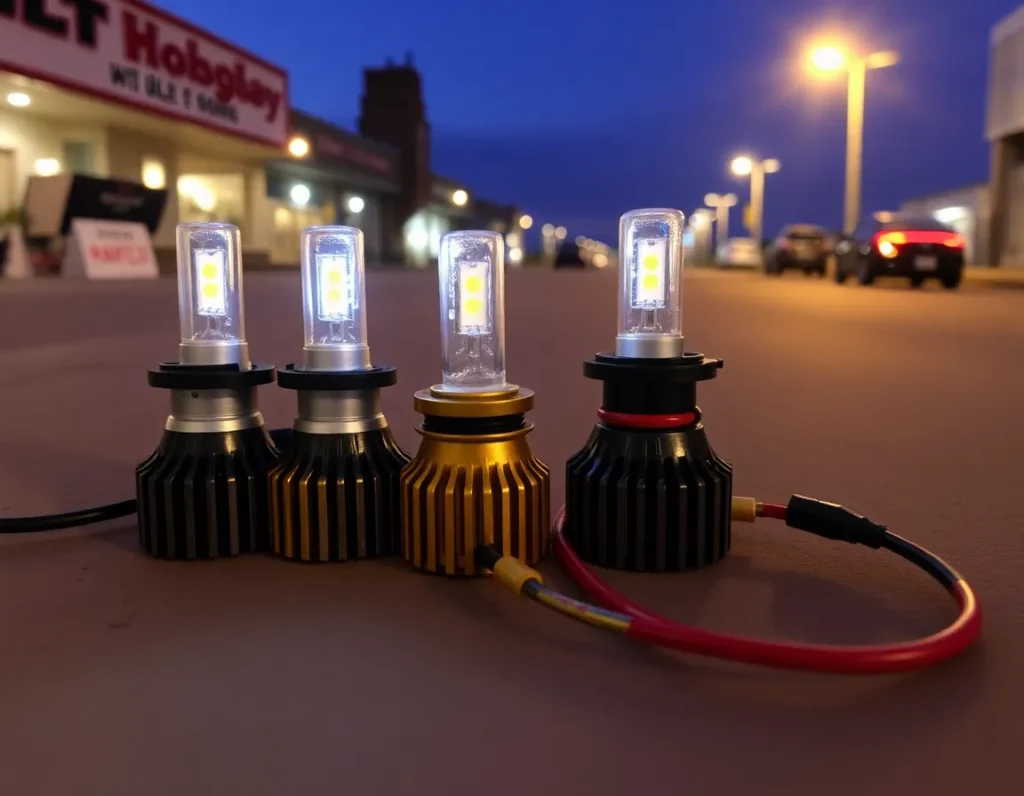
2. What is a 9005 Bulb? Understanding the Halogen Standard
To fully appreciate the LED evolution, one must first understand the original standard. The 9005 is a specific bulb size or “fitting,” defined by an international standardized system. It features a single-filament design and uses a P20d base—a plastic connector with three tabs in a specific alignment to ensure it can only be installed in the correct orientation. Historically, the 9005 bulb was almost exclusively manufactured as a halogen bulb. In this design, electricity heats a tungsten filament sealed inside a glass capsule filled with halogen gas, causing it to glow and produce light. The 9005 halogen bulb is typically used for high-beam headlights in many vehicles, though it is also commonly specified for low-beam or fog-light applications in various models.
The halogen 9005 has inherent limitations. Its efficiency is poor, converting only about 10-15% of its energy into visible light, with the vast majority wasted as heat. This inefficiency leads to higher power draw from your vehicle’s electrical system. Furthermore, the filament is fragile and susceptible to vibration failure, and the bulb’s output degrades and yellows over its relatively short lifespan, often rated between 450 to 1,000 hours. The 9005 standard, therefore, represents a specific form factor and electrical interface that newer technologies like LED aim to fit into and dramatically improve upon, creating a direct plug-and-play upgrade path for vehicle owners.
3. The LED Revolution: Why Upgrade from Halogen to 9005 LED Bulbs?
The shift from halogen to LED represents a fundamental change in how light is generated. Instead of a heated filament, Light Emitting Diodes (LEDs) produce light through electroluminescence—the movement of electrons in a semiconductor material. This core difference unlocks a suite of advantages that make upgrading to a 9005 headlight bulb led a compelling decision.
3.1. Superior Light Output and Visibility
LED bulbs produce a significantly brighter, whiter light compared to the yellowish glow of halogen. High-quality 9005 LED conversions can output 5,000 to 6,000 Kelvin color temperature, closely mimicking natural daylight. This spectrum improves contrast, reduces eye strain, and makes road signs, markings, and potential hazards appear sharper and more visible at greater distances.
3.2. Enhanced Energy Efficiency and Longevity
LEDs are remarkably efficient, using up to 80% less power than their halogen equivalents to produce the same or greater amount of light. A typical 9005 halogen bulb draws 65 watts, while a comparable LED bulb may use only 20-30 watts. This reduces load on your vehicle’s alternator and electrical system. More importantly, LEDs have an exceptionally long lifespan, often rated between 30,000 to 50,000 hours—essentially the lifetime of the vehicle for most drivers.
3.3. Instant On and Robust Design
Unlike some HID systems, LEDs achieve full brightness instantly, with no warm-up time. This is critical for safety when flashing high beams. Furthermore, LED chips are solid-state components with no fragile filament, making them highly resistant to shock and vibration from rough roads, a common point of failure for halogen bulbs.
4. Key Specifications and Features of High-Quality 9005 LED Bulbs
Not all LED bulbs are created equal. Discerning the quality of a 9005 LED upgrade requires looking beyond marketing claims and focusing on key technical specifications and design features.
4.1. Luminous Flux (Brightness)
Measured in lumens (lm), this is the total quantity of visible light emitted. A stock 9005 halogen produces roughly 1,700 lumens. A quality LED upgrade should offer between 3,000 to 6,000 lumens per bulb for a substantial improvement. Be wary of exaggerated lumen claims from uncertified manufacturers.
4.2. Beam Pattern and Chip Placement
The single most critical feature is the design of the LED chips and their placement. Halogen bulbs emit light omnidirectionally from a central filament, which the headlight housing’s reflector or projector is precisely engineered to focus. High-quality LED bulbs use chips placed on two or four sides (dual-sided or quad-sided) in a configuration that mimics the halogen filament’s position and light emission points. This ensures the light is projected correctly, creating a sharp, legal cut-off line without blinding glare for oncoming traffic.
4.3. Heat Management (Heatsink and Fan)
While LEDs run cooler than halogens in terms of radiant heat, the semiconductor junction itself generates intense heat that must be dissipated to ensure longevity. A high-quality 9005 LED bulb will feature a large, finned aluminum heatsink, often coupled with a silent, brushless cooling fan. Passive cooling (heatsink only) can be sufficient for lower-power designs, but active cooling (fan) is generally more effective for high-output bulbs.
4.4. Canbus Compatibility
Modern vehicles use a Canbus (Controller Area Network) system to monitor bulb health. The low power draw of an LED can trick the system into thinking a bulb is out, triggering a dashboard warning light. Canbus-compatible 9005 LED bulbs include built-in decoders or resistors that simulate the electrical load of a halogen bulb, preventing error messages.
5. How to Choose the Best 9005 LED Bulb: A Buyer's Guide
With a crowded market, selecting the right bulb involves a systematic evaluation based on your vehicle, needs, and the quality indicators discussed.
- Verify Your Bulb Size: Double-check your vehicle’s owner’s manual or a reliable bulb sizing guide to confirm you need a 9005. Some vehicles use 9005 for high beams and a different size (like 9006) for low beams.
- Prioritize Beam Pattern Design: Seek out brands that transparently show beam pattern comparisons against halogen. Look for phrases like “DOT/SAE compliant” and reviews that confirm a clean cut-off. Avoid bulbs where the LED chips are simply stacked on top of each other.
- Evaluate Power and Lumens Realistically: Choose a bulb with a balanced output (e.g., 3,000-4,500 lumens) from a reputable brand. Extreme lumen claims (e.g., 10,000+) are often misleading and may come with poor beam focus and excessive heat.
- Assess the Cooling Solution: For high-performance bulbs, an active fan-cooling system is advisable. Ensure the overall dimensions of the bulb, especially the heatsink and fan assembly, will fit inside your vehicle’s headlight housing and allow the dust cover to be re-sealed.
- Check for Canbus Compatibility: If your vehicle is model year 2000 or newer, assume you need Canbus-compatible bulbs to avoid dashboard errors.
- Consider Color Temperature: For optimal visibility, a color temperature between 5,000K (pure white) and 6,000K (slight cool blue tint) is recommended. Higher Kelvin ratings (e.g., 8,000K) produce a deeper blue light that actually reduces usable light output and can attract unwanted law enforcement attention.
- Warranty and Brand Reputation: A reputable manufacturer will back its product with a substantial warranty (2+ years). Read user reviews focusing on longevity, beam pattern quality, and customer service experience.
6. Step-by-Step Installation Guide for 9005 LED Headlight Bulbs
Installing 9005 LED bulbs is generally a straightforward plug-and-play process. However, careful attention to detail ensures a safe, secure, and optimal installation.
6.1. Tools and Preparation
You will need: your new 9005 LED bulb kit, a clean cloth or gloves (to avoid touching the LED lens with bare skin), and potentially a screwdriver or socket set to access the headlight assembly. Always consult your vehicle’s manual for specific access instructions. Work on a cool, clean surface and disconnect the vehicle’s negative battery terminal for absolute safety.
6.2. Installation Procedure
- Access the Headlight Assembly: Open the hood and locate the back of the headlight housing. You may need to remove a plastic dust cover, which typically twists off by hand, or in some vehicles, you might need to access it from behind the wheel well liner.
- Remove the Old Halogen Bulb: Unplug the wiring harness connector by pressing the release clip and pulling it straight back. For the 9005, release the bulb by twisting the plastic base counter-clockwise (usually about 1/8th of a turn) and then pull the bulb straight out. Handle the old halogen bulb carefully to avoid breakage.
- Prepare the New LED Bulb: Using a clean cloth or gloves, unpack the new LED bulb. Do not touch the yellow LED chips or lenses. If your kit includes separate components, attach the heatsink/fan assembly to the bulb base as per instructions, ensuring it is firmly seated.
- Insert and Secure the LED Bulb: Align the three tabs on the LED bulb’s P20d base with the slots in the headlight socket. Insert the bulb and twist it clockwise until it locks securely. The installation orientation is fixed by the tabs, so it can only go in one way.
- Manage the Wiring and Driver: Plug the vehicle’s OEM wiring harness into the input connector on the LED bulb’s driver or built-in cable. Neatly tuck any excess cable and the driver box (if separate) into the headlight cavity. Ensure no wires are pinched or touching the heatsink.
- Re-seal the Housing: Crucially, you must reattach the headlight dust cover. Test fit the cover before finalizing the wire placement. The LED bulb’s heatsink and fan will be larger than the original halogen base, but most quality kits are designed to allow the cover to close. If necessary, some covers have a removable rubber grommet that can accommodate the wires.
- Test and Align: Reconnect the battery terminal. Turn on your vehicle’s headlights to test the new LED bulbs. Ensure both lights work and the cooling fans (if present) are operating silently. Finally, it is highly recommended to check and adjust your headlight aim on a level surface against a wall to ensure your new, brighter lights are properly aligned and not causing glare.
7. Common Issues and Troubleshooting with 9005 LED Upgrades
While upgrading to a 9005 LED headlight bulb is generally straightforward, you may encounter a few common issues. Understanding these problems and their solutions ensures you get the full benefit of your upgrade without frustration.
7.1. Hyperflashing or Turn Signal Error Messages (For Dual-Function Bulbs)
If your vehicle uses a 9005 bulb for a dual-purpose function like a daytime running light (DRL) that also serves as a turn signal, you might experience hyperflashing (rapid blinking) or a dashboard error message. This occurs because LEDs draw significantly less power than halogen bulbs, tricking the vehicle’s computer into thinking a bulb is out. The solution is often a simple load resistor, also called a decoder or anti-flicker module, installed in-line with the wiring. Many premium LED kits include these or have built-in CANbus error cancellation technology.
7.2. Flickering or Inconsistent Operation
Flickering can be caused by several factors. The most common is incompatible or low-quality LED drivers that can’t handle the vehicle’s pulse-width modulation (PWM) used to dim DRLs. Ensure your LED bulbs are specifically designed for automotive PWM systems. Loose connections at the harness or a failing vehicle voltage regulator can also cause flicker. Start by checking all plugs are fully seated. If flickering persists, try the bulbs in another vehicle to isolate the issue to the bulbs or the car’s electrical system.
7.3. Excessive Glare or Poor Beam Pattern
This is a critical safety and performance issue. If your new LED lights seem blinding to oncoming traffic or don’t illuminate the road properly, the bulbs are likely not aligned correctly in the housing. Even with perfect installation, some reflector housings designed for a halogen filament’s specific point of light will scatter light from an LED chip improperly. First, double-check that the LED bulbs are fully seated and locked into the base, and that any rotational alignment (if your kit has it) is set according to the instructions. The ultimate fix is a professional headlight aim adjustment. If the pattern remains poor, you may need to seek out LED bulbs specifically engineered with a 360-degree or precise filament-mimicking design for your reflector housing.
7.4. Fan Noise or Cooling System Failure
High-quality 9005 LED bulbs use a heatsink and fan to manage heat. You should hear a faint whirr at startup, but it should not be audible from the driver’s seat with the windows up. Loud grinding or a fan that stops spinning indicates a failure. A failed cooling system will lead to rapid LED degradation and burnout. Most reputable brands offer warranties for such defects. For a quieter operation, consider bulbs with a large, passive heatsink (no fan), but ensure your headlight cavity has enough space for adequate airflow around it.
7.5. One Bulb Not Working or Intermittent Failure
If one LED bulb fails or works intermittently, first swap the bulbs from side to side. If the problem moves with the bulb, it’s a faulty unit. If the problem stays on the same side of the vehicle, the issue is with the vehicle’s socket, wiring, or fuse. Also, check that the polarity is correct; while most modern LEDs are polarity-protected, some cheaper models are not, and installing them backwards will prevent them from lighting.
8. Legal and Safety Considerations for Aftermarket LED Headlights
Upgrading your lighting isn’t just about brightness; it’s about doing so responsibly and legally. Navigating the regulations is essential for your safety and the safety of others on the road.
8.1. DOT/SAE Certification and Compliance
In the United States, the Department of Transportation (DOT) and the Society of Automotive Engineers (SAE) set standards for headlight performance. A DOT/SAE certification mark on the bulb or packaging indicates the manufacturer claims the product meets these standards for items like beam pattern, intensity, and color. However, it’s crucial to understand that this certification is often self-certified by the manufacturer. The National Highway Traffic Safety Administration (NHTSA explicitly states that converting a halogen headlamp assembly to use LED bulbs is not legal if the assembly was not originally designed for LEDs, as it will not maintain compliance with Federal Motor Vehicle Safety Standard (FMVSS) No. 108. This creates a significant gray area for aftermarket LED bulbs.
8.2. State-Level Inspections and Enforcement
While federal regulations provide the framework, enforcement often happens at the state level during vehicle inspections. Many states have laws against headlights that are “too blue” (typically limiting color temperature to a maximum of a certain Kelvin rating, often around 6000K) or that cause excessive glare. An improperly aimed or glaring LED conversion is a common reason for failing a state safety inspection or receiving a citation from law enforcement, even if the bulbs themselves bear a DOT mark.
8.3. The Critical Role of Proper Aiming
This cannot be overstated. The single most important safety action you can take after installing any new headlight, especially a brighter 9005 headlight bulb LED, is to aim them correctly. A misaimed halogen bulb is annoying; a misaimed LED or HID bulb is dangerous and blinding. Proper aiming ensures your increased light output is projected onto the road where you need it, not into the eyes of oncoming drivers. This simple step, done on a level surface against a wall, is your primary defense against creating a hazard.
8.4. Color Temperature and Visibility
While cool white or slightly blue-tinted light (5000K-6000K) is popular for its modern look, it’s important to consider real-world performance. Pure white light around 5000K-5500K closely mimics daylight and generally offers excellent contrast. However, in poor weather like fog, snow, or heavy rain, light with a warmer temperature (4000K-4500K) can sometimes cut through better with less back-scatter. Extremely high color temperatures (8000K+) sacrifice useful lumens for a deep blue hue and can significantly reduce usable light output and visibility.
9. Maintenance and Care Tips for Your 9005 LED Headlight System
LED headlights are famously low-maintenance, but they are not “install and forget” components. A small amount of periodic care will maximize their lifespan and performance.
9.1. Keeping Lenses and Bulbs Clean
Clear lenses are paramount. Over time, polycarbonate headlight lenses oxidize, turning yellow and hazy. This diffuses light, drastically reducing the effectiveness of even the brightest LED bulb. Regularly clean your headlight lenses with automotive soap and water. For oxidized lenses, use a dedicated headlight restoration kit to clear them up. Also, when replacing bulbs, avoid touching the LED chips or the silicone lens cover with your bare fingers. Skin oils can create hot spots on the chip when heated, potentially shortening its life. Use the provided gloves or a clean cloth.
9.2. Ensuring Adequate Cooling and Ventilation
Heat is the enemy of electronics. The built-in heatsink and fan on your LED bulbs must have room to breathe. When installing, never pack the headlight cavity with loose wires or other items that could block airflow or insulate the heatsink. Ensure the dust cover is reinstalled to keep moisture and debris out, but confirm that it isn’t pressing directly against a fan intake or exhaust. Periodically, it’s a good idea to listen for the faint sound of the fans operating when you first turn on the headlights.
9.3. Electrical Connection Integrity
Corrosion or loose connections can cause voltage drops, leading to dimming or flickering. Every year or so, during routine maintenance, consider popping the dust cover off and checking the connection between the OEM harness and the LED driver. Ensure it is clean, dry, and fully clicked together. Look for any signs of melted plastic or corrosion, which could indicate an incompatible bulb or wiring issue.
9.4. System Diagnostics and Long-Term Checks
Unlike halogens that burn out suddenly, LEDs typically degrade slowly, becoming dimmer over time. Every few months, park facing a wall at night and compare the light output and color of both headlights. A significant difference in brightness or a shift toward a bluer hue (often a sign of phosphor degradation) can indicate one bulb is beginning to fail. Proactive replacement in pairs maintains balanced lighting.
10. Summary of Key Points
Upgrading to a 9005 LED headlight bulb represents a significant leap forward in automotive lighting technology, offering superior brightness, efficiency, and longevity over the halogen standard. The process involves understanding the bulb’s role, selecting a high-quality product with the right lumens, color temperature, and cooling design, and executing a careful installation that prioritizes proper seating and alignment. It is vital to acknowledge the legal landscape, which often frowns on halogen-to-LED conversions in reflector housings from a strict compliance standpoint, making proper aiming a non-negotiable safety and ethical practice. While common issues like hyperflashing or glare can occur, they are usually solvable with quality components and correct setup. Finally, simple maintenance like keeping lenses clean and ensuring connections are secure will protect your investment and ensure you enjoy a brilliantly illuminated road for years to come. Making an informed choice and installing with care transforms this upgrade from a simple parts swap into a genuine enhancement of your nighttime driving safety.
11. Frequently Asked Questions (FAQ)
11.1. Are 9005 LED bulbs really plug-and-play?
Most are designed to be physically plug-and-play, meaning they fit the 9005 socket and connect to the factory wiring harness. However, “functional” plug-and-play can depend on your vehicle. You may need to add load resistors for turn signal functions or anti-flicker modules for certain DRL systems. Always check the product details for compatibility notes related to your specific vehicle make and model.
11.2. Can I use 9005 LED bulbs in my halogen projector housings?
Projector housings are generally more forgiving and better suited for LED upgrades than reflector housings. A projector lens is designed to focus light from a specific focal point, and many LED bulbs are engineered to place their chips at that same point. The result is often a clean, sharp cutoff line with minimal scatter. The upgrade is frequently very successful in projectors, but aiming is still essential.
11.3. Why are my new LED bulbs not as bright as expected?
Several factors could be at play. First, check the rated lumens; marketing terms like “XX,000K” refer to color, not brightness. Second, dirty or oxidized headlight lenses can absorb over 50% of the light output. Third, if the bulbs are not seated perfectly or are rotated incorrectly, the beam pattern will be off, scattering light instead of projecting it down the road. Finally, ensure you purchased from a reputable brand, as some low-cost LEDs vastly overstate their output.
11.4. How long do 9005 LED headlight bulbs actually last?
While many are rated for 30,000 to 50,000 hours, this is a theoretical lifespan under ideal lab conditions. Real-world factors like extreme engine bay temperatures, voltage spikes, and cooling system failure can shorten life. However, a high-quality LED bulb should still last many years, far exceeding the 500-1,000 hour typical lifespan of a halogen bulb.
11.5. Is it legal to install LED bulbs in my stock halogen headlights?
This is the most complex question. Federally in the U.S., if the headlight assembly was not originally designed and certified for LEDs, installing them technically makes the assembly non-compliant with FMVSS 108. Enforcement, however, is primarily state-driven. Your legal risk is lowest if you choose high-quality, properly aimed bulbs that produce a clean beam pattern without excessive glare or illegal blue color. The safest legal route is to replace the entire headlight assembly with a DOT/SAE-certified LED or HID assembly designed as a complete unit.
11.6. Do I need a conversion kit or can I just buy the bulbs?
For a standard 9005 high-beam or low-beam application, you typically just need the pair of bulbs. The term “kit” usually refers to the bulbs packaged with any necessary accessories like anti-flicker modules, zip ties, and gloves. For dual-function applications (e.g., DRL/Turn Signal), you must ensure the kit includes or that you purchase the correct load resistors separately.