
1. 簡介:以9005 LED燈泡照亮前方道路
從昏暗泛黃的光束到清晰如白晝的照明,對任何車輛而言都是一項革命性的升級。對於數百萬輛汽車、卡車和SUV而言,這場變革的核心在於 9005頭燈LED 改裝。這個特定的燈泡尺寸,曾是低效率鹵素技術的領域,如今已成為汽車照明革命的焦點。升級至LED不僅僅是美觀問題;它更是安全性、性能和耐用性的全面增強。本指南將探討9005 LED燈泡的關鍵面向,從其基礎技術和令人信服的優點,到選擇和安裝的實際步驟。透過了解什麼是優質的LED升級,您可以自信地以卓越的能見度和現代可靠性照亮您的道路。.
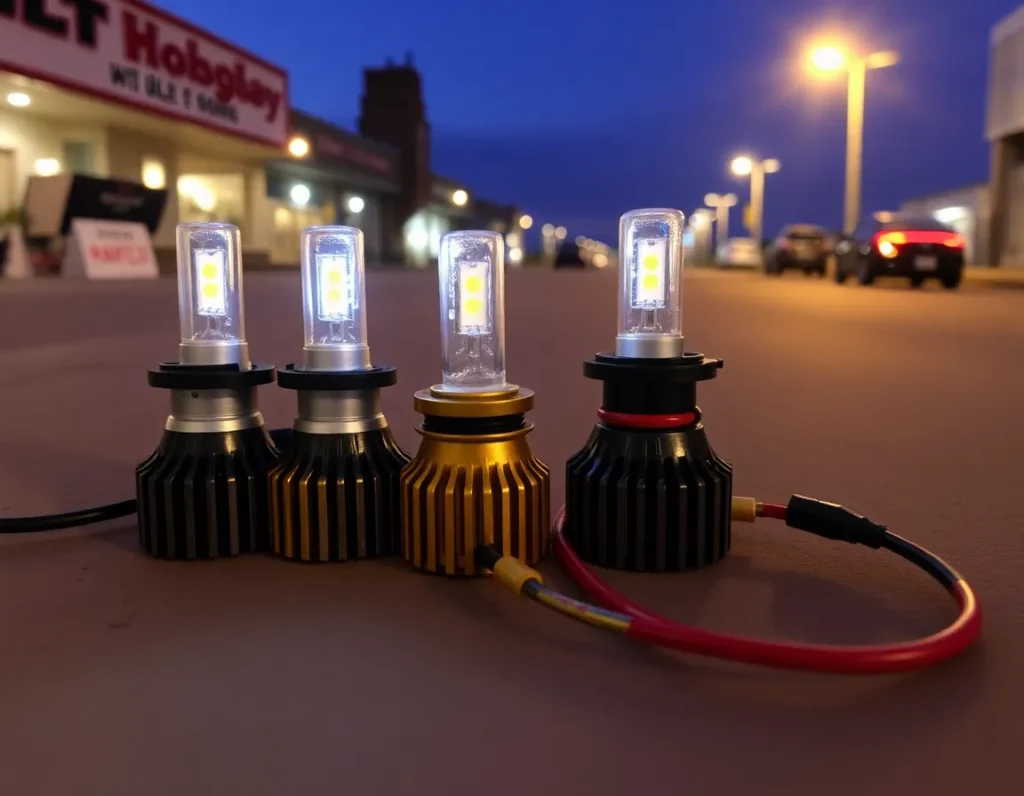
2. 什麼是9005燈泡?了解鹵素標準
要充分理解LED的演進,必須先了解原始標準。9005是一種特定的燈泡尺寸或「規格」,由國際標準化系統定義。它採用單燈絲設計,並使用P20d底座——一種帶有三個定位片的塑膠連接器,以特定對齊方式確保只能以正確方向安裝。歷史上,9005燈泡幾乎完全以鹵素燈泡形式製造。在此設計中,電流通過密封在充滿鹵素氣體的玻璃膠囊內的鎢絲,使其發熱並產生光。9005鹵素燈泡通常用於許多車輛的遠光燈,但在各種車型中也常用於近光燈或霧燈應用。
鹵素9005有其固有的限制。其效率低下,僅將約10-15%的能量轉化為可見光,其餘大部分以熱能形式浪費。這種低效率導致車輛電氣系統的功耗較高。此外,燈絲脆弱且易受振動故障影響,且燈泡的輸出會在其相對較短的使用壽命(通常為450至1,000小時)內衰減並變黃。因此,9005標準代表了一種特定的外形尺寸和電氣介面,而LED等新技術旨在適應並大幅改進,為車主提供直接的即插即用升級路徑。.
3. LED革命:為何從鹵素升級至9005 LED燈泡?
從鹵素到LED的轉變代表了光產生方式的根本性變革。LED(發光二極體)不是透過加熱燈絲,而是透過電致發光——半導體材料中電子的移動——來產生光。這個核心差異帶來了眾多優勢,使得升級至 9005頭燈LED 成為一個令人信服的決定。.
3.1. 卓越的光輸出和能見度
與鹵素的黃光相比,LED燈泡能產生更明亮、更白的光。高品質的9005 LED改裝可輸出5,000至6,000開爾文色溫,非常接近自然日光。此光譜可提高對比度、減少眼睛疲勞,並使路標、標線和潛在危險在更遠的距離上顯得更清晰、更可見。.
3.2. 更高的能源效率和耐用性
LED非常高效,使用比同等鹵素燈泡少高達80%的電力,卻能產生相同或更多的光。典型的9005鹵素燈泡消耗65瓦,而同等LED燈泡可能僅使用20-30瓦。這減輕了車輛發電機和電氣系統的負載。更重要的是,LED具有極長的使用壽命,通常額定為30,000至50,000小時——對大多數駕駛者而言,基本上等同於車輛的壽命。.
3.3. 即時點亮和堅固設計
與某些HID系統不同,LED能即時達到全亮度,無需預熱時間。這對於閃爍遠光燈時的安全性至關重要。此外,LED晶片是固態元件,沒有脆弱的燈絲,因此對崎嶇路面造成的衝擊和振動具有高度抵抗力,這是鹵素燈泡常見的故障點。.
4. 高品質 9005 LED 燈泡的關鍵規格與特點
並非所有 LED 燈泡都一樣。要辨別 9005 LED 升級套件的品質,需要超越行銷宣傳,專注於關鍵的技術規格和設計特點。.
4.1. 光通量(亮度)
以流明(lm)為單位,這是發出的可見光總量。原廠 9005 鹵素燈泡約產生 1,700 流明。優質的 LED 升級套件每個燈泡應提供 3,000 至 6,000 流明,以獲得顯著改善。要警惕未經認證製造商誇大的流明宣稱。.
4.2. 光束圖案與晶片擺放
The most critical characteristic is the design of the LED chip and its placement. Halogen bulbs emit light from a central filament in all directions, and the reflector or projector lens of the headlight housing is precisely designed for this. High-quality LED bulbs use chips placed on two or four sides (double-sided or four-sided), with a configuration that mimics the position and light-emitting point of the halogen filament. This ensures that light is correctly projected, forming a clear, legal cutoff line without causing glaring glare to oncoming traffic.
4.3. 散熱管理(散熱片與風扇)
Although LEDs are cooler than halogen bulbs in terms of radiated heat, the semiconductor junction itself generates intense heat that must be dissipated to ensure longevity. High-quality 9005 LED bulbs are equipped with large finned aluminum heat sinks, often paired with a silent brushless cooling fan. Passive cooling (heat sink only) may be sufficient for low-power designs, but active cooling (fan) is usually more effective for high-output bulbs.
4.4. Canbus 相容性
Modern vehicles use CAN bus (Controller Area Network) systems to monitor bulb health. The low power consumption of LEDs can cause the system to mistakenly think the bulb is burned out, triggering a dashboard warning light. CAN bus-compatible 9005 LED bulbs have built-in decoders or resistors that simulate the electrical load of halogen bulbs, preventing false error messages.
5. 如何選擇最佳 9005 LED 燈泡:購買指南
In a crowded market, choosing the right bulb requires a systematic evaluation based on your vehicle, needs, and the quality indicators mentioned above.
- Confirm your bulb size: Please carefully consult your owner's manual or a reliable bulb size guide to confirm that you need 9005. Some vehicles use 9005 for low beam and a different size (such as 9006) for high beam.
- Prioritize beam pattern design: Look for brands that transparently show comparisons with halogen bulb beam patterns. Look for terms like 'DOT/SAE compliant' and reviews confirming a clear cutoff line. Avoid bulbs where LED chips are simply stacked together.
- Practically evaluate power and lumens: Choose bulbs from reputable brands with balanced output (e.g., 3,000-4,500 lumens). Extreme lumen claims (e.g., over 10,000) are often misleading and may come with poor beam focus and excessive heat.
- Evaluate cooling solutions: For high-performance bulbs, an active fan cooling system is recommended. Ensure that the overall dimensions of the bulb (especially the heat sink and fan assembly) can fit inside your vehicle's headlight housing and allow the dust cap to be resealed.
- Check Canbus compatibility: If your vehicle is a 2000 model or newer, assume you need Canbus-compatible bulbs to avoid dashboard errors.
- Consider color temperature: For optimal visibility, it is recommended to choose a color temperature between 5,000K (pure white) and 6,000K (slightly cool blue tint). Higher Kelvin values (e.g., 8,000K) produce a deeper blue light, which actually reduces usable light output and may attract unwanted attention from law enforcement.
- Warranty and brand reputation: Reputable manufacturers offer substantial warranties (over 2 years) on their products. Read user reviews, focusing on lifespan, beam pattern quality, and customer service experience.
6. Step-by-Step Installation Guide for LED Headlight Bulbs
Installing 9005 LED bulbs is usually a simple plug-and-play process. However, careful attention to detail ensures a safe, secure, and optimal installation.
6.1. Tools and Preparation
You will need: your new 9005 LED bulb kit, a clean cloth or gloves (to avoid touching the LED lens with bare hands), and possibly a screwdriver or socket wrench set to access the headlight assembly. Be sure to consult your vehicle's manual for specific access instructions. Work on a cool, clean surface and disconnect the vehicle's negative battery terminal for absolute safety.
6.2. 安裝程序
- Accessing the Headlight Assembly: Open the hood and locate the back of the headlight housing. You may need to remove the plastic dust cover, which can usually be twisted off by hand, or in some vehicles, you may need to access it from behind the wheel well liner.
- Remove the old halogen bulb: 拔下線束連接器時,請按下釋放卡扣並直接向後拉。對於9005型號,請逆時針旋轉塑膠底座(通常約1/8圈)以鬆開燈泡,然後直接將燈泡拉出。小心處理舊的鹵素燈泡,避免破損。.
- Prepare the new LED bulb: Using a clean cloth or gloves, unpack the new LED bulb. Do not touch the yellow LED chip or lens. If your kit includes separate components, follow the instructions to install the heatsink/fan assembly onto the bulb base, ensuring it is securely seated.
- 插入並固定LED燈泡: 將LED燈泡P20d底座上的三個卡榫對準頭燈插座中的凹槽。插入燈泡並順時針旋轉,直到其牢固鎖定。安裝方向由卡榫固定,因此只能以一種方式安裝。.
- 管理線路和驅動器: Plug the vehicle's original wiring harness into the input connector on the LED bulb driver or built-in cable. Tuck any excess cable and the driver box (if separate) neatly into the headlight cavity. Ensure no wires are pinched or touching the heatsink.
- 重新密封外殼: It is crucial that you reinstall the headlight dust cover. Before finalizing the wire placement, test-fit the dust cover. The LED bulb's heatsink and fan will be larger than the original halogen bulb base, but most quality kits are designed to allow the dust cover to close. If necessary, some dust covers have removable rubber gaskets that can accommodate the wires.
- Test and align: Reconnect the battery terminals. Turn on the vehicle's headlights to test the new LED bulbs. Ensure both lights work properly and the cooling fans (if any) run quietly. Finally, it is highly recommended to check and adjust the headlight beam angle against a wall on a level surface to ensure your new, brighter lights are properly aimed and do not cause glare.
7. LED升級的常見問題與故障排除
While upgrading to 9005 LED headlight bulbs is usually straightforward, you may encounter some common issues. Understanding these issues and their solutions will ensure you fully enjoy the benefits of the upgrade without frustration.
7.1. Hyper-flashing or Turn Signal Error Messages (for dual-function bulbs)
If your vehicle uses the 9005 bulb for a dual function, such as daytime running lights (DRL) that also serve as turn signals, you may experience hyper-flashing (rapid blinking) or a dashboard error message. This is because LEDs draw much less power than halogen bulbs, causing the vehicle's computer to think the bulb is burned out. The solution is usually to install a load resistor in line with the circuit, also known as a decoder or anti-flicker module. Many premium LED kits include these components or have built-in CANbus error cancellation technology.
7.2. Flickering or Unstable Operation
Flickering can be caused by several factors. The most common is an incompatible or low-quality LED driver that cannot handle the pulse-width modulation (PWM) used by the vehicle to dim the DRLs. Ensure your LED bulbs are specifically designed for automotive PWM systems. Loose wiring or a faulty vehicle voltage regulator can also cause flickering. First, check that all plugs are fully seated. If flickering persists, try installing the bulb in another vehicle to determine if the issue is with the bulb or the vehicle's electrical system.
7.3. 過度眩光或光束圖形不佳
This is a serious safety and performance issue. If your new LED lights appear glaring to oncoming traffic or fail to illuminate the road properly, the bulb is likely not aligned correctly within the housing. Even with perfect installation, some reflector housings designed for the specific light point of a halogen filament may scatter the LED chip's light improperly. First, double-check that the LED bulb is fully installed and locked into the base, and any rotational alignment (if your kit has this feature) is set according to the instructions. The final solution is professional headlight aiming. If the beam pattern is still poor, you may need to look for LED bulbs specifically designed for your reflector housing, with 360-degree or precise filament-simulation designs.
7.4. 風扇噪音或冷卻系統故障
High-quality 9005 LED bulbs use heatsinks and fans to manage heat. You should hear a faint hum when they are on, but it should not be audible from the driver's seat with the windows closed. A loud grinding noise or a fan that stops spinning indicates a malfunction. A cooling system failure will cause rapid LED degradation and burnout. Most reputable brands offer warranties for such defects. For quieter operation, consider bulbs with large passive heatsinks (no fan), but ensure your headlight cavity has enough space for airflow.
7.5. 一個燈泡不亮或間歇性故障
If one LED bulb fails or operates intermittently, first swap the bulbs left and right. If the problem moves with the bulb, the bulb is faulty. If the problem remains on the same side of the vehicle, the issue is with the vehicle's socket, wiring, or fuse. Also, check for correct polarity; although most modern LEDs have polarity protection, some cheaper models do not, and reverse installation will prevent the bulb from lighting.
8. 售後市場 LED 車頭燈的法律與安全考量
Upgrading your lighting is not just about brightness; it's about doing it responsibly and legally. Understanding the regulations is crucial for your safety and that of other road users.
8.1. DOT/SAE認證與合規性
In the United States, the Department of Transportation (DOT) and the Society of Automotive Engineers (SAE) establish performance standards for headlights. A DOT/SAE certification mark on a bulb or its packaging indicates that the manufacturer claims the product meets these standards, such as beam pattern, intensity, and color. However, it is important to understand that this certification is often self-certified by the manufacturer. The National Highway Traffic Safety Administration (NHTSA) explicitly states that retrofitting halogen headlight housings with LED bulbs is not legal if the housing was not originally designed for LEDs, as it would fail to maintain compliance with Federal Motor Vehicle Safety Standard (FMVSS) No. 108. This creates a significant gray area for aftermarket LED bulbs.
8.2. 州級檢查與執法
While federal regulations provide the framework, enforcement often occurs at the state level during vehicle inspections. Many states have laws prohibiting headlights that are 'too blue' (often limiting color temperature to a maximum of around 6000K) or that cause excessive glare. Even if a bulb carries a DOT mark, improperly aimed or glaring LED retrofits are a common reason for failing state safety inspections or receiving citations from law enforcement.
8.3. 正確對準的關鍵作用
這點不容忽視。安裝任何新頭燈後,尤其是更亮的 9005頭燈LED燈泡, The most critical step is to aim them correctly. A misaimed halogen bulb is annoying; a misaimed LED or HID bulb is dangerous and glaring. Proper aiming ensures that your increased light output is projected onto the road where you need it, not into the eyes of oncoming drivers. This simple step, performed against a wall on a flat surface, is your primary defense against causing hazards.
8.4. 色溫與可見度
雖然冷白光或略帶藍色調的光(5000K-6000K)因其現代感外觀而受歡迎,但重要的是要考慮實際性能。約5000K-5500K的純白光非常接近日光,通常提供出色的對比度。然而,在霧、雪或大雨等惡劣天氣中,色溫較暖的光(4000K-4500K)有時能更好地穿透,減少背向散射。極高的色溫(8000K以上)會犧牲有用的流明來換取深藍色調,並可能顯著降低可用的光輸出和可見度。.
9. LED頭燈系統的維護與保養技巧
LED頭燈以低維護著稱,但它們並非「安裝後就忘記」的組件。定期進行少量保養將能最大化其使用壽命和性能。.
9.1. 保持透鏡和燈泡清潔
Clear lenses are crucial. Over time, polycarbonate headlight lenses oxidize, becoming yellowed and hazy. This scatters light, drastically reducing the effectiveness of even the brightest LED bulbs. Regularly clean headlight lenses with automotive soap and water. For oxidized lenses, use a dedicated headlight restoration kit to clear them. Additionally, when replacing bulbs, avoid touching the LED chip or silicone lens cover with bare hands. Skin oils can create hot spots on the chip when heated, potentially shortening its lifespan. Use the provided gloves or a clean cloth.
9.2. 確保足夠的冷卻和通風
Heat is the enemy of electronics. The heat sinks and fans built into LED bulbs need room to breathe. During installation, never stuff loose wires or other items that could block airflow or insulate the heat sink into the headlight housing. Ensure the dust cap is reinstalled to prevent moisture and debris from entering, but confirm it is not pressing directly against the fan intake or exhaust. Periodically, it's a good idea to listen for the faint sound of the fan running when you first turn on the headlights.
9.3. 電氣連接完整性
Corroded or loose connections can cause voltage drops, leading to dimming or flickering. About once a year, during routine maintenance, consider opening the dust cap and checking the connections between the factory wiring harness and the LED driver. Ensure they are clean, dry, and fully seated. Check for any signs of melted plastic or corrosion, which could indicate bulb incompatibility or wiring issues.
9.4. System Diagnostics and Long-Term Inspection
Unlike halogen bulbs that burn out suddenly, LEDs typically degrade slowly, dimming over time. Every few months, park your vehicle facing a wall at night and compare the light output and color of both headlights. A significant difference in brightness or a shift in color towards blue (often a sign of phosphor degradation) may indicate one bulb is starting to fail. Replacing them in pairs maintains balanced illumination.
10. 重點摘要
Upgrading to 9005 LED headlight bulbs represents a significant leap forward in automotive lighting technology, offering superior brightness, efficiency, and lifespan compared to halogen standards. The process involves understanding the bulb's role, selecting a high-quality product with the correct lumens, color temperature, and cooling design, and performing a careful installation that prioritizes proper fitment and aiming. It is essential to address the legal landscape, which generally discourages halogen-to-LED retrofits in reflective housings from a strict compliance standpoint, making proper aiming a non-negotiable safety and ethical practice. While common issues like hyper-flashing or glare can occur, they are usually resolved with quality components and proper setup. Finally, simple maintenance like keeping lenses clean and ensuring secure connections will protect your investment and ensure you enjoy brightly lit roads for years to come. Making an informed choice and installing carefully transforms this upgrade from a mere part replacement into a true enhancement of nighttime driving safety.
11. 常見問題 (FAQ)
11.1. Are LED bulbs truly plug-and-play?
Most are designed to be physically plug-and-play, meaning they fit the 9005 socket and connect to the original wiring harness. However, 'functional' plug-and-play may depend on your vehicle. You may need to add load resistors for turn signal functions or anti-flicker modules for certain DRL systems. Always check the compatibility notes in the product details related to your specific vehicle make and model.
11.2. Can I use 9005 LED bulbs in my halogen projector housings?
Projector housings are generally more forgiving and better suited for LED upgrades than reflector housings. The projector lens is designed to focus light from a specific focal point, and many LED bulbs are designed to place their chips at that same point. The result is often a clean, sharp cutoff line with minimal scatter. Upgrades in projector lights are usually very successful, but alignment is still crucial.
11.3. 為什麼我的新 LED 燈泡不如預期明亮?
Several factors could be at play. First, check the rated lumens; marketing terms like 'XX,000K' refer to color, not brightness. Second, dirty or oxidized headlight lenses can absorb over 50% of the light output. Third, if the bulb is not seated perfectly or rotated incorrectly, the beam pattern will be off, scattering light instead of projecting it onto the road. Finally, ensure you are purchasing from a reputable brand, as some low-cost LEDs significantly exaggerate their output.
11.4. How long do LED headlight bulbs actually last?
While many are rated for 30,000 to 50,000 hours, this is a theoretical lifespan under ideal laboratory conditions. Real-world factors such as extreme engine bay temperatures, voltage spikes, and cooling system failures can shorten lifespan. However, high-quality LED bulbs should still last for many years, far exceeding the typical 500-1,000 hour lifespan of halogen bulbs.
11.5. Is it legal to install LED bulbs in my factory halogen headlights?
This is the most complex issue. At the federal level in the US, if the headlight assembly was not originally designed and certified for LEDs, installing them technically makes the assembly non-compliant with FMVSS 108. However, enforcement is primarily driven by states. If you choose high-quality, properly aimed bulbs that produce a clean beam pattern without excessive glare or illegal blue tint, your legal risk is minimal. The safest legal path is to replace the entire headlight assembly with a DOT/SAE certified LED or HID assembly designed as a complete unit.
11.6. Do I need a conversion kit or just the bulbs?
For standard 9005 high beam or low beam applications, you typically only need a pair of bulbs. The term 'kit' usually refers to the bulbs being packaged with any necessary accessories like anti-flicker modules, zip ties, and gloves. For dual-function applications (e.g., DRL/turn signal), you must ensure the kit includes or you separately purchase the correct load resistors.