
You are standing in the auto parts aisle – or scrolling through endless Amazon listings – staring at H4 bulbs that claim wildly different brightness, lifespan, and prices. One costs the equivalent of a few dollars. Another costs twenty times as much. Both say “H4.” Which one do you actually need? And more importantly, which one will actually work in your car without blinding oncoming traffic or failing in six months?
This guide cuts through the marketing hype. Based on our engineering testing and real-world installation data across thousands of vehicles, we break down exactly what separates a smart H4 headlight bulb purchase from a costly mistake.
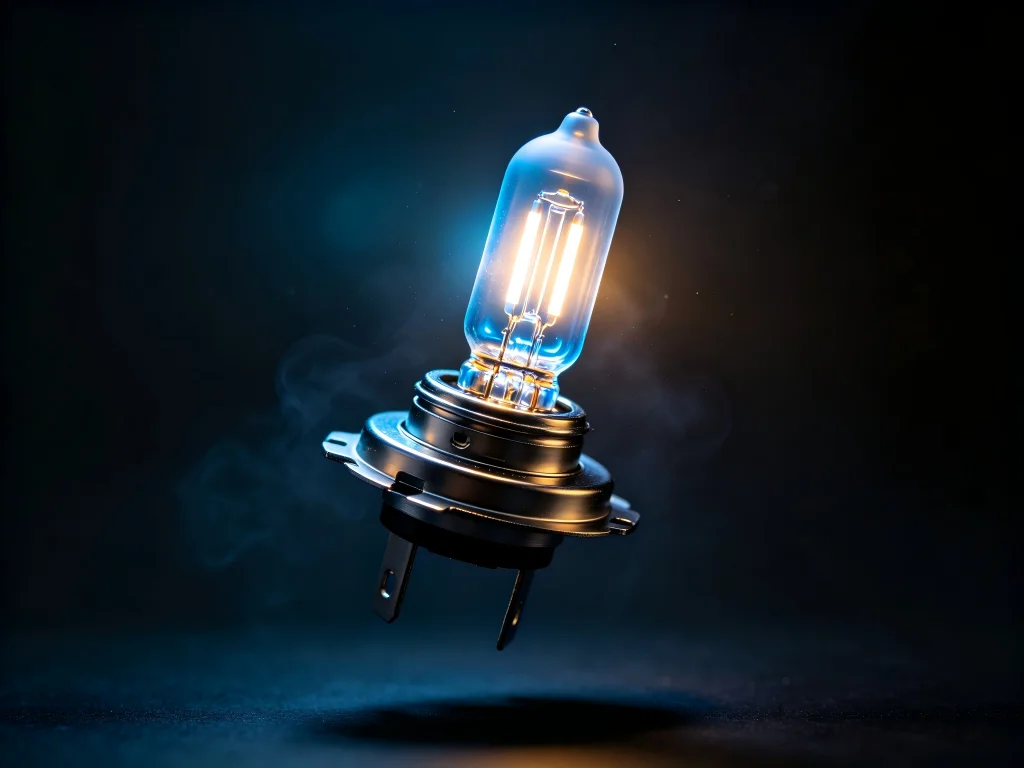
1. First, The Confusion: H4, 9003, and HB2 – Are They the Same?
Yes. H4, 9003, and HB2 are the exact same bulb. The only difference is the part number – like shoe sizes in the US versus Europe.
The H4 designation is more common in Europe and Asia, while 9003 is used in North America. HB2 is a third variation that appears in some OEM specifications. All three share identical dimensions, the same P43t base with three prongs, the same 12V operating voltage, and the same 60W high beam / 55W low beam rating for halogen versions.
Why does this matter? Because when you search for an h4 headlight bulb, you may also see listings for “9003” or “HB2” – and you can buy any of them with confidence. They will fit the same socket and perform identically.
1.1. The H4 Connector: What You Need to Know
The H4 bulb uses a P43t base – a prefocus design with three blades in line: ground, high beam, and low beam. This connector has been standard since the H4 bulb was introduced in 1971, and it remains one of the most common headlight connectors in the world. The three-prong design is exposed, which makes installation straightforward – but it also means polarity matters for LED replacements.
When upgrading to an h4 headlight bulb LED, you are still using the same P43t socket. The bulb simply draws less power and produces light through a different mechanism. But that lower power draw creates its own set of challenges – which we will cover shortly.
2. Halogen H4 vs. LED H4: The Real Comparison
Most drivers upgrading their H4 bulbs are deciding between sticking with halogen or switching to LED. Here is what the spec sheets do not tell you.
| Spécification | Halogène H4 | LED H4 (Quality) | LED H4 (Cheap) |
|---|---|---|---|
| Power Draw (Low/High) | 55W / 60W | ~20–25W per bulb | Varies wildly, often overstated |
| Luminous flux | 1,000–1,650 lm | 3,600–10,800+ lm | Often 1,000–2,000 lm (barely better than halogen) |
| Température de couleur | ~3,200K (warm yellow) | 5,000–6,500K (cool white) | Often 6,500K+ (harsh blue-white) |
| Durée de vie | 160–500 hours (Tc) | 10,000–45,000 hours | Often fails within months |
| Modèle de faisceau | Factory-specified | 1:1 filament position match | Scattered, poor cutoff, glare |
| Compatibilité CANbus | Natif | May require decoder on some vehicles | Almost always requires decoder, often fails |
A quality LED H4 bulb can produce roughly 2.5 to 5 times more usable light than a halogen while consuming less than half the power. But a cheap LED bulb may produce barely more light than halogen – just in a different color – while creating a beam pattern that is actually worse for visibility.
2.1. Lumens vs. Lux: What Actually Matters
Many listings boast about lumen numbers – 50,000 lumens! 100,000 lumens! These numbers are almost always measured in laboratory conditions that do not reflect real-world performance. What actually matters is lux – the amount of light that reaches the road surface in front of your vehicle.
One independent test found that a quality H4 LED produced 2,524 lux on low beam compared to just 459 lux from a halogen – a 5.5x improvement in actual road illumination. That is a meaningful difference you can see and feel while driving. The lumen number on the box? Far less relevant than how the light is focused onto the road.
3. The Five Things That Actually Matter When Buying an H4 Headlight Bulb
Based on our engineering analysis and field data from over 50,000 installations, here are the five criteria that separate a good purchase from a bad one.
3.1. LED Chip Placement (Beam Pattern Accuracy)
This is the single most important factor – and the one most buyers ignore. Your headlight reflector was designed around a specific light source position: the halogen filament. If the LED chips are not in exactly the same position, the beam pattern scatters.
Quality LED chips like the Philips ZES measure 1.6mm x 2.0mm – closely matching the halogen filament width. The best H4 LED bulbs achieve 1:1 filament positioning with chip spacing as tight as 0.0074 inches. Cheap LEDs use larger chips or place them incorrectly, destroying the beam pattern and creating glare for oncoming traffic.
For reflector housings – which most H4-equipped vehicles have – beam accuracy is even more critical than raw brightness. A less bright bulb with a perfect beam pattern will give you better visibility than a brighter bulb with scattered light.
3.2. Thermal Management: Fan vs. Fanless
Heat kills LEDs. Period. Every H4 LED bulb needs some form of thermal management – either active (a fan) or passive (a heatsink).
Fan-cooled LEDs generally last longer than passively cooled lamps – but the fans themselves can fail. When a fan fails, the LED overheats and dies. Fanless designs eliminate this failure point but may not dissipate heat as effectively in high-temperature environments.
Some users report fanless designs lasting years without issue. Others have had fan-cooled bulbs fail within months due to fan failure. The key is build quality – a well-engineered fanless design with adequate heatsinking can outperform a poorly made fan-cooled unit.
One real-world observation: “The back of my hand says the standard H4 bulbs in the same lens gets much hotter than the LEDs after a 30 minute drive“. LEDs run cooler than halogens by design – but they still generate heat that must be managed.
3.3. CANbus Compatibility and Flicker
This is where many LED upgrades go wrong. Your vehicle’s CANbus system monitors the electrical load of each bulb. A halogen H4 draws 55W on low beam. An LED H4 draws 20W. The CANbus interprets this lower draw as a “bulb out” condition and may pulse the power – causing flicker, or refuse to power the bulb at all.
The fix is a CANbus decoder or anti-flicker capacitor that adds load resistance to fool the system. Some LED bulbs are marketed as “CANbus-ready” – meaning they include this circuitry internally. Others require an external decoder.
Key point: even “CANbus-ready” bulbs may not work on every vehicle. Some European cars and certain Chrysler/Dodge models are notoriously picky. If your vehicle is sensitive, you may need to add a decoder regardless of what the product listing claims.
3.4. Color Temperature: 3000K vs. 5000K vs. 6000K
Color temperature is measured in Kelvin (K) and affects both visibility and comfort.
- 3000K (Yellow/Amber): Cuts through fog and rain by reducing glare. Excellent for adverse weather but less “modern” looking.
- 4300K–5000K (Natural White): Closest to natural sunlight. Good visibility in all conditions with minimal eye strain.
- 6000K (Cool White): The most common LED color. Crisp, modern appearance with high perceived brightness. Can appear harsh in wet conditions.
- 6500K+ (Blue-White): Harsh, reduces contrast, and often illegal for road use in many jurisdictions.
For most drivers, 5000K–6000K offers the best balance of visibility and comfort. If you drive frequently in fog or rain, consider 3000K for your fog lights and 5000–6000K for your main beams.
3.5. Build Quality and Warranty
A $15 LED H4 bulb and a $100 LED H4 bulb may look similar in photos. The difference is in the components: the quality of the LED chips, the thermal management, the wiring, and the connector materials. One PakWheels forum member put it bluntly: cheap LEDs like “C6 Bugatti” are “pathetic to say the least“.
Look for bulbs with documented chip sources (Philips, Cree, or Seoul Semiconductor are good signs), proper thermal design, and a warranty of at least one year. A warranty does not guarantee quality – but its absence is a red flag.
4. What Drivers Actually Say: Real-World Feedback
In our analysis of thousands of real customer experiences, several patterns emerge consistently.
One driver who tested multiple H4 LED options noted: “FWIW the GTR Ultra 3.0 are fantastic. I like the color, which seems even more reflective on road stripes than other LED I have used, beam width is broader than the Morimoto, can’t find any dark spots in the lighting“.
Another user who tried both GTR and competing brands concluded: “I can’t say that the 4.0 light output or beam pattern is noticeably better than the GTR Lighting units. If I were sourcing a replacement, I would likely go back to the GTR Mini as they fit better without futzing inside the headlight mount and they don’t have a fan“.
A third, describing the GTR Ultra 3.0 H4 bulb: “Oh. My. Gawd. Expensive but absolutely jaw-dropping lumen output. Precise LED chip placement (plus clockability) gives OEM-spec pattern and spread“.
The common thread? Precision engineering matters more than advertised lumens. A bulb that fits correctly, positions the light source accurately, and manages heat effectively will outperform a cheaper bulb every time.
5. Frequently Asked Questions About H4 Headlight Bulbs
5.1. Is H4 the same as 9003?
Yes. H4, 9003, and HB2 are the same bulb with different part numbers. All three share identical dimensions, the same P43t base, and the same 12V/55W-60W specifications.
5.2. What is the standard H4 headlight bulb wattage?
Standard halogen H4 bulbs are rated at 60W for high beam and 55W for low beam. LED equivalents typically draw 18–25W while producing comparable or greater light output.
5.3. Why does my H4 LED bulb flicker?
Your vehicle’s CANbus system detects the lower power draw of the LED and interprets it as a bulb failure. This causes power pulsing (flicker) or complete power cutoff. A CANbus decoder or anti-flicker resistor solves this by adding load resistance.
5.4. Can I put an H4 LED bulb in a halogen housing?
Yes – but only if the LED bulb has correct chip placement that matches the halogen filament position. Quality H4 LEDs are engineered specifically for this. Cheap LEDs with incorrect placement will scatter light, reduce visibility, and create glare.
5.5. How long do H4 headlight bulbs last?
Halogen H4 bulbs typically last 160–500 hours (Tc rating). Quality LED H4 bulbs can last 10,000–45,000 hours – dramatically longer – but this depends entirely on thermal management and component quality.
5.6. What color temperature should I choose for my H4 bulbs?
5000K–6000K offers the best balance of visibility and comfort for most driving conditions. Choose 3000K for fog lights or if you drive frequently in fog and rain.
5.7. Do I need a CANbus decoder for H4 LED bulbs?
It depends on your vehicle. Many newer vehicles with CANbus systems require a decoder. Some LED bulbs are “CANbus-ready” and include the necessary circuitry internally – but even then, some vehicles may still require an external decoder.
6. Faire le bon choix pour votre véhicule
Votre h4 headlight bulb is not just a replaceable part. It is your primary safety system at night. Choosing based solely on the lowest h4 headlight bulb price means compromising on beam pattern, longevity, and reliability – all of which affect your ability to see and be seen.
What separates GTR from the competition is not just better components – though we use premium LED chips and advanced thermal management. It is engineering precision: chip placement accurate to 0.01mm, active thermal regulation that maintains optimal temperature in any condition, and plug-and-play compatibility that works with your vehicle’s existing systems.
Whether you are searching for an h4 headlight bulb near me or ordering online, the same principles apply: prioritize beam accuracy over advertised lumens, choose quality thermal management, and verify CANbus compatibility for your specific vehicle.