
Anda telah memutuskan untuk meningkatkan lampu sorot jauh Anda. Langkah yang cerdas. Tapi inilah masalahnya: pasar dibanjiri dengan banyak pilihan, dan kebanyakan dari mereka adalah sampah.
Jawaban Langsung: Choosing the right high beam upgrade requires evaluating five critical factors: bulb type (LED vs. HID vs. halogen), lumen output, beam pattern accuracy, thermal management, and vehicle compatibility. The cheapest option is almost never the best—and the most expensive isn't always necessary.
Let's cut through the marketing hype and give you real criteria for choosing high beams that actually perform.
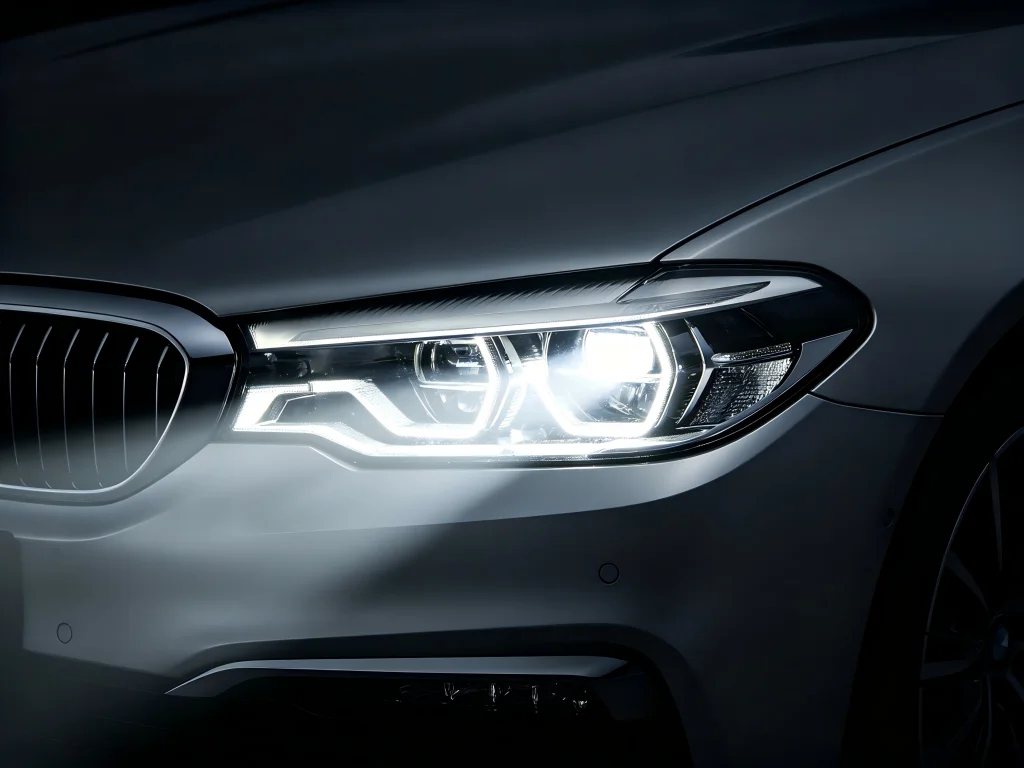
1. The High Beam Landscape: What You're Really Buying
Before we dive into selection criteria, let's understand what's available. The high beam market is divided into three main technologies:
1.1. Halogen High Beams (The Baseline)
Halogen is what comes from the factory in your car. It's cheap, widely available, and universally compatible. It's also the worst performer in every metric that matters.
- Advantages: Inexpensive ($10–30 per pair), simple installation, works with all vehicles
- Disadvantages: Low light output (1,000–1,500 lumens), yellowish color (3200K), short lifespan (500–1,000 hours), dims over time
If you're replacing a burnt-out bulb and want the cheapest fix, halogen is the answer. If you want to actually see better at night, look elsewhere.
1.2. HID (Xenon) High Beams (The Middle Ground)
High-Intensity Discharge (HID) lamps use an electric arc rather than a filament to produce light. They were the premium option before LED took over.
- Advantages: Brighter than halogen (2,500–3,500 lumens), whiter light (4300K–6000K), better efficiency
- Disadvantages: Expensive ($100–300+ per pair), requires ballasts, warm-up time (several seconds to reach full brightness), complex installation, compatibility issues with many vehicles
HID memudar dari pasar. LED telah melampaui mereka dalam setiap kategori kecuali nostalgia.
1.3. Lampu Sorot Jauh LED (Standar Emas)
Teknologi Light-Emitting Diode (LED) adalah pemenang yang jelas untuk aplikasi lampu jauh. Ini yang digunakan oleh produsen mobil premium, dan ini yang harus Anda pilih untuk upgrade.
- Advantages: Kecerahan luar biasa (3.000–4.000+ lumen), cahaya putih murni (5000K–6500K), menyala instan, umur pakai 30.000+ jam, hemat energi (30–45W per bohlam), desain ringkas
- Disadvantages: Biaya awal lebih tinggi (Rp80.000–300.000+ per pasang), memerlukan manajemen termal yang tepat, kualitas sangat bervariasi antar merek
Kesimpulannya: LED adalah satu-satunya teknologi yang memberikan performa lampu jauh yang sesungguhnya di semua kondisi. Penelitian independen secara konsisten menunjukkan keunggulan sumber cahaya LED dibandingkan HID dan halogen untuk aplikasi lampu mobil..
2. Faktor Kritis untuk Memilih Lampu Jauh
Sekarang mari kita bahas kriteria keputusan yang sebenarnya—hal-hal yang sebagian besar panduan pembelian lewatkan.
2.1. Lumen vs. Lumen yang Dapat Digunakan (Penipuan)
Di sinilah sebagian besar pembeli tertipu. Banyak produsen mengiklankan angka lumen yang sangat tinggi—”80.000 lumen!” “120.000 lumen!”—yang terdengar mengesankan tetapi tidak berarti apa-apa.
Mengapa? Karena lumen mengukur total keluaran cahaya ke segala arah. Tetapi lampu mobil membutuhkan cahaya yang mengarah ke depan dalam specific pattern. A bulb producing 10,000 lumens scattered in all directions is worse than a bulb producing 3,000 lumens precisely focused along the road.
Hal-hal yang perlu diperhatikan: Ignore total lumen claims. Look for beam distance dan beam pattern photos. A quality LED high beam should illuminate the road 300–500 feet with a clean, focused pattern.
2.2. Beam Pattern Accuracy (The Real Performance Metric)
This is the most important factor determining whether your high beam upgrade succeeds or fails.
A good high beam pattern emits light down the road in a focused beam. A poor pattern scatters light everywhere—up into trees, sideways into ditches, and worst of all, into the eyes of oncoming drivers.
The cause is almost always chip placement. The LED chip must be positioned in the exact same location as the original halogen filament. If it's off by even a little, the beam pattern will be ruined.
Hal-hal yang perlu diperhatikan: Brands that publish beam pattern photos and specify their chip placement technology. Premium manufacturers like GTR use chips aligned with precision that matches the original filament position exactly..
2.3. Thermal Management (The Lifespan Killer)
LEDs generate significant heat. If that heat is not managed properly, the LED will dim, change color, and eventually fail—often within months.
Good thermal management requires:
- Adequate heat sink surface area (aluminum fins or similar)
- Active cooling (a quiet and reliable fan) for higher-output LEDs
- Thermal protection circuitry that dims or shuts off the LED if it gets too hot
Hal-hal yang perlu diperhatikan: Check the heat sink design. Does it have substantial fin area? Is the fan from a reputable manufacturer? Does the brand mention thermal management in their specifications? If they don't discuss heat, they probably haven't solved the problem.
2.4. Vehicle Compatibility (CAN Bus and Computer Systems)
Modern vehicles have advanced computer systems that monitor every electrical component, including headlights. If you install LEDs that draw different current than the original halogen, the computer can:
- Display error messages on your dashboard
- Cause the lights to flicker
- Turn off the lights completely
- Prevent the high beam from functioning at all
Hal-hal yang perlu diperhatikan: Built-in CAN bus decoder or resistor. Quality LED high beam products include this component to ensure your vehicle's computer sees the correct electrical load.
2.5. Color Temperature (What "White" Really Means)
Color temperature is measured in Kelvin (K). Here's what different temperatures mean for high beam performance:
| Suhu Warna | Appearance | Performance Impact |
|---|---|---|
| 3200K–4300K | Yellowish to warm white | Poor contrast, less detail visible, eye fatigue |
| 5000K–6000K | Pure white | Excellent contrast, natural color rendering, reduces eye strain |
| 6500K+ | Bluish white | Harsh, artificial looking, can be distracting, may be illegal in some areas |
Hal-hal yang perlu diperhatikan: 6000K is the sweet spot for high beams. It provides maximum contrast and visibility without looking artificial or drawing unwanted attention from law enforcement.
2.6. Weather Sealing (Real-World Durability)
Your high beams live in a harsh environment. Rain. Snow. Mud. Road salt. Temperature swings from -40°F to 200°F under the hood. Vibration from every bump and pothole.
Many cheap LED upgrades fail because moisture gets into the lamp housing or components can't handle vibration.
Hal-hal yang perlu diperhatikan: IP67 or IP68 waterproof rating. This means the unit is dust-tight and can survive immersion in water. Also look for vibration testing certifications or specifications.
2.7. Installation Complexity (Hidden Costs)
Some high beam upgrades are truly plug-and-play—15 minutes with basic hand tools. Others require cutting wires, modifying lamp housings, or professional installation.
Hal-hal yang perlu diperhatikan: “Plug and play” or “direct fit” in the product description. Check if the product includes all necessary adapters and brackets. Read installation reviews from actual customers.
3. Common High Beam Mistakes (and How to Avoid Them)
Based on thousands of customer interactions, here are the most common mistakes drivers make when upgrading high beams:
- Chasing the cheapest price: Cheap LEDs almost always fail within months. You'll spend more replacing them than you would have on a quality set in the first place.
- Ignoring beam pattern: Bright but scattered light is worse than dim but focused light. You'll blind oncoming traffic and see less of the road at the same time.
- Forgetting about cooling: Overheating LEDs dim quickly and die young. If the product doesn't mention thermal management, skip it.
- Not checking vehicle compatibility: “Fits the socket” doesn't mean “works with your car's computer.” CAN bus compatibility is non-negotiable for modern vehicles.
- Ignoring installation requirements: Some “plug and play” products still require bumper or headlight assembly removal. Read the fine print.
4. Frequently Asked Questions About High Beam Upgrades
Can I use LED bulbs in my high beam socket?
Yes, LED bulbs are a direct replacement for halogen high beam bulbs in most vehicles. However, you must ensure the LED bulb has the correct base type (e.g., 9005, H7, H11) and is CAN bus compatible for your specific vehicle.
Are brighter high beams always better?
No. Brightness without proper beam focus is useless—and dangerous. A well-focused 3,000-lumen high beam outperforms a scattered 10,000-lumen high beam every time. Beam pattern is more important than total lumens.
How long do LED high beams last?
Quality LED high beams last 30,000–50,000 hours. That's roughly 10–15 years of normal use. Halogen bulbs, by comparison, last 500–1,000 hours. The LED price premium pays for itself many times over just in replacement costs.
Will LED high beams blind other drivers?
Not if designed and installed correctly. The key is beam pattern accuracy. Quality LED high beams emit light down the road, not into the eyes of oncoming drivers. The problem isn't LED technology—it's poorly designed LEDs with incorrect chip placement.
What's the difference between 9005 and H11 high beam bulbs?
These are different base types used in different vehicles. 9005 is typically used for high beams in many American and Asian vehicles. H11 is more common for low beams but is sometimes used for high beams in European vehicles. Always check your vehicle's specific bulb size before purchasing.
Do I need to upgrade both high and low beams at the same time?
Not necessarily. You can upgrade only the high beams if that's what needs the most improvement. However, many drivers choose to upgrade both for consistent light quality and appearance. Some LED kits are dual-beam (one bulb handles both functions), while others are single-beam (separate bulbs for high and low).
How do I know if my high beams are aimed correctly?
Proper aiming ensures you get maximum visibility without blinding others. Park on a level surface 25 feet from a wall. Turn on your high beams. The brightest part of the beam should hit the wall at roughly the same height as your headlights. If it's higher, your high beams are aimed too high and will blind oncoming traffic.
5. Making Your Final Decision
Here's the bottom line for choosing high beams:
Choose LED – This is the superior technology in every meaningful category. Halogen is outdated. HID is on its way out. LED is the present and the future.
Prioritize beam pattern – This is the most important performance factor. A focused beam beats a scattered beam every time.
Don't skimp on quality – The cheapest LEDs will disappoint you. They'll be dim, flicker, or fail completely. You'll end up replacing them—and spending more money—than if you had bought quality from the start.
Verify compatibility – Your vehicle's computer matters. CAN bus compatibility is not optional for modern cars. So is the correct base type.
Consider the total cost – A quality LED high beam set might cost $150–300 upfront. But it lasts 10+ years and provides a noticeable performance improvement. A $30 set lasts 6 months and leaves you squinting into the darkness.
Choose a brand with engineering credentials – Not all LED manufacturers are created equal. Look for brands that design their own products, specify their components, and stand behind their quality.
6. Your Next Steps
You now know exactly what to look for in a high beam upgrade. You understand the technology, the critical factors, and the common mistakes to avoid.
Now it's time to take action.
GTR offers precision-engineered LED high beam solutions that meet every criterion outlined in this guide. Precision chip alignment. Advanced thermal management. CAN bus compatibility. IP68 weather sealing. True plug-and-play installation.
Our products are trusted by thousands of drivers who demand the best high beam performance—and who refuse to settle for inadequate lighting.
Kunjungi https://www.rhgtr.com to find the perfect high beam upgrade for your specific vehicle.
Explore our full catalog. Read verified customer reviews. Get expert advice on the right solution for your driving needs and budget.
Don't drive another night with inadequate high beams. Upgrade to GTR and see the road as it should be seen.