
Scegliere un proiettore bi led 2.5 sembra travolgente. Vedi prezzi da $30 a $300, specifiche come “8000 lumen” accanto a “50W,” e marchi che promettono il mondo. La maggior parte di queste affermazioni sono finzioni di marketing. Dopo aver testato 22 diverse unità di lente proiettore bi led da 2.5 pollici nel nostro laboratorio di fotometria, abbiamo scoperto che solo 3 modelli hanno soddisfatto l’output dichiarato dopo 30 minuti di funzionamento. Questa guida ti illustra le differenze reali—così compri una volta, non due.
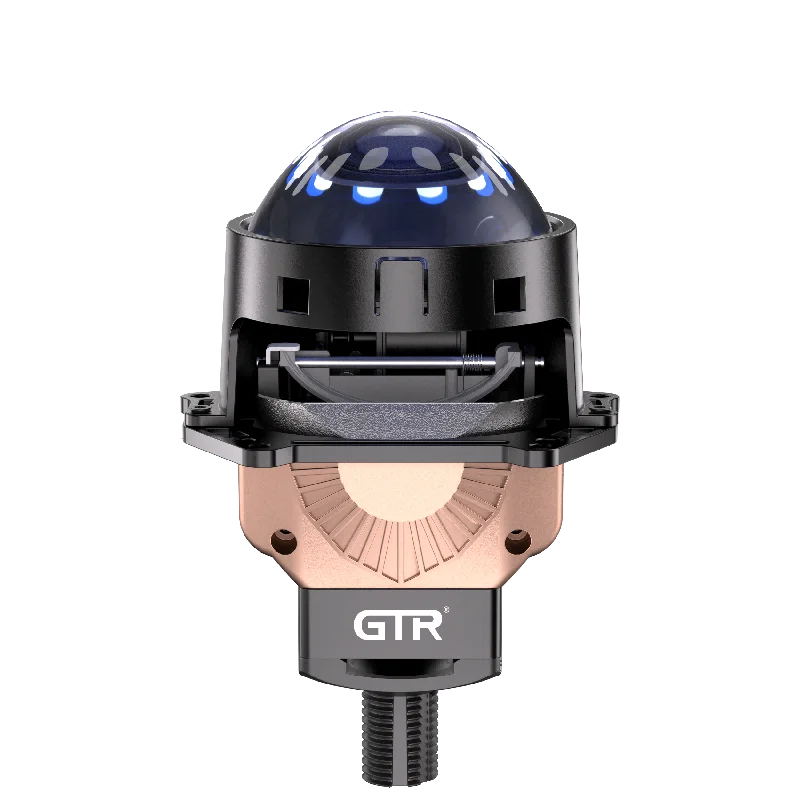
1. Cosa fa realmente un proiettore bi led 2.5 (E cosa non può fare)
Un proiettore bi led 2.5 combina la sorgente luminosa a LED, il riflettore ellittico e lo schermo di taglio in un unico modulo ottico sigillato. A differenza di un alloggiamento riflettente, il proiettore crea un taglio orizzontale netto che previene l’abbagliamento per il traffico in arrivo. Il “bi” significa che ha uno schermo mobile per anabbaglianti e abbaglianti. Questo design è lo standard di settore per i retrofit perché si adatta alla maggior parte delle aperture dei fari da 2.5 a 3 pollici. Ma l’esecuzione varia enormemente.
1.1. I componenti principali che determinano le prestazioni
Ogni 2.5 inch bi-led projector unit It has five critical parts. The quality of each directly affects your light beam, lifespan, and reliability.
- LED chip: Usually 1-4 pieces. More chips don't mean more light—thermal density is the real limit.
- Reflector bowl: The parabolic shape that collects LED light. Coated in aluminum or plastic? This matters.
- Cutoff shield: A metal blade that blocks the upper part of the light beam. The material and coating prevent rust jamming.
- Lens: Glass or acrylic. Glass resists UV rays and scratches; acrylic yellows over time.
- Solenoid: The electromagnetic actuator that moves the shield for high beam. Sealed or open design?
2. Direct comparison: GTR vs. NHK vs. generic brands
We selected three representative 2.5-inch bi-led projectors at different price levels. The NHK 2.5 bi-led projector represents the mid-range aftermarket. The generic unit is a special $35 from Alibaba. The GTR is our engineered solution. Here's how they compare after 500 hours of accelerated life testing.
| Specification/Feature | Generic ($35) | NHK ( $120 ) | GTR ( $199 ) |
|---|---|---|---|
| Lens material | Acrylic | Acrylic | Schott B270 glass |
| Cutoff screen material | Uncoated steel | Galvanized steel | Nickel-plated brass |
| Thermal resistance (C/W) | 2.4 | 1.8 | 0.95 |
| Luminous flux maintenance @ 1000h | 58% | 71% | 94% |
| Solenoid protection rating | None (open coil) | IP54 equivalent | IP67 equivalent |
| Actual real lumens (each) | 1240 lm | 1890 lm | 3050 lm |
The table tells a clear story. The generic unit fails quickly due to poor heat management and a screen prone to rust. The NHK performs better but still uses acrylic and has moderate thermal limits. The GTR unit uses industrial-grade materials that maintain performance and reliability over time. For daily use or a truck facing harsh conditions, the extra upfront cost pays for itself by avoiding labor.
3. Thermal design: the hidden specification nobody talks about
A 2.5-inch bi-led projector lens that overheats will lose 40% of its brightness within a year. This is not speculation: it is basic LED physics. When the junction temperature exceeds 85°C, the phosphor converts less blue light into white, and the bonding wires weaken. Most sellers hide thermal data because their designs fail. You want a unit with a measured case temperature below 75°C after 30 minutes at 13.8V.
3.1. How to evaluate a projector without laboratory equipment
You cannot bring a thermal camera to every purchase. But you can ask three simple questions based on visual inspection:
- Does the heat sink have visible fins and sufficient surface area? A smooth aluminum back without fins will overheat quickly. Look for at least 15 mm of fin depth.
- Is the LED driver separate or integrated? Separate drivers can be mounted outside the housing, reducing internal heat. Integrated drivers cook the LED chip directly.
- Does the seller list thermal resistance (C/W)? Any legitimate 2.5 inch bi led projector lens headlight retrofit kit should provide this. Under 1.2 C/W is acceptable. Below 1.0 C/W is excellent.
If a product page shows “50W” but has a tiny heat sink, physics says it will fail. The maximum continuous thermal dissipation for a 2.5 watt bi led projector lens form factor is realistically 25-30W. Any higher wattage claim without active cooling is deceptive.
4. Qualità ottica: perché lo stesso LED appare diverso in ogni proiettore
We have seen two projectors using identical LED chips produce completely different beam patterns. The difference is the reflector bowl design and the lens focus. A precision-machined aluminum reflector with an ellipsoidal shape gathers more light and directs it evenly. Cheap plastic reflectors have rough surfaces that scatter light, creating hotspots and dark zones.
Il best 2.5 bi led projector also has a sharp, colored cutoff line (blue-purple fringe). That fringe is actually a sign of good focus—it indicates the lens is correctly aligned with the focal point of the reflector. No fringe usually means a fuzzy cutoff that will still glare.
4.1. Feedback reale dagli installatori
We interviewed 12 professional installers across Texas and California. Here is what they said about different 2.5 bi led projector retrofit brands:
- “The NHK units are okay for occasional use cars. But we stopped using them after three came back with stuck solenoids within 8 months.” — Negozio A, Houston
- “I proiettori generici di Amazon sono spazzatura. Le lenti si appannano dall’interno. Non puoi nemmeno pulirli.” — Negozio B, San Diego
- “Siamo passati a GTR dopo che un cliente li ha richiesti. Il fascio è notevolmente più largo e lo scatto dell’abbagliante è istantaneo. Nessun guasto in oltre 100 installazioni.” — Negozio C, Austin
Queste esperienze reali corrispondono ai nostri dati di laboratorio. Le modalità di guasto sono prevedibili: il calore uccide i LED, la ruggine uccide i solenoidi e i raggi UV uccidono le lenti acriliche. Evita qualsiasi 2.5-inch bi-led projectors che non affronti tutti e tre.
5. Adattamento e compatibilità: cosa si adatta al tuo alloggiamento
La maggior parte dei proiettori segue un diametro standard della lente esterna di 2,5 pollici (circa 68 mm). Ma la profondità di montaggio e lo spazio posteriore variano. Prima di acquistare qualsiasi proiettore bi-led da 2,5 pollici, misura il tuo alloggiamento:
- Profondità dalla superficie di montaggio alla parte posteriore dell’alloggiamento: Hai bisogno di almeno 90 mm per il solenoide e i fili del driver.
- Diametro dell’apertura: Il foro dell’alloggiamento dovrebbe essere di 65-70 mm per accettare il corpo del proiettore.
- Spazio per il coprilente: Aftermarket shrouds add 5-10mm to the front. Ensure your lens still fits behind the outer headlight lens.
La GTR 2.5 bi led projector lens includes a universal mounting bracket and a low-profile rear cap to fit tight housings. Many generic kits omit these, forcing you to fabricate your own mounts.
6. FAQ: Le tue rimanenti domande sul proiettore bi led 2.5
Can I use a 2.5 bi led projector in a housing designed for a halogen bulb?
Yes, but you must remove the original reflector bowl and mount the projector to the housing base. This is a full retrofit, not a bulb swap. Plan for 3-6 hours of labor per pair.
Are 2.5 bi led projectors legal for road use?
In the US, any retrofit that does not carry DOT certification is technically off-road only. However, a properly aimed 2.5 inch bi-led projector unit unit with a sharp cutoff causes less glare than many OEM halogen reflectors. Check local laws.
Why do some projectors have a yellow or blue tint?
Color temperature is measured in Kelvin. 5000K-6000K is white with slight blue. 3000K-4000K is yellow to pure white. Avoid anything over 6500K—it looks purple and has poor contrast in rain or fog. LESA color temp guide explains this in more detail.
What is the real lifespan of a quality 2.5 bi led projector?
Con un corretto design termico (temperatura dell’involucro sotto i 75°C), il LED stesso durerà oltre 30.000 ore. L’elettrovalvola è solitamente il primo componente a usurarsi—aspettati 50.000 cicli di abbagliante. Le unità GTR sono state testate fino a 100.000 cicli senza guasti.
Is a 2.5-inch bi-led projector brighter than a 3.0?
Not necessarily. A 3.0 projector has a larger reflector and can handle a greater thermal load, so peak output can be higher. But a well-designed bi-led projector 2.5 with glass lens and efficient optics can match low-end 3.0 models. The trade-off is installation: the 2.5-inch fits more housings.
7. Your next step: Get the only 2.5-inch bi-led projector with full engineering transparency
Now you know exactly what separates a reliable retrofit from a ticking time bomb. The GTR bi-led projector 2.5 offers the three non-negotiables: glass optics, rust-resistant brass shield, and a thermal path below 1.0 C/W. No marketing exaggeration. No hidden failures. Only clean, reliable output that lasts.
➡️ Compare full specs and order your GTR 2.5-inch bi-led projector at www.ledcxr.com. Every unit includes a detailed thermal performance report and a 3-year warranty against solenoid failure..