
Se stai cercando una lampadina HID D3S di ricambio, probabilmente hai notato qualcosa di frustrante: ogni marca afferma di essere la migliore. Gli annunci dicono tutti “più luminose”, “più durature” e “qualità OEM”. Ma i prezzi variano da $25 a $200 per quello che sembra lo stesso prodotto. Quindi cosa vale davvero i tuoi soldi? Questa guida taglia il marketing e ti dice esattamente cosa conta—e cosa no—quando acquisti lampadine HID D3S.
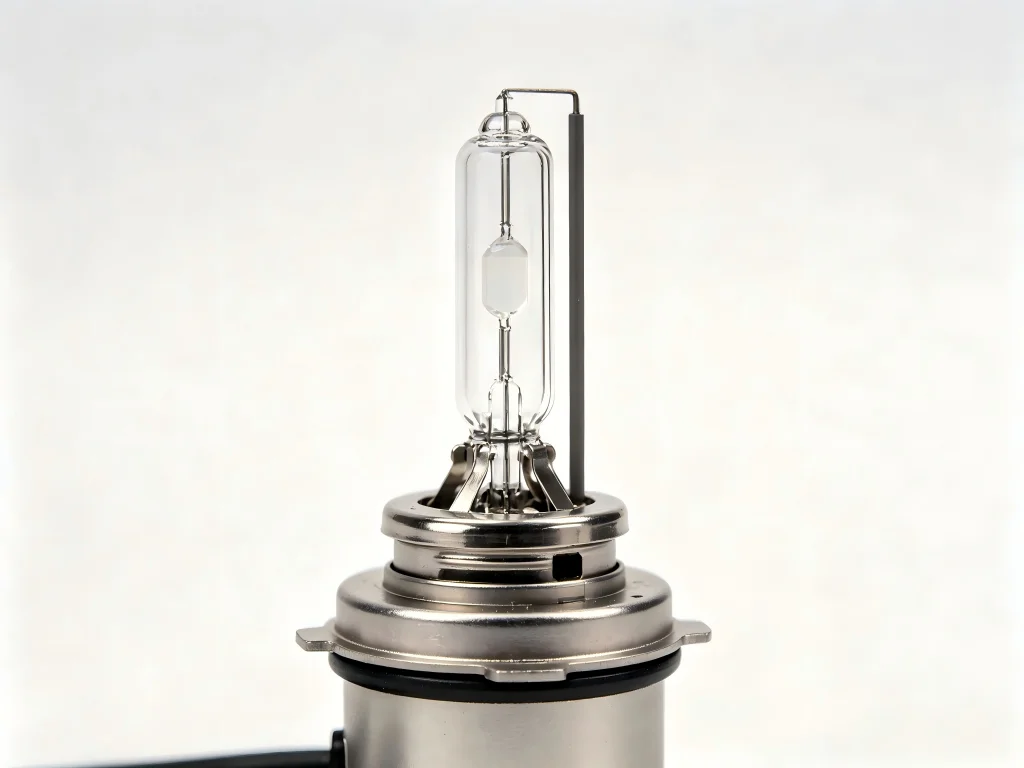
1. What exactly is a D3S HID bulb? (And why "D3S" matters)
D3S is an international standard designation (IEC 60061) for a specific type of HID bulb that operates at 42V DC with an integrated igniter and PK32d-5 base. Unlike D1S bulbs that operate at 85V AC, D3S bulbs are mercury-free and designed for newer vehicle electrical systems.
The “D” stands for discharge (HID), the “3” indicates the electrical architecture (42V DC with integrated igniter), and the “S” means shielded—designed for projector headlights with a cutoff shield. D3R, on the other hand, is for reflector housings and has a painted section to block part of the light output.
Here's the critical point: D3S bulbs are not interchangeable with D1S, D2S, or D4S. Even though the base looks similar, the voltage requirements and igniter configurations are completely different. Installing the wrong bulb can damage your ballast—a repair that can cost $300 or more.
2. D3S HID vs LED: which should you choose?
This is the biggest decision you'll make. Here's the honest breakdown:
| Fattore | D3S HID (OEM replacement) | D3S LED conversion |
|---|---|---|
| Brightness | 2.800–3.800 lumen per lampadina | 4.000–10.000+ lumen dichiarati (varia enormemente) |
| Tempo di riscaldamento | 3–5 secondi per la piena luminosità | Accensione istantanea |
| Durata della vita | 2.500–5.000 ore | 30.000–60.000 ore |
| Schema del fascio luminoso | Progettato per l’alloggiamento del proiettore: emissione luminosa a 360° | Può essere incoerente; alcuni LED non corrispondono all’ottica dell’alloggiamento |
| Coerenza del colore | Si sposta nel tempo (rosa/viola vicino al guasto) | Stabile per tutta la durata di vita |
| Clima freddo | Può avere difficoltà e impiegare più tempo per riscaldarsi | Prestazioni costanti in tutte le condizioni |
| Installation | Direct 1:1 replacement | Plug-and-play into the existing ballast |
Here's the reality few sellers will tell you: LED conversion bulbs may not perform as well in your specific housing. One Jeep owner reported that while the LEDs were better for short-to-medium distance, they lost “a bit” of range on high beams. Another forum member warned that even if you could physically mount an LED, ”it's unlikely an LED will be brighter, especially inside the same housing.“.
Our recommendation from GTR? Stick with HIDs if you want predictable, housing-optimized performance. Consider LEDs only if you're willing to accept potential compromises in beam pattern and throw distance.
3. How to choose the right color temperature for HID D3S bulbs
Color temperature is measured in Kelvin (K). Higher numbers appear “cooler” (bluer), but they don't necessarily mean better visibility.
| Kelvin | Appearance | Ideale per | Trade-offs |
|---|---|---|---|
| 4300K | Warm white, OEM standard | All-around visibility, wet roads, fog | Less “modern” appearance” |
| 5000K | Pure white | Balance between brightness and style | Slightly less penetration in rain compared to 4300K |
| 6000K | Ice white (cold blue-white) | Style, matching with LED DRLs | Reduced visibility in fog and rain |
| 8000K+ | Ice blue to purple | Aesthetic only | Significantly reduced useful light output |
According to Diode Dynamics, who measure color temperatures in their photometric testing lab, 6000K is the most popular aftermarket choice because it matches best with most LEDs. But if you drive in areas with frequent rain or fog, 4300K or 5000K will serve you better.
One thing to watch out for: cheap bulbs often claim a color temperature they don't actually deliver. At GTR, we verify the color temperature of every bulb in our testing lab—what you order is what you get.
4. What top brands don't tell you
Here's what we've learned from years of manufacturing and testing D3S HID bulbs:
4.1. The "Lumen" problem"
Many brands advertise astonishing lumen numbers—8,000, 10,000, even 20,000 lumens. But here's the catch: these numbers are often theoretical or measured at the emitter, not what actually reaches the road. A properly designed D3S HID bulb produces 2,800–3,800 lumens of usable light. Anything claiming significantly more should be viewed with skepticism.
4.2. The "German" claim"
Some budget brands claim to use “German xenon gas” or “German engineering” to justify higher prices. While German-sourced materials may indicate quality, the real difference comes from manufacturing precision: arc alignment, glass quality, and electrode materials. A bulb with “German gas” but sloppy assembly will still underperform.
4.3. The OEM myth
Not all “OEM-grade” bulbs are equal. Philips and Osram are the actual OEM suppliers for most major car manufacturers. When you buy a Philips D3S bulb, you get the same quality that was in your car from the factory. When you buy an unknown brand claiming “OEM-grade,” you're gambling on quality control.
5. Real-world performance of D3S HID bulbs: what drivers say
We examined thousands of forum posts, reviews, and customer feedback to understand what drivers actually experience with aftermarket D3S HID bulbs.
“I installed HID headlights on my car and the difference is huge. The light is much brighter and whiter than standard halogen bulbs, making night driving much clearer and safer. They project the light further down the road, so visibility is better in dark areas.”
“I'VE BEEN USING THEM FOR ALMOST 6 MONTHS AND THEY STILL SHINE BRIGHT.”
“I found these DMEX brand HID bulbs on Amazon for about $35 for TWO bulbs... The DMEX bulbs are brighter and whiter, much better for night driving and bad weather. I can't speak to longevity, I've had them for two months and they still work great, time will tell.”
The pattern is clear: cheaper bulbs often perform well initially but may not last beyond a year or two. Premium bulbs cost more upfront but deliver consistent performance for years of use.
One Philips customer was blunt: “Buy once, cry once. These bulbs will last six years or more compared to cheap aftermarket brands that last from a few months to a year or two. Do the math.”
6. D3S HID bulb compatibility: will they fit your vehicle?
D3S HID bulbs are used in a wide range of vehicles from the late 2000s to today. Common applications include:
- Audi: A3, A4, A5, A6, A7, A8, Q3, Q5, Q7 (2009–2018)
- BMW: Various models with factory HID systems
- Cadillac: ATS, CTS, XTS (2013–2018)
- Chevrolet: Camaro, Corvette (2014–2018)
- Dodge: Charger, Challenger, Dart
- Ford: Fusion (2013–2020 with HID option), F-150 King Ranch
- Jeep: Grand Cherokee (2014–2021), Cherokee (2014–2018)
- Lincoln: MKZ, MKX
Before purchasing, verify that your vehicle is equipped with factory HID headlights, not halogen. D3S bulbs do not fit halogen housings. Check the owner's manual or look for the “D3S” marking on the current bulb.
7. Frequently Asked Questions about D3S HID Bulbs
7.1. What is the difference between D3S and D3R?
D3S bulbs are shielded (designed for projector housings) without a painted section on the glass. D3R bulbs have a painted section that blocks part of the light output for use in reflector housings. They are not interchangeable: using a D3S in a reflector housing scatters light and glares oncoming traffic.
7.2. How do I know if my D3S HID bulb needs to be replaced?
Signs include headlights dimming, color change toward pink or purple, flickering, delayed ignition, or complete failure. If one bulb fails, replace both: the other is likely near the end of its lifespan.
7.3. Can I install a D3S HID bulb myself?
Yes: D3S HID bulbs are designed for a direct 1:1 replacement. Installation typically involves removing the headlight access cover, twisting the old bulb to remove it, and inserting the new one. Always wear gloves to avoid oil contamination on the glass.
7.4. Why are D3S HID bulbs so expensive?
Quality D3S HID bulbs use premium materials: quartz glass, precision electrodes, and complex gas mixtures, which cost more to produce. Cheap bulbs cut corners on these materials, resulting in shorter lifespan and inconsistent performance.
7.5. Are D3S HID bulbs legal?
Properly ECE-certified D3S HID bulbs are legal for use in vehicles that were originally equipped with HID systems. Aftermarket installations in halogen housings may not be street-legal in your jurisdiction.
7.6. What wattage should I choose?
HID D3S bulbs are standardized at 35W. There are some 55W aftermarket options, but they may stress your ballast and wiring, and typically shift the color temperature downward.
7.7. How can I prevent premature failure of the HID D3S bulb?
Handle bulbs only by the base: skin oils on the glass create hot spots that can cause cracks. Replace them in pairs. Ensure the ballast works correctly, as voltage issues can reduce bulb life.
8. Why GTR HID D3S bulbs are different
We have been manufacturing automotive lighting for years. We know the difference between a bulb that looks good on paper and one that works on the road.
GTR HID D3S bulbs are designed with:
- Precise arc alignment—our bulbs put the light where it's needed: on the road, not in the eyes of oncoming drivers
- UV-reduced quartz glass—protects headlight lenses from clouding and cracking
- Real color temperature—verified in our photometric testing laboratory
- Ceramic bases—resistant to the intense heat of continuous operation
- Full vehicle compatibility—designed to fit all factory HID D3S applications
Every GTR HID D3S bulb is tested before leaving our facility. We do not ship products we would not put in our own vehicles.
9. Replacing your HID D3S bulb: the key point
You have three choices when your D3S HID bulb fails:
- Buy the cheapest bulb you can find—save money now, replace it again in 6-18 months, and hope it doesn't fail at the worst possible moment
- Buy a premium brand bulb—pay more upfront, get 3-6 years of consistent performance, and drive with confidence
- Convert to LED—potentially get instant ignition and longer lifespan, but risk an uneven beam pattern and reduced illumination distance
At GTR, we believe in choice number two. Premium D3S HID bulbs are not an expense—they are an investment in your safety and peace of mind.
Ready to switch to D3S HID bulbs? Visit www.rhgtr.com today. Discover our full selection of D3S HID bulbs in 4300K, 5000K, 6000K and beyond. Free technical support. Fast shipping. And the confidence that comes from driving with lighting you can trust..