
I fari a LED H11 sono l’upgrade per fari più popolare sul mercato — ma l’80% delle lampadine su Amazon sono spazzatura completa.
Stai cercando fari a LED H11 perché vuoi una migliore visibilità, una durata maggiore e un aspetto moderno. Quello che trovi è un’ondata di specifiche confuse, affermazioni gonfiate sui lumen e prezzi che vanno da $15 a $300. Come distingui le vere occasioni dalle truffe?
Dopo aver testato dozzine di lampadine per fari a LED H11 nel nostro laboratorio di ingegneria e analizzato migliaia di recensioni dei clienti, abbiamo creato la guida definitiva per scegliere fari a LED H11 che funzionano davvero. Nessuna fuffa di marketing. Solo ciò che devi sapere per fare un acquisto informato.
1. LED H11 vs. Alogeni: I Numeri Reali
Il divario tra fari H11 alogeni e LED è sbalorditivo. Ecco cosa significano realmente i numeri per la tua guida notturna.
| Specifiche | Alogeno H11 | LED H11 (Premium) |
|---|---|---|
| Lumen (per coppia) | ~1,200 | 3.000 – 6.000 |
| Durata della vita | ~320 ore | 30.000 – 50.000 ore |
| Assorbimento di potenza | 55W | ~30-40W |
| Tempo di riscaldamento | Immediato | Immediato |
| Temperatura di colore | ~3.200K (giallo) | 5.000K – 6.500K (bianco) |
Ecco il punto: un faro LED H11 premium produce da 3 a 5 volte più luce di uno alogeno, durando 100 volte di più. Non stai solo ottenendo fari più luminosi. Stai ottenendo fari che non si bruceranno per un decennio.
Ma ecco il problema: non tutti i fari LED H11 raggiungono questi numeri. Molte lampadine economiche gonfiano le dichiarazioni sui lumen producendo schemi di fascio terribili che in realtà riducono la visibilità utilizzabile.
2. LED H11 vs. HID: Quale Upgrade Fa per Te?
Sia le lampadine LED H11 che quelle HID offrono miglioramenti significativi rispetto agli alogeni. Ma funzionano in modo molto diverso.
Fari LED H11 producono luce istantaneamente, consumano meno energia e durano oltre 30.000 ore. Sono plug-and-play nella maggior parte dei veicoli e non richiedono reattori o componenti esterni. Il fascio è nitido e focalizzato quando la lampadina è progettata correttamente.
Lampadine HID (Xenon) H11 sono più luminose degli alogeni e producono una luce bianca o bluastra intensa. Ma impiegano secondi per riscaldarsi, consumano più energia e richiedono reattori che aggiungono complessità e punti di guasto. Tendono anche a creare più abbagliamento negli alloggiamenti alogeni.
Nei test reali, i fari LED H11 premium spesso eguagliano o superano la luminosità HID offrendo una migliore longevità e un’installazione più semplice. Per la maggior parte dei conducenti, i LED sono la scelta più intelligente.
3. Cosa Rende Buona una Lampadina LED H11?
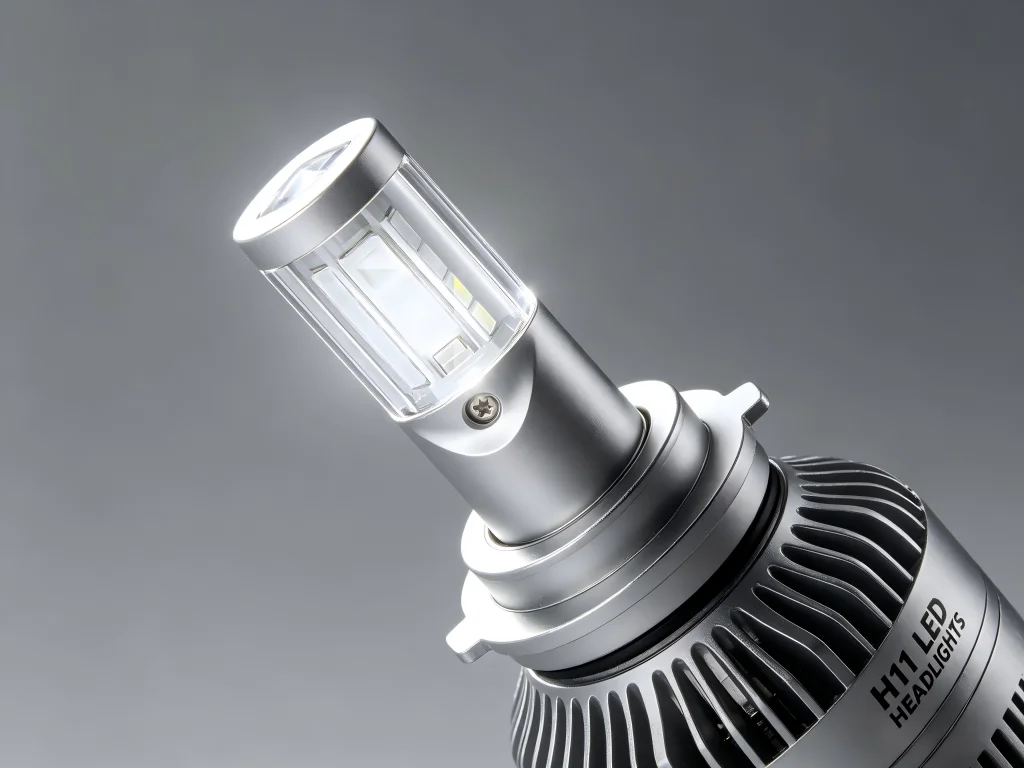
Una buona lampadina LED H11 replica esattamente la posizione del filamento alogeno, mantiene una linea di taglio netta, include la compatibilità CANbus e utilizza una gestione termica avanzata per sostenere la luminosità per tutta la sua vita.
Dopo aver analizzato le migliori recensioni di fari LED H11 e condotto i nostri test di ingegneria, abbiamo identificato quattro criteri che separano le lampadine premium dalla spazzatura.
3.1. Tecnologia dei Chip LED: Il Cuore della Lampadina
Il chip LED determina luminosità, schema del fascio e quanto bene la lampadina imita il filamento alogeno. Nel 2026, vedrai tre tipi principali di chip:
- Philips ZES (Luxeon Z ES): Lo standard d’oro per la precisione del fascio. Ogni chip misura 1,6 mm x 2,0 mm, avvicinandosi molto al filamento alogeno. Eccellente consistenza del colore. Schemi di fascio estremamente nitidi. Questo è ciò che raccomandiamo per gli alloggiamenti a proiettore.
- CSP (Chip Scale Package): Maggiore luminosità per watt rispetto a ZES e più compatto. I chip CSP di nuova generazione hanno colmato significativamente il divario di qualità del fascio. Ideale per alloggiamenti a riflettore dove conta l’emissione grezza. Il compromesso: leggermente più suscettibile allo stress termico nel tempo.
- Serie Cree XHP: Chip premium con durata eccezionale. L’XHP50 produce fino a 19W per emitter. Eccessivo per la maggior parte delle applicazioni e il pacchetto più grande rende più difficile l’abbinamento della posizione del filamento.
3.2. Modello del fascio: dove va effettivamente la luce
La luminosità grezza non significa nulla se la luce si disperde. Il tuo LED per fari H11 deve produrre un modello del fascio che corrisponda al tuo alloggiamento, che sia a riflettore o a proiettore.
Negli alloggiamenti a proiettore, cerca una linea di taglio orizzontale netta. Nei riflettori, cerca una distribuzione uniforme della luce senza punti scuri o zone di abbagliamento. Il design della posizione del filamento 1:1 è non negoziabile per entrambi.
Un conducente su un forum Honda lo ha detto perfettamente: “Mi sono solo assicurato che fossero orientati nella posizione delle 3 e delle 9”. L’orientamento corretto garantisce che il modello del fascio rimanga pulito.
3.3. Gestione termica: ciò che mantiene viva la lampadina
Il calore è il killer silenzioso dei LED per fari H11. Senza una corretta gestione termica, le lampadine si attenuano, cambiano colore e si guastano prematuramente.
Le lampadine premium utilizzano uno dei due approcci:
- Raffreddamento attivo (ventole): Allontana il calore dai chip LED in modo continuo. Più efficace ma richiede spazio e può creare rumore.
- Raffreddamento passivo (dissipatori di calore): Utilizza alluminio o rame per dissipare il calore. Silenzioso e affidabile ma meno efficace in condizioni estreme.
I migliori LED per fari H11 combinano un design avanzato dei chip con un raffreddamento efficiente. La tecnologia di separazione termica, che posiziona il die LED su un piano termico separato dal circuito del driver, è un segno distintivo dell’ingegneria premium.
3.4. Compatibilità CANbus: nessuno sfarfallio, nessun errore
I veicoli moderni utilizzano sistemi CANbus per monitorare i carichi elettrici. Quando installi LED per fari H11 che assorbono meno potenza degli alogeni, il sistema potrebbe interpretarlo come una lampadina bruciata.
La soluzione è un decoder CANbus integrato nella lampadina. Non un modulo esterno. Integrato. Questo garantisce che il tuo veicolo riconosca il LED e non generi codici di errore o causi sfarfallio.
4. H11 vs. H9 vs. H8: Qual è la differenza?
Le lampadine H8, H9 e H11 condividono la stessa base fisica e sono spesso cross-compatibili. Ma hanno diverse potenze nominali e applicazioni:
- H8: Estremità inferiore a 35W. Tipicamente utilizzata per fendinebbia.
- H11: Lampadina standard per anabbaglianti da 55W.
- H9: Uscita più elevata a 65W. Più luminosa della H11 ma può generare più calore.
La maggior parte dei fari a LED H11 moderni sono progettati per sostituire tutti e tre — H8, H9 e H11 — rendendoli aggiornamenti versatili. Controlla sempre le specifiche del tuo veicolo per confermare la compatibilità.
5. Dove acquistare fari a LED H11: confronto rivenditori
Troverai fari a LED H11 ovunque, da Amazon a AutoZone a Walmart. Ecco cosa significa ogni opzione per il tuo acquisto.
| Rivenditore | Selezione | Intervallo di prezzo | Competenza |
|---|---|---|---|
| Amazon | Enorme | $15 – $200 | Limitata (le recensioni sono la tua unica guida) |
| AutoZone | Moderate | $40 – $150 | Il personale può aiutare con l’installazione |
| Walmart | Moderate | $30 – $120 | Limited |
| O’Reilly | Moderate | $40 – $150 | Il personale può aiutare con l’installazione |
| Rivenditori specializzati | Curato | $100 – $300 | Raccomandazioni e supporto di esperti |
Ecco la verità: i grandi rivenditori immagazzinano ciò che vende, non ciò che funziona meglio. I rivenditori specializzati come HID Nation — con oltre 25 anni di esperienza nell’illuminazione automobilistica e oltre 50.000 ordini — testano effettivamente i prodotti che raccomandano. Paghi di più per la competenza, ma ottieni lampadine che funzionano davvero.
6. Cosa dicono le migliori recensioni di fari LED H11 nel 2026
Abbiamo analizzato le principali recensioni di fari LED H11 del 2026. Ecco su cosa concordano gli esperti.
La guida di HID Nation di marzo 2026 — scritta con oltre 25 anni di esperienza — raccomanda il GTR Lighting Ultra 3 per prestazioni H11 premium. I loro test hanno scoperto che il chip TST 7045 personalizzato di GTR, con tecnologia di separazione termica, funziona più freddo rispetto ai concorrenti che assorbono la stessa potenza.
Il confronto di fari di Sanvicar di gennaio 2026 ha scoperto che le lampadine H11 Ultra 2 di GTR Lighting hanno superato ogni altro set testato. Hanno elogiato l’alloggiamento in alluminio, le ventole di raffreddamento integrate e la durata di 50.000 ore.
Una recensione dedicata del GTR Lighting Ultra 3 su una Honda Civic ha mostrato il 475% di luminosità in più rispetto allo stock, con un fascio luminoso che mantiene la linea di taglio netta. Questa è luce utilizzabile, non solo abbagliamento.
Le discussioni sul forum confermano il modello. Un guidatore ha definito le sue lampadine H11 GTR Lighting Ultra 2.0 un “vero punto di svolta”, notando che le ventole di raffreddamento compatte si adattano dietro i tappi antipolvere OEM senza modifiche.
7. Bandiere Rosse: Come Individuare Fari LED H11 Scadenti
Prima di cliccare su “acquista”, fai attenzione a questi segnali di avvertimento.
- Affermazioni assurde sui lumen: Qualsiasi faro LED H11 che dichiari 20.000+ lumen per lampadina sta mentendo. I LED premium reali producono 3.000-6.000 lumen per coppia.
- Nessuna menzione della posizione del filamento: Se il prodotto non pubblicizza una posizione del filamento 1:1, il fascio luminoso sarà probabilmente pessimo.
- Nessuna compatibilità CANbus: Senza decoder CANbus integrati, si rischiano sfarfallii e codici di errore.
- Prezzi sospettosamente bassi: Sotto $50 per un set di fari LED H11 di solito significa che sono stati tagliati angoli su chip, raffreddamento o entrambi. Pagherai il doppio quando si guastano entro 6 mesi.
- Nessun dettaglio sulla gestione termica: Se il produttore non sa spiegare come gestisce il calore, probabilmente non lo gestisce bene.
8. Domande frequenti sui fari LED H11
8.1. H11 e 9005 sono la stessa cosa?
No. H11 è principalmente una lampadina per anabbaglianti. 9005 è una lampadina per abbaglianti. Hanno basi diverse, wattaggi diversi e fasci luminosi diversi. Controlla sempre le specifiche del tuo veicolo prima dell’acquisto.
8.2. Posso usare i fari LED H11 nei fendinebbia?
Sì. H11 è comunemente usato sia per anabbaglianti che per fendinebbia. Molte lampadine LED H11 sono compatibili con le applicazioni fendinebbia H8, H9 e H16.
8.3. I fari a LED H11 necessitano di un relè?
Tipicamente no. I fari a LED H11 di qualità con compatibilità CANbus integrata si collegano direttamente al cablaggio originale. Nessun relè, nessuna modifica al cablaggio, nessun componente esterno.
8.4. Come regolo il fascio luminoso dei fari a LED H11?
L’orientamento corretto è fondamentale. La maggior parte dei fari a LED H11 dovrebbe essere installata con i chip LED alle posizioni delle 3 e delle 9. Se il fascio luminoso è ancora fuori asse, utilizzare le viti di regolazione dei fari del veicolo per ottimizzare la mira.
8.5. I fari a LED H11 fonderanno il mio alloggiamento?
No. I LED producono significativamente meno calore rispetto agli alogeni. Tuttavia, LED di scarsa qualità con raffreddamento inadeguato possono surriscaldarsi e potenzialmente danneggiare la lampadina o l’alloggiamento. I fari a LED H11 di qualità con una corretta gestione termica sono completamente sicuri.
8.6. Quale temperatura di colore dovrei scegliere per i fari a LED H11?
Da 5.000K a 6.000K produce una luce bianca nitida che massimizza la visibilità senza apparire blu o gialla. 6.500K tende leggermente al blu e può ridurre la visibilità in caso di pioggia o nebbia. 5.000K è spesso il punto ottimale per il miglior equilibrio tra visibilità ed estetica.
9. Perché GTR Lighting è la scelta intelligente per i fari a LED H11
Hai fatto le tue ricerche. Sai cosa cercare. Ora parliamo del perché GTR Lighting soddisfa ogni criterio.
Chip TST 7045 personalizzati con tecnologia di separazione termica mantengono la lampadina più fresca e più duratura. Nei test con proiettori, il GTR Ultra 3 ha fornito il 475% in più di luminosità rispetto allo stock con una linea di taglio netta e pulita.
Design della posizione del filamento 1:1 garantisce che il fascio luminoso rimanga focalizzato. Nessuna dispersione. Nessun abbagliamento. Solo luce utilizzabile dove serve.
Compatibilità CANbus integrata significa installazione plug-and-play senza sfarfallio e senza codici di errore. Nessun modulo esterno. Nessuna complessità.
Design compatto si adatta in spazi ristretti. Le ventole di raffreddamento sono progettate per essere riposte dietro i copripolvere OEM.
Durata di 50.000 ore significa che installi una volta e te ne dimentichi.
HID Nation chiama il GTR Ultra 3 “il miglior LED headlight H11 sul mercato in questo momento”. Il confronto di Sanvicar ha trovato che le lampadine GTR superano ogni altro set testato. I conducenti reali le chiamano un “cambia gioco totale”.
Non è marketing. È prestazione reale validata da esperti e conducenti allo stesso modo.
10. Il tuo prossimo passo: Passa a LED headlight H11 che funzionano davvero
Hai passato abbastanza tempo a leggere di LED headlight H11. Ora è il momento di prendere una decisione.
Potresti continuare a scommettere su lampadine economiche che sfarfallano, abbagliano altri conducenti e si guastano entro mesi. Oppure potresti investire in LED headlight H11 premium che offrono le prestazioni che ti aspettavi dal primo giorno.
Migliore visibilità. Guida notturna più sicura. Niente più frustrazione. Questo è ciò che offre GTR Lighting.
Sperimenta la differenza che fanno i LED headlight H11 premium. La tua guida notturna non sarà mai più la stessa.