
Risposta diretta: la migliore lampadina LED H7 non è la più luminosa o la più economica, ma quella che corrisponde al sistema CANBUS del tuo veicolo, produce un fascio di luce corretto nel tuo tipo di alloggiamento e mantiene un’emissione stabile grazie a una corretta gestione termica. Dai priorità alla compatibilità rispetto alle dichiarazioni sui lumen.
Finding the right H7 LED bulb feels like navigating a minefield. Every ad promises “brighter than 500%”, “plug and play” and “CANBUS error-free”. But read the reviews. Scroll past the five-star ratings. Hidden among the one-star reviews are stories of flickering, dashboard errors, melted housings and light beams that blind everyone on the road.
After years of manufacturing and testing H7 LED bulbs at GTR, we have identified the five mistakes that separate a successful upgrade from a $100 paperweight. Here's how to avoid them all.
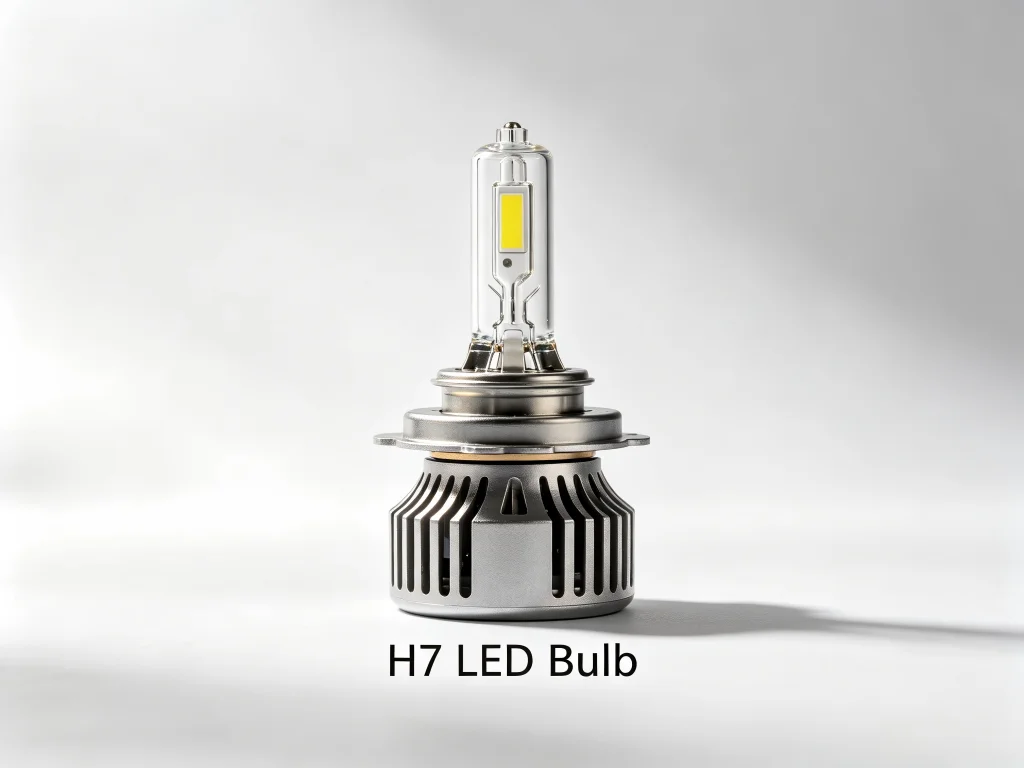
1. Mistake #1: chasing lumens instead of beam quality
Straight answer: lumen ratings on Amazon are often inflated by 200-500%. What matters is not raw lumens, but how they are focused. A 3,000-lumen bulb with a perfect beam outperforms a 20,000-lumen one that scatters light everywhere.
Here's a dirty secret of the LED industry: lumen numbers are unregulated. Manufacturers can claim anything. That $30 H7 LED bulb that promises 60,000 lumens? It actually probably produces 3,000-5,000 lumens.
What matters is the light beam. The H7 halogen bulb produces light from a single filament position. A quality LED bulb positions its chips in exactly the same position. A cheap LED? The chips are in the wrong place and the projector lens or reflector scatters light into useless hotspots and dark spots.
1.1. How to check beam quality
- Look for “1:1 Design” statements”—but verify them. Look for bulbs that specifically mention filament positioning, not just dimensions.
- Read critical reviews. Look for “beam pattern,” “hotspot,” and “glare” in customer reviews.
- Know your housing type. Projector headlights are less tolerant than reflectors. If you drive a BMW, Mercedes, or Audi with projector low beams, you need a bulb designed specifically for that application.
2. Error #2: Ignoring CANBUS compatibility
This is the #1 complaint in every H7 LED bulb reviews section. You install the bulbs. You turn on the headlights. The dashboard lights up with errors. Or worse—the bulbs constantly flicker.
Modern vehicles use CANBUS systems to monitor every electrical component. When you replace a 55W halogen with a 16W LED, the computer thinks the bulb is burned out. It generates an error. Then it starts pulsing the voltage to “test” the bulb. That pulsing creates flicker.
2.1. The spectrum of CANBUS solutions
| Solution type | Come funziona | Pro | Contro |
|---|---|---|---|
| Built-in CANBUS decoder | The bulb internally mimics the halogen's electrical signature | No extra parts, clean installation | More expensive to produce |
| External resistor | Adds resistance to match halogen bulb consumption | Inexpensive | Generates heat, can melt wiring |
| CANBUS adapter | Plug-in module between bulb and wiring | Works with existing bulbs | Extra component to install |
| Encoding | Software modification to disable bulb monitoring | One-time solution | Requires technical skills, may void warranty |
Our recommendation: choose a bulb with integrated CANBUS decoders that have been tested on your specific vehicle model. GTR bulbs, for example, are designed to work error-free on over 200 vehicle models without external resistors or coding.
3. Error #3: Neglecting thermal management
LEDs are efficient, but they still generate significant heat. That heat has to go somewhere. If it stays in the bulb, the chips degrade. Brightness decreases. Color shifts. Then the bulb fails completely.
3.1. Cooling technologies compared
- Passive (fanless): Uses a heat sink to dissipate heat. Quiet and reliable, but less effective in tight housings.
- Active (with fan): Uses a turbine fan to move heat away. More effective, but fans can fail.
- Heat Pipe + Fan: Combines copper heat pipes with a fan for maximum heat transfer. The gold standard for high-performance LEDs.
Quando valuti una H7 LED bulb, look for high-quality copper heat pipes or aluminum heatsinks. Check fan speed: 8,500+ RPM indicates serious cooling capability. And read reviews for mentions of “dimming after a few months” or “failure after 6 months”—these are red flags for heat-related failures.
4. Mistake #4: Buying the Wrong Wattage
A standard H7 halogen bulb draws 55W. A quality H7 LED draws between 16W and 43W. Some Amazon listings claim 130W or even 180W for LED bulbs. Here's the problem: those numbers are either:
- Completely made up (the bulb physically cannot draw that much power without melting), or
- “Equivalent wattage” (meaning the bulb produces as much light as a 130W halogen, not that it draws 130W).
Actual power draw matters because your vehicle's electrical system has limits. A bulb that draws too much power can blow fuses or damage wiring. A bulb that draws too little power triggers CANBUS errors.
Look for bulbs that state the actual wattage, not the “equivalent” one. The GTR Ultra 3.0 draws 43W—enough for excellent brightness without overloading the system.
5. Mistake #5: Ignoring Installation Reality
Even the best H7 LED bulb is useless if you can't install it properly.
5.1. The 1:1 Size Myth
“Dimensione mini 1:1” è una frase di marketing che spesso non significa nulla. Un vero design 1:1 significa che il corpo della lampadina, la base e il posizionamento dei chip corrispondono esattamente all'originale alogeno. Qualcosa di meno significa:
- La lampadina non si bloccherà correttamente nell'alloggiamento
- Il coperchio antipolvere non sigillerà, permettendo all'umidità di entrare nell'alloggiamento
- Il fascio luminoso sarà errato perché i chip sono disallineati
5.2. Lista di Controllo per l'Installazione
- Check compatibility—controlla il manuale del tuo veicolo per la dimensione della lampadina. Alcune auto usano H7 per gli anabbaglianti e 9005 per gli abbaglianti.
- Controlla lo spazio per il coperchio antipolvere—alcuni LED sono troppo lunghi per entrare dietro il coperchio antipolvere.
- Pianifica la polarità—alcune lampadine sono non polari (si inseriscono in entrambi i modi), altre richiedono l'orientamento corretto.
- Abbi un piano di riserva—conserva i tuoi alogeni originali nel caso in cui i LED non funzionino.
6. Parlare Chiaro: Cosa Dicono gli Automobilisti
“Installato questo sul mio Outlander del 2019. Luce bianca molto luminosa, unico problema avuto è stato un leggero sfarfallio dovuto a problemi CANBUS con la mia auto, ma è appena percettibile.” — Una recensione tipicamente “buona” che ammette comunque lo sfarfallio.
“After about 30-40 seconds the driver's side started flickering on and off, then stopped altogether. I replaced the bulbs, same result... then I changed the wiring of the entire headlight assembly only to see it flicker again.” — A Ram owner who spent hundreds of dollars chasing a problem caused by incompatible LEDs.
“In a BMW E46 and E39 they constantly flicker and trigger the CANBUS bulb warning as soon as they are turned on.” — Another CANBUS victim.
These are not isolated incidents. They are the daily reality of motorists who bought H7 LED bulbs without understanding compatibility.
7. The GTR Difference: Engineering You Can Trust
Here's what sets GTR apart from generic brands flooding Amazon:
- True CANBUS integration: Built-in decoders that work with 99% of vehicles—no resistors, no coding, no flicker
- Filament-perfect beam pattern: Automotive-grade multi-core chips positioned with micron precision
- Advanced thermal management: Copper heat pipes + high-speed fans that maintain stable output for over 50,000 hours
- Testato in condizioni reali: Ogni lampadina è testata su oltre 200 modelli di veicoli prima del rilascio
- Specifiche trasparenti: Pubbliciamo wattaggio effettivo, flusso luminoso e temperatura di colore—non numeri di marketing gonfiati
8. Domande frequenti sulle lampadine LED H7
8.1. Qual è la differenza tra LED H7 e alogeno H7?
Risposta diretta: L’alogeno utilizza un filamento riscaldato per produrre luce gialla (3.200K) a 55W con una durata di 400-1.000 ore. Il LED utilizza chip a semiconduttore per produrre luce bianca (5.000-6.500K) a 16-43W con una durata di 30.000-50.000 ore.
8.2. Le lampadine LED H7 si adattano alla mia auto?
H7 è una dimensione di lampadina standardizzata utilizzata in molti veicoli, tra cui VW Golf, BMW Serie 3, Mercedes Classe C, Audi A4, Honda Civic, Toyota Camry e Ford Focus. Verifica sempre con il manuale del proprietario.
8.3. Le lampadine LED H7 richiedono un'installazione speciale?
Most are plug-and-play with a 1:1 design. However, some vehicles require CANBUS adapters or coding. Check compatibility before purchase.
8.4. Are H7 LED bulbs worth it?
Yes—if you buy the right ones. Quality LEDs provide 3-4 times more brightness, modern white light, and 50 times longer lifespan compared to halogens. Cheap LEDs cause more problems than they solve.
8.5. Why do H7 LED bulbs cause radio interference?
LEDs with insufficient shielding can emit electromagnetic interference. Look for bulbs with ECE R10 compliance, which certifies electromagnetic compatibility.
8.6. What color temperature should I choose?
5,700K-6,500K produces a crisp white light that mimics daylight. Lower temperatures (4,000K-5,000K) are warmer; higher temperatures (8,000K+) are blue and often illegal for road use.
8.7. Can I use H7 LEDs for both high beams and low beams?
The H7 is a single-filament bulb designed for high beam OR low beam, not both. Some vehicles use separate H7 bulbs for each function.
9. Your next step: upgrade seamlessly
Now you know the five mistakes that turn an H7 LED bulb upgrade into a nightmare. You know what to look for: true CANBUS compatibility, beam patterns perfect like filament, serious thermal management, honest specifications, and proper installation. You know what to avoid: inflated lumen claims, generic “1:1” promises, and external resistors that melt wiring.
GTR has already done the engineering work, so you don't have to. Every bulb is tested, validated, and guaranteed to work with your vehicle. No flicker. No errors. No compromises.
Stop reading reviews and start driving with confidence.
Browse GTR's H7 LED collection now and experience the difference that true engineering makes. Your night drives will never be the same..