
Standing in the lighting aisle, staring at shelves of halogen lamp bulbs and LED alternatives, most buyers make one of two mistakes: they buy the cheapest option, or they overpay for features they don’t need. This guide cuts through the marketing hype and gives you the decision framework that actually works.
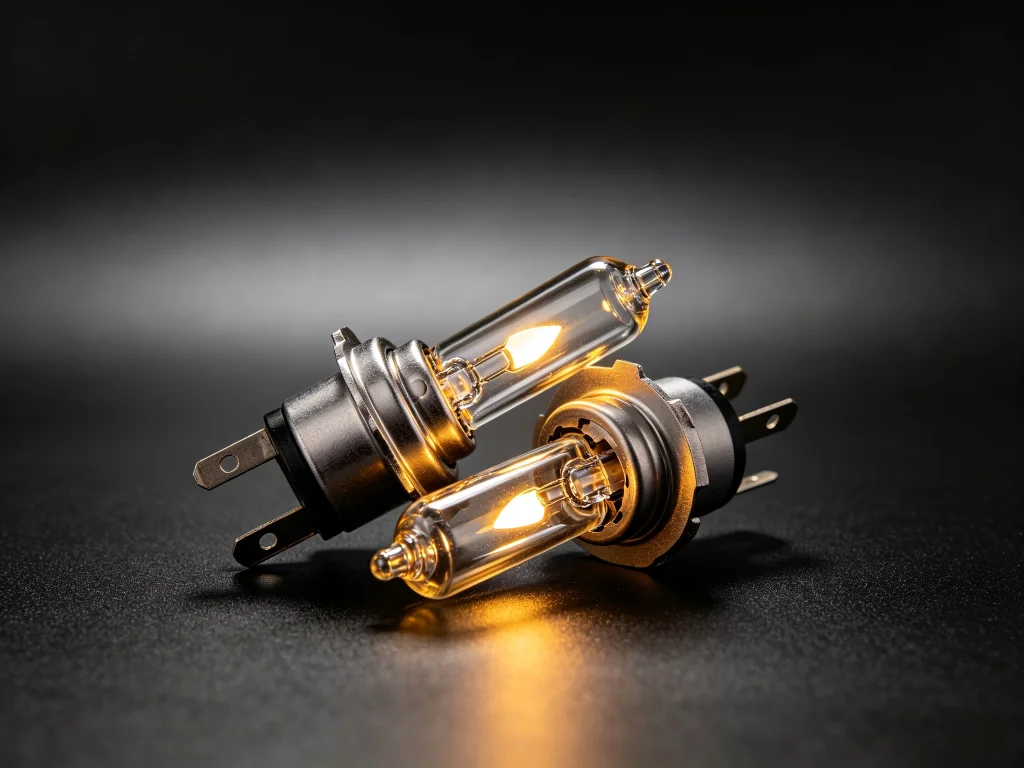
1. Halogen Lamp Bulb Types: Know What You're Buying
Halogen light bulbs come in six primary configurations, each designed for specific applications. Selecting the wrong type wastes money and creates safety hazards. Match the bulb to the fixture – not the other way around.
| Halogen Bulb Type | Common Base | Typical Applications | Key features |
|---|---|---|---|
| Capsule | Bi-pin (G4, GY6.35) | Under-cabinet, appliances, indicators | Extremely compact, focused beam |
| Candle / Mini Candle | E14, B22 | Chandeliers, wall sconces, decorative | Slim tapered design, aesthetic focus |
| Linear R7 | R7S (double-ended) | Floodlights, worklights, security | Elongated tubular, high output |
| Automotive | H1, H4, H7, H11, 9005, 9006 | Headlights, fog lights, signal lights | Safety-rated, vibration-resistant |
| MR16 | GU5.3, GU10 | Track lighting, recessed, display | Multi-faceted reflector, directional |
| Standard A19 | E26, E27 | General household lamps | Pear shape, direct incandescent replacement |
Each type has specific wattage, voltage, and dimensional requirements. Using the wrong base or exceeding wattage ratings creates fire hazards and premature failure.
2. Halogen Light Bulb vs LED: The Real Comparison
Here’s the data buyers actually need – not marketing claims, but measurable performance differences that impact your bottom line.
2.1. Energy Efficiency: The 80% Difference
Halogen bulbs convert about 95% of their energy into heat rather than light. LEDs convert 80-90% of electrical energy into visible light. This isn’t a minor efficiency gap – it’s a fundamental technological advantage that shows up on every electricity bill.
Halogen bulbs produce 16-24 lumens per watt. LEDs deliver 80-100 lumens per watt. A 15-watt LED bulb produces the same brightness as an 85-watt halogen bulb. If you’re running multiple fixtures, the annual savings can exceed hundreds of dollars per fixture.
2.2. Lifespan: The Replacement Math
This is where the numbers tell a compelling story. A quality halogen lamp bulb lasts 2,000 to 4,000 hours. An LED bulb lasts 25,000 to 50,000 hours.
Over 25,000 hours of operation, you’ll replace a halogen bulb 6 to 12 times. Each replacement costs not just the bulb, but your time and any labor charges. The LED bulb may cost more upfront, but it eliminates that cycle of repeated replacements.
2.3. Color Quality: Where Halogen Still Excels
Halogen bulbs offer a Color Rendering Index (CRI) of 100 – the maximum possible score. Colors appear natural and accurate under halogen light. Early LEDs had poor color quality, but modern LEDs now achieve CRI ratings of 90+ and offer adjustable color temperatures from 2700K (warm) to 6500K (daylight).
Halogen light produces approximately 3000K color temperature – a warm white. LEDs can match this warmth or provide cooler light for task applications. If color accuracy is critical (art studios, retail displays, inspection work), high-CRI LEDs now rival halogen performance.
2.4. Heat and Safety
Halogen bulbs reach 1,200°F during operation. This creates burn hazards, fire risks near flammable materials, and heat stress on fixtures. LEDs run cool enough to touch after hours of operation.
For enclosed fixtures, recessed lighting, or any application where heat accumulation is a concern, LEDs are objectively safer. Halogen bulbs require clearance and ventilation that many modern fixtures don’t provide.
2.5. Compatibilità con la dimmerazione
Most halogen bulbs are fully dimmable with standard dimmer switches. LED dimming is more complex – you need LED-compatible dimmers and bulbs designed for dimming. However, the LED dimming experience is now equivalent to halogen in most quality installations.
3. The Decision Framework: Halogen or LED?
Based on our years of manufacturing expertise across both technologies, here’s the practical decision matrix:
Choose halogen lamp bulbs when:
- You need instant full brightness with no warm-up time
- Maximum color accuracy (CRI 100) is non-negotiable
- Your fixtures are already halogen-compatible and you’re not ready to retrofit
- Usage is occasional or low-hour (less than 500 hours per year)
- Upfront cost is your primary constraint (halogen bulbs cost $10-$40 each)
Choose LED when:
- You’re running lights 3+ hours daily – energy savings pay back quickly
- Bulb access is difficult – you don’t want to replace bulbs frequently
- Heat is a concern – enclosed fixtures, temperature-sensitive environments
- You’re making a long-term investment (LED pays back through energy and replacement savings)
- You want smart home integration or variable color temperature options
4. Buying Guide: What to Check Before You Purchase
Whether you’re buying halogen or LED, these factors determine whether you get value or waste money.
4.1. Wattage vs. Lumens – Don't Confuse Them
Wattage measures energy consumption. Lumens measure brightness. A 50-watt halogen bulb produces approximately 600-700 lumens. When comparing halogen light bulb vs LED options, match lumens first – then compare wattage. If you buy by wattage alone, you’ll likely overpay for electricity or under-light your space.
4.2. Base Type – Non-Negotiable
The bulb must physically fit your fixture. Common bases include E26 (standard screw), E14 (candle), GU10 (twist-lock), G4 (bi-pin), and R7S (linear double-ended). Check the old bulb’s base before ordering. Adapters exist but add failure points.
4.3. Voltage – Match It Exactly
Using a 12V bulb in a 120V fixture destroys it instantly. Most household fixtures in North America are 120V; automotive applications are 12V. The bulb’s packaging clearly states voltage – verify before installation.
4.4. Dimmable vs. Non-Dimmable
Not all bulbs work with dimmers. If you have a dimmer switch, buy bulbs explicitly labeled as dimmable. Using non-dimmable bulbs on a dimmer causes flickering, reduced lifespan, and potential damage.
4.5. Quality Indicators
Legitimate manufacturers (Osram, Philips, GE, Sylvania) provide clear specifications, consistent quality, and real warranties. Generic bulbs with vague packaging often use inferior materials and fail early. When comparing price, factor in replacement frequency – cheap bulbs are rarely the economical choice.
5. Featured Snippet: Quick Answers for Halogen Lamp Bulb Buyers
5.1. Are halogen light bulbs being phased out?
Many regions have restricted halogen sales due to energy efficiency regulations. The EU began phasing out halogen bulbs in 2018, and other markets have followed. While still available, halogen bulbs are increasingly hard to find as retailers shift to LED.
5.2. Can I put an LED bulb in a halogen fixture?
Yes, if the base type matches and the LED bulb’s lumen output meets your needs. Some fixtures with electronic transformers may require LED-compatible drivers. For dimmer circuits, ensure both dimmer and bulb are LED-rated.
5.3. Quanto posso risparmiare passando da alogeno a LED?
LEDs use up to 90% less energy than halogen bulbs. A household with 10 bulbs running 3 hours daily saves approximately $89 annually. Commercial installations with more fixtures and longer run times save substantially more.
5.4. Which halogen bulb is brightest?
Brightness depends on wattage and design. A 500W linear halogen can produce 8,500 lumens. However, high-wattage halogens generate extreme heat and consume significant electricity. For equivalent brightness with lower energy use, LED is the superior choice.
5.5. How do I know my halogen bulb's wattage?
Wattage is printed on the bulb’s base or glass envelope. Never use a bulb with higher wattage than the fixture’s rating – this creates fire and failure risks. If the printing is illegible, use a multimeter or consult the fixture’s documentation.
5.6. Why are halogen bulbs so expensive now?
As production scales down due to LED adoption, halogen bulbs have become niche products. Lower manufacturing volumes mean higher per-unit costs. Additionally, remaining halogen production often focuses on specialty applications where LED alternatives don’t yet match performance.
5.7. What's the best halogen bulb brand?
Osram, Philips, GE, and Sylvania are established manufacturers with consistent quality. Premium automotive brands like SilverStar offer enhanced performance. For specialty applications, brands like CTKcom and Jaenmsa provide reliable options.
6. GTR: Your Partner in Lighting Decisions
At GTR, we don’t push products – we provide solutions. Our team has decades of combined experience in halogen and LED lighting across industrial, commercial, and automotive applications. We understand the trade-offs because we’ve tested them in real conditions.
Whether you’re maintaining existing halogen systems or planning a comprehensive LED conversion, GTR offers the expertise and products you need. We source from trusted manufacturers, verify specifications, and stand behind every recommendation.
Stop guessing about your lighting. Visit https://www.rhgtr.com o https://www.ledcxr.com to explore our full range of halogen lamp bulbs and LED alternatives. Our specialists will help you choose the right solution for your specific needs – not the one that’s easiest to sell..