
Scegliere un faro LED per auto è più difficile che confrontare wattaggio e prezzo. I risultati di ricerca sono pieni di prodotti da 150W, 200W, 220W e 300W, enormi dichiarazioni di lumen, diversi sistemi di raffreddamento e dozzine di configurazioni di chip. Per distributori e aziende professionali di retrofit, scegliere in modo errato può significare resi, reclami e fiducia del cliente compromessa.
Questa guida adotta un approccio diverso.
Invece di chiedere quale LED sembri più potente, esamineremo quali specifiche prevedono effettivamente prestazioni utili del faro e quali numeri meritano maggiore attenzione.
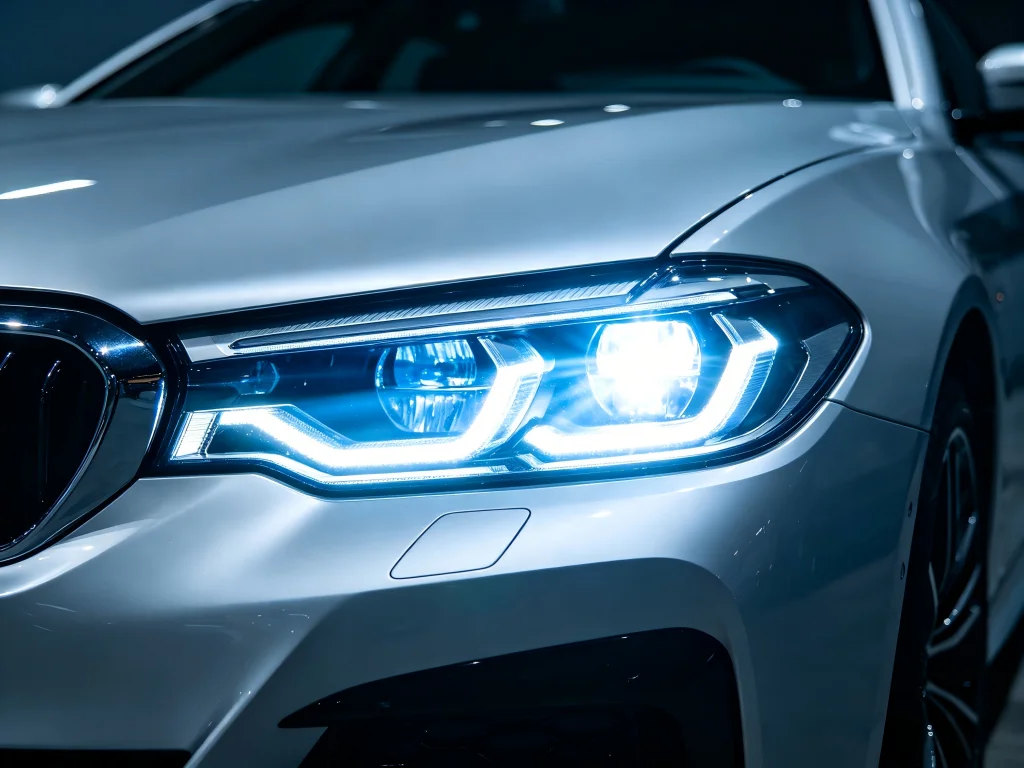
1. Cosa dovresti cercare quando acquisti fari LED per auto?
Scegli un faro LED per auto valutando il pattern del fascio luminoso, la geometria del chip LED, l’emissione sostenuta, il design termico, la compatibilità elettrica, l’adattamento fisico e la coerenza del fornitore. I valori di wattaggio e lumen possono supportare il confronto, ma nessuno dei due dovrebbe sostituire i test ottici all’interno del riflettore o proiettore effettivo utilizzato dal veicolo.
Questo crea sette criteri di acquisto principali:
- Compatibilità ottica
- Schema del fascio luminoso
- Luminosità sostenuta
- Gestione termica
- Elettronica di pilotaggio
- Adattamento meccanico
- Capacità del fornitore e di produzione
Nota cosa non è in cima alla lista: il wattaggio pubblicizzato.
2. Fari LED 150W vs 200W vs 220W vs 300W
Un’etichetta da 300W non rende automaticamente un faro LED migliore di un prodotto da 150W o 200W. Il wattaggio descrive la potenza elettrica solo quando misurato in modo coerente. L’efficacia del faro dipende anche dall’efficienza ottica, dal posizionamento del LED, dalla stabilità termica, dall’intensità del fascio e da quanta luce generata raggiunge aree utili della strada.
| Categoria di ricerca | Potenziale appeal | Rischio principale | Cosa dovrebbero verificare gli acquirenti B2B |
|---|---|---|---|
| LED 150W | Aggiornamento orientato alle prestazioni | La valutazione potrebbe essere fraintesa | Potenza operativa effettiva per lampadina |
| LED 200W | Forte posizione di marketing | Riduzione di calore e resa | Resa sostenuta dopo il riscaldamento |
| LED 220W | Posizionamento di specifiche premium | Un numero più alto potrebbe non migliorare l’ottica | Intensità del fascio e progettazione termica |
| LED da 300W | Posizionamento ad alte prestazioni estreme | Valutazioni gonfiate o basate su coppie | Dati elettrici misurati e condizioni di prova |
2.1. Trappola #1: Confronto tra diverse definizioni di wattaggio
Supponiamo che il Fornitore A pubblicizzi 200W e il Fornitore B pubblicizzi 150W.\r\n\r\nIl Fornitore A sembra più potente.\r\n\r\nMa il Fornitore A potrebbe indicare la potenza teorica combinata per una coppia, mentre il Fornitore B potrebbe pubblicare una misurazione diversa. Senza conoscere il metodo di prova, il confronto diventa privo di significato.\r\n\r\nI team di approvvigionamento professionale dovrebbero richiedere dati operativi misurati e chiarire se le specifiche si riferiscono a una singola lampadina o a una coppia.
2.2. Trappola #2: Assumere che più potenza significhi più distanza
A luce led per faro auto 200 watt potrebbe consumare più energia elettrica di un altro prodotto senza produrre un’illuminazione superiore a lunga distanza.\r\n\r\nPerché?\r\n\r\nPerché la distanza dipende fortemente da dove la luce è concentrata.\r\n\r\nUna lampada che diffonde enormi quantità di luce nelle aree vicine può apparire più luminosa mentre produce un’illuminazione più debole più avanti sulla strada.
3. Lumen vs Lux: Quale numero conta?
I lumen descrivono il flusso luminoso. I lux descrivono l’illuminamento che raggiunge una superficie. Nessuno dei due numeri dovrebbe essere interpretato senza comprendere la configurazione del test.\r\n\r\nPer gli acquirenti di fari, la distinzione è cruciale.\r\n\r\nImmagina due prodotti che producono un flusso luminoso totale simile. Il Prodotto A concentra la luce efficacemente nelle zone stradali utili. Il Prodotto B disperde più luce al di fuori di quelle zone.\r\n\r\nL’emissione luminosa totale può apparire simile sulla carta, ma l’esperienza di guida può essere molto diversa.\r\n\r\nI lettori che vogliono le definizioni fotometriche sottostanti possono consultare il concetto tecnico di lux.
4. Geometria del chip LED: La specifica che la maggior parte degli acquirenti ignora
Questa è una delle prime aree che il nostro team di ingegneria considera quando valuta le prestazioni delle luci di ricambio.\r\n\r\nUn riflettore alogeno è stato progettato attorno a un filamento con una dimensione e una posizione definite. Quando un LED sostituisce quel filamento, la superficie emissiva del LED dovrebbe interagire correttamente con l’ottica esistente.\r\n\r\nSe la sorgente luminosa diventa troppo grande o si allontana dall’area focale prevista, la precisione del fascio può diminuire.\r\n\r\nIl risultato potrebbe includere:
- linee di taglio sfocate;
- zone scure;
- luminosità eccessiva del primo piano;
- luce verso l’alto non controllata;
- concentrazione ridotta dell’abbagliante; e
- più abbagliamento per gli altri utenti della strada.
5. I fari a LED H4 richiedono particolare attenzione
Un la luce LED per faro auto H4 non è semplicemente un LED luminoso che si adatta a una presa H4.
Le applicazioni H4 combinano tradizionalmente le funzioni di anabbagliante e abbagliante in un’unica architettura di lampadina. Questo rende la geometria della sorgente particolarmente importante.
Prima di acquistare LED H4 in grandi quantità, testare:
- taglio dell’anabbagliante;
- intensità centrale dell’abbagliante;
- transizione tra anabbagliante e abbagliante;
- orientamento di installazione;
- compatibilità con il riflettore;
- spazio di installazione posteriore; e
- comportamento termico durante il funzionamento continuo.
Un prodotto che funziona bene in un alloggiamento potrebbe non comportarsi in modo identico in un altro. Ecco perché i test applicativi forniscono informazioni più utili rispetto al giudicare una lampadina a LED su un banco di prova da sola.
6. Raffreddamento a ventola vs raffreddamento passivo
| Fattore | Raffreddamento attivo a ventola | Passive cooling |
|---|---|---|
| Potenziale di rimozione del calore | Può essere elevato con un buon flusso d’aria | Dipende fortemente dalle dimensioni del dissipatore |
| Design compatti ad alta potenza | Spesso vantaggiosi | Possono richiedere strutture più grandi |
| Componenti in movimento | Yes | No |
| Considerazioni sull’installazione | Il flusso d’aria deve rimanere libero da ostacoli | Lo spazio per la dissipazione del calore è importante |
| Valutazione dell’acquirente | Qualità della ventola + percorso termico completo | Materiale + area + percorso termico |
Nessuna architettura vince automaticamente.
Un design di ventola scadente non diventa premium semplicemente perché utilizza raffreddamento attivo. Allo stesso modo, un sistema passivo non è automaticamente più affidabile se non riesce a dissipare abbastanza calore per la sua potenza operativa.
La domanda corretta è se il sistema termico completo mantiene i componenti critici entro un intervallo operativo appropriato.
7. Come testare la stabilità termica prima di acquistare all'ingrosso
Un test utile per i fari a LED dovrebbe confrontare l’emissione all’avvio con quella dopo un funzionamento prolungato. Se il calore causa una riduzione aggressiva della potenza, la luminosità iniziale può esagerare le prestazioni di guida reali. Gli acquirenti B2B dovrebbero quindi valutare la temperatura stabilizzata, la potenza elettrica, l’emissione luminosa e il comportamento dei componenti invece di fare affidamento su brevi dimostrazioni.
Per i distributori che valutano campioni, un test di approvvigionamento di base può seguire questa sequenza:
- Registrare tensione di ingresso, corrente e potenza subito dopo l’avvio.
- Installare la lampada in una configurazione di faro rappresentativa.
- Farla funzionare continuamente in condizioni controllate.
- Monitorare le variazioni di potenza elettrica e prestazioni luminose.
- Ispezionare il fascio dopo che il sistema raggiunge condizioni operative stabili.
- Ripetere il test su più campioni invece di fare affidamento su una sola unità.
Questo ultimo passaggio è importante.
Un acquirente B2B sta acquistando coerenza di produzione, non un campione selezionato a mano.
8. Prezzo dei fari a LED per auto: perché il preventivo più economico può costare di più
Quando gli acquirenti cercano prezzo dei fari a LED per auto, unit cost naturally becomes a major consideration.
But professional procurement should calculate a broader cost.
Consider a cheaper bulb that generates more warranty claims. The distributor may have to pay for replacements, international shipping, customer support, technician time, and damaged dealer relationships.
Those costs can exceed the original saving.
For wholesale buyers, a more useful equation is:
Total Procurement Value = Product Performance + Consistency + Supplier Support + Market Fit – Failure and After-Sales Risk
This is one reason experienced distributors often become more demanding about quality after several years in the market. They have already learned what cheap failures cost.
9. What About 300W LED Car Headlights?
The phrase led light for car headlight 300 watt attracts buyers looking for extreme performance. But very high advertised numbers deserve careful technical verification.
Ask the supplier:
- Is 300W measured or theoretical?
- Is the rating for one lamp or a pair?
- A quale tensione è stata misurata la potenza?
- What is the operating power after thermal stabilization?
- How is heat removed?
- What beam data supports the performance claim?
Apply the same questions when comparing a led light for car headlight 220 watt o led light for car headlight 150 watt.
The number itself is not the problem. An unverifiable number is.
10. Is LED Light for Car Headlight Legal in India?
Buyers searching led light for car headlight legal in India should separate physical compatibility from regulatory compliance.
A replacement LED may fit a socket and operate correctly from an electrical perspective, yet that alone does not establish legal compliance of the resulting headlamp system.
Regulatory requirements can involve vehicle category, approved lamp configuration, photometric performance, installation, and other factors. Regulations may also change, so businesses should verify current requirements before importing, selling, or installing a specific lighting configuration.
For current Indian regulatory information, consult authoritative sources such as India’s Ministry of Road Transport and Highways and the applicable automotive standards rather than relying solely on seller claims.
11. Searching “LED Light for Car Headlight Near Me”?
For consumers, led light for car headlight near me usually signals strong purchase intent.
But choosing the nearest installer should not be the only criterion.
A professional retrofit shop should understand beam alignment, bulb orientation, electrical compatibility, projector and reflector behavior, and post-installation testing.
Ask the installer to demonstrate the beam rather than only showing the bulb.
12. Supplier Comparison: What B2B Buyers Should Really Score
| Fattore d’acquisto | Low-Cost Commodity Supplier | Professional Lighting Manufacturer | Perché è importante |
|---|---|---|---|
| Price | Often highly competitive | Based on product positioning | Affects margin but not total risk |
| Wattage Claims | May focus on headline numbers | Should support technical evaluation | Prevents misleading comparisons |
| Optical Development | May be limited | Application-oriented | Controls usable road illumination |
| Progettazione termica | Cost-driven | Performance and durability driven | Affects sustained output |
| Batch Consistency | Must be verified carefully | Should be managed systematically | Reduces wholesale return risk |
| Customization | Often limited | Can support market-specific programs | Helps distributors differentiate |
| Technical Support | Primarily sales-focused | Engineering and application support | Useful for professional channels |
13. Why Professional Buyers Choose GTR
GTR is positioned around professional automotive lighting rather than a race for the largest number printed on a box.
Based on our manufacturing experience, successful aftermarket lighting requires several disciplines to work together: optics, electronics, thermal management, mechanical engineering, production control, and real application knowledge.
For wholesalers, distributors, importers, and retrofit chains, this also changes what a supplier relationship should provide.
You may need products adapted to local vehicle populations.
You may need different performance levels for good-better-best product positioning.
You may need packaging, branding, technical documentation, or other customization for your sales channel.
Most importantly, you need repeatable quality when an initial sample becomes a commercial order.
That is where manufacturing capability becomes more valuable than a spectacular specification sheet.
14. A Practical Sample Evaluation Checklist
Before approving your next LED headlight supplier, use this checklist:
- Measure: Do not accept wattage and output claims without understanding the test conditions.
- Install: Evaluate samples inside real representative headlights.
- Project: Examine cutoff, hotspot, width, dark zones, and high-beam concentration.
- Heat: Run the product long enough to reveal thermal behavior.
- Fit: Check socket dimensions, rear clearance, dust covers, and wiring.
- Repeat: Compare several production samples for consistency.
- Verify: Review applicable regulations and documentation for your target market.
- Calculate: Compare warranty and after-sales risk alongside purchase price.
15. FAQ: LED Car Headlight Buying Questions
15.1. Which LED lamp car headlight is best?
The best option is the one that matches the vehicle’s optical system while providing controlled beam distribution, stable output, effective cooling, reliable electronics, and appropriate fitment. There is no universal wattage that makes one LED best for every vehicle.
15.2. Should I buy a 200W or 300W LED headlight?
Compare verified operating power, sustained performance, beam quality, and thermal behavior first. A larger advertised wattage does not by itself prove superior road performance.
15.3. Is 220W enough for an LED car headlight?
Wattage alone cannot answer this question. An efficient optical system may produce excellent usable illumination without chasing extreme power figures.
15.4. What makes a good H4 LED bulb?
A strong la luce LED per faro auto H4 should provide accurate source positioning, effective low/high-beam control, stable thermal performance, suitable dimensions, and good electrical compatibility.
15.5. Why are some LED headlights much cheaper?
Price differences may reflect LED components, driver design, thermal materials, manufacturing consistency, quality control, packaging, supplier support, and brand positioning. Evaluate the total cost of ownership rather than price alone.
15.6. Can LED headlights cause glare?
Yes. Poor source positioning, incompatible optics, incorrect installation, or poor headlight alignment may send excessive light into unintended areas. Proper optical compatibility and aiming are essential.
15.7. Do LED headlights lose brightness when hot?
Some designs may reduce output as operating temperature rises. The amount depends on thermal management and electronic control, making sustained testing useful when comparing products.
15.8. Where can wholesalers source professional LED headlights?
B2B buyers should prioritize manufacturers that can support technical evaluation, stable production, application matching, quality control, customization, and after-sales requirements rather than selecting suppliers from price lists alone.
16. Your Next Headlight Order Should Start With Testing, Not Wattage
If you are selecting your next faro LED per auto range for a wholesale business, distribution network, or professional retrofit chain, do not let 150W versus 200W versus 300W become the entire purchasing decision.
Your customers do not drive specification sheets.
They drive dark highways, wet city streets, mountain roads, and poorly illuminated rural routes. They will judge your product by what they can actually see after sunset.
Visita www.rhgtr.com to explore GTR automotive lighting solutions. Send us your target market, vehicle applications, required product positioning, and expected order program. Instead of choosing another LED from a spreadsheet, build a lighting range around the performance your dealers and customers can see on the road..