
Acquistare un proiettore LED per auto prodotto sembra facile finché non si confrontano i fornitori. Una fabbrica promuove lumen estremi. Un’altra si concentra sulla potenza. Un’altra promette una lunga durata, installazione immediata, compatibilità CANbus e adattamento universale. Per gli acquirenti professionali, queste affermazioni creano più rumore che chiarezza.
The best question is not: “Which LED projector has the biggest number?”
It is: “Which lighting system can deliver a repeatable beam, stable thermal performance, reliable electronics, correct vehicle fitment, and an acceptable warranty rate across thousands of installations?”
This guide is written for distributors, automotive wholesalers, purchasing managers, and retrofit chains who need to evaluate LED bulbs for cars as a commercial product rather than as a one-time purchase for the consumer.
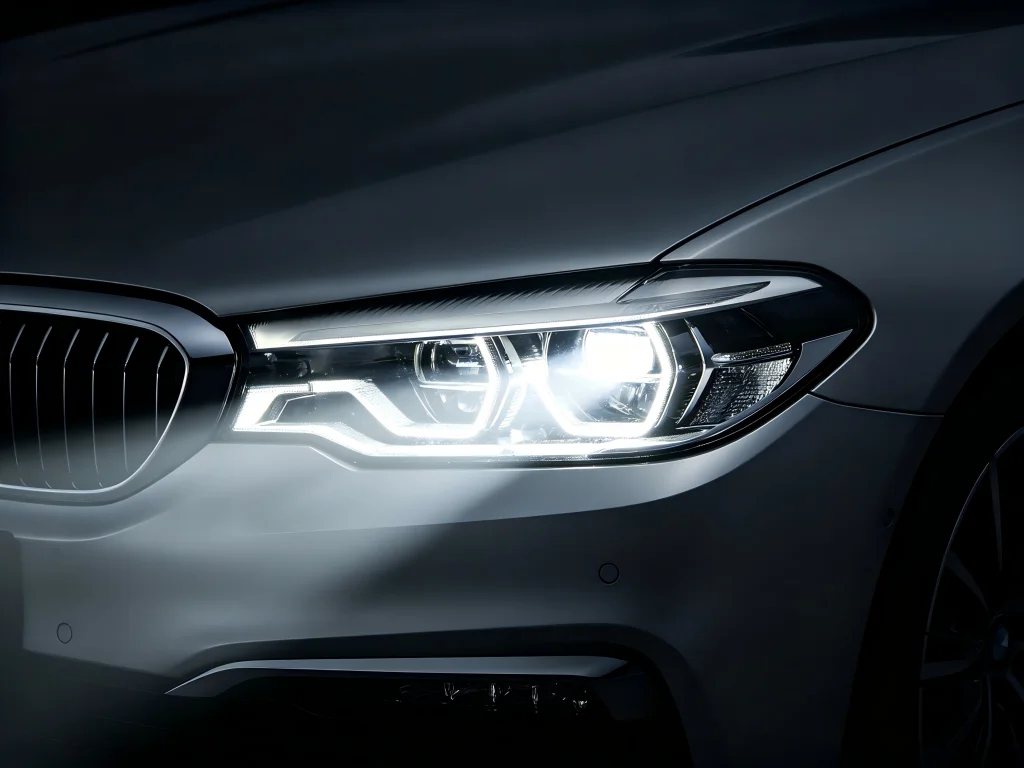
1. What makes a good LED headlight product?
A good LED headlight combines accurate emitter geometry, controlled beam distribution, stable output, effective thermal management, reliable drive electronics, correct vehicle fitment, and consistent manufacturing. Professional buyers should evaluate the complete system instead of choosing products mainly based on advertised lumens, watts, color temperature, or price.
This distinction protects your margin.
A cheap bulb with a high return rate can be more expensive than a premium bulb with a higher factory price.
For B2B buyers, the true equation is:
Total product cost = Purchase price + Shipping + Installation issues + Returns + Warranty + Technical support + Brand damage.
Once purchases are viewed this way, the comparison between suppliers changes completely.
2. LED vs. Halogen vs. HID: which technology should you buy?
LED tends to offer the best balance of efficiency, instant start, compact system design, service life, and product flexibility. Halogen remains simple and economical, while HID can provide strong projector performance. The best choice still depends on optics, vehicle architecture, regulations, installation requirements, and target customer expectations.
| Fattore | Halogen | HID/Xenon | LED |
|---|---|---|---|
| Start-up | Immediato | Requires warm-up | Immediato |
| Electrical efficiency | Lower | Superior to halogen | High |
| System Complexity | Low | Reactor/igniter required | Driver and thermal system required |
| Thermal challenge | High radiant heat | High-voltage system considerations | Semiconductor heat must be managed |
| Design flexibility | Limited | Moderate | High |
| Instant flicker | Buono | Less suitable for some standalone HID designs | Excellent |
| Retrofit risk | Correct specification base | Required optical and electrical compatibility | Required optical, electrical and thermal compatibility |
| B2B aftermarket potential | Price-driven replacement | Application-specific | Strong premium and performance opportunity |
LEDs win many purchase comparisons, but that does not mean every LED product is better than halogen or HID.
A poorly designed LED installed in the wrong optical system could perform worse than the original halogen lamp.
This is the first major purchasing trap.
3. Buying trap #1: Choosing based on lumens
Huge lumen numbers are attractive because they make product comparison easy.
Unfortunately, the road does not measure marketing claims.
A professional buyer should distinguish between:
- Theoretical LED chip output
- Initial lamp output
- Stabilized output after warm-up
- Optical efficiency
- Useful beam intensity
- Street lighting distribution
A product can boast enormous raw output but lose part of its performance due to heat, inefficient optics, incorrect emitter positioning, or aggressive electronic driving.
3.1. Instead, ask your supplier this
“Can you show me the beam pattern and stabilized performance after the lamp reaches operating temperature?”
This question is much more useful than asking for the maximum lumen value.
4. Purchase trap #2: Comparing Wattage instead of Efficiency
Some buyers still assume that a 100W LED must outperform a 50W LED.
That might not be the case.
Higher electrical power generates more heat. More heat requires more robust thermal management. If the cooling system cannot keep up, increasing power can produce diminishing returns.
The best product is one that converts electrical input into controlled, stable, and efficient street lighting.
4.1. Evaluate the stabilized output
During supplier evaluation, consider testing samples after:
- Initial startup
- 15 minutes
- 30 minutes
- 60 minutes
- Repeated hot/cold cycles
If the output changes abruptly while the product heats up, ask why.
Thermal behavior often reveals the engineering quality that packaging cannot show.
5. Buying Trap #3: Ignoring LED emitter geometry
This is one of the most important technical differences between low-cost and well-engineered led car headlamp bulbs.
The reflector or projector does not simply need “light.”
It needs light from the correct position.
When an LED replaces a halogen filament, the LED emitting surfaces should approximate the optical position required by the housing as closely as the design allows.
Pay attention to:
- Larghezza emettitore
- Lunghezza emettitore
- Spessore PCB
- Distanza dal punto di riferimento di montaggio
- Allineamento LED su due lati
- Orientamento rotazionale della lampadina
Un piccolo errore qui può diventare un grande errore del fascio luminoso a diversi metri di distanza.
6. Buying Trap #4: Mistaking whiter light for better light
La temperatura di colore è facile da vendere.
Un bianco freddo faro per veicoli a LED può far sembrare un'auto più vecchia immediatamente più moderna.
Ma spingere il prodotto verso un aspetto molto blu può ridurre l'attrattiva pratica per alcune condizioni di guida e mercati.
Gli acquirenti professionali dovrebbero considerare il caso d'uso del cliente.
| Priorità dell'acquirente | Cosa valutare | Errore comune |
|---|---|---|
| Aspetto moderno | Uscita bianca pulita e costante | Scegliere una luce eccessivamente blu |
| Guida su strade bagnate | Contrasto e visibilità stradale utilizzabile | Acquistare solo in base al numero di Kelvin |
| Retrofit premium | Coerenza del colore tra i lampioni | Ignorare la variazione del lotto |
| Distribuzione commerciale | Preferenze di mercato e normative | Usare una specifica a livello globale |
7. Trappola d'acquisto #5: Ignorare il driver
The LED chip receives most of the attention because it produces the light.
The driver deserves equal respect.
Automotive electrical environments are not perfectly clean laboratory power supplies. Voltage can vary. Control systems may use pulse width modulation. Vehicles may perform lamp diagnostics. Electrical noise matters.
A weak driver can turn a good LED chip into a poor product.
When purchasing products fari a LED per auto ask about:
- Input voltage range
- Current regulation
- Over-temperature protection
- Over-voltage protection
- Reverse polarity protection where applicable
- Electromagnetic compatibility strategy
- Compatibilità CANbus
- PWM behavior
Do not assume that “CANbus ready” means universal compatibility.
Vehicle electronics differ.
8. Trappola d'acquisto #6: Trattare il raffreddamento come una caratteristica estetica
I grandi dissipatori di calore sembrano impressionanti nelle foto dei prodotti.
Ma le prestazioni termiche dipendono dal materiale, dalla superficie, dal percorso di trasferimento del calore, dal flusso d'aria, dalla temperatura ambiente, dal carico dei LED, dalla progettazione del driver e dall'ambiente di installazione.
Nei nostri test di ingegneria, ci preoccupiamo più del comportamento termico stabilizzato che delle dimensioni visive del sistema di raffreddamento.
8.1. Raffreddamento attivo
Una ventola può allontanare efficacemente il calore da un gruppo LED compatto. Ciò consente prestazioni più elevate in un pacchetto più piccolo.
Ma la ventola diventa parte della catena di affidabilità.
La qualità dei cuscinetti della ventola, la resistenza alla polvere, la temperatura operativa e la restrizione del flusso d'aria sono quindi importanti.
8.2. Raffreddamento passivo
Un dissipatore di calore passivo elimina la parte mobile, il che può migliorare la semplicità meccanica.
Tuttavia, richiede una superficie sufficiente e un percorso termico adeguato.
Nessuno dei due sistemi vince automaticamente.
La domanda corretta è:
Questo design di raffreddamento mantiene il LED e l'elettronica entro il loro intervallo operativo termico previsto in condizioni realistiche?
Gli ingegneri dell'illuminazione automobilistica possono rivedere ulteriori principi di gestione termica attraverso HELLA technical documentation.
9. Purchase trap #7: “H7” does not mean “fits every H7 vehicle”
This issue causes costly B2B returns.
The bulb base may match, but full installation can fail due to:
- Vehicle-specific brackets
- Insufficient rear clearance
- Large heat sinks
- External drivers
- Decoder modules
- Dust cap interference
- Connector differences
- Vehicle electronics
This applies to common applications such as H4, H7, H11, 9005, and 9006.
For distributors, a detailed vehicle application database can therefore become a competitive advantage.
10. How to compare LED headlight suppliers
A professional supplier should be evaluated based on engineering support, optical performance, quality consistency, electronics, thermal design, application coverage, customization, production control, and after-sales response. Price matters, but a lower quote has little value if installation issues and warranty claims eat up the savings.
| Supplier factor | Low-level evaluation | Professional evaluation |
|---|---|---|
| Brightness | Advertised lumens | Stable output + beam distribution |
| LED chip | Chip brand only | Emitter geometry + binning + thermal load |
| Raffreddamento | Large fan or heatsink | Measured thermal stability |
| Compatibility | “Fits most cars” | Application-specific fit validation |
| CANbus | “No-error” claim” | Vehicle-specific compatibility testing |
| Quality | Sample appearance | Batch consistency and quality control process |
| Garanzia | Long warranty request | Clear warranty process and response times |
| OEM | Logo printing | Product, packaging and market customization |
| Supplier value | Lowest FOB price | Lowest total business risk |
11. A 10-step procurement checklist for automotive LED headlights
- Define the target market. Regulations, vehicle mix, climate and customer expectations vary from country to country.
- Define the target vehicles. Start with the applications that generate the most sales.
- Confirm the bulb types. Build the range based on actual demand rather than the maximum possible number of SKUs.
- Evaluate the light beams. Test the products in relevant housings.
- Test thermal stability. Compare cold and stabilized performance.
- Evaluate the electronics. Test representative vehicles for warnings, flicker, and PWM issues.
- Check the physical installation. Confirm clips, adapters, driver space, and dust cap clearance.
- Review production quality control. A perfect sample means little if mass production variation is high.
- Calculate warranty cost. Include shipping and labor, not just the replacement product value.
- Assess supplier support. Ask a difficult technical question before placing the order.
12. What should distributors test before a large order?
Do not approve a product because a sample looks shiny.
Build a small validation program.
12.1. Optical Test
Compare cut-off shape, hot spot position, foreground distribution, glare control, and distance performance.
12.2. Thermal Test
Run the product long enough to reach a stable operating condition.
12.3. Vehicle Test
Install samples in vehicles representative of the target market.
12.4. Mounting Test
Confirm that the bulb locks in correctly and that the rear cover can close without pinching wires or blocking cooling.
12.5. Electrical Test
Check startup, switching from low beam to high beam where applicable, dashboard warning lights, flicker, radio interference, and other compatibility issues.
12.6. Test di lotto
Non testare solo un campione selezionato a mano. Richiedere unità provenienti da diversi lotti di produzione quando possibile.
13. E per quanto riguarda la conformità legale?
L'illuminazione automobilistica è regolamentata in modo diverso a seconda dei mercati.
Ad esempio, i requisiti di illuminazione dei veicoli negli Stati Uniti coinvolgono NHTSA e FMVSS n. 108, mentre molti mercati internazionali utilizzano regolamenti basati sui requisiti di illuminazione dei veicoli UNECE.
La lezione chiave per gli acquisti è semplice:
Non confondere una marcatura del componente, una dichiarazione di marketing o un documento di laboratorio con l’approvazione di ogni possibile combinazione lampadina-faro.
Se la legalità stradale è importante nel tuo mercato, chiedi al fornitore esattamente cosa è stato testato, quale configurazione del prodotto è stata testata, quale standard è stato utilizzato e cosa certifica effettivamente il documento.
14. Come leggere le dichiarazioni di certificazione come un acquirente professionista
Supponiamo che un fornitore dica:
“I nostri fari a LED hanno la certificazione.”
Questa affermazione non è sufficiente.
Ask:
- Which certification or test standard?
- Which model number appears in the report?
- Does the report cover the current production version?
- Which laboratory performed the test?
- Does it apply to a component or the complete headlight system?
- For which target market is the document relevant?
These questions can quickly reveal whether a supplier understands automotive compliance or simply uses certificates as sales material.
15. Why experienced buyers look beyond Alibaba prices
Online B2B platforms make price comparison extremely easy.
Engineering comparison is more difficult.
Two LED car headlight supply quotes may seem to describe almost identical products:
Same bulb type.
Same declared power.
Same color temperature.
Similar LED chips.
Similar aluminum body.
However, their field performance can differ substantially.
Differences are often hidden in optical tolerances, PCB design, thermal interfaces, driver components, fan quality, assembly processes, and quality control standards.
That's why procurement teams should avoid reducing an engineered automotive product to a spreadsheet containing only watts, lumens, and FOB price.
16. Looking for LED Headlamp Auto Supply Sdn Bhd?
A buyer searching for led headlamp auto supply sdn bhd might be looking for a Malaysian company or a regional automotive lighting supplier.
If your actual goal is sourcing LED lighting for distribution, compare local availability with direct manufacturer capabilities.
A local supplier can offer faster delivery and easier communication.
A specialized manufacturer may offer greater customization, direct technical support, broader product development, or better scalability.
The right sourcing model depends on order volume, market position, inventory strategy, and how much product differentiation your company needs.
17. When OEM/ODM capability becomes important
A basso volume, un prodotto standard può essere sufficiente.
Man mano che la tua attività di distribuzione cresce, la differenziazione diventa più importante.
Potresti aver bisogno di:
- Il tuo marchio
- Imballaggio personalizzato
- Combinazioni di prodotti specifiche per il mercato
- Numeri di modello privati
- Kit focalizzati sull’applicazione
- Materiali espositivi per concessionari
- Documentazione tecnica
- Specifiche di prodotto personalizzate
È qui che il rapporto con il tuo produttore inizia a influenzare il tuo marchio.
18. Why GTR is designed for professional automotive lighting buyers
GTR si concentra sull’illuminazione aftermarket automobilistica e lavora dalla prospettiva dei requisiti reali di installazione e distribuzione.
Per noi, un successo auto LED headlight the product is not simply one that looks good during a five-minute sales demonstration.
It should make sense along the entire commercial chain:
Factory → Importer → Distributor → Installer → Vehicle → Driver.
If the product fails at any point in that chain, someone pays for the failure.
Often, that someone is the distributor.
Our goal is therefore to help professional buyers evaluate products based on optics, thermal design, electronics, application compatibility, production consistency, and market requirements.
18.1. For Wholesalers
Consistency and scalable sourcing are key. A product must behave predictably on repeat orders, not just during sample approval.
18.2. For Modification Chains
Installation efficiency and repeatability matter. Products that reduce assembly uncertainty and technical complaints can improve workshop productivity.
18.3. For Brand Owners
OEM/ODM capability can help turn a generic LED product into a differentiated product line designed around your market.
19. FAQ: Purchasing Questions for Automotive LED Headlights
19.1. What is the best product for automotive LED headlights?
The best product depends on the vehicle, housing, market, and use case. Evaluate optical performance, thermal stability, driver quality, installation fit, electronics, manufacturing consistency, and compliance before comparing maximum brightness.
19.2. How many lumens should automotive LED headlight bulbs have?
There is no universal lumen number that guarantees good road performance. Beam distribution and optical intensity matter more than a large theoretical lumen claim.
19.3. Is a higher wattage LED headlight bulb better?
Not necessarily. Higher wattage increases thermal load. A low-wattage design with efficient LEDs, robust optics, and effective cooling could outperform a high-wattage product after thermal stabilization.
19.4. Should I buy LED headlight bulbs with or without a fan?
Both designs can work. Fan-cooled products can provide effective cooling in a compact package, while passive systems eliminate a moving component. Compare stabilized temperatures, dimensions, airflow, reliability, and application requirements.
19.5. Why do some LED headlight bulbs cause CANbus errors?
The LED system may draw or respond to electrical signals differently than the original bulb. Vehicle monitoring systems may interpret this difference as a lamp failure. Compatibility depends on both the LED driver and the vehicle architecture.
19.6. What are the most important tests before importing LED headlights?
Prioritize beam pattern tests, thermal tests, electrical compatibility, physical fit, environmental tests relevant to your market, and lot-level quality assessment.
19.7. How can I compare two LED headlight factories?
Send both suppliers the same application requirements and test their samples under the same conditions. Compare beam quality, stabilized performance, electronics, fit, quality control, documentation, technical response, warranty management, and total commercial risk.
19.8. Are retrofit LED bulbs legal everywhere?
No. I requisiti variano a seconda del mercato e della configurazione del faro. Verifica le normative nazionali o regionali applicabili prima di importare o commercializzare un prodotto retrofit per uso su strada pubblica.
20. Non Comprare il Tuo Prossimo Faro LED in Base alle Specifiche sulla Scatola
Il faro LED più facile da vendere è quello con il numero più grande stampato sulla confezione.
Il faro LED più facile su cui costruire un’attività è diverso.
Produce un fascio controllato. Rimane stabile quando è caldo. Si adatta ai veicoli previsti. Il suo driver funziona in modo affidabile. La sua qualità di produzione è ripetibile. E quando il tuo team tecnico incontra un’applicazione difficile, il produttore capisce il problema.
Questa differenza diventa più preziosa con ogni container che importi.
Se stai valutando un nuovo fornitore di fari LED per automotive, preparando una gamma a marchio privato, sostituendo un prodotto esistente instabile o espandendo la tua catena di retrofit, invia a GTR il tuo mercato di riferimento, le applicazioni delle lampadine, il volume previsto e i requisiti di prestazione.
Invece di confrontare un altro foglio di calcolo pieno di affermazioni sui lumen, costruisci una gamma di prodotti attorno ai veicoli e ai clienti che servi realmente.
Esplora le soluzioni di illuminazione automobilistica GTR attraverso il sito ufficiale GTR e discuti il tuo prossimo progetto all’ingrosso, di distribuzione, OEM o ODM con il nostro team..