
شراء منتج مصباح أمامي LED للسيارات يبدو سهلاً حتى تقارن الموردين. أحد المصانع يروّج لعدد لومن مرتفع للغاية. آخر يركز على القوة الكهربائية. آخر يعد بعمر افتراضي طويل، وتركيب فوري، وتوافق مع ناقل CANbus، وملاءمة عامة. بالنسبة للمشترين المحترفين، تخلق هذه الادعاءات ضوضاء أكثر من الوضوح.
السؤال الأفضل ليس: “أي مصباح أمامي LED لديه أكبر رقم؟”
بل: “أي نظام إضاءة يمكنه تقديم شعاع ضوئي متكرر، وأداء حراري مستقر، وإلكترونيات موثوقة، وملاءمة صحيحة للمركبة، ومعدل ضمان مقبول عبر آلاف التركيبات؟”
هذا الدليل مكتوب للموزعين، وتجار الجملة للسيارات، ومديري المشتريات، وسلاسل التعديل التحديثي الذين يحتاجون إلى تقييم LED Car Headlight Bulbs As a commercial product rather than a one-time consumer purchase.
1. What makes a good LED car headlight product?
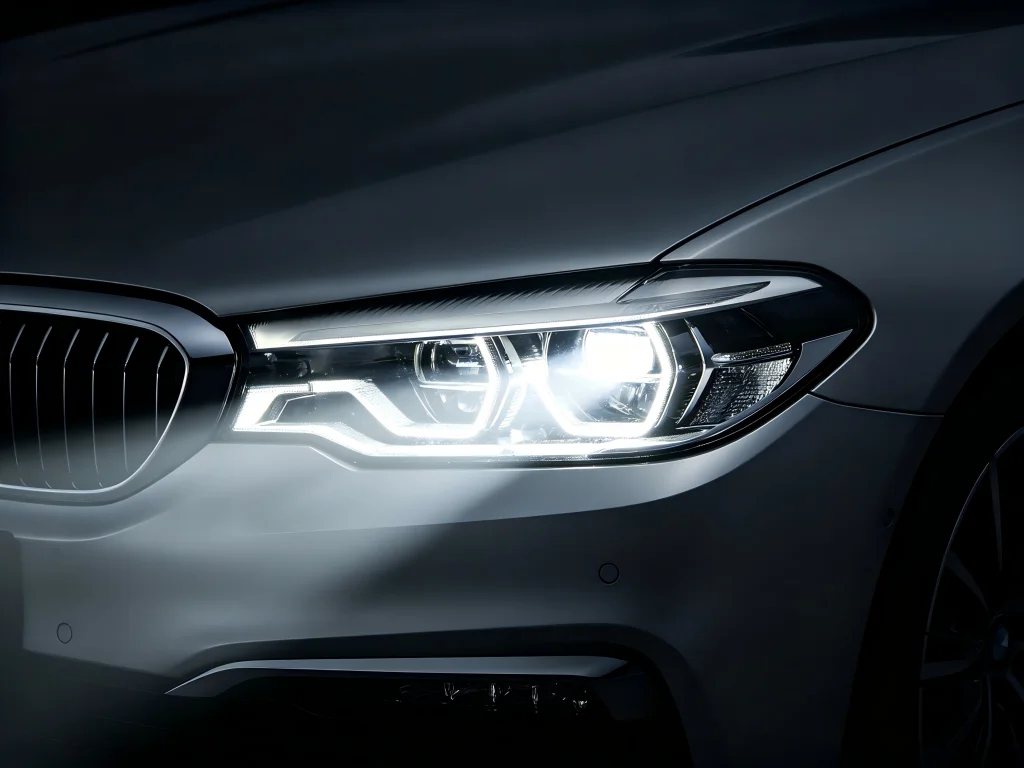
A good LED car headlight combines precise emitter engineering, controlled beam distribution, stable output, efficient thermal management, reliable drive electronics, proper vehicle fitment, and consistent manufacturing. Professional buyers should evaluate the entire system rather than selecting products primarily based on advertised lumens, wattage, color temperature, or price.
This distinction protects your profit margin.
A cheap bulb with a high return rate can be more expensive than a premium bulb with a higher factory price.
For B2B buyers, the real equation is:
Total product cost = purchase price + shipping + installation issues + returns + warranty + technical support + brand damage.
Once you look at purchases this way, supplier comparison changes completely.
2. LED vs. Halogen vs. HID: Which technology should you buy?
LED tends to offer the strongest balance of efficiency, instant start, compact system design, lifespan, and product flexibility. Halogen remains simple and inexpensive, while HID can provide strong projection performance. The best choice still depends on optics, vehicle engineering, regulations, installation requirements, and target customer expectations.
| Factor | Halogen | HID/Xenon | LED |
|---|---|---|---|
| Startup | Instant | Requires warm-up | Instant |
| Electrical efficiency | Lower | Higher than halogen | مرتفع |
| System complexity | Low | Ballast/igniter required | Driver and thermal system required |
| Thermal challenge | High radiant heat | High voltage system considerations | Semiconductor heat must be managed |
| Design flexibility | Limited | Moderate | مرتفع |
| Instant high beam | Good | Less suitable for some standalone HID designs | Excellent |
| Risk of modification | Low with correct specifications | Optical and electrical compatibility required | Optical, electrical, and thermal compatibility required |
| B2B aftermarket potential | Price-driven replacement | Application-specific | Strong opportunity for premium and luxury performance |
LEDs win in many purchase comparisons, but this does not mean that every LED product is better than halogen or HID.
A poorly designed LED lamp installed in the wrong optical system may perform worse than the original halogen lamp.
This is the first major purchasing trap.
3. Purchase Trap #1: Choosing by Lumens
Huge lumen numbers are attractive because they make product comparisons simple.
Unfortunately, the road does not measure marketing claims.
A professional buyer must distinguish between:
- The theoretical output of the LED chip
- The initial output of the lamp
- The stable output after heating
- Luminous efficacy
- Useful beam intensity
- Road lighting distribution
A product can claim a huge raw output but lose part of its performance due to heat, inefficient optics, incorrect emitter placement, or aggressive electronic driving.
3.1. Ask your supplier this instead
“Can you show the beam pattern and stable performance after the lamp reaches operating temperature?”
This question is more useful than asking for the largest lumen number.
4. Buying Trap #2: Comparing Wattage Instead of Efficiency
Some buyers still assume that a 100W LED must outperform a 50W LED.
It may not be so.
Higher electrical power produces more heat. More heat requires stronger thermal management. If the cooling system cannot keep up, increasing power may lead to diminishing returns.
The better product is the one that efficiently converts electrical input into stable, controlled road illumination.
4.1. Evaluating Stable Output
When evaluating a supplier, consider testing samples after:
- Initial startup
- 15 minutes
- 30 minutes
- 60 minutes
- Repeated hot/cold cycles
If the output changes sharply when the product heats up, ask about the cause.
Thermal behavior often reveals engineering quality that packaging cannot show.
5. Buying Trap #3: Ignoring LED Emitter Engineering
This is one of the most important technical differences between low-cost and well-designed automotive headlights Automotive LED headlights.
The inverter or projector simply does not need “light.”.
It needs light from the correct position.
When an LED replaces a halogen filament, the LED emitting surfaces must approach the optical position required by the structure as closely as the design allows.
Note:
- Emitter width
- Emitter length
- PCB thickness
- Distance from a mounting reference point
- Double-sided LED alignment
- Lamp rotation direction
A small error here may turn into a large error in the beam pattern several meters away on the road.
6. فخ الشراء #4: الخلط بين الضوء الأبيض والضوء الأفضل
Color temperature is easy to sell.
A cool white led vehicle headlamp يمكن أن يجعل السيارة القديمة تبدو أكثر حداثة على الفور.
ولكن دفع المنتج نحو مظهر أزرق للغاية يمكن أن يقلل من الجاذبية العملية في بعض ظروف القيادة والأسواق.
يجب على المشترين المحترفين مراعاة حالة استخدام العميل.
| أولوية المشتري | ما يجب تقييمه | خطأ شائع |
|---|---|---|
| مظهر حديث | إخراج أبيض نظيف ومتسق | اختيار ضوء أزرق مفرط |
| القيادة في الطقس الممطر | التباين ورؤية الطريق القابلة للاستخدام | الشراء برقم كلفن فقط |
| التحسين الراقي | اتساق اللون بين المصابيح | تجاهل تباين الدفعات |
| Commercial distribution | Market preferences and regulations | Using one specification globally |
7. Purchasing Mistake #5: Ignoring the Driver
The LED chip gets most of the attention because it produces light.
The driver deserves equal respect.
Automotive electrical environments are not perfectly clean laboratory power sources. Voltage can vary. Control systems may use pulse width modulation. Vehicles may perform lamp diagnostics. Electrical noise is significant.
A weak driver can turn a good LED chip into a poor product.
When supplying automotive LED headlights products, ask about:
- Input voltage range
- Current regulation
- Overheating protection
- Overvoltage protection
- Protection against reverse polarity where applicable
- Electromagnetic compatibility strategy
- CANbus compatibility
- PWM behavior
Do not assume that “CANbus ready” means universal compatibility.
Vehicle electronics vary.
8. Purchase Trap #6: Treating Cooling as a Cosmetic Feature
Large heat sinks look impressive in product photos.
But thermal performance depends on material, surface area, heat transfer path, airflow, ambient temperature, LED load, driver design, and installation environment.
In our engineering tests, we care about stable thermal behavior more than the visual size of the cooling system.
8.1. Active Cooling
A fan can effectively move heat away from the integrated LED module. This allows higher performance in a smaller package.
But the fan becomes part of the reliability chain.
So fan bearing quality, dust resistance, operating temperature, and airflow restriction are all important.
8.2. Passive Cooling
The passive heat sink removes the moving part, which can improve mechanical simplicity.
However, it requires sufficient surface area and an appropriate thermal path.
Neither system wins automatically.
The right question is:
Does this cooling design keep the LED and electronics within the intended thermal operating range under real-world conditions?
Automotive lighting engineers can review additional thermal management principles through HELLA technical documentation.
9. Purchase Trap #7: “H7” does not mean “fits every H7 vehicle”
This issue causes costly B2B returns.
The bulb base may match, but the full installation may fail due to:
- Vehicle-specific retainers
- Insufficient rear clearance
- Large heat sinks
- External drivers
- Decoder units
- Dust cover interference
- Connector variations
- Vehicle electronics
This applies to common applications such as H4, H7, H11, 9005, and 9006.
For distributors, a detailed vehicle application database can become a competitive advantage.
10. How to compare LED headlight bulb suppliers
A professional supplier should be evaluated based on engineering support, optical performance, quality consistency, electronics, thermal design, application coverage, customization, production control, and after-sales response. Price matters, but a low price has little value if installation issues and warranty claims consume the savings.
| Supplier factor | Low-level evaluation | Professional evaluation |
|---|---|---|
| Brightness | Advertised lumens | Stable output + beam pattern |
| LED chip | Chip brand only | Emitter Engineering + Classification + Thermal Load |
| Cooling | Large Fan or Heat Sink | Measured Thermal Stability |
| Compatibility | “Fits Most Cars” | Verify Application-Specific Compatibility |
| CANbus | “Error-Free” Claim” | Vehicle-Specific Compatibility Testing |
| Quality | Sample Appearance | Batch Consistency and Quality Control Process |
| Warranty | Long Warranty Claim | Clear Warranty Process and Response Time |
| OEM | Logo Printing | Product customization, packaging, and market |
| Supplier value | Lowest FOB price | Lowest total business risk |
11. A 10-step checklist for purchasing LED car lights
- Identify the target market. Regulations, vehicle mix, climate, and customer expectations vary by country.
- Identify target vehicles. Start with applications that generate most of your sales.
- Confirm bulb types. Build the assortment based on actual demand rather than the largest possible number of SKUs.
- Evaluate beam pattern styles. Test products in relevant housings.
- Test thermal stability. Compare cold and stable performance.
- Electronics evaluation. Testing representative vehicles for warnings, flicker, and PWM issues.
- Physical fit check. Confirming brackets, converters, driver space, and dust cover clearance.
- Production quality control review. A perfect sample means little if mass production variation is high.
- Warranty cost calculation. Include shipping and labor, not just replacement product value.
- Supplier support assessment. Ask a tough technical question before placing an order.
12. What should distributors test before a large order?
Don't adopt a product just because one sample looks bright.
Build a small verification program.
12.1. Visual testing
Compare beam shape, hotspot position, foreground light distribution, glare control, and performance at distances.
12.2. الاختبار الحراري
شغّل المنتج لفترة كافية للوصول إلى حالة تشغيل مستقرة.
12.3. اختبار المركبة
قم بتركيب عينات في مركبات ممثلة من سوقك المستهدف.
12.4. اختبار التركيب
تأكد من أن المصباح يُقفل بشكل صحيح وأن الغطاء الخلفي يمكن إغلاقه دون سحق الكابلات أو إعاقة التبريد.
12.5. الاختبار الكهربائي
تحقق من بدء التشغيل، التبديل بين الضوء المنخفض/المرتفع حيثما ينطبق، تحذيرات لوحة العدادات، الوميض، التداخل الراديوي، ومشاكل التوافق الأخرى.
12.6. اختبار الدفعة
لا تختبر عينة واحدة فقط تم اختيارها يدويًا. اطلب وحدات من دفعات إنتاج مختلفة عندما يكون ذلك ممكنًا.
13. ماذا عن الامتثال القانوني؟
تخضع إضاءة السيارات للوائح مختلفة عبر الأسواق.
على سبيل المثال، تتضمن متطلبات إضاءة المركبات في الولايات المتحدة NHTSA and FMVSS No. 108, while many international markets use regulations based on متطلبات الإضاءة للمركبات وفقًا للجنة الأمم المتحدة الاقتصادية لأوروبا (UNECE).
الدرس الأساسي في المشتريات بسيط:
لا تخلط بين علامة على مكوّن، أو بيان تسويقي، أو مستند مختبري وبين الموافقة على كل تركيبة ممكنة من المصباح والوحدة الأمامية.
إذا كانت الشرعية على الطرق مهمة في سوقك، فاسأل المورّد بالضبط عن ما تم اختباره، وأي تكوين للمنتج تم اختباره، وأي معيار تم استخدامه، وما الذي يوثّقه المستند فعليًا.
14. كيف تقرأ ادعاءات الشهادات كمشترٍ محترف
افترض أن مورّدًا يقول:
“مصابيحنا الأمامية LED حاصلة على شهادة.”
هذا البيان غير كافٍ.
اسأل:
- أي شهادة أو معيار اختبار؟
- أي رقم طراز يظهر في التقرير؟
- هل يغطي التقرير نسخة الإنتاج الحالية؟
- أي مختبر أجرى الاختبار؟
- هل ينطبق على مكوّن أم على نظام الوحدة الأمامية الكامل؟
- لأي سوق مستهدف يكون المستند ذا صلة؟
يمكن لهذه الأسئلة أن تكشف بسرعة ما إذا كان المورد يفهم الامتثال في صناعة السيارات أم يستخدم الشهادات فقط كمواد مبيعات.
15. لماذا ينظر المشترون ذوو الخبرة إلى ما هو أبعد من تسعير علي بابا
تجعل منصات B2B عبر الإنترنت مقارنة الأسعار سهلة للغاية.
المقارنة الهندسية أصعب.
اثنان توريد مصابيح أمامية LED للسيارات يمكن أن يبدو العرضان وكأنهما يصفان منتجات متطابقة تقريبًا:
نفس نوع المصباح.
نفس القوة الكهربائية المزعومة.
نفس درجة حرارة اللون.
رقائق LED متشابهة.
جسم ألومنيوم مشابه.
ومع ذلك، قد يختلف أداؤهما الميداني بشكل كبير.
غالبًا ما تكون الاختلافات مخفية داخل التفاوتات البصرية، وتصميم ثنائي الفينيل متعدد الكلور، والواجهات الحرارية، ومكونات المحرك، وجودة المروحة، وعمليات التجميع، ومعايير مراقبة الجودة.
لهذا السبب يجب على فرق المشتريات تجنب اختزال منتج سيارات هندسي إلى جدول بيانات يحتوي فقط على الواط واللومن وسعر FOB.
16. Are you looking for an LED headlight supplier for cars?
A buyer looking for an LED headlight supplier for cars may try to identify a Malaysian company or a regional automotive lighting supplier.
If your actual goal is to obtain LED lighting for distribution, compare local availability with direct manufacturer capabilities.
A local supplier may offer faster delivery and easier communication.
A specialized manufacturer may offer stronger customization, direct technical support, and broader product development or better scalability.
The right supply model depends on order volume, market position, inventory strategy, and the degree of product differentiation your business needs.
17. When does OEM/ODM capability become important
At low volumes, a standard product may be sufficient.
As your distribution business grows, differentiation becomes more important.
You may need:
- Your own brand
- Custom packaging
- Market-specific product sets
- Special model numbers
- Application-oriented groups
- Distributor display materials
- Technical documentation
- Customized product specifications
Here begins the relationship with the manufacturer to influence your brand.
18. Why was GTR designed for professional automotive lighting buyers
GTR focuses on automotive aftermarket lighting and works from the perspective of actual installation and distribution requirements.
For us, a product LED car headlight Successful is not simply one that looks impressive during a five-minute sales presentation.
It must make sense across the entire commercial chain:
Factory ← Importer ← Distributor ← Installer ← Vehicle ← Driver.
If the product fails at any point in that chain, someone pays for the failure.
Often, that someone is the distributor.
Therefore, our goal is to help professional buyers evaluate products regarding optics, thermal design, electronics, application compatibility, manufacturing consistency, and market requirements.
18.1. For large wholesalers
Consistency and scalable supply are crucial. The product must perform predictably across repeat orders, not just during sample approval.
18.2. For retrofit chains
Installation efficiency and repeatability matter. Products that reduce installation uncertainty and technical complaints can improve workshop productivity.
18.3. For brand owners
OEM/ODM capability can help turn a generic LED product into a premium product line designed around your market.
19. FAQ: Car LED headlight bulb purchasing questions
19.1. What is the best car LED headlight bulb product?
The best product depends on the vehicle, housing, market, and use case. Evaluate optical performance, thermal stability, driver quality, installation fit, electronics, manufacturing consistency, and compliance before comparing maximum brightness.
19.2. How many lumens should car LED headlight bulbs have?
There is no universal lumen number that guarantees good on-road performance. Beam distribution and optical intensity are more important than large theoretical lumen claims.
19.3. Is a higher wattage LED headlight bulb better?
Not necessarily. Higher wattage increases thermal load. A lower-power design with efficient LEDs, strong optics, and effective cooling may outperform a higher-power product after thermal stabilization.
19.4. Should I buy fanless or fan-cooled LED headlight bulbs?
Both designs can work. Fan-cooled products may offer strong cooling in a compact package, while passive systems remove a moving component. Compare stable temperatures, size, airflow, reliability, and application requirements.
19.5. Why do some LED headlight bulbs cause CANbus errors?
An LED system may draw or respond to electrical signals differently than the original bulb. Vehicle monitoring systems can interpret this difference as a lamp failure. Compatibility depends on both the LED driver and the vehicle's electronics.
19.6. What are the most important tests before importing LED headlight bulbs?
Prioritize beam pattern testing, thermal testing, electrical compatibility, physical fit, environmental testing relevant to your market, and batch-level quality assessment.
19.7. How can I compare LED headlight bulb manufacturers?
Send both suppliers the same application requirements and test their samples under the same conditions. Compare beam quality, stable performance, electronics, installation, quality control, documentation, technical response, warranty handling, and overall final business risk.
19.8. Are replacement LED bulbs legal everywhere?
No. Requirements vary by market and headlight configuration. Check applicable national or regional regulations before importing or marketing a replacement product for use on public roads.
20. Don't buy your next LED headlight based on box specifications
The easiest LED headlight to sell is the one with the biggest number printed on the package.
The easiest LED headlight to build a business around is different.
It produces a controlled beam. It remains stable under heat. It fits the intended vehicles. Its driver operates reliably. Its production quality is repeatable. And when your technical team faces a difficult application, the manufacturer understands the problem.
This difference becomes more valuable with every container you import.
If you are evaluating a new automotive LED headlight supplier, preparing a private-label set, replacing a current unstable product, or expanding a retrofit series, send GTR your target market, lamp applications, expected volume, and performance requirements.
Instead of comparing another spreadsheet full of lumen claims, build a product lineup around the vehicles and customers you actually serve.
Explore GTR automotive lighting solutions via the official GTR website and discuss your upcoming wholesale, distribution, OEM, or ODM project with our team.